
Aiphone IX-DVF-4A vs Hanwha TID-600R: Specification Comparison
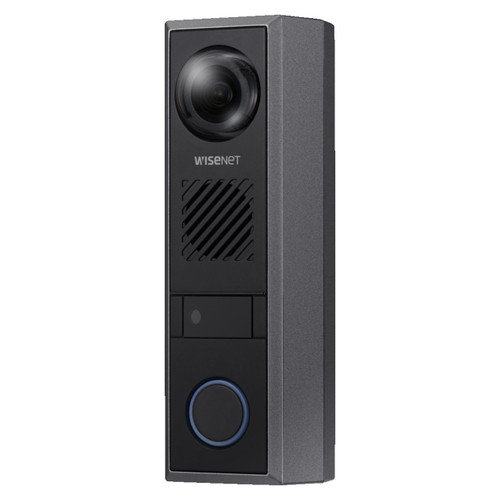
Both the Aiphone IX-DVF-4A and Hanwha TID-600R are wired, PoE-powered IP video door stations designed for building-entry intercom applications. The IX-DVF-4A is a four-call-button SIP door station built around Aiphone's IX Series IP intercom platform. The TID-600R is a 1080p SIP-compatible video intercom with integrated IR night vision, edge storage, and advanced analytics. Buyers evaluating either unit are selecting a primary door-side device for IP-based visitor management, making these two legitimately cross-shoppable products.

In This Guide
- How do the imaging performance and audio capabilities compare?
- Which unit offers more intercom call and access-control integration features?
- How do the two units compare on environmental hardening, power, and compliance certifications?
- Which should you choose: the IX-DVF-4A or the TID-600R?
- Side-by-Side Specs
- FAQ
How do the imaging performance and audio capabilities compare?
The Aiphone IX-DVF-4A uses a 1/3" CMOS sensor rated at 1.23 megapixels with a minimum illumination of 5 lux. No frame rate or dynamic range figure is specified. Camera tilt is mechanically adjustable to +15°, 0°, or -8° during installation. Audio codecs are G.711 and G.722, and video is encoded as H.264/AVC or Motion JPEG.
The Hanwha TID-600R uses a larger 1/2.8" CMOS sensor delivering full 1080p at up to 60 fps. Minimum illumination is 0.018 lux in color and 0 lux with IR active, supported by a 5m IR illuminator and Auto ICR day/night switching. Wide dynamic range is rated at 150 dB via WDR and SSDR. Audio is two-way full duplex with a built-in 85 dB speaker (measured at 0.5m); supported audio codecs include G.711 µ-law and G.726. The TID-600R also supports digital image stabilization, defog, and SSNRⅤnoise reduction — none of which are specified for the IX-DVF-4A.
For low-light identification and image fidelity, the TID-600R holds a clear measurable advantage: its sensor is larger, its frame rate is documented, its minimum illumination is dramatically lower (0 lux IR vs. 5 lux), and it adds active IR. The IX-DVF-4A does not publish a frame rate or dynamic range figure.
Which unit offers more intercom call and access-control integration features?
The IX-DVF-4A is purpose-built as a multi-tenant door station: it ships with four labeled call buttons, two contact outputs, and two trigger inputs, allowing direct wiring to door strikes or external devices without a separate relay module. It is SIP compliant and ONVIF Profile S compliant, and its protocol stack includes SFTP, SMTP, and IGMP/MLD for multicast — standard in the Aiphone IX Series ecosystem. Physical connectivity is Cat-5e/6.
The TID-600R provides two alarm inputs and one relay output. Its SIP 2.0 implementation (RFC 3261) is explicitly validated against Cisco, Grandstream, Yealink, and Asterisk PBX platforms — named interoperability the IX-DVF-4A spec does not provide. The TID-600R also adds SNMPv1/v2c/v3, UPnP, Bonjour, QoS, DDNS, PPPoE, SRTP, and Wisenet SUNAPI/open-platform API — a substantially broader protocol and management surface. Edge storage via microSD/SDHC/SDXC up to 256 GB and 2 GB RAM are present; the IX-DVF-4A specifies neither.
For multi-tenant call routing, the IX-DVF-4A's four labeled buttons and native Aiphone IX ecosystem integration are operationally direct. For SIP/PBX interoperability across heterogeneous UC platforms and broader access-control API surface, the TID-600R's documented PBX compatibility and SUNAPI give it an advantage.
How do the two units compare on environmental hardening, power, and compliance certifications?
The IX-DVF-4A is rated IP65 and IK08, operates from -40°F to +140°F (-40°C to +60°C), and draws 5.28 W from PoE (IEEE 802.3af Class 0) or 24V DC. Its enclosure dimensions are 13-11/16" H × 7-3/16" W; depth is not specified. Port security is IEEE 802.1x. Compliance listings beyond IP65/IK08 are not stated in the provided spec.
The TID-600R is rated IP65, IK08, and NEMA 4X, and carries UL Safety and FCC/CE EMC certifications — none of which are listed for the IX-DVF-4A. Operating temperature range is -22°F to +131°F (-30°C to +55°C), and storage temperature extends to -50°C. Maximum power draw is 12.95 W from PoE (802.3af stated in the spec) or 12V DC. Dimensions are 1.93" W × 6.50" H × 1.89" D (49 × 165 × 48 mm), and the unit weighs 490 g. A 3-year warranty is specified; no warranty term is provided for the IX-DVF-4A.
The IX-DVF-4A's cold-temperature floor of -40°F gives it a notable advantage in extreme-cold deployments. The TID-600R adds NEMA 4X, UL, FCC, and CE certifications not present in the Aiphone spec, and its 3-year warranty is documented. Power draw is higher on the TID-600R (12.95 W vs. 5.28 W), which may affect PoE switch budget planning on constrained installations.
Which should you choose: the IX-DVF-4A or the TID-600R?
Our take: The TID-600R is the stronger choice when image quality, night-vision performance, PBX interoperability, and broader compliance certification are the primary decision criteria. Its 1/2.8" sensor delivers 1080p at 60 fps versus the IX-DVF-4A's 1.23 MP with no documented frame rate; its minimum illumination of 0 lux (IR) versus 5 lux gives it a decisive low-light advantage; and its NEMA 4X, UL, FCC, and CE certifications exceed the IX-DVF-4A's listed ratings. The IX-DVF-4A is the stronger choice for purpose-built multi-tenant SIP intercom deployments on the Aiphone IX platform: its four labeled call buttons and dual contact outputs/trigger inputs are factory-ready for direct multi-directory wiring without auxiliary modules, and its -40°F cold-temperature rating outperforms the TID-600R's -22°F floor. Specify the IX-DVF-4A for Aiphone IX ecosystems and extreme-cold environments; specify the TID-600R for Wisenet/SIP-PBX environments requiring documented 1080p imaging and edge recording.
Side-by-Side Comparison
Spec-for-spec, from manufacturer data.
| Specification | Aiphone IX-DVF-4A | Hanwha TID-600R |
|---|---|---|
| Product Type | IP Video Door Station (4-call) | IP Video Intercom |
| Image Sensor | 1/3" CMOS | 1/2.8" CMOS |
| Resolution | 1.23 MP | 1080p (2MP) |
| Max Frame Rate | — | 60 fps |
| Min. Illumination | 5 lux | 0.018 lux color / 0 lux IR |
| IR Night Vision | — | 5m IR, Auto ICR |
| Wide Dynamic Range | — | 150 dB (WDR + SSDR) |
| Video Compression | H.264/AVC, MJPEG | H.265, H.264, MJPEG |
| Audio Codec | G.711, G.722 | G.711 µ-law, G.726 (ADPCM) |
| Call Buttons | 4 labeled | — |
| Alarm Inputs / Outputs | 2 inputs / 2 outputs | 2 inputs / 1 relay output |
| SIP Compatibility | SIP compliant | SIP 2.0 (Cisco, Grandstream, Yealink, Asterisk) |
| ONVIF | Profile S | Profile S |
| Edge Storage | — | microSD/SDHC/SDXC up to 256 GB |
| Power Source | PoE 802.3af Class 0 / 24V DC | PoE 802.3af / 12V DC |
| Max Power Draw | 5.28 W | 12.95 W |
| Operating Temperature | -40°F to +140°F | -22°F to +131°F |
| IP / Impact Rating | IP65, IK08 | IP65, IK08, NEMA 4X |
| Certifications | — | UL, FCC, CE |
| Warranty | — | 3 years |
| Dimensions (H × W) | 13.69" H × 7.19" W | 6.50" H × 1.93" W × 1.89" D |
Frequently Asked Questions
Which should you choose: the IX-DVF-4A or the TID-600R?
The TID-600R is the stronger choice when image quality, night-vision performance, PBX interoperability, and broader compliance certification are the primary decision criteria. Its 1/2.8" sensor delivers 1080p at 60 fps versus the IX-DVF-4A's 1.23 MP with no documented frame rate; its minimum illumination of 0 lux (IR) versus 5 lux gives it a decisive low-light advantage; and its NEMA 4X, UL, FCC, and CE certifications exceed the IX-DVF-4A's listed ratings. The IX-DVF-4A is the stronger choice for purpose-built multi-tenant SIP intercom deployments on the Aiphone IX platform: its four labeled call buttons and dual contact outputs/trigger inputs are factory-ready for direct multi-directory wiring without auxiliary modules, and its -40°F cold-temperature rating outperforms the TID-600R's -22°F floor. Specify the IX-DVF-4A for Aiphone IX ecosystems and extreme-cold environments; specify the TID-600R for Wisenet/SIP-PBX environments requiring documented 1080p imaging and edge recording.
Which unit works better with an existing Cisco or Asterisk phone system?
The TID-600R explicitly documents SIP 2.0 (RFC 3261) compatibility with Cisco, Grandstream, Yealink, and Asterisk. The IX-DVF-4A is listed as SIP compliant but does not name specific PBX platforms in the provided specifications. If your deployment relies on a Cisco or Asterisk PBX, the TID-600R's documented interoperability reduces integration risk.
Can either unit handle a building entrance with multiple tenants or call destinations?
The IX-DVF-4A ships with four labeled call buttons and is designed specifically for multi-directory applications within the Aiphone IX Series platform. The TID-600R's specifications do not describe multiple call buttons or directory configurations; it is positioned as a single-point SIP video intercom. For installations requiring four distinct call destinations at the door station itself, the IX-DVF-4A is the purpose-built option.
Is either unit rated for outdoor use in very cold climates?
Both units carry IP65 and IK08 ratings for weather and impact resistance. However, the IX-DVF-4A specifies an operating temperature floor of -40°F (-40°C), while the TID-600R's floor is -22°F (-30°C). For installations in climates that regularly reach below -22°F, the IX-DVF-4A's cold-temperature specification provides a documented margin the TID-600R does not.
More Intercom Comparisons
- Hanwha TID-600R vs Aiphone IX-EA
- Hanwha TID-600R vs Axis A8207-VE
- Hanwha TID-600R vs Aiphone IX-DVF-6
- Hanwha TID-600R vs Aiphone JOS-1FW
- Aiphone IX-EA vs Axis A8207-VE
- Aiphone IX-EA vs 2N 01273-001
Intercom Buying Guides
Get a Second Opinion on Your Camera Choice
Share your site layout, coverage goals, and budget. Our team will validate the camera selection, flag anything we would change, and recommend products that match the use case.