
Aiphone IX-DVF-4A vs 2N 01273-001: Specification Comparison
Both the Aiphone IX-DVF-4A and the 2N 01273-001 (IP Verso Nickel) are SIP-based wired IP video door stations intended for commercial and multi-tenant access control applications. The IX-DVF-4A is a fixed four-button surface-mount unit; the 01273-001 is a modular main unit whose camera module is listed as optional. Buyers typically cross-shop these when selecting a video intercom front-end for a SIP/VoIP or ONVIF-integrated access system, weighing imaging capability, environmental hardening, calling capacity, and ecosystem expandability.

In This Guide
- How do the two units compare on camera quality, night vision, and audio codec support?
- Which unit is better suited for harsh outdoor or vandal-prone installations?
- How do the two units differ in calling capacity, protocol support, and system integration flexibility?
- Which should you choose: the IX-DVF-4A or the 01273-001?
- Side-by-Side Specs
- FAQ
How do the two units compare on camera quality, night vision, and audio codec support?
The Aiphone IX-DVF-4A ships with an integrated 1.23 MP 1/3" CMOS sensor, a minimum illumination of 5 lux, and mechanical tilt adjustment of +15°, 0°, or −8°. Video is encoded in H.264/AVC or Motion JPEG. Audio codecs are G.711 and G.722, the latter offering wideband (HD) voice quality. No infrared or thermal night-vision capability is listed in the provided specs.
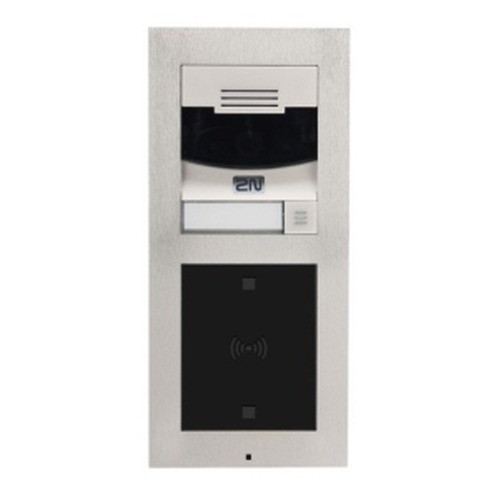
The 2N 01273-001 specifies thermal infrared night vision for 24/7 low-light visitor identification and a color resolution of 640×480 from its camera module — however, the spec sheet explicitly marks the camera as '(optional)', meaning the camera may not be included at purchase. Video compression is H.264 and MJPEG. Audio codec details beyond 'built-in mic' are not provided in the supplied specifications. The thermal imaging capability is a meaningful differentiator for outdoor or poorly lit entrances where visible-light cameras underperform.
Which unit is better suited for harsh outdoor or vandal-prone installations?
The Aiphone IX-DVF-4A carries an IP65 ingress-protection rating (dust-tight, jet-water resistant) and an IK08 impact rating (5 joules). It operates across a wide temperature range of −40°F to 140°F (−40°C to 60°C), making it suitable for extreme-climate outdoor deployments. Power options are PoE IEEE 802.3af Class 0 or 24 V DC, with a measured draw of 5.28 W.
The 2N 01273-001 is rated IP54 (splash-resistant, not jet-water resistant) and IK08 (matching the Aiphone on impact resistance). Its operating temperature range is not stated in the provided specifications. Power is PoE 802.3af. The IX-DVF-4A's IP65 rating represents a materially higher level of water ingress protection than the 01273-001's IP54, which is relevant for exposed outdoor entrances subject to rain or hose-down cleaning. The wider temperature tolerance of the IX-DVF-4A is documented; no equivalent figure is available for the 01273-001.
How do the two units differ in calling capacity, protocol support, and system integration flexibility?
The Aiphone IX-DVF-4A provides four labeled call buttons with individual directories, two contact outputs, and two trigger inputs. It supports an extensive protocol stack: IPv4/IPv6, TCP, UDP, SIP, HTTP, HTTPS, RTSP, RTP, RTCP, IGMP, MLD, SMTP, SFTP, DHCP, NTP, DNS, and IEEE 802.1x port security. It is both SIP-compliant and ONVIF Profile S compliant, enabling integration with third-party VoIP systems and NVRs alike.
The 2N 01273-001 uses a 2-position modular frame with one slot reserved for expansion modules (access card readers, keypads, additional call buttons, etc.), offering hardware scalability without replacing the main unit. It also declares ONVIF compliance and includes Bluetooth Smart technology — a feature absent from the IX-DVF-4A specs. Detailed protocol-stack information (IPv6, RTSP, SFTP, IEEE 802.1x, etc.) is not provided in the supplied 01273-001 specifications. The 2N modular architecture suits installations where access-control features may be added incrementally; the Aiphone's fixed four-button layout suits deployments with a defined, static call-directory requirement from the outset.
Which should you choose: the IX-DVF-4A or the 01273-001?
Our take: The IX-DVF-4A is the stronger choice when outdoor environmental resilience, a fixed multi-tenant calling structure, and broad protocol interoperability are the primary requirements. Its IP65 rating versus the 01273-001's IP54 provides meaningfully greater water resistance, and its documented −40°F to 140°F operating range covers climates for which the 2N unit's thermal limits are simply unspecified. The IX-DVF-4A's G.722 wideband audio codec and explicit IEEE 802.1x port-security support add integration depth not confirmed in the 01273-001 spec set. Conversely, the 01273-001 is the stronger candidate when thermal infrared night vision for 24/7 low-light operation is required, when the modular frame's expansion slot allows future access-control modules to be added without swapping hardware, or when Bluetooth-based mobile credentials are part of the system design. Note that the 01273-001's camera is listed as optional — buyers must confirm camera inclusion at order.
Side-by-Side Comparison
Spec-for-spec, from manufacturer data.
| Specification | Aiphone IX-DVF-4A | 2N 01273-001 |
|---|---|---|
| Product Type | Video Door Station (integrated) | IP Intercom Main Unit (camera optional) |
| Camera Resolution | 1.23 MP | 640×480 (color) |
| Camera Sensor | 1/3" CMOS | Not specified |
| Night Vision | Not specified | Thermal infrared |
| Min. Illumination | 5 lux | Not specified |
| Video Codec | H.264/AVC, Motion JPEG | H.264, MJPEG |
| Audio Codec | G.711, G.722 (HD) | Not specified |
| SIP Compliance | Yes | Not confirmed in specs |
| ONVIF Compliance | Profile S | Yes (profile not specified) |
| Power | PoE 802.3af Class 0 or 24 V DC | PoE 802.3af |
| Power Draw | 5.28 W | Not specified |
| IP Rating | IP65 | IP54 |
| Impact Rating | IK08 | IK08 |
| Operating Temperature | −40°F to 140°F | Not specified |
| Call Buttons | 4 (labeled, individual directories) | Modular (expansion via slots) |
| Bluetooth | Not specified | Yes (Smart technology) |
| Contact Outputs / Trigger Inputs | 2 outputs / 2 inputs | Not specified |
| IEEE 802.1x Port Security | Yes | Not specified |
| Modular Frame | No | 2-position (1 expansion slot) |
| Warranty | Not specified | 3 years |
Frequently Asked Questions
Which should you choose: the IX-DVF-4A or the 01273-001?
The IX-DVF-4A is the stronger choice when outdoor environmental resilience, a fixed multi-tenant calling structure, and broad protocol interoperability are the primary requirements. Its IP65 rating versus the 01273-001's IP54 provides meaningfully greater water resistance, and its documented −40°F to 140°F operating range covers climates for which the 2N unit's thermal limits are simply unspecified. The IX-DVF-4A's G.722 wideband audio codec and explicit IEEE 802.1x port-security support add integration depth not confirmed in the 01273-001 spec set. Conversely, the 01273-001 is the stronger candidate when thermal infrared night vision for 24/7 low-light operation is required, when the modular frame's expansion slot allows future access-control modules to be added without swapping hardware, or when Bluetooth-based mobile credentials are part of the system design. Note that the 01273-001's camera is listed as optional — buyers must confirm camera inclusion at order.
Is the Aiphone IX-DVF-4A or the 2N 01273-001 better for an outdoor entrance exposed to heavy rain?
The IX-DVF-4A is the documented choice here. Its IP65 rating means the enclosure is fully dust-tight and protected against water jets from any direction. The 01273-001 is rated IP54, which covers splash and drip resistance but not directed water streams. If the installation is under an overhang with limited direct water exposure, IP54 may suffice; for open-face or rain-exposed mounting, IP65 is the more appropriate rating.
Does either unit work in a parking garage or lobby with very low light at night?
The 2N 01273-001 specifically includes thermal infrared imaging for night-vision operation, enabling visitor identification when visible light is insufficient. The Aiphone IX-DVF-4A lists a minimum illumination of 5 lux but does not specify infrared or thermal night-vision capability in the provided specifications. For 24/7 low-light environments where visible illumination cannot be guaranteed, the 01273-001's thermal capability is a material advantage — provided the camera module is included at purchase, as the spec marks it optional.
Can either unit integrate with a third-party SIP phone system or VoIP PBX?
Yes for the IX-DVF-4A, which is explicitly SIP-compliant and ONVIF Profile S compliant, and lists SIP in its protocol stack. The 2N 01273-001 is described as an IP intercom and declares ONVIF compliance; however, the provided specifications do not enumerate SIP in the protocol list. 2N products are generally known for SIP support, but buyers should verify SIP compliance directly against the 01273-001 datasheet (referenced as /content/product-datasheets/01273-001.pdf) before assuming interoperability.
More Intercom Comparisons
- Hanwha TID-600R vs Aiphone IX-EA
- Hanwha TID-600R vs Axis A8207-VE
- Hanwha TID-600R vs Aiphone IX-DVF-6
- Hanwha TID-600R vs Aiphone JOS-1FW
- Aiphone IX-EA vs Axis A8207-VE
- Aiphone IX-EA vs 2N 01273-001
Intercom Buying Guides
Get a Second Opinion on Your Camera Choice
Share your site layout, coverage goals, and budget. Our team will validate the camera selection, flag anything we would change, and recommend products that match the use case.