
Best NDAA-Compliant Cameras for Commercial Office Buildings
Three things have turned NDAA Section 889 compliance from a federal-contractor concern into a default office specification: corporate-tenant due diligence, cyber-liability insurance underwriting, and multi-property portfolio standardization. None of those are federal mandates, but each is driving the same conclusion — new office deployments should default to NDAA-compliant cameras unless there is a specific reason not to. This guide walks through the compliant camera picks for office buildings and the OEM relabels that cause most audit failures.
Bottom Line
For compliance-sensitive office deployments, the default lineup is Hanwha Q-series and P-series indoor domes, Axis P-series for main entries, and i-PRO WV-X/S for AI-enabled executive floors. Avoid Hikvision, Dahua, Honeywell Performance Series, LTS, Alibi, EZVIZ, Lorex, and ICRealtime — these are Section 889 blocked or OEM-relabeled from blocked sources. When in doubt, ask the manufacturer for a written NDAA compliance statement.
Our commercial team audits office camera inventories for NDAA compliance across multiple metros and spec replacements when the audit flags blocked equipment. The picks below reflect what we actually recommend.
Best For
- Offices with federal-contractor tenants, GSA leases, or federal-facility adjacency
- Buildings with corporate tenants that audit landlord surveillance during due diligence
- Properties seeking favorable cyber-liability insurance renewals
- Office portfolios standardizing on NDAA-compliant across multiple properties
- Property managers responding to tenant-driven compliance requirements
Not For
- Residential surveillance
- Facilities where no tenant or customer requires NDAA compliance
- Small offices with no compliance exposure or tenant-audit history
In This Guide
Why Office Buildings Care About NDAA (Without Federal Exposure)
Most office buildings are not federal contractors. They do not have GSA leases. They do not process federal shipments. On paper, NDAA Section 889 does not apply. Yet we are replacing legacy Hikvision and Dahua cameras in more commercial offices every month. Three forces are driving this:
Corporate-tenant due diligence. Most Fortune 500 companies now audit landlord surveillance when signing new leases or renewing existing ones. The corporate tenant's own compliance program requires that landlord common-area surveillance use compliant brands, because the tenant is on the camera network whenever their employees walk through the lobby or use the shared elevator. A non-compliant landlord system can stall a lease negotiation or trigger a post-move-in demand to replace the hardware at the landlord's cost.
Cyber-liability insurance underwriting. Commercial-property cyber-liability carriers have added surveillance brand questions to their underwriting questionnaires over the last two renewal cycles. Non-compliant deployments may see premium increases in the 5 to 15 percent range, or denied renewals. For large portfolios, the annual premium delta often exceeds the hardware-replacement cost within 18 to 24 months.
Multi-property portfolio standardization. Office REITs and large portfolio owners increasingly standardize on one camera brand and one compliance posture across their entire portfolio. The practical effect is that NDAA-compliant is simpler to specify than a mixed-compliance portfolio, because any tenant audit or insurance questionnaire gets the same answer for every property.
The hardware cost premium is typically 15 to 25 percent versus non-compliant on matched specs. For a 24-camera office deployment, that is $3,000 to $5,000 of incremental camera cost. Readily absorbed by operating budgets; often more than recovered through tenant-retention and insurance-premium benefits.
NDAA Section 889 Summary
NDAA Section 889 Part B prohibits federal agencies and federal contractors from purchasing or using video surveillance equipment from five blocked entities: Hikvision, Dahua, Huawei, ZTE, and Hytera. The rule extends to the full surveillance stack — cameras, NVRs, VMS, and network gear on the surveillance VLAN — and to OEM relabels that use components from the blocked manufacturers.
The test is binary: one non-compliant camera fails the system. There is no partial compliance, no grandfather exemption for existing deployments, and no waiver for "we only use it for the parking lot" scenarios. When the compliance question is asked, the answer is either yes (every camera) or no.
The five recommended NDAA-compliant brands for office surveillance are Axis, Hanwha Vision, i-PRO, Bosch Security, and Pelco — each with published compliance statements and federal-procurement catalog listings. Digital Watchdog and Vivotek are additional compliant options less commonly specified for corporate office.
Brands and OEM Relabels to Avoid
The clear blocks are Hikvision and Dahua direct-brand cameras and NVRs. The less-obvious blocks — OEM relabels that use blocked components — account for most of the surprise-compliance-failure incidents we see at tenant audits:
Honeywell Performance Series — Hikvision OEM relabel, blocked. Honeywell has NDAA-compliant lines (Commercial series with specific 30-Series designations) that are not Hikvision-sourced; verify per-SKU before specifying.
LTS (LT Security) — Hikvision OEM relabel, blocked across the product line.
Alibi — multiple SKUs are Hikvision OEM. Check each model against the manufacturer sourcing statement.
EZVIZ — Hikvision consumer brand, blocked.
Lorex — Dahua consumer brand, blocked.
Swann — Dahua components in multiple product lines; check per-SKU.
ICRealtime — Dahua OEM relabel, blocked.
When in doubt: ask the manufacturer directly for a written NDAA Section 889 compliance statement. Legitimate compliant manufacturers provide it within 24 to 48 hours. A vague response or delay is itself a red flag.
What Corporate Tenants Actually Ask For
Understanding what corporate tenants actually ask for during due diligence helps a property manager prepare a clean response. The common questions:
"Provide a list of all camera models and manufacturers on the surveillance network." Standard first question. Prepare the list in advance with model, manufacturer, firmware version, and deployment location. A complete inventory answered within a day signals professional operations.
"Confirm all cameras are NDAA Section 889 compliant and provide manufacturer statements." Second question, almost always. Keep the compliance statements from your manufacturer partners on file; retrieve and forward within 24 hours.
"Describe the firmware-update policy and cybersecurity baseline." Third question from compliance-sensitive tenants. Have a written policy that covers monthly patch cadence, admin password policy, certificate management, and logging. Integrators can provide a template.
"What is the retention policy for common-area footage?" Standard retention-policy question. Confirm your policy (typically 30 days) and your ability to produce footage on request.
"What is the incident-response workflow if a tenant requests footage?" Document the process: who receives the request, how identity is verified, how the footage is exported, who approves the release. Having a written process avoids ad-hoc handling.
Our Office NDAA-Compliant Camera Picks
Six NDAA Section 889 compliant cameras that cover most office positions. All backed by manufacturer compliance statements; all specified in real office deployments.
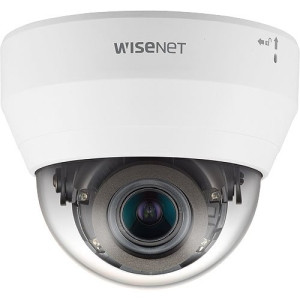
Hanwha
Hanwha QND-7082R 4MP Indoor IR Dome Camera
QND-7082R
4MP Hanwha indoor IR dome. NDAA-compliant, discreet lobby aesthetic, strong Wisenet WAVE mobile-app integration. Default for most office positions.
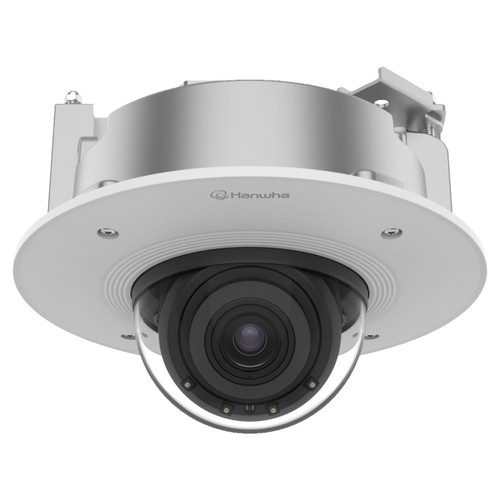
Hanwha
Hanwha PND-A9081RF 4K Indoor AI IR Dome IP Camera
PND-A9081RF
Hanwha 4K indoor AI IR dome. Edge AI for people counting and dwell analytics. Premium for executive suites, boardroom approaches, and high-compliance tenant floors.
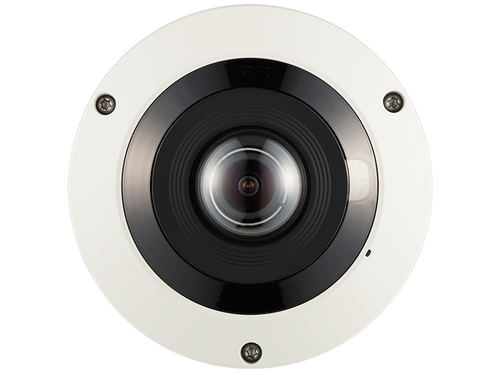
Hanwha
Hanwha PNF-9010RV 12MP 360˚ Fisheye Camera
PNF-9010RV
Hanwha 12MP 360-degree fisheye for conference and common-area full-room coverage. One clearly-posed camera — lower privacy friction than a fixed-dome cluster.
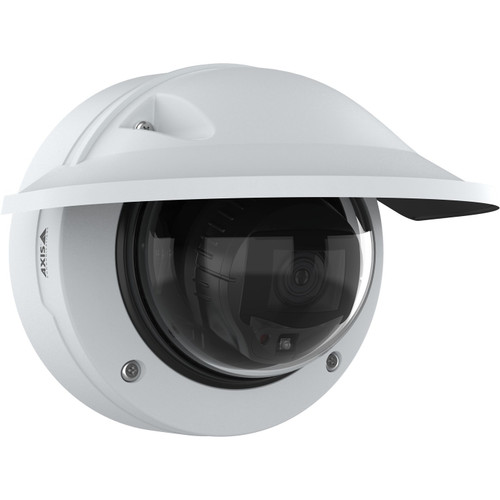
Axis
Axis P3277-LVE 5MP Outdoor AI IR Dome Camera - 03153-001
03153-001
Axis P3277-LVE 5MP AI outdoor dome. Lightfinder 2.0 and AXIS Object Analytics. The default Axis pick for glass-front main entries and exterior coverage.
Hanwha
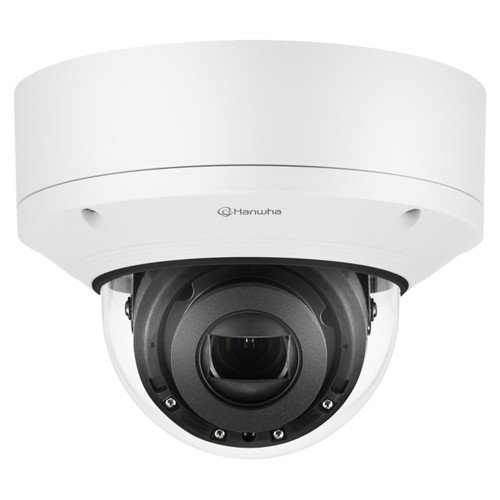
Hanwha XND-6081RV 2MP Vandal-Resistant Dome Camera
XND-6081RV
Hanwha IK10-rated 2MP dome for high-traffic lobbies, shared elevator landings, loading-dock-facing positions. NDAA-compliant, low-profile aesthetic.
Hanwha
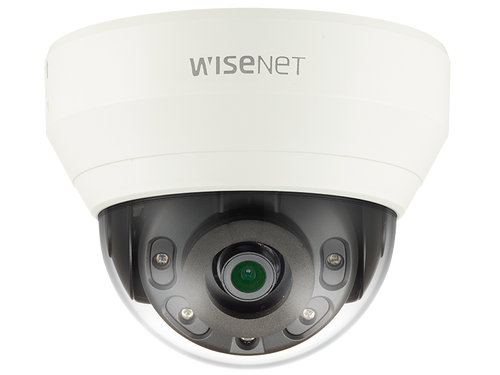
Hanwha QND-6010R 2MP Network IR Dome Camera
QND-6010R
Hanwha 2MP indoor IR dome for multi-tenant common areas or budget-sensitive deployments. NDAA-safe presence detection at commercial-reasonable price.
Also Consider: AI Outdoor and Recording
Complete an NDAA-safe office deployment with AI outdoor cameras and a channel-matched NVR.
i-PRO
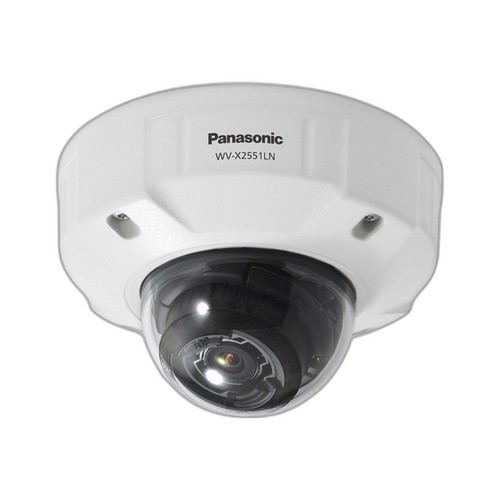
i-PRO WV-X2551LN 5MP AI-Enhanced Fixed Outdoor Dome IP Camera
WV-X2551LN
i-PRO 5MP AI outdoor dome. NDAA-compliant; strong low-light for glass-front offices; native i-PRO VMS and third-party integration.
Hanwha
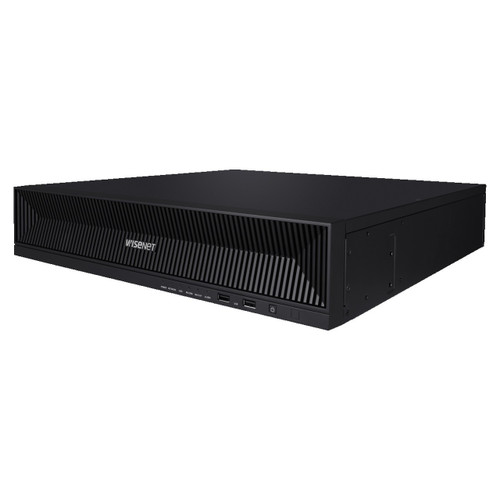
Hanwha XRN-1620B2 16-Channel 4K NVR
XRN-1620B2
Hanwha 16-channel 4K NVR. NDAA-compliant, RAID expansion, Wisenet WAVE VMS with strong mobile-app support.
Hanwha
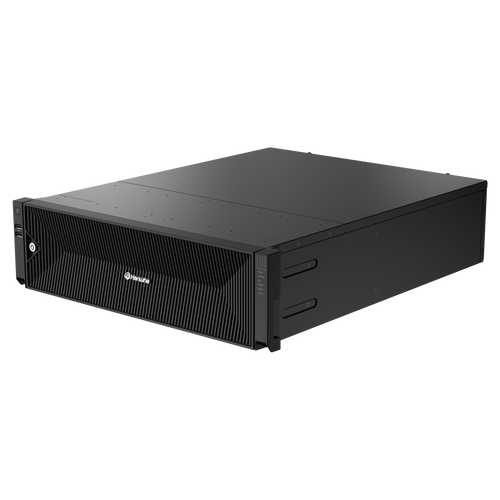
Hanwha XRN-3220B4 32-Channel 8K Network Video Recorder
XRN-3220B4
Hanwha 32-channel 8K NVR for large multi-tenant or multi-floor office buildings with 25+ cameras. NDAA-compliant.
Frequently Asked Questions
Is NDAA compliance legally required for a commercial office?
Required for buildings with federal-contractor tenants, GSA leases, or federal-facility adjacency. Increasingly expected by corporate-tenant due diligence and cyber-insurance underwriting even without federal exposure. Most new office installs in 2026 default to NDAA-compliant regardless of exposure.
Which office camera brands are NDAA-compliant?
Axis, Hanwha Vision, i-PRO, Bosch Security, Pelco are the primary options. Digital Watchdog and Vivotek are also compliant but less commonly specified for corporate office. Avoid Hikvision, Dahua, Honeywell Performance Series, LTS, Alibi, EZVIZ, Lorex, ICRealtime.
Can I mix compliant and non-compliant cameras in an office?
For federally-exposed buildings, no — any non-compliant camera fails the compliance review. For purely commercial buildings, a mixed deployment is increasingly risky due to tenant-audit and insurance requirements. Standardizing on compliant is the cleaner path.
Are Hikvision cameras really blocked if we have no federal tenants?
The federal rule does not reach non-federal buildings directly. But corporate tenants with their own compliance programs often audit landlord surveillance during due diligence, and non-compliant cameras can stall lease negotiations or trigger replacement at the landlord's cost. The practical answer is that NDAA compliance is becoming the default expectation.
What NVR should I use for an NDAA-compliant office system?
Hanwha Wisenet XRN series (XRN-820S small, XRN-1620B2 standard, XRN-3220B4 large), Axis S3008 Mk II (compact with built-in PoE), or i-PRO WJ-NX310 are all NDAA-compliant. Hikvision and Dahua NVRs are themselves blocked.
Is Honeywell NDAA-compliant?
Honeywell Commercial Security has NDAA-compliant camera lines (Commercial series with specific designations). Honeywell Performance Series is Hikvision OEM and is NOT compliant. Verify the specific model and sourcing statement.
How much more do NDAA cameras cost?
Typically 15 to 25 percent premium on matched specs. For a 24-camera office, that is roughly $3,000 to $5,000 of incremental cost. Usually absorbed into operating budgets and often recovered through insurance premium and tenant-retention benefits.
Do I need to replace my entire office system to go NDAA-compliant?
Cameras and NVRs from blocked brands need replacement. Compatible VMS platforms (Genetec, Milestone, Avigilon, Wisenet WAVE) support compliant cameras without system changes. Existing switches and UPS can stay unless they are also blocked-brand.
No Bots, Just Experts
No bots, just experts. Free pre-sales support for every customer — product questions, BOM quotes, compatibility checks, price confirmation — typically answered within one business day. Paid services available like full system design, remote installation, and more. Replacing a specific Hikvision model? Send the model list, we return NDAA-compliant replacements with pricing free. Need a full NDAA audit and migration plan? Engineering time at $175/hour. Typical single-site audit runs 4 to 10 hours. Hardware buyers get up to one hour ($175) credited back against their order as a thank-you.