
People Counting Camera Buying Guide
A technical buying guide for retail operators, venue managers, facility directors, and integrators specifying people counting cameras. Covers sensor technology (stereo vision, time-of-flight, thermal), typical accuracy ranges, mounting geometry, POS and BI integration, and the deployment conditions that make the difference between 85% and 95% count accuracy.
In This Guide
- Sensor Technology & How Counting Works
- Specifications That Drive Accuracy
- Featured People Counting Cameras
- Mounting Geometry & Site Conditions
- POS, BI, and Analytics Integration
- Typical Use Cases by Venue Type
- Entry Point Coverage Cameras
- Common Mistakes
- Quick Comparison: Counting Camera Tiers
- Related Resources
People counting cameras are not a security product. They are a business intelligence product that happens to use a camera form factor. The specifications that matter for security cameras — megapixel count, IR range, WDR, IK rating — are largely irrelevant to counting. What matters is the counting algorithm's performance under real-world traffic, lighting, and geometry conditions.
Sensor Technology & How Counting Works
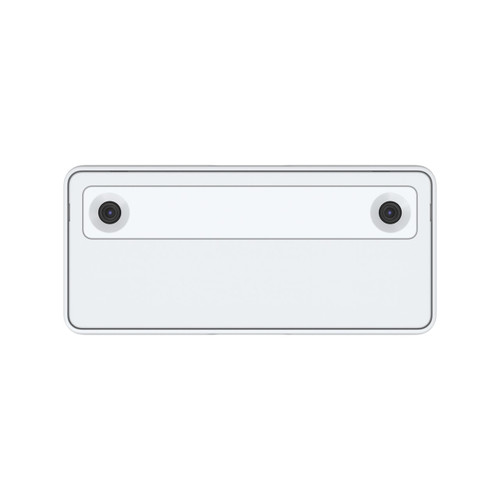
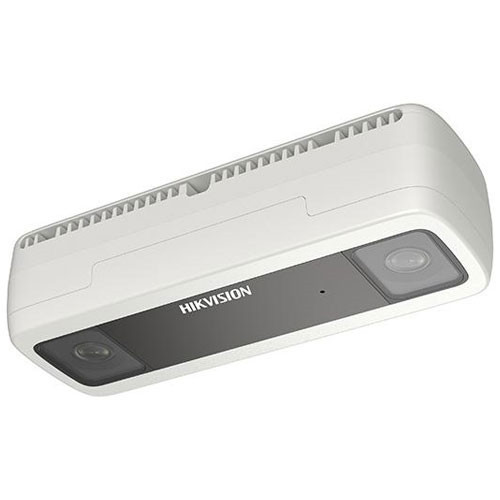
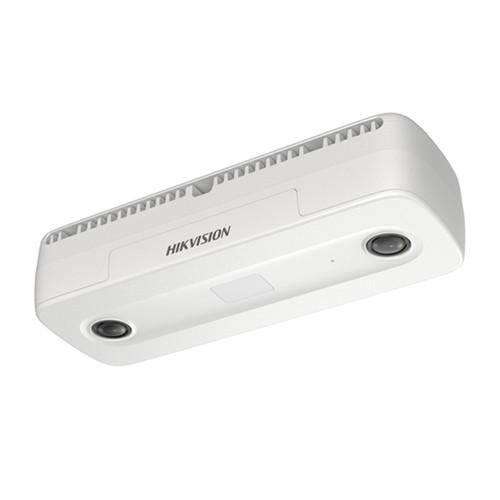
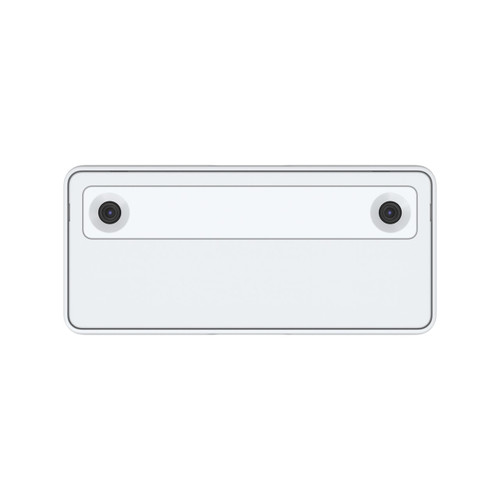
Stereo Vision (Dual-Lens)
A stereo vision counting camera uses two lenses with a fixed baseline offset. The camera computes disparity between the two images to produce a depth map, then counts objects that cross the counting line at a specific height range (typically human head height, 150-200 cm from floor). Stereo vision handles overlap (two people walking side-by-side) and direction better than single-lens analytics. Accuracy typically runs 95-98% under normal conditions. Ceiling height and mounting affect accuracy significantly — most stereo cameras require 2.4m to 6m ceiling clearance.
Time-of-Flight (ToF)
ToF cameras emit a modulated infrared signal and measure return time per pixel to build a real-time depth map. Because ToF is an active technology, it works identically in complete darkness and full daylight. Accuracy typically runs 96-99% with very low false-positive rates for shadows, reflections, and carts. ToF ceiling clearance requirements are similar to stereo vision. ToF cameras typically cost more than stereo but deliver higher accuracy in variable-lighting venues like glass-fronted retail.
Single-Lens AI Analytics
A standard 2D camera with a person-detection AI model running on-device can perform counting. Accuracy is inherently lower than depth-based methods — typically 85-92% in controlled entrances, dropping to 75-85% with overlapping traffic. Single-lens counting works best at single-person-width entrances, not wide retail openings. The advantage is cost: a standard AI camera costs a fraction of a dedicated stereo/ToF unit. Suitable for traffic-trend analytics where exact count accuracy is secondary to directional trend.
Thermal (for Specialty Cases)
Thermal cameras detect human body heat and count by thermal signature crossing a counting line. Primary advantage: privacy (no identifiable image) and performance in zero-light environments like nightclub entries or emergency stairwells. Accuracy is acceptable for traffic trending (typically 88-93%) but below stereo/ToF for gate counting. Not recommended for mainstream retail counting. Covered in detail in the Thermal Camera Deployment Guide.
Specifications That Drive Accuracy
Published Accuracy
Manufacturer published accuracy is measured under ideal conditions — controlled lighting, single-file traffic, no shopping carts, no children held in arms. Expect real-world accuracy 3-5 percentage points below published spec. A camera rated at 98% typically delivers 93-95% in a real retail entrance.
Counting Line Behavior
Most counting cameras let you define the counting line position and direction in the VMS. Some cameras differentiate adult versus child by object height, and most let you exclude shopping carts or strollers by size filtering. Verify the configuration interface gives you the granularity your reporting requires — some budget cameras only output aggregate in/out counts with no directional or size filtering.
Mounting Height Range
Every counting camera has a mounting height specification: a minimum below which the field of view is too narrow, and a maximum above which object resolution drops. Typical stereo cameras work at 2.4m to 6m ceilings. Installations outside this range produce degraded accuracy. If your ceiling is 8m, you need a long-range counting camera or a different architecture (multi-camera tiling).
Counting Line Width
A stereo camera at a 3m ceiling typically covers a 3-4m wide entrance zone. Wider entrances need multiple cameras with overlapping counting zones. Specify the aggregate count output — some platforms natively aggregate across cameras, others require VMS-side summing.
Reporting & API Access
The counting data is worthless if you cannot pull it into your BI platform. Specify cameras with a documented REST API, MQTT output, or RTSP metadata stream. Closed ecosystems where count data is trapped in the vendor's dashboard limit downstream analytics. Verify API rate limits — a camera that allows 10 requests per hour cannot feed a 5-minute traffic dashboard.
Privacy Masking
Modern counting cameras support privacy masking — the image is blurred or discarded after counting, with only the count data retained. Privacy-compliant counting is a requirement in the EU under GDPR and increasingly in California under CCPA. Verify the camera firmware supports on-device image disposal, not after-upload blurring.
Featured People Counting Cameras
Dedicated counting cameras and analytics-capable cameras from IP camera inventory. Pair with VMS reporting or direct BI integration for traffic analytics.
Mounting Geometry & Site Conditions
Counting accuracy is as much about mounting geometry as about the camera itself. An excellent stereo camera mounted incorrectly delivers worse counts than a mid-tier camera mounted correctly.
Directly Above the Counting Line
Mount the camera so the field of view centers on the counting line, with the line roughly perpendicular to the traffic direction. Oblique mounting (camera angled into the entrance at a side) produces tracking errors as people walk across the sensor at different depths. For retail entrances, a ceiling mount directly above the threshold is optimal.
Clearance From Doors & Lighting
Automatic sliding doors, revolving doors, and strong backlight from glass storefronts all affect counting. Stereo cameras can handle moderate backlighting. ToF cameras are largely immune. 2D AI cameras struggle with glass-fronted retail during daylight hours and often require door-side mounting to avoid the backlight zone.
Shopping Carts, Strollers & Children
A shopping cart is typically counted as zero (its height is below the head-height counting plane), but a stroller is borderline. Children held in arms present as one tall object and may be under-counted. Verify your camera's configuration options for differentiation. For grocery and warehouse venues with heavy cart traffic, specify a camera with explicit cart-exclusion logic, not just size filtering.
Shadows, Reflections, and Dark Carpet
Shadows on light carpet and reflections on polished floors both create false triggers for 2D AI cameras. ToF and stereo depth-based cameras are immune because they measure actual depth, not image contrast. If your entrance has polished stone floors or patterned high-contrast mats, budget for depth-based counting.
POS, BI, and Analytics Integration
The primary business value of counting data is conversion rate: visitors divided by transactions. A counting system that delivers traffic counts but cannot feed a BI platform produces vanity metrics with no operational outcome.
REST API Pull
The most flexible integration: a scheduled job pulls counts per interval (hourly, daily) into your data warehouse via the camera's or VMS's REST API. Verify JSON output format, per-door or per-camera granularity, and historical data access depth (some cameras overwrite count history after 30 days).
MQTT / Webhook Push
For near-real-time dashboards, MQTT or webhook push from the camera to a message broker drops the polling overhead. Appropriate for venues wanting minute-resolution traffic feeds into BI tools like Power BI or Tableau.
VMS Analytics Dashboard
Several VMS platforms (Milestone, Hanwha WAVE, Axis Camera Station) aggregate counting data from connected cameras into built-in reports. Acceptable for venues without a BI platform. Limitations: report formats are vendor-specific and do not always export cleanly.
POS Cross-Correlation
Conversion rate requires matching traffic count to transaction count by time window. Confirm your POS system exports time-stamped transactions at your desired resolution. Matching a hourly traffic count against a daily POS roll-up produces an average rate that hides high-performing and low-performing hours.
Typical Use Cases by Venue Type
Retail Storefront
Primary application: conversion rate tracking. Stereo or ToF camera at the main entrance, additional cameras at each secondary entrance. Feed counts into BI tool alongside POS data for hourly conversion-rate reports. Typical accuracy target: 95%+. Mount height 2.4-4m depending on store ceiling.
Shopping Mall
Multi-entrance aggregation with per-tenant allocation. Cameras at every mall entrance, counts aggregated centrally and broken out by time window for rent-per-visitor calculations. Mall-scale installations often use a vendor-integrated platform that pre-processes aggregation.
Venue & Event Space
Occupancy tracking for fire-code compliance and audience-size reporting. Thermal or ToF cameras at every entrance, with a central tally of people in minus people out. Real-time occupancy dashboard drives door-staff decisions on entry pauses during peak windows.
Grocery & Warehouse Retail
Heavy cart traffic requires explicit cart exclusion logic, not just object-size filtering. Also requires tracking through wide entrances (often 4-6m) which typically means multiple cameras with aggregated counts.
Museum & Attraction
Per-exhibit or per-gallery counting drives programming decisions and staff allocation. Typically ToF cameras given variable interior lighting. Privacy masking is common because visitors include children and minor-aged visitors in quasi-public contexts.
Office Reception
Occupancy tracking for hybrid-work space utilization. Counts at main lobby and floor vestibules feed into space-planning analytics for desks-per-occupant ratios and meeting-room utilization. Often paired with access control for credential-correlated counts.
Entry Point Coverage Cameras
Complementary cameras for retail-entrance overview, POS coverage, and perimeter context. Pair with dedicated counting cameras for full entry analytics.
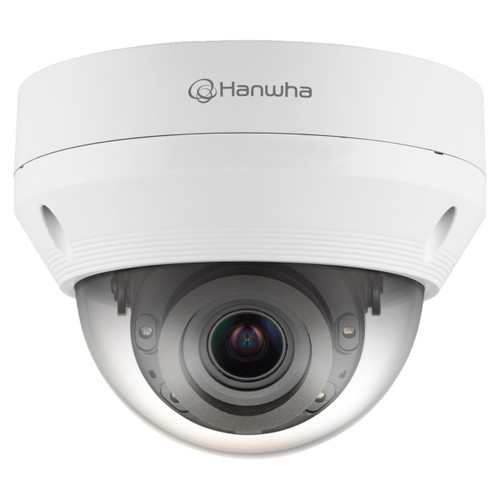
Hanwha QNV-8080R 5MP Vandal-Resistant Dome Camera
QNV-8080R
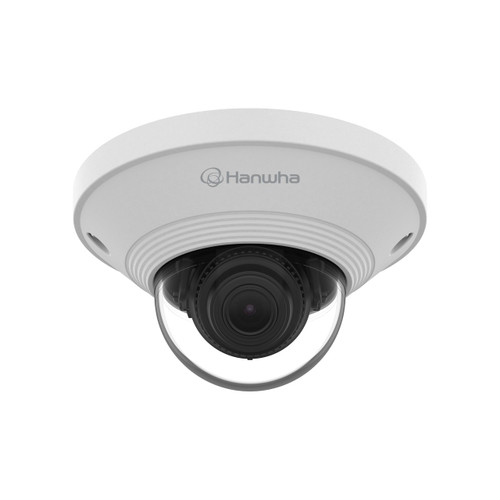
Hanwha QND-8011 5MP Mini Dome IP Camera
QND-8011
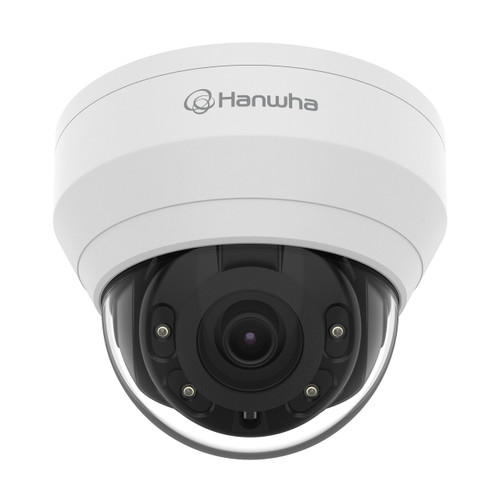
Hanwha QND-8010R 5MP Vandal-Resistant Dome Camera
QND-8010R
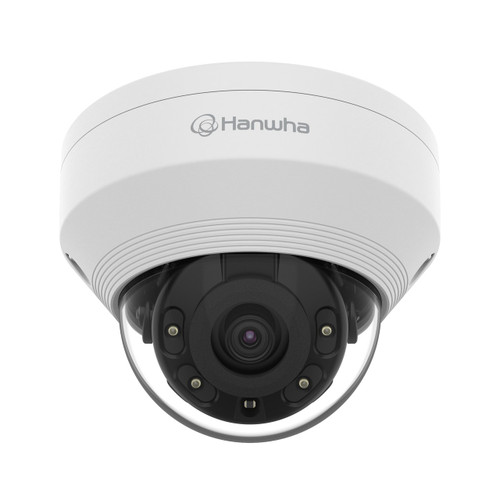
Hanwha QNV-8010R 5MP Vandal-Resistant Dome Camera
QNV-8010R
Common Mistakes
- Treating counting cameras as security cameras. They are BI instruments. Specifications that drive security camera selection (megapixel count, IR range) do not apply to counting accuracy.
- Mounting too low or too high. Every camera has a mounting height spec. Outside that range, accuracy drops regardless of technology. Measure your ceiling before ordering.
- Single-lens AI in wide retail entries. 2D AI cameras struggle with overlapping traffic. Use stereo or ToF for any entry wider than 2m with high foot traffic.
- No API integration plan. Purchasing a counting camera without confirming how counts reach your BI platform produces a dashboard in the vendor's portal that nobody checks.
- Ignoring cart and stroller differentiation. Grocery, big-box, and warehouse venues need explicit cart/stroller exclusion — size filtering alone is inadequate.
- Benchmarking against published accuracy only. Real-world accuracy is typically 3-5 points below published. Budget for the real number, not the marketing number.
- Forgetting privacy compliance. In the EU and California, counting systems must operate without retaining identifiable images. Specify on-device privacy masking, not after-upload blurring.
- Aggregating across incompatible cameras. Mixing stereo cameras from Vendor A with ToF cameras from Vendor B produces correct individual counts but inconsistent aggregation. Standardize on one platform per venue.
Quick Comparison: Counting Camera Tiers
| Specification | Budget (2D AI) | Mid (Stereo) | Premium (ToF) |
|---|---|---|---|
| Published Accuracy | 85-92% | 95-98% | 96-99% |
| Real-World Accuracy | 75-88% | 92-95% | 94-97% |
| Low-Light Performance | Poor | Good | Excellent |
| Overlap Handling | Limited | Good | Excellent |
| API Integration | Basic REST | REST + MQTT | Full API + Webhooks |
| Typical Mount Height | 2.4-3.5m | 2.4-6m | 2.4-8m |
| Typical Price Range | $300-$800 | $800-$1,800 | $1,500-$3,500 |
| Best For | Traffic trending | Retail conversion | High-value venues |
Ready to Specify a Counting System?
Share your venue type, entrance count, ceiling height, and the BI platform you need to integrate with. We will recommend a camera class, mounting plan, and integration path matched to your accuracy target.