
Vertiv GXT5LI-6000MVRT3UXLN vs Vertiv GXT5LI-6000GVRT3UXLN: Specification Comparison
Both units are Vertiv GXT5 Lithium-ion, double-conversion online UPS systems rated at 6000VA/6000W in a 3U rackmount form factor. The core differentiator is voltage domain: the GXT5LI-6000MVRT3UXLN targets North American 120V/208V split-phase infrastructure, while the GXT5LI-6000GVRT3UXLN is engineered for international 200–240V single-phase environments. Buyers comparing these are typically choosing the right voltage variant for their facility, not comparing performance tiers. Physical footprint, power rating, battery chemistry, and topology are effectively identical across both.
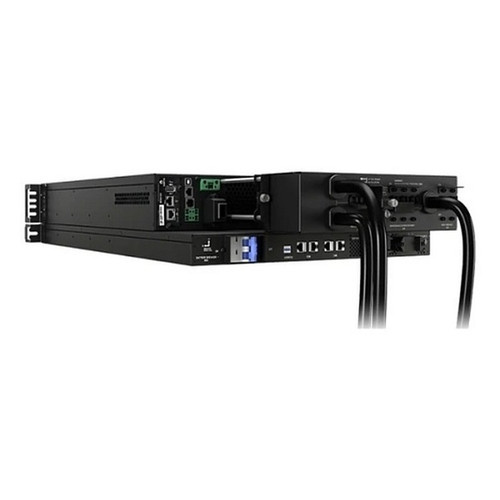
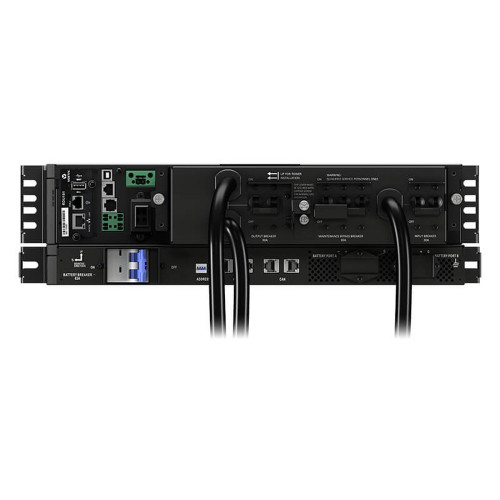
In This Guide
- Which unit matches your facility's voltage infrastructure — 120/208V split-phase or 200–240V single-phase?
- Which unit's certification stack matches your regulatory and compliance requirements?
- Are there meaningful differences in physical dimensions, weight, or management interfaces between the two units?
- Which should you choose: the GXT5LI-6000MVRT3UXLN or the GXT5LI-6000GVRT3UXLN?
- Side-by-Side Specs
- FAQ
Which unit matches your facility's voltage infrastructure — 120/208V split-phase or 200–240V single-phase?
The GXT5LI-6000MVRT3UXLN accepts 120V/240V input and delivers 120V/208V output (user-configurable to 120V/240V), wired via L1, L2, N, G — the standard North American split-phase arrangement found in data centers and IT closets served by 208V PDUs or 240V branch circuits.
The GXT5LI-6000GVRT3UXLN accepts 200V–240V input and outputs 230VAC by default, user-configurable across 200–240VAC (±1% regulation), wired L1-L2/N-G. This voltage profile aligns with IEC-standard single-phase infrastructure common in international deployments and global enterprise branch offices.
Both units are hardwired — neither uses a standard NEMA plug. The voltage domain is the primary selection axis; installing the wrong variant into mismatched infrastructure would require rewiring or step-up/step-down transformation, negating any cost savings.
Which unit's certification stack matches your regulatory and compliance requirements?
The GXT5LI-6000MVRT3UXLN carries a North American certification suite: UL 1642 (Li-Ion battery cells), UL 1973 (Li-Ion battery pack with UPS), UL 1778 (UPS), CSA 22.2 No. 107.3, c-UL, FCC Part 15 Class A, and Energy Star 2.0. The UL 1778 and c-UL listings satisfy typical NEC and Canadian Electrical Code AHJ requirements. Energy Star 2.0 may be relevant for government procurement or sustainability mandates.
The GXT5LI-6000GVRT3UXLN carries IEC-based certifications: IEC 62040-1:2008+A1 2013 (UPS safety), IEC 62619 1st Ed. (Li-Ion battery safety), IEC 62040-2 2nd Ed. (EMC), IEC 61000-3-2 and IEC 61000-3-12 (harmonic current limits), CISPR 22 Class A, FCC Part 15 Class A, and UL 1778. The IEC stack is required for CE marking and deployment in EU, APAC, and other IEC-jurisdiction markets.
Neither unit's certification stack is superior in absolute terms — they serve different regulatory environments. Note that the GXT5LI-6000GVRT3UXLN also holds UL 1778, providing some crossover, but its absence of UL 1973 or CSA listings limits its NEC-compliant deployment path in North America. Energy Star 2.0 is listed only for the MVRT3UXLN; the GVRT3UXLN spec does not include this certification.
Are there meaningful differences in physical dimensions, weight, or management interfaces between the two units?
Both units share an identical 16.9 in width and 35 in depth, fitting the same 3U rackmount slot. Height differs by 0.05 in (GXT5LI-6000MVRT3UXLN: 5.2 in; GXT5LI-6000GVRT3UXLN: 5.25 in) — a negligible delta with no practical rack-planning consequence. Weight differs by 1 lb (MVRT3UXLN: 100 lbs; GVRT3UXLN: 99 lbs), also negligible for floor-loading or shipping purposes.
The GXT5LI-6000MVRT3UXLN spec explicitly lists interface options: Serial Port, Network RJ-45 (RDU101 card), and USB. The GXT5LI-6000GVRT3UXLN spec does not enumerate interface options. Buyers requiring confirmed network management card (RDU101) support should note that only the MVRT3UXLN spec documents this; the GVRT3UXLN's management interface capabilities are not confirmed from the provided specifications.
Operating temperature is identical for both: 32°F to 104°F (0°C to 40°C), with a 10% derating noted at 50°C. Both are double-conversion online topology units — no difference in protection mode, transfer time, or battery chemistry is indicated by the provided specs.
Which should you choose: the GXT5LI-6000MVRT3UXLN or the GXT5LI-6000GVRT3UXLN?
Our take: The GXT5LI-6000MVRT3UXLN is the stronger choice when the deployment site runs North American 120V/208V split-phase infrastructure and must satisfy UL/CSA/Energy Star compliance requirements. Concretely: it outputs 120V/208V (user-configurable to 120V/240V) versus the GVRT3UXLN's 230VAC IEC output; it carries UL 1973 Li-Ion battery pack certification and Energy Star 2.0, neither of which appear in the GVRT3UXLN spec; and it explicitly documents Network RJ-45 (RDU101), Serial, and USB management interfaces, while the GVRT3UXLN's management interfaces are unspecified. Conversely, the GXT5LI-6000GVRT3UXLN is the correct selection for IEC-jurisdiction sites — EU, APAC, or any facility wired for 200–240V single-phase — where IEC 62040-1, IEC 62619, and CISPR 22 compliance are required. These are voltage-domain variants, not competing performance tiers; the selection criterion is site voltage and regulatory jurisdiction, not feature preference.
Side-by-Side Comparison
Spec-for-spec, from manufacturer data.
| Specification | Vertiv GXT5LI-6000MVRT3UXLN | Vertiv GXT5LI-6000GVRT3UXLN |
|---|---|---|
| SKU | GXT5LI-6000MVRT3UXLN | GXT5LI-6000GVRT3UXLN |
| Power Rating | 6000VA / 6000W | 6000VA / 6000W |
| Topology | Double-Conversion Online | — |
| Input Voltage Range | 120V/240V | 200V–240V |
| Output Voltage Range | 120V/208V (user-configurable 120V/240V) | 230VAC default; 200–240VAC user-configurable, ±1% |
| Wiring | Hardwired (L1, L2, N, G) | Hardwired (L1-L2/N-G) |
| Weight | 100 lbs | 99 lbs |
| Height | 5.2 in | 5.25 in |
| Width | 16.9 in | 16.9 in |
| Depth | 35 in | 35 in |
| Operating Temperature | 32°F–104°F (0°C–40°C); 10% derate at 50°C | 32°F–104°F (0°C–40°C); 10% derate at 50°C |
| Management Interfaces | Serial, Network RJ-45 (RDU101), USB | — |
| UL Listings | UL 1642, UL 1973, UL 1778, c-UL, CSA 22.2 No. 107.3 | UL 1778 |
| IEC Certifications | — | IEC 62040-1:2008+A1 2013, IEC 62619 1st Ed., IEC 62040-2 2nd Ed., IEC 61000-3-2, IEC 61000-3-12, CISPR 22 Class A |
| FCC | FCC Part 15, Class A | FCC Part 15, Class A |
| Energy Star | Energy Star 2.0 | — |
Frequently Asked Questions
Which should you choose: the GXT5LI-6000MVRT3UXLN or the GXT5LI-6000GVRT3UXLN?
The GXT5LI-6000MVRT3UXLN is the stronger choice when the deployment site runs North American 120V/208V split-phase infrastructure and must satisfy UL/CSA/Energy Star compliance requirements. Concretely: it outputs 120V/208V (user-configurable to 120V/240V) versus the GVRT3UXLN's 230VAC IEC output; it carries UL 1973 Li-Ion battery pack certification and Energy Star 2.0, neither of which appear in the GVRT3UXLN spec; and it explicitly documents Network RJ-45 (RDU101), Serial, and USB management interfaces, while the GVRT3UXLN's management interfaces are unspecified. Conversely, the GXT5LI-6000GVRT3UXLN is the correct selection for IEC-jurisdiction sites — EU, APAC, or any facility wired for 200–240V single-phase — where IEC 62040-1, IEC 62619, and CISPR 22 compliance are required. These are voltage-domain variants, not competing performance tiers; the selection criterion is site voltage and regulatory jurisdiction, not feature preference.
Can I use the GXT5LI-6000GVRT3UXLN in a US data center?
Based on the provided specs, the GXT5LI-6000GVRT3UXLN is designed for 200–240V single-phase input and outputs 230VAC by default. It does not list a 120V output mode or North American UL 1973 / CSA 22.2 certifications. Deploying it in a standard US 208V split-phase environment would require infrastructure that matches its IEC voltage profile, and it may not satisfy NEC AHJ requirements without the CSA/c-UL listings present on the MVRT3UXLN. Confirm with Vertiv and your AHJ before attempting a cross-region installation.
Is the GXT5LI-6000MVRT3UXLN or GXT5LI-6000GVRT3UXLN better for international deployments?
The GXT5LI-6000GVRT3UXLN is the specified choice for international deployments. Its 200–240V input/230VAC output and IEC certification stack — IEC 62040-1, IEC 62619, IEC 62040-2, IEC 61000-3-2, IEC 61000-3-12, and CISPR 22 Class A — are the compliance baseline required for CE marking and operation in EU, APAC, and other IEC-jurisdiction markets. The MVRT3UXLN's UL/CSA/North American certifications are not substitutes for IEC approvals in those regions.
Do both units support remote network management?
The GXT5LI-6000MVRT3UXLN spec explicitly lists a Network RJ-45 interface with the RDU101 card, plus Serial and USB ports. The GXT5LI-6000GVRT3UXLN spec does not enumerate management interfaces in the provided data. Buyers who require confirmed network management card support should rely on the MVRT3UXLN spec or contact Vertiv directly to verify the GVRT3UXLN's management options before purchase.
More UPS Comparisons
- APC by Schneider Electric SRT6KXLT vs Vertiv GXT5-6000RT208
- APC by Schneider Electric SRT6KXLT vs Vertiv GXT5LI-6000MVRT3UXLN
- APC by Schneider Electric SRT6KXLT vs Vertiv GXT5LI-6000GVRT3UXLN
- APC by Schneider Electric SRT6KXLT vs APC by Schneider Electric SRT6KRMXLI
- APC by Schneider Electric SRT6KXLT vs APC by Schneider Electric SRT6KRMXLIM
- APC by Schneider Electric SRT6KRMXLI vs Vertiv GXT5-6000RT208
UPS Buying Guides
Get a Second Opinion on Your Camera Choice
Share your site layout, coverage goals, and budget. Our team will validate the camera selection, flag anything we would change, and recommend products that match the use case.