
Vertiv GXT5LI-2000LVRT2UXL vs Vertiv GXT5-2000LVRT2UXL: Specification Comparison
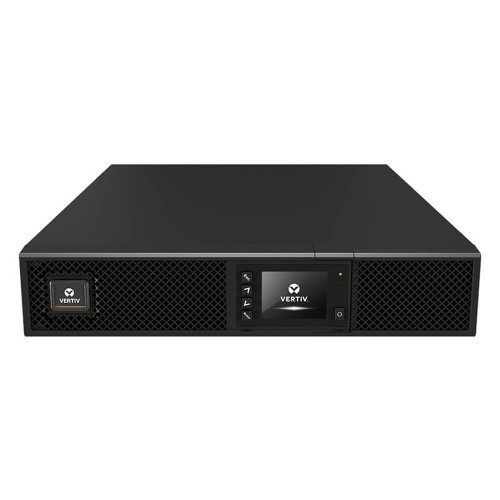
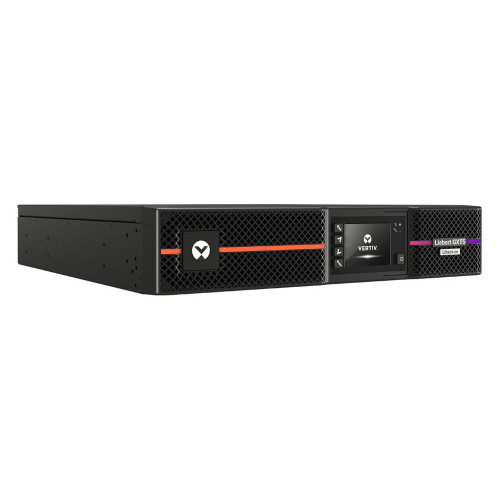
Both products are Vertiv GXT5-series 2000VA / 1800W online double-conversion rack/tower UPS units designed for 120 VAC North American environments. The GXT5LI-2000LVRT2UXL uses a lithium-ion battery chemistry, while the GXT5-2000LVRT2UXL uses a traditional VRLA/lead-acid configuration. Buyers selecting between these two are weighing battery technology trade-offs—weight, runtime aging, and total cost of ownership—across an otherwise nearly identical platform sharing the same VA/watt rating, form factor, and management ecosystem.
In This Guide
- Which model offers better efficiency and what does battery chemistry mean for long-term operating cost?
- How do the two units compare in physical footprint, weight, and installation environment?
- What are the differences in interface options, output receptacle configuration, and certifications?
- Which should you choose: the GXT5LI-2000LVRT2UXL or the GXT5-2000LVRT2UXL?
- Side-by-Side Specs
- FAQ
Which model offers better efficiency and what does battery chemistry mean for long-term operating cost?
The GXT5LI-2000LVRT2UXL (lithium-ion) is rated at up to 92% efficiency in online mode and up to 98% in Active ECO Mode. The GXT5-2000LVRT2UXL (lead-acid) is rated at up to 95% efficiency in online mode and up to 98% in Active ECO Mode. In standard online mode—the topology that delivers true double-conversion protection—the lead-acid GXT5-2000LVRT2UXL holds a 3-percentage-point efficiency advantage (95% vs 92%). Both units reach 98% in Active ECO Mode, meaning that advantage disappears if ECO Mode is acceptable for the load.
The lithium-ion chemistry in the GXT5LI carries the UL 1973 and UL 1642 certifications not listed for the GXT5, indicating the battery pack has been independently tested to lithium-specific safety standards. Lithium-ion batteries typically support more charge-discharge cycles and a longer service life than VRLA, which can reduce battery replacement frequency and associated maintenance costs over the UPS service life—though neither spec sheet quantifies cycle count or battery service life explicitly.
How do the two units compare in physical footprint, weight, and installation environment?
Both units share the same 2U rack/tower form factor with identical height (3.4 in) and width (16.9 in). Depth differs slightly: the GXT5LI measures 18.7 in versus 18.5 in for the GXT5, a 0.2-in difference unlikely to affect rack selection in practice.
Weight is the more meaningful physical delta. The GXT5LI-2000LVRT2UXL weighs 39.7 lbs, while the GXT5-2000LVRT2UXL weighs 47.5 lbs—a 7.8 lb (roughly 16%) reduction attributable directly to the lithium-ion battery pack. For high-density deployments where multiple UPS units stack in the same rack, or where a single technician must install the unit without a lift, the lighter lithium-ion model is operationally significant.
Operating temperature range is identical for both: 32°F to 104°F (0°C to 40°C). The GXT5LI spec additionally notes a 10% derating at 50°C; the GXT5 spec does not mention an elevated-temperature derating, though this may reflect a difference in documentation rather than a confirmed capability difference.
What are the differences in interface options, output receptacle configuration, and certifications?
Both units share the same core management architecture: USB, RS232, a dry-contact terminal block, and an optional Vertiv Liebert IntelliSlot RDU120 network card for SNMP and web management. The GXT5-2000LVRT2UXL additionally lists RS485 and an external battery connector in its interface options; neither of these appears in the GXT5LI spec. RS485 support on the GXT5 enables integration with building management systems and daisy-chaining scenarios that RS232 alone does not support.
Output receptacle counts are functionally equivalent: both provide one L5-20R twist-lock and six 5-20R standard outlets (7 total). The GXT5 spec explicitly identifies four of the six 5-20R outlets as individually programmable (load shedding / sequencing), with the remaining two 5-20R and the L5-20R as non-programmable. The GXT5LI spec does not call out programmable receptacles individually; buyers requiring confirmed per-outlet control should verify this with Vertiv documentation.
Input wiring is stated as L5-20P for the GXT5LI. The GXT5 spec lists wiring in Portuguese (NBR 14136 / NBR 14316 connectors), which are Brazilian standard plugs—this appears to be a documentation localization artifact rather than a product difference, since the GXT5 is marketed for North American 120V use. Buyers should confirm correct input plug type with Vertiv before ordering. Certification differences: the GXT5LI adds UL 1973 and UL 1642 (lithium battery safety standards) not present on the GXT5; the GXT5 adds CSA 22.2 No. 107.1 (Canadian standards) not listed for the GXT5LI.
Which should you choose: the GXT5LI-2000LVRT2UXL or the GXT5-2000LVRT2UXL?
Our take: The GXT5LI-2000LVRT2UXL is the stronger choice when minimizing weight, reducing long-term battery maintenance, and meeting lithium-specific safety certifications (UL 1973, UL 1642) are priorities. Its 39.7 lb weight saves 7.8 lbs over the GXT5-2000LVRT2UXL's 47.5 lbs—meaningful for dense rack builds. However, in standard online double-conversion mode the GXT5-2000LVRT2UXL holds a 3-point efficiency edge (95% vs 92%), which translates to measurable heat and energy cost differences at sustained load. The GXT5 also lists RS485 and an external battery connector absent from the GXT5LI spec, and carries CSA certification for Canadian deployments. Choose the GXT5LI for environments prioritizing lighter weight, longer battery service life, and lithium safety compliance. Choose the GXT5-2000LVRT2UXL for installations where online-mode efficiency, RS485 integration, confirmed per-outlet programmability, or Canadian certification are required.
Side-by-Side Comparison
Spec-for-spec, from manufacturer data.
| Specification | Vertiv GXT5LI-2000LVRT2UXL | Vertiv GXT5-2000LVRT2UXL |
|---|---|---|
| Battery Chemistry | Lithium-Ion | VRLA / Lead-Acid (implied; not stated as Li-ion) |
| Power Rating | 2000VA / 1800W | 2000VA / 1800W |
| Form Factor | 2U Rack/Tower | 2U Rack/Tower |
| Weight | 39.7 lbs | 47.5 lbs |
| Height | 3.4 in | 3.4 in |
| Width | 16.9 in | 16.9 in |
| Depth | 18.7 in | 18.5 in |
| Online Mode Efficiency | Up to 92% | Up to 95% |
| Active ECO Mode Efficiency | Up to 98% | Up to 98% |
| Input Voltage Range | 102–150 VAC (full load); 60–150 VAC (max) | 60–150 VAC |
| Output Voltage (configurable) | 100/110/115/120/125 VAC | 110/115/120/125 VAC |
| Output Receptacles | 6x 5-15/20R + 1x L5-20R | 6x 5-20R (4 programmable) + 1x L5-20R |
| Interface Options | USB, RS232, Dry-Contact, IntelliSlot | USB, RS232, RS485, Dry-Contact, IntelliSlot, External Battery Connector |
| Operating Temperature | 32°F–104°F (0°C–40°C) | 32°F–104°F (0°C–40°C) |
| Certifications | UL 1778, UL 1973, UL 1642, Energy Star 2.0, RoHS, WEEE, REACH | UL 1778 4th Ed., CSA 22.2 No. 107.1, Energy Star 2.0, RoHS2, WEEE, REACH |
| Display | Color graphic LCD with gravity-sensing orientation | Color graphic LCD with gravity-sensing orientation |
Frequently Asked Questions
Which should you choose: the GXT5LI-2000LVRT2UXL or the GXT5-2000LVRT2UXL?
The GXT5LI-2000LVRT2UXL is the stronger choice when minimizing weight, reducing long-term battery maintenance, and meeting lithium-specific safety certifications (UL 1973, UL 1642) are priorities. Its 39.7 lb weight saves 7.8 lbs over the GXT5-2000LVRT2UXL's 47.5 lbs—meaningful for dense rack builds. However, in standard online double-conversion mode the GXT5-2000LVRT2UXL holds a 3-point efficiency edge (95% vs 92%), which translates to measurable heat and energy cost differences at sustained load. The GXT5 also lists RS485 and an external battery connector absent from the GXT5LI spec, and carries CSA certification for Canadian deployments. Choose the GXT5LI for environments prioritizing lighter weight, longer battery service life, and lithium safety compliance. Choose the GXT5-2000LVRT2UXL for installations where online-mode efficiency, RS485 integration, confirmed per-outlet programmability, or Canadian certification are required.
Is the GXT5LI-2000LVRT2UXL or GXT5-2000LVRT2UXL more energy-efficient?
In Active ECO Mode both are rated at up to 98% efficiency—identical. In standard online double-conversion mode, the GXT5-2000LVRT2UXL is rated up to 95% versus up to 92% for the GXT5LI-2000LVRT2UXL, giving the lead-acid model a 3-percentage-point edge in the mode most relevant to critical-load protection.
Does the lithium-ion model weigh significantly less than the standard model?
Yes. The GXT5LI-2000LVRT2UXL weighs 39.7 lbs versus 47.5 lbs for the GXT5-2000LVRT2UXL—a difference of 7.8 lbs (approximately 16%). This is a direct result of the lithium-ion battery pack replacing the heavier VRLA lead-acid battery, and is a practical consideration for single-technician installation or high-density rack builds.
Can both units connect to a network for remote SNMP monitoring?
Neither unit includes network management natively. Both support SNMP and web management only with the optional Vertiv Liebert IntelliSlot RDU120 network card, installed in the shared IntelliSlot expansion bay. Both also support out-of-band serial management via USB and RS232. The GXT5-2000LVRT2UXL additionally lists RS485, which the GXT5LI-2000LVRT2UXL does not.
More UPS Comparisons
- APC by Schneider Electric SMX2000LV vs CyberPower PR2000RTXL2UC
- APC by Schneider Electric SMX2000LV vs CyberPower CP2000PFCRM2U
- APC by Schneider Electric SMX2000LV vs CyberPower PR2000RT2UCN
- APC by Schneider Electric SMX2000LV vs Middle Atlantic UPX-EXPANRUN-OL20
- APC by Schneider Electric SMX2000LV vs APC by Schneider Electric SMX2000LVNCUS
- APC by Schneider Electric SMX2000LV vs APC by Schneider Electric SMX2000RMLV2U
UPS Buying Guides
Get a Second Opinion on Your Camera Choice
Share your site layout, coverage goals, and budget. Our team will validate the camera selection, flag anything we would change, and recommend products that match the use case.