
Vertiv GXT5-3KL620RT2UXL vs Vertiv GXT5-3KL630RT2UXL: Specification Comparison
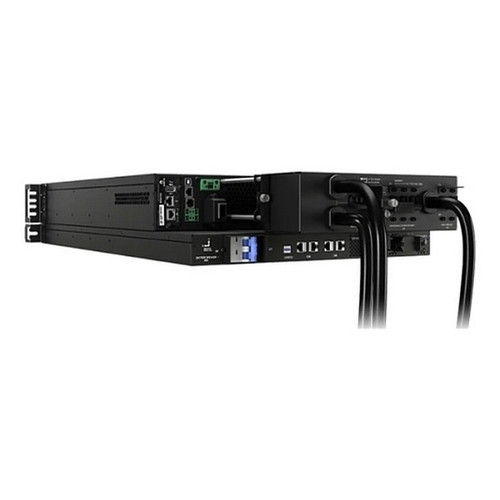
Both the GXT5-3KL620RT2UXL and GXT5-3KL630RT2UXL are Vertiv GXT5-series 3 kVA / 3,000 W online double-conversion rack/tower UPS units rated for 208 VAC input and output. They share identical physical dimensions, weight, efficiency ratings, interface options, certifications, and topology. The sole differentiator is the input plug and corresponding output receptacle configuration — L6-20P versus L6-30P — making this a purely electrical compatibility decision driven by the facility's PDU or circuit breaker infrastructure.
In This Guide
- Which input plug and output receptacle configuration matches your facility's power infrastructure?
- Do the two models differ in power capacity, efficiency, or expected runtime under load?
- Are there differences in management interfaces, certifications, or environmental ratings between the two models?
- Which should you choose: the GXT5-3KL620RT2UXL or the GXT5-3KL630RT2UXL?
- Side-by-Side Specs
- FAQ
Which input plug and output receptacle configuration matches your facility's power infrastructure?
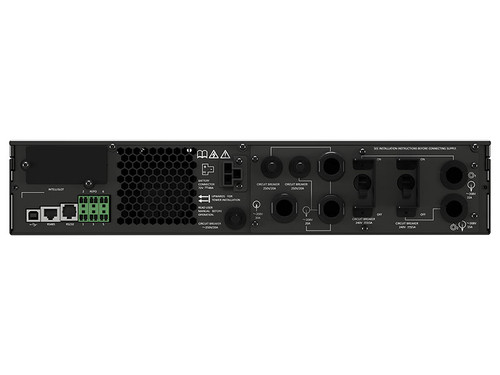
The GXT5-3KL620RT2UXL uses an L6-20P input plug, rated for 20 A at 208 VAC. Its output bank provides 2 × L6-15R receptacles and 2 × L6-20R receptacles — a total of four outlets, with the highest single-outlet rating at 20 A.
The GXT5-3KL630RT2UXL uses an L6-30P input plug, rated for 30 A at 208 VAC. Its output bank provides 2 × L6-15R receptacles and 2 × L6-30R receptacles — again four outlets, but with the two primary outlets rated at 30 A each.
The practical consequence is upstream circuit sizing. The L6-20P model requires a dedicated 208 VAC / 20 A circuit (typically breaker-protected at 20 A per NEC 80% rule, yielding 16 A continuous). The L6-30P model requires a 208 VAC / 30 A circuit (24 A continuous). Installers must verify which circuit type exists at the rack position before selecting a model; neither model ships with a plug adapter, and field re-wiring is outside the provided spec data.
Do the two models differ in power capacity, efficiency, or expected runtime under load?
Both units are rated identically at 3,000 VA / 3,000 W, giving a unity power factor — no derating is required when sizing connected loads up to 3,000 W. Input voltage nominal is 208 VAC for both, with output voltage fixed at 208 VAC.
Efficiency figures are also identical: up to 98% in Active ECO Mode and up to 95% in standard on-line double-conversion mode. These figures are drawn directly from the provided specifications; neither model shows a measured efficiency advantage over the other.
Runtime data is not included in the provided specifications for either model. Battery capacity, runtime curves, and optional external battery connector support (listed under Interface Options for both) would need to be evaluated using Vertiv's published runtime tables or the Vertiv Energy Analyzer tool, which are outside the scope of the supplied spec sheets.
Are there differences in management interfaces, certifications, or environmental ratings between the two models?
Management interfaces are identical across both models: USB, RS485, RS232, terminal block, and an external battery connector are all standard. SNMP and web management require the optional Vertiv RDU101 communications card on both units; this card is not included as standard on either.
Both models carry the same certification portfolio: ENERGY STAR 2.0, UL1778, c-UL, RoHS2, and REACH. Neither model holds a certification the other lacks based on the provided specifications.
Environmental ratings are identical: operating temperature range of +32 to +122 °F (0 to 50 °C) for both. Physical dimensions — 3.4 in H × 16.9 in W × 21.3 in D — and weight at 65.1 lb are the same, confirming both occupy the same 2U rack footprint and require the same mounting hardware.
Which should you choose: the GXT5-3KL620RT2UXL or the GXT5-3KL630RT2UXL?
Our take: The GXT5-3KL620RT2UXL is the correct choice when your rack position is fed by a 208 VAC / 20 A circuit with an L6-20P receptacle; the GXT5-3KL630RT2UXL is the correct choice when your circuit is 208 VAC / 30 A with an L6-30P receptacle. Beyond wiring, every measurable spec is identical: both deliver 3,000 VA / 3,000 W at unity power factor, both achieve up to 98% efficiency in ECO mode and up to 95% in on-line mode, and both weigh 65.1 lb in a 2U rack/tower chassis. The output receptacles mirror the input — L6-20R on the 20 A model, L6-30R on the 30 A model — so downstream device cords must also match. Select based solely on available circuit type; there is no performance, management, or compliance reason to prefer one over the other.
Side-by-Side Comparison
Spec-for-spec, from manufacturer data.
| Specification | Vertiv GXT5-3KL620RT2UXL | Vertiv GXT5-3KL630RT2UXL |
|---|---|---|
| SKU | GXT5-3KL620RT2UXL | GXT5-3KL630RT2UXL |
| Power Rating | 3,000 VA / 3,000 W | 3,000 VA / 3,000 W |
| Topology | Online double conversion | Online double conversion |
| Input Voltage | 208 VAC nominal | 208 VAC nominal |
| Input Plug | L6-20P (20 A) | L6-30P (30 A) |
| Output Voltage | 208 VAC | 208 VAC |
| Output Receptacles | 2 × L6-15R, 2 × L6-20R | 2 × L6-15R, 2 × L6-30R |
| Efficiency (ECO Mode) | Up to 98% | Up to 98% |
| Efficiency (On-line Mode) | Up to 95% | Up to 95% |
| Form Factor | 2U Rack/Tower | 2U Rack/Tower |
| Height | 3.4 in | 3.4 in |
| Width | 16.9 in | 16.9 in |
| Depth | 21.3 in | 21.3 in |
| Weight | 65.1 lb | 65.1 lb |
| Operating Temp | +32 to +122 °F (0 to +50 °C) | +32 to +122 °F (0 to +50 °C) |
| Certifications | ENERGY STAR 2.0, UL1778, c-UL, RoHS2, REACH | ENERGY STAR 2.0, UL1778, c-UL, RoHS2, REACH |
Frequently Asked Questions
Which should you choose: the GXT5-3KL620RT2UXL or the GXT5-3KL630RT2UXL?
The GXT5-3KL620RT2UXL is the correct choice when your rack position is fed by a 208 VAC / 20 A circuit with an L6-20P receptacle; the GXT5-3KL630RT2UXL is the correct choice when your circuit is 208 VAC / 30 A with an L6-30P receptacle. Beyond wiring, every measurable spec is identical: both deliver 3,000 VA / 3,000 W at unity power factor, both achieve up to 98% efficiency in ECO mode and up to 95% in on-line mode, and both weigh 65.1 lb in a 2U rack/tower chassis. The output receptacles mirror the input — L6-20R on the 20 A model, L6-30R on the 30 A model — so downstream device cords must also match. Select based solely on available circuit type; there is no performance, management, or compliance reason to prefer one over the other.
Is the GXT5-3KL620RT2UXL or GXT5-3KL630RT2UXL better for larger deployments?
Neither model has a power capacity advantage — both are rated 3,000 VA / 3,000 W. For larger deployments the decision remains electrical infrastructure: if your PDUs or breaker panels provide 30 A / L6-30P circuits, the GXT5-3KL630RT2UXL allows up to 24 A continuous draw per NEC 80% rule versus 16 A continuous on the 20 A model, which can matter when aggregating high-wattage servers or network equipment.
Can I use the GXT5-3KL620RT2UXL on a 30 A circuit, or the GXT5-3KL630RT2UXL on a 20 A circuit?
The provided specifications do not list plug adapters or step-down cables as included or supported accessories for either model. Connecting an L6-20P UPS to a 30 A / L6-30P receptacle or an L6-30P UPS to a 20 A / L6-20P receptacle would require third-party adapters and must comply with local electrical codes. Vertiv's specifications do not address this scenario; consult a licensed electrician and Vertiv technical support before attempting any wiring adaptation.
Do both models support SNMP monitoring out of the box?
No. Both the GXT5-3KL620RT2UXL and GXT5-3KL630RT2UXL require the optional Vertiv RDU101 SNMP/Webcard for SNMP and web management; this card is not included as standard on either model per the provided specifications. USB, RS485, RS232, and terminal block interfaces are standard on both units.
More UPS Comparisons
- APC by Schneider Electric SMT3000RMT2U vs Panduit U03S12L
- APC by Schneider Electric SMT3000RMT2U vs Vertiv GXT5-3KL620RT2UXL
- APC by Schneider Electric SMT3000RMT2U vs Vertiv GXT5-3KL630RT2UXL
- APC by Schneider Electric SMT3000RMT2U vs Panduit U03N11V
- APC by Schneider Electric SMT3000RMT2U vs APC by Schneider Electric SMTL3000RM2UCNC
- APC by Schneider Electric SMT3000RMT2U vs APC by Schneider Electric SMX3000HV
UPS Buying Guides
Get a Second Opinion on Your Camera Choice
Share your site layout, coverage goals, and budget. Our team will validate the camera selection, flag anything we would change, and recommend products that match the use case.