
APC by Schneider Electric SMT3000RMT2U vs APC by Schneider Electric SMTL3000RM2UCNC: Specification Comparison
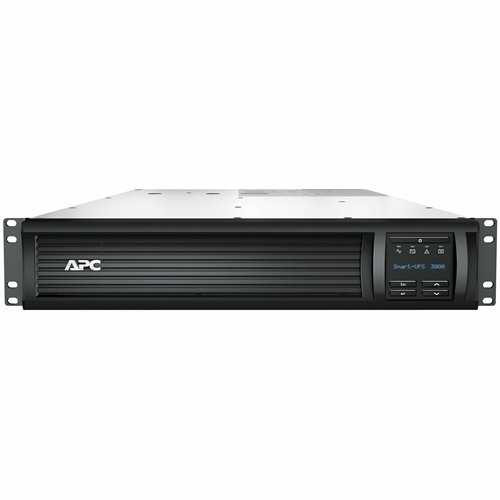
Both the SMT3000RMT2U and the SMTL3000RM2UCNC are 3 kVA / 2700 W Line-Interactive, sine-wave, 2U rackmount UPS units from APC by Schneider Electric — the same device class a buyer would evaluate side by side. The critical divergence is voltage domain and battery chemistry: the SMT3000RMT2U is a 208 V unit with lead-acid batteries, while the SMTL3000RM2UCNC is a 120 V unit with lithium-ion chemistry. This comparison covers power architecture, battery technology and runtime flexibility, and connectivity and management features.
In This Guide
- Which unit fits your voltage infrastructure and outlet requirements?
- How do battery chemistry, lifespan, and runtime extensibility compare?
- Which unit offers more management and monitoring capability, and what are the environmental operating limits?
- Which should you choose: the SMT3000RMT2U or the SMTL3000RM2UCNC?
- Side-by-Side Specs
- FAQ
Which unit fits your voltage infrastructure and outlet requirements?
The SMT3000RMT2U operates on a 208 V input and output domain, drawing power via a NEMA L6-20P plug and delivering to two NEMA L6-20R receptacles. This makes it purpose-built for 208 V branch circuits common in data centers and raised-floor environments with dedicated PDU feeds. Harmonic distortion is specified at less than 5%, and output frequency synchronizes to mains at 50/60 Hz ±3 Hz. Transfer time is 4 ms typical, 8 ms maximum.
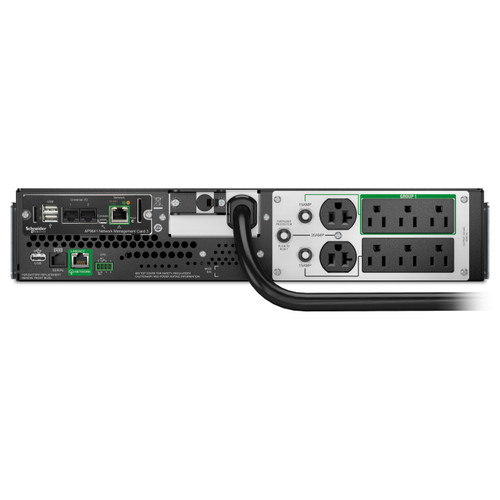
The SMTL3000RM2UCNC operates on a 120 V infrastructure, accepting input between 82 V and 144 V and delivering 120 V output across 8 AC outlets (NEMA 5-15R and NEMA 5-20R). Output voltage regulation is held to ±5%, and surge energy rating is 459 J. Efficiency is rated at 96%. No transfer time is listed in the provided specifications.
A buyer must match the UPS voltage domain to the branch circuit already installed. The SMT3000RMT2U serves 208 V single-phase loads; the SMTL3000RM2UCNC serves standard 120 V North American loads. These are mutually exclusive infrastructure choices — neither unit is a substitute for the other from a wiring standpoint.
How do battery chemistry, lifespan, and runtime extensibility compare?
The SMT3000RMT2U uses a conventional lead-acid battery. Expected battery life is 3–5 years, typical recharge time is 3 hours, and the replacement cartridge is RBC43. Battery charger output is rated at 188 W. The unit carries one RBC slot (Rbc Quantity: 1). No external battery module slots are listed in the provided specifications (Included Battery Modules: 0, Battery Slots Empty: 0), so runtime extensibility via additional modules is not confirmed by the spec sheet provided.
The SMTL3000RM2UCNC uses lithium-ion chemistry. No battery life, recharge time, or replacement cartridge designation is provided in the specifications given. Lithium-ion UPS units generally offer longer calendar life and faster recharge than VRLA lead-acid, but those figures are not confirmable from the data supplied and should be verified directly from APC's published datasheet before relying on them.
For buyers where extended runtime or lower battery-replacement overhead is a priority, the lithium-ion chemistry of the SMTL3000RM2UCNC is the relevant differentiator — but runtime extension capability and exact lifespan figures are absent from the provided spec data and must be confirmed externally.
Which unit offers more management and monitoring capability, and what are the environmental operating limits?
The SMT3000RMT2U includes a multi-function LCD status and control console, one free expansion slot (for a network management card or similar accessory), and alarm outputs (on-battery alarm, low-battery alarm, configurable delays). Heat dissipation is 348 Btu/h, acoustic level is 55 dBA, operating altitude is 0–10,000 ft, ambient storage temperature is 5–113 °F (−15–45 °C), storage altitude is 0–50,000 ft, and relative humidity (operating and storage) is 0–95%. Weight is 97.62 lb (44.28 kg). No USB or serial interface is mentioned in the provided specs.
The SMTL3000RM2UCNC includes both a USB port and a serial interface as confirmed by the provided specifications, enabling direct connection to a host system for graceful shutdown software without an add-in card. Noise level is 55 dB. No operating altitude, humidity, storage temperature, heat dissipation, expansion slot count, or weight data is provided in the specifications supplied.
The SMT3000RMT2U has a richer set of documented environmental ratings, which matters for deployments in edge or non-climate-controlled locations. The SMTL3000RM2UCNC has native USB and serial management interfaces confirmed in spec, reducing the need for an additional network card for basic host-connected shutdown. Neither advantage is universal — the right choice depends on whether environmental documentation or built-in interface coverage is the higher priority.
Which should you choose: the SMT3000RMT2U or the SMTL3000RM2UCNC?
Our take: The SMT3000RMT2U is the stronger choice when the load infrastructure runs on 208 V single-phase circuits and documented environmental tolerances are required. It delivers 3000 VA / 2700 W on a NEMA L6-20P/L6-20R wiring scheme suited to data-center PDU feeds, specifies a 4 ms typical / 8 ms maximum transfer time, carries an operating altitude rating of 0–10,000 ft and humidity tolerance of 0–95%, and uses an established lead-acid battery (RBC43, 3–5 year life, 3 h recharge). The SMTL3000RM2UCNC is the appropriate selection when the branch circuit is 120 V, lithium-ion battery chemistry is preferred for longer calendar life (specific figures not confirmed in provided specs), and built-in USB plus serial management interfaces are needed without an add-in card — it also provides 8 outlet positions versus two on the 208 V model. These two units serve fundamentally different voltage domains and are not interchangeable; voltage infrastructure is the primary decision gate before any other spec comparison applies.
Side-by-Side Comparison
Spec-for-spec, from manufacturer data.
| Specification | APC by Schneider Electric SMT3000RMT2U | APC by Schneider Electric SMTL3000RM2UCNC |
|---|---|---|
| UPS Topology | Line Interactive | Line-Interactive |
| Rated Power (VA) | 3000 VA | 3 kVA |
| Rated Power (Watts) | 2700 W | 2700 W |
| Input Voltage | 208 V | 82–144 V (120 V domain) |
| Output Voltage | 208 V | 120 V |
| Input Connector | NEMA L6-20P | — |
| Output Connectors | (2) NEMA L6-20R | NEMA 5-15R, NEMA 5-20R (8 outlets) |
| Waveform | Sine wave | Sine |
| Transfer Time | 4 ms typical / 8 ms max | — |
| Battery Chemistry | Lead-Acid | Lithium-Ion |
| Battery Life | 3–5 years | — |
| Recharge Time | 3 h | — |
| Replacement Battery | RBC43 | — |
| Efficiency | — | 96% |
| Surge Energy Rating | — | 459 J |
| Noise Level | 55 dBA | 55 dB |
| USB / Serial Interface | — | USB: Yes / Serial: Yes |
| Expansion Slots | 1 free slot | — |
| Operating Altitude | 0–10,000 ft | — |
| Operating Humidity | 0–95% | — |
| Heat Dissipation | 348 Btu/h | — |
| Weight | 97.62 lb (44.28 kg) | — |
| Form Factor | 2U Rackmount | 2U Rackmount |
Frequently Asked Questions
Which should you choose: the SMT3000RMT2U or the SMTL3000RM2UCNC?
The SMT3000RMT2U is the stronger choice when the load infrastructure runs on 208 V single-phase circuits and documented environmental tolerances are required. It delivers 3000 VA / 2700 W on a NEMA L6-20P/L6-20R wiring scheme suited to data-center PDU feeds, specifies a 4 ms typical / 8 ms maximum transfer time, carries an operating altitude rating of 0–10,000 ft and humidity tolerance of 0–95%, and uses an established lead-acid battery (RBC43, 3–5 year life, 3 h recharge). The SMTL3000RM2UCNC is the appropriate selection when the branch circuit is 120 V, lithium-ion battery chemistry is preferred for longer calendar life (specific figures not confirmed in provided specs), and built-in USB plus serial management interfaces are needed without an add-in card — it also provides 8 outlet positions versus two on the 208 V model. These two units serve fundamentally different voltage domains and are not interchangeable; voltage infrastructure is the primary decision gate before any other spec comparison applies.
Can I use the SMT3000RMT2U or the SMTL3000RM2UCNC on a standard 120 V office or server-room circuit?
Only the SMTL3000RM2UCNC is designed for 120 V circuits; its input operating range is 82–144 V and its outlets are NEMA 5-15R and NEMA 5-20R. The SMT3000RMT2U requires a 208 V circuit and uses a NEMA L6-20P input plug — it cannot be connected to a standard 120 V receptacle.
Does the SMTL3000RM2UCNC's lithium-ion battery last longer than the lead-acid battery in the SMT3000RMT2U?
The SMT3000RMT2U specifies a lead-acid battery life of 3–5 years with a 3-hour recharge time. The provided specifications for the SMTL3000RM2UCNC do not include battery life or recharge time figures, so a direct numeric comparison cannot be made from the data supplied. APC's published datasheet for the SMTL3000RM2UCNC should be consulted for those figures.
Which UPS connects directly to a server for graceful shutdown without buying an extra network management card?
The SMTL3000RM2UCNC includes both a USB port and a serial interface per the provided specifications, enabling direct host connection for shutdown software out of the box. The SMT3000RMT2U's provided specifications list one free expansion slot and an LCD console but do not confirm a built-in USB or serial interface; a network management card or accessory would be needed for host-connected monitoring on that unit.
More UPS Comparisons
- APC by Schneider Electric SMT3000RMT2U vs Panduit U03S12L
- APC by Schneider Electric SMT3000RMT2U vs Vertiv GXT5-3KL620RT2UXL
- APC by Schneider Electric SMT3000RMT2U vs Vertiv GXT5-3KL630RT2UXL
- APC by Schneider Electric SMT3000RMT2U vs Panduit U03N11V
- APC by Schneider Electric SMT3000RMT2U vs APC by Schneider Electric SMX3000HV
- Panduit U03S12L vs APC by Schneider Electric SMX3000HV
UPS Buying Guides
Get a Second Opinion on Your Camera Choice
Share your site layout, coverage goals, and budget. Our team will validate the camera selection, flag anything we would change, and recommend products that match the use case.