
Panduit U03S12L vs APC by Schneider Electric SMX3000HV: Specification Comparison
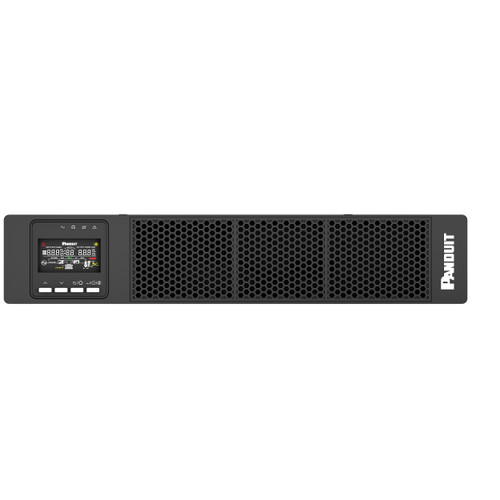
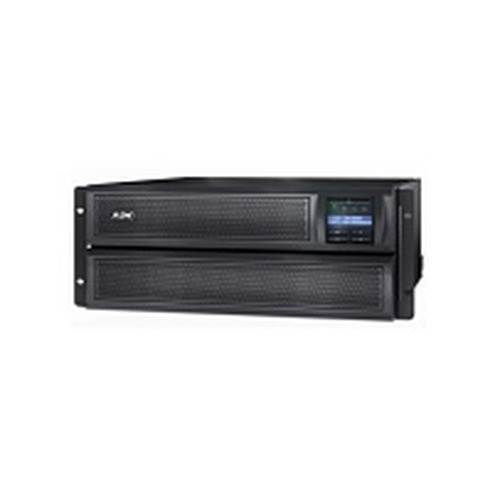
Both products are 3 kVA rack-mount uninterruptible power supplies targeting data center, enterprise, and edge infrastructure deployments. The Panduit U03S12L (SteadySine™) is an online double-conversion UPS in a 2U rack form factor with lithium-ion batteries, while the APC SMX3000HV is a line-interactive sine-wave UPS in a 4U rack/tower form factor with lead-acid batteries (type not explicitly stated but implied by standard SMX series design). Buyers cross-shopping these units are choosing between two fundamentally different protection topologies at identical power ratings.
In This Guide
- How does each UPS's topology affect the quality of power protection delivered to connected equipment?
- Which UPS offers a more serviceable and longer-lived battery solution for a multi-year deployment?
- Which UPS integrates more completely with enterprise data center monitoring and DCIM platforms?
- Which should you choose: the U03S12L or the SMX3000HV?
- Side-by-Side Specs
- FAQ
How does each UPS's topology affect the quality of power protection delivered to connected equipment?
The Panduit U03S12L uses online double-conversion topology, meaning the connected load is always powered from the inverter — utility power never reaches the load directly. This produces a zero-millisecond transfer time to battery during any input disturbance, and the output is regenerated AC independent of input quality. The spec confirms 'Transfer Time: Zero (Double Conversion).'
The APC SMX3000HV uses line-interactive topology with automatic voltage regulation (AVR). Under normal conditions the load is powered directly from utility via the AVR; the inverter only engages on power failure. The SMX3000HV spec states a hold time of 2 ms (min) to 10 ms (max), meaning there is a brief transfer gap before battery power reaches the load. The waveform is a true sine wave and the crest factor is rated at 3:1.
For equipment with active power factor correction (PFC) power supplies — common in modern servers and network gear — the zero-transfer online topology of the U03S12L provides a measurable advantage. The SMX3000HV's 2–10 ms transfer window is within the tolerance of most ATX server PSUs but is a design compromise relative to double conversion.
Which UPS offers a more serviceable and longer-lived battery solution for a multi-year deployment?
The Panduit U03S12L specifies lithium-ion batteries with a stated battery life of 10+ years. The unit supports hot-swap battery replacement, allowing battery service without a maintenance window or load transfer to bypass. No runtime figures (minutes at full or half load) are provided in the supplied spec data.
The APC SMX3000HV spec does not state battery chemistry, battery design life, or whether hot-swap is supported. Runtime figures are also absent from the provided specification set. Buyers requiring those details should consult the APC datasheet directly before purchasing.
The 10+ year lithium-ion claim on the U03S12L, if borne out in service, represents a meaningful total-cost-of-ownership advantage: lead-acid UPS batteries typically require replacement every 3–5 years at significant labor and material cost. Hot-swap capability on the U03S12L further reduces operational risk during battery service.
Which UPS integrates more completely with enterprise data center monitoring and DCIM platforms?
The Panduit U03S12L lists SNMP, Modbus TCP, and a web GUI as native management interfaces, and is explicitly noted as SmartZone™ compatible — Panduit's data center infrastructure management (DCIM) platform. These three protocol layers cover standard NMS polling, building-automation/BMS integration via Modbus, and browser-based local management without an add-in card.
The APC SMX3000HV spec as provided does not list any management interfaces, network card support, or compatible software platform. APC's SMX line historically supports optional NMC (Network Management Card) accessories, but no such spec is present in the data provided here. Buyers should verify card compatibility and licensing requirements with APC before assuming network management capability.
The U03S12L's out-of-box SNMP and Modbus TCP support is a concrete differentiator for IT and facilities teams running mixed monitoring stacks. The SMX3000HV's management posture cannot be assessed from the supplied data.
Which should you choose: the U03S12L or the SMX3000HV?
Our take: The U03S12L is the stronger choice when zero-transfer-time power protection, long battery life, and out-of-box network management are non-negotiable requirements. The double-conversion topology eliminates the 2–10 ms transfer gap present on the SMX3000HV, directly benefiting PFC-based server PSUs and latency-sensitive equipment. The U03S12L's lithium-ion battery with a 10+ year stated life and hot-swap support compares favorably against the SMX3000HV's unspecified battery chemistry and unstated service model. Native SNMP and Modbus TCP on the U03S12L require no add-in card; the SMX3000HV's management capability is not determinable from available specs. The SMX3000HV does provide one concrete data point the U03S12L spec omits: an explicit 98.5% efficiency rating and a 645 J surge energy rating. Buyers whose primary environment is 230V AC enterprise rack infrastructure with DCIM integration requirements will find the U03S12L better specified; the SMX3000HV suits budget-conscious deployments tolerant of line-interactive transfer gaps.
Side-by-Side Comparison
Spec-for-spec, from manufacturer data.
| Specification | Panduit U03S12L | APC by Schneider Electric SMX3000HV |
|---|---|---|
| UPS Topology | Online Double Conversion | Line-Interactive |
| Power Capacity | 3 kVA / 2.7 kW | 3 kVA / 2700 W |
| Transfer Time to Battery | Zero (0 ms) | 2 ms (min) – 10 ms (max) |
| Output Waveform | — (not stated in spec) | Sine Wave |
| Efficiency Rating | — (not stated in spec) | 98.5% |
| Surge Energy Rating | — | 645 J |
| Input Voltage Range | 230V AC Single-Phase | 140 V – 280 V |
| Output Voltage Range | 230V AC | 208 V – 240 V |
| Input Frequency | — (not stated in spec) | 50/60 Hz |
| Battery Type | Lithium-Ion | — |
| Stated Battery Life | 10+ Years | — |
| Hot-Swap Battery | Yes | — |
| Form Factor | 2U Rack-Mount | 4U Rack / Tower |
| Management Interfaces | SNMP, Modbus TCP, Web GUI | — |
| Platform Integration | SmartZone™ Compatible | — |
| Automatic Voltage Regulation | — (not stated; online topology inherent) | Yes |
| Noise Level | — | 55 dB |
| Emergency Power Off (EPO) | — | Yes |
Frequently Asked Questions
Which should you choose: the U03S12L or the SMX3000HV?
The U03S12L is the stronger choice when zero-transfer-time power protection, long battery life, and out-of-box network management are non-negotiable requirements. The double-conversion topology eliminates the 2–10 ms transfer gap present on the SMX3000HV, directly benefiting PFC-based server PSUs and latency-sensitive equipment. The U03S12L's lithium-ion battery with a 10+ year stated life and hot-swap support compares favorably against the SMX3000HV's unspecified battery chemistry and unstated service model. Native SNMP and Modbus TCP on the U03S12L require no add-in card; the SMX3000HV's management capability is not determinable from available specs. The SMX3000HV does provide one concrete data point the U03S12L spec omits: an explicit 98.5% efficiency rating and a 645 J surge energy rating. Buyers whose primary environment is 230V AC enterprise rack infrastructure with DCIM integration requirements will find the U03S12L better specified; the SMX3000HV suits budget-conscious deployments tolerant of line-interactive transfer gaps.
Is the U03S12L or SMX3000HV better for servers with modern active PFC power supplies?
The U03S12L is better suited. Its online double-conversion topology produces a zero-millisecond transfer time and a fully regenerated output waveform, which is ideal for active PFC supplies. The SMX3000HV's line-interactive design has a 2–10 ms transfer window; while most server PSUs tolerate this, it is an inherent limitation of the topology compared to double conversion.
How often will I need to replace batteries, and can I do it without taking the load offline?
For the U03S12L, Panduit states a battery life of 10+ years and confirms hot-swap capability, meaning replacement can be done without powering down connected equipment. The SMX3000HV spec as provided does not state battery life or whether hot-swap is supported — those details should be confirmed with APC before purchase.
Does the SMX3000HV include network management, or do I need to buy an add-in card?
The SMX3000HV spec provided here does not list any native management interface, SNMP support, or included network card. APC's SMX platform historically uses optional NMC accessories, but this cannot be confirmed from the available data. The U03S12L, by contrast, includes SNMP, Modbus TCP, and a web GUI as stated native interfaces requiring no additional hardware.
More UPS Comparisons
- APC by Schneider Electric SMT3000RMT2U vs Panduit U03S12L
- APC by Schneider Electric SMT3000RMT2U vs Vertiv GXT5-3KL620RT2UXL
- APC by Schneider Electric SMT3000RMT2U vs Vertiv GXT5-3KL630RT2UXL
- APC by Schneider Electric SMT3000RMT2U vs Panduit U03N11V
- APC by Schneider Electric SMT3000RMT2U vs APC by Schneider Electric SMTL3000RM2UCNC
- APC by Schneider Electric SMT3000RMT2U vs APC by Schneider Electric SMX3000HV
UPS Buying Guides
Get a Second Opinion on Your Camera Choice
Share your site layout, coverage goals, and budget. Our team will validate the camera selection, flag anything we would change, and recommend products that match the use case.