
APC by Schneider Electric SMT3000RMT2U vs Panduit U03N11V: Specification Comparison
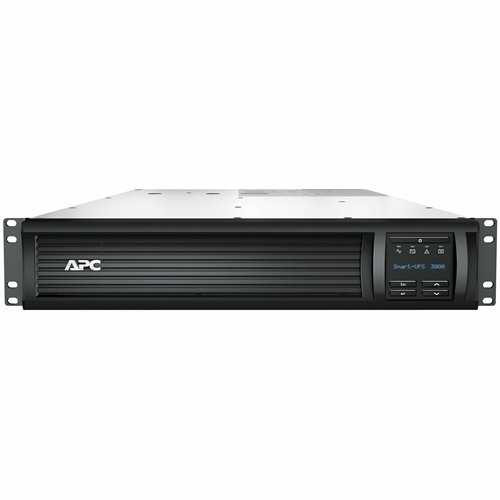
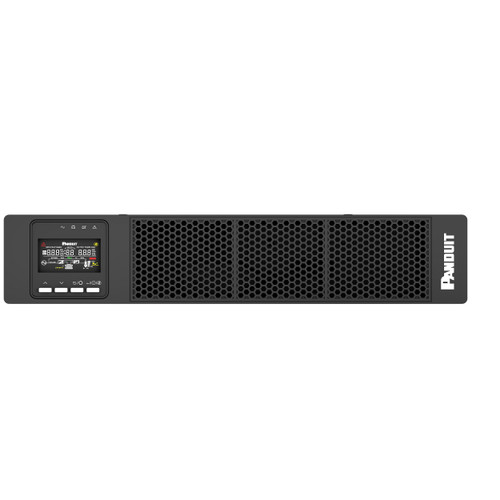
Both the APC SMT3000RMT2U and the Panduit U03N11V are 3 kVA rackmount uninterruptible power supplies targeting data center and IT infrastructure deployments. The APC unit is a 208V Line Interactive design in a 2U chassis, while the Panduit SteadySine is an Online Double Conversion unit rated at 120V in a comparable 2U form factor. Despite sharing the same VA rating, their topologies, input/output voltages, and feature transparency differ substantially — dimensions that matter greatly to installers specifying power protection for sensitive loads.
In This Guide
- Which UPS topology and output power quality best protects sensitive loads?
- Are the input/output voltage and plug configurations compatible with my existing infrastructure?
- What are the battery runtime, recharge, and serviceability characteristics of each unit?
- Which should you choose: the SMT3000RMT2U or the U03N11V?
- Side-by-Side Specs
- FAQ
Which UPS topology and output power quality best protects sensitive loads?
The APC SMT3000RMT2U uses a Line Interactive topology with a sine wave output. Transfer time is specified at 4 ms typical and 8 ms maximum when switching to battery, with total harmonic distortion (THD) less than 5%. Rated output is 3000 VA / 2700 W at 208V, yielding a power factor of 0.90.
The Panduit U03N11V is specified as an Online Double Conversion unit, which by design provides zero-transfer-time isolation — the inverter continuously powers the load regardless of input condition. No transfer time, THD, output waveform type, or power factor figure is provided in the available spec data for the Panduit.
For loads requiring the highest power quality and zero transfer time — medical imaging, high-density virtualization hosts, or any device intolerant of even a 4–8 ms gap — Online Double Conversion is the superior topology. The APC's 4 ms typical / 8 ms maximum transfer time is within the tolerance of most server-grade power supplies (typically 10–20 ms), making its Line Interactive topology adequate for mainstream IT use. Buyers should note that Panduit provides no waveform or THD spec in the available data.
Are the input/output voltage and plug configurations compatible with my existing infrastructure?
The APC SMT3000RMT2U is a 208V unit throughout: NEMA L6-20P input plug on an 8 ft (2.44 m) cord, and two (2) NEMA L6-20R output receptacles. This targets 208V single-phase branch circuits common in North American data centers and server rooms fed by 208/120V three-phase distribution.
The Panduit U03N11V is specified as a 120V unit. No input plug type, output receptacle type, cord length, or output receptacle count appears in the available spec data. Buyers planning infrastructure around 120V single-phase power — typical in edge or branch-office closets — would find the Panduit's nominal voltage appropriate, while the APC would require a 208V circuit.
Voltage compatibility is a hard constraint: these two units cannot be substituted for each other without changes to branch circuit wiring and receptacle infrastructure. Confirm the building's power distribution voltage before selecting either model. Panduit's absence of connector-type specs in available data means installers must consult the product datasheet (/content/product-datasheets/U03N11V.pdf) before finalizing a bill of materials.
What are the battery runtime, recharge, and serviceability characteristics of each unit?
The APC SMT3000RMT2U uses a sealed Lead-Acid battery pack (RBC43 replacement cartridge). Typical recharge time to full is 3 hours. Battery life is specified at 3–5 years. The unit draws up to 188 W to charge the battery. Runtime at load is not listed in the provided specs; buyers must consult APC's runtime curves for the actual minutes of backup at a given wattage. External battery pack expansion is not supported per the spec (Extendable Run Time: 0, Included Battery Modules: 0, Battery Slots Empty: 0).
No battery chemistry, replacement part number, recharge time, expected battery life, runtime curve reference, or external expansion capability is provided in the available Panduit U03N11V spec data.
For planning maintenance cycles, the APC's RBC43 cartridge designation and 3–5 year life expectation are concrete inputs for service scheduling. The Panduit's complete absence of battery serviceability data in the provided specs is a meaningful gap for facilities teams and integrators who need to plan preventive maintenance intervals and spare-parts inventory.
Which should you choose: the SMT3000RMT2U or the U03N11V?
Our take: The SMT3000RMT2U is the stronger choice when the installation has 208V single-phase circuits, requires a fully documented battery service path, and can tolerate the Line Interactive topology's 4–8 ms transfer window. Three concrete spec deltas drive this assessment: first, the APC operates at 208V with explicit NEMA L6-20 connectors, while the Panduit is a 120V unit with no connector specs disclosed — a hard voltage mismatch that determines compatibility before any other factor. Second, APC documents battery serviceability fully (RBC43, 3 h recharge, 3–5 year life), whereas Panduit provides none of these figures. Third, APC specifies THD < 5% and a true sine wave output; Panduit provides no waveform or THD data. The Panduit's Online Double Conversion topology is architecturally superior for zero-transfer-time isolation, making it the correct specification for loads that cannot tolerate any gap — if and when its full connector, runtime, and battery specs can be confirmed from its datasheet.
Side-by-Side Comparison
Spec-for-spec, from manufacturer data.
| Specification | APC by Schneider Electric SMT3000RMT2U | Panduit U03N11V |
|---|---|---|
| VA Rating | 3000 VA | 3000 VA |
| Watt Rating | 2700 W | — |
| UPS Topology | Line Interactive | Online Double Conversion |
| Input Voltage | 208V | 120V |
| Output Voltage | 208V | 120V |
| Input Plug | NEMA L6-20P | — |
| Output Receptacles | (2) NEMA L6-20R | — |
| Transfer Time | 4 ms typical / 8 ms maximum | 0 ms (double conversion) |
| Output Waveform | Sine wave | — |
| THD | < 5% | — |
| Form Factor | 2U Rackmount | 2U Rackmount |
| Height | 3.39 in (8.6 cm) | 3.4 in (86.5 mm) |
| Width | — | 17.3 in (440 mm) |
| Weight | 97.62 lb (44.28 kg) | — |
| Battery Type | Sealed Lead-Acid | — |
| Replacement Battery | RBC43 | — |
| Battery Life | 3–5 years | — |
| Recharge Time | 3 hours | — |
| Acoustic Level | 55 dBA | — |
| Operating Altitude | 0–10,000 ft | — |
Frequently Asked Questions
Which should you choose: the SMT3000RMT2U or the U03N11V?
The SMT3000RMT2U is the stronger choice when the installation has 208V single-phase circuits, requires a fully documented battery service path, and can tolerate the Line Interactive topology's 4–8 ms transfer window. Three concrete spec deltas drive this assessment: first, the APC operates at 208V with explicit NEMA L6-20 connectors, while the Panduit is a 120V unit with no connector specs disclosed — a hard voltage mismatch that determines compatibility before any other factor. Second, APC documents battery serviceability fully (RBC43, 3 h recharge, 3–5 year life), whereas Panduit provides none of these figures. Third, APC specifies THD < 5% and a true sine wave output; Panduit provides no waveform or THD data. The Panduit's Online Double Conversion topology is architecturally superior for zero-transfer-time isolation, making it the correct specification for loads that cannot tolerate any gap — if and when its full connector, runtime, and battery specs can be confirmed from its datasheet.
Can I use either of these UPS units on a standard 120V office outlet?
No — not both. The APC SMT3000RMT2U is a 208V unit with a NEMA L6-20P input plug and requires a 208V single-phase branch circuit. The Panduit U03N11V is specified as a 120V unit. Neither should be connected to a circuit of the wrong voltage. Verify your facility's branch circuit voltage before ordering.
Which unit provides better protection for sensitive servers during a power event?
On topology alone, the Panduit U03N11V's Online Double Conversion design continuously powers connected loads from its inverter, producing zero transfer time during an outage — versus the APC's 4 ms typical / 8 ms maximum transfer. However, the Panduit provides no waveform, THD, or output power quality specs in the available data, so that advantage cannot be fully quantified without consulting its datasheet. The APC specifies < 5% THD and a sine wave output explicitly.
How do I plan battery replacement for these units?
For the APC SMT3000RMT2U, the replacement battery cartridge is designated RBC43, with an expected life of 3–5 years and a 3-hour recharge time — clear inputs for a preventive maintenance schedule. For the Panduit U03N11V, no battery chemistry, replacement part number, expected life, or recharge time appears in the available spec data; consult Panduit's datasheet at /content/product-datasheets/U03N11V.pdf for this information before committing to a service plan.
More UPS Comparisons
- APC by Schneider Electric SMT3000RMT2U vs Panduit U03S12L
- APC by Schneider Electric SMT3000RMT2U vs Vertiv GXT5-3KL620RT2UXL
- APC by Schneider Electric SMT3000RMT2U vs Vertiv GXT5-3KL630RT2UXL
- APC by Schneider Electric SMT3000RMT2U vs APC by Schneider Electric SMTL3000RM2UCNC
- APC by Schneider Electric SMT3000RMT2U vs APC by Schneider Electric SMX3000HV
- Panduit U03S12L vs APC by Schneider Electric SMX3000HV
UPS Buying Guides
Get a Second Opinion on Your Camera Choice
Share your site layout, coverage goals, and budget. Our team will validate the camera selection, flag anything we would change, and recommend products that match the use case.