
APC by Schneider Electric SMT3000RMT2U vs Panduit U03S12L: Specification Comparison
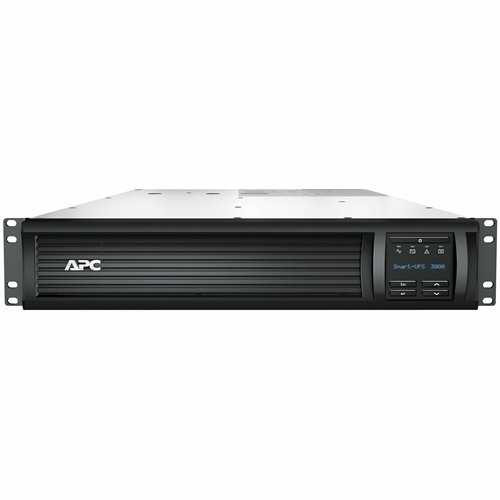
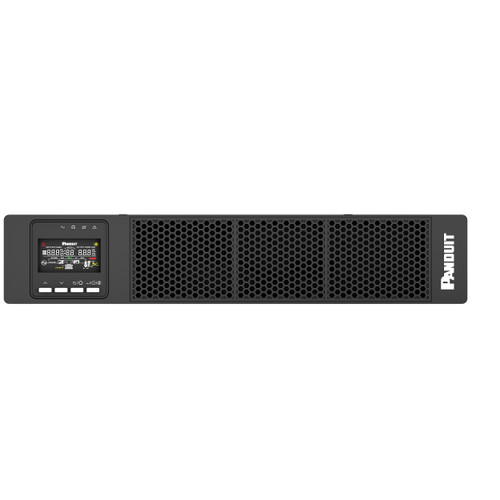
Both units are 3 kVA / 2.7 kW rackmount UPS devices occupying 2U of rack space — the same power class and the same form factor a data-center or server-room buyer would evaluate side by side. The APC SMT3000RMT2U is a 208 V Line Interactive unit with lead-acid batteries targeting North American installations, while the Panduit U03S12L is a 230 V Online Double-Conversion unit with lithium-ion batteries marketed for data centers, edge, and enterprise MTDC environments. Voltage rails differ but both serve the 3 kVA rackmount segment.
In This Guide
Which topology and transfer behavior better protects sensitive loads?
The SMT3000RMT2U uses Line Interactive topology with a transfer time of 4 ms typical / 8 ms maximum when switching from mains to battery. Line Interactive corrects minor voltage sags and swells via an automatic voltage regulator but does not isolate the load from the mains waveform continuously. Total harmonic distortion on the output is specified at less than 5%, and the waveform is pure sine wave.
The U03S12L uses Online Double Conversion topology, which regenerates a clean AC output at all times from its DC bus, resulting in a specified zero-millisecond transfer time — the load never sees a break in conditioned power. Double conversion also provides complete galvanic isolation from mains disturbances. Efficiency figures and THD numbers are not provided in the available specifications beyond the label 'High-Efficiency Design.'
For loads that are intolerant of any transfer gap or mains-borne noise — medical imaging, high-frequency trading servers, precision industrial equipment — double conversion's zero transfer time and continuous output conditioning are decisive advantages. For standard server and network gear that tolerates a sub-10 ms gap, line interactive is a proven, lower-cost alternative.
How do battery chemistry, expected service life, and runtime extensibility compare?
The SMT3000RMT2U uses a sealed lead-acid (VRLA) battery with a specified life of 3–5 years under normal conditions. Recharge time from full discharge is 3 hours. The replacement battery cartridge is RBC43, and the unit carries a battery charge power rating of 188 W. The spec lists zero included external battery modules and zero empty battery slots, indicating runtime extension requires APC's separate external battery pack accessories rather than internal slots.
The U03S12L uses lithium-ion chemistry with a specified battery life exceeding 10 years — roughly two to three times the lead-acid service interval. The unit also supports hot-swap battery replacement, meaning batteries can be exchanged without shutting down the connected load. Runtime figures, recharge time, and external battery extension options are not stated in the available specifications.
Lithium-ion's longer calendar life reduces total cost of ownership over a five-to-ten-year deployment, lowers disposal frequency, and typically provides better performance across a wider temperature range. Hot-swap capability further reduces planned downtime. Lead-acid is a mature, widely understood chemistry with predictable failure modes and broadly available replacement parts, but the 3–5 year replacement cycle adds operational overhead.
Which unit offers stronger remote monitoring and integration options?
The SMT3000RMT2U provides a multi-function LCD status and control console on the front panel and one free expansion slot (likely for APC's network management card, though no card is included per spec). Alarm outputs include on-battery notification, a distinctive low-battery alarm, and configurable delay alarms. Specific network protocols supported natively are not listed in the provided specifications.
The U03S12L specifies SNMP, Modbus TCP, and a Web GUI as native interfaces, plus compatibility with Panduit's SmartZone™ monitoring platform and Ethernet connectivity. This means out-of-the-box remote visibility without purchasing an add-on card. For environments already running SmartZone infrastructure or requiring Modbus TCP integration with building management systems, this is a meaningful built-in advantage.
Buyers deploying into managed data centers or MTDC environments where SNMP traps and BMS integration are mandatory will find the U03S12L's native protocol stack ready immediately. The SMT3000RMT2U's expansion slot approach is flexible but requires an additional accessory purchase and configuration step to reach comparable remote management capability.
Which should you choose: the SMT3000RMT2U or the U03S12L?
Our take: The U03S12L is the stronger choice when battery longevity, zero-transfer-time output conditioning, and native remote management are non-negotiable requirements. Its lithium-ion chemistry delivers a specified 10+ year battery life versus the SMT3000RMT2U's 3–5 year lead-acid cycle, its Online Double Conversion topology eliminates the 4–8 ms transfer gap present in the APC unit, and its SNMP/Modbus TCP/Web GUI stack is available without an add-on card. The SMT3000RMT2U is the appropriate selection for 208 V North American single-phase environments — the U03S12L is rated at 230 V AC, which makes it incompatible with standard NEMA L6-20 circuits without a transformer. Platform fit is therefore the first filter: 208 V North American rack → SMT3000RMT2U; 230 V data center or MTDC → U03S12L.
Side-by-Side Comparison
Spec-for-spec, from manufacturer data.
| Specification | APC by Schneider Electric SMT3000RMT2U | Panduit U03S12L |
|---|---|---|
| Power Capacity | 3000 VA / 2700 W | 3 kVA / 2.7 kW |
| UPS Topology | Line Interactive | Online Double Conversion |
| Transfer Time | 4 ms typical / 8 ms max | Zero (Double Conversion) |
| Input Voltage | 208 V | 230 V AC Single-Phase |
| Output Voltage | 208 V | 230 V AC |
| Input Connection | NEMA L6-20P | — |
| Output Connections | (2) NEMA L6-20R | — |
| Battery Chemistry | Lead-Acid (VRLA) | Lithium-Ion |
| Battery Life | 3–5 years | 10+ years |
| Hot-Swap Battery | — | Yes |
| Typical Recharge Time | 3 hours | — |
| Replacement Battery | RBC43 | — |
| Waveform | Pure Sine Wave | — |
| Output Frequency | 50/60 Hz ±3 Hz (sync to mains) | — |
| Management Interfaces | LCD panel; 1 expansion slot (card not included) | SNMP, Modbus TCP, Web GUI, SmartZone™ |
| Form Factor | 2U Rack-Mount | 2U Rack-Mount |
| Height | 3.39 in (8.6 cm) | 3.4 in (86.5 mm) |
| Weight | 97.62 lb (44.28 kg) | — |
| Operating Temperature | — | -5°C to +45°C |
| Acoustic Level | 55 dBA | — |
| Heat Dissipation | 348 Btu/h | — |
| THD (Output) | < 5% | — |
Frequently Asked Questions
Which should you choose: the SMT3000RMT2U or the U03S12L?
The U03S12L is the stronger choice when battery longevity, zero-transfer-time output conditioning, and native remote management are non-negotiable requirements. Its lithium-ion chemistry delivers a specified 10+ year battery life versus the SMT3000RMT2U's 3–5 year lead-acid cycle, its Online Double Conversion topology eliminates the 4–8 ms transfer gap present in the APC unit, and its SNMP/Modbus TCP/Web GUI stack is available without an add-on card. The SMT3000RMT2U is the appropriate selection for 208 V North American single-phase environments — the U03S12L is rated at 230 V AC, which makes it incompatible with standard NEMA L6-20 circuits without a transformer. Platform fit is therefore the first filter: 208 V North American rack → SMT3000RMT2U; 230 V data center or MTDC → U03S12L.
Can I use the Panduit U03S12L in a standard North American 208 V rack environment?
Based on the provided specifications, the U03S12L is rated for 230 V AC single-phase input and output. The APC SMT3000RMT2U is rated for 208 V with a NEMA L6-20P input plug. If your rack PDUs or branch circuits are wired for 208 V NEMA L6-20, the SMT3000RMT2U is the directly compatible unit; deploying the U03S12L would require verifying local voltage compatibility and likely an intermediate transformer — consult your facilities team before proceeding.
How much longer will I go between battery replacements with the Panduit U03S12L compared to the APC SMT3000RMT2U?
The SMT3000RMT2U specifies a battery life of 3–5 years for its lead-acid pack (replacement cartridge RBC43). The U03S12L specifies lithium-ion battery life exceeding 10 years. Over a 10-year deployment you would expect roughly two to three lead-acid replacement cycles on the APC unit versus potentially zero planned replacements on the Panduit, though actual life depends on ambient temperature, discharge frequency, and depth of discharge in both cases.
Does the APC SMT3000RMT2U include built-in network monitoring, or do I need to buy an add-on card?
The provided specifications for the SMT3000RMT2U describe a front-panel LCD console, alarm outputs, and one free expansion slot, but do not list any native SNMP, Modbus, or web interface. Network management capability for this unit typically requires purchasing a separate APC network management card to populate that expansion slot. The Panduit U03S12L, by contrast, lists SNMP, Modbus TCP, and a Web GUI as included interfaces per its specifications, without referencing an add-on card requirement.
More UPS Comparisons
- APC by Schneider Electric SMT3000RMT2U vs Vertiv GXT5-3KL620RT2UXL
- APC by Schneider Electric SMT3000RMT2U vs Vertiv GXT5-3KL630RT2UXL
- APC by Schneider Electric SMT3000RMT2U vs Panduit U03N11V
- APC by Schneider Electric SMT3000RMT2U vs APC by Schneider Electric SMTL3000RM2UCNC
- APC by Schneider Electric SMT3000RMT2U vs APC by Schneider Electric SMX3000HV
- Panduit U03S12L vs APC by Schneider Electric SMX3000HV
UPS Buying Guides
Get a Second Opinion on Your Camera Choice
Share your site layout, coverage goals, and budget. Our team will validate the camera selection, flag anything we would change, and recommend products that match the use case.