
APC by Schneider Electric SMT3000RMT2U vs APC by Schneider Electric SMX3000HV: Specification Comparison
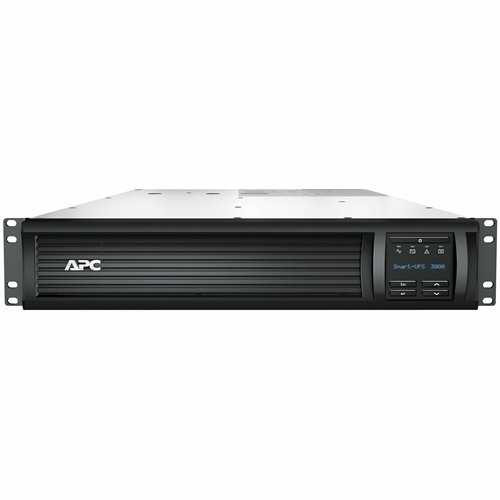
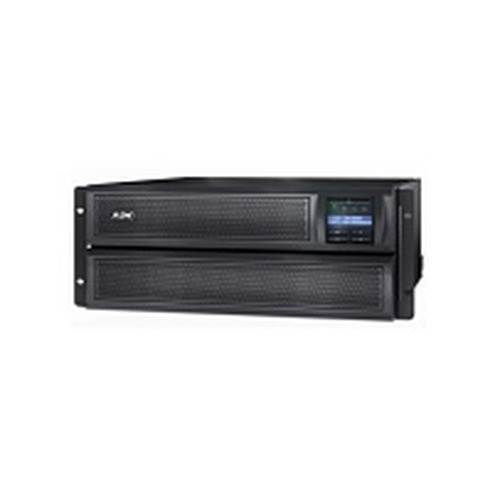
Both the SMT3000RMT2U and SMX3000HV are APC by Schneider Electric Line-Interactive UPS units rated at 3 kVA / 2700 W, designed for protecting servers, networking gear, and AV equipment in professional IT environments. The SMT3000RMT2U is a 2U rackmount-only unit with a 208V input/output profile and NEMA L6 connections, while the SMX3000HV is a 4U rack/tower convertible model with a wide 140–280V input range and selectable 208–240V output. Both deliver pure sine wave output and are cross-shoppable by any buyer sizing a 3 kVA UPS.
In This Guide
- How do the input voltage range, output flexibility, and power quality specs compare?
- What do the battery specs, recharge time, and runtime extension capabilities indicate?
- How do physical form factor, mounting options, acoustic output, and management features compare?
- Which should you choose: the SMT3000RMT2U or the SMX3000HV?
- Side-by-Side Specs
- FAQ
How do the input voltage range, output flexibility, and power quality specs compare?
The SMT3000RMT2U is hard-wired to 208V on both input and output, connected via a NEMA L6-20P plug with two NEMA L6-20R receptacles. Its transfer time is specified at 4 ms typical / 8 ms maximum. Harmonic distortion is rated at less than 5%. No surge energy rating or efficiency figure is provided in the supplied specs.
The SMX3000HV accepts a wide input voltage range of 140–280V and provides an output voltage range of 208–240V, making it adaptable to variable utility conditions without switching to battery. It incorporates Automatic Voltage Regulation (AVR), a surge energy rating of 655 J, and a published efficiency of 98.5%. Its hold time is specified at 2 ms minimum / 10 ms maximum. Crest factor is rated at 3:1. No output receptacle configuration or plug type is listed in the provided specs.
For installations with clean, stable 208V utility power and a fixed NEMA L6 panel feed, the SMT3000RMT2U's electrical profile is a direct fit. The SMX3000HV's broader voltage window and AVR make it the stronger choice where input voltage varies or future migration to 240V is anticipated.
What do the battery specs, recharge time, and runtime extension capabilities indicate?
The SMT3000RMT2U uses a Lead-Acid battery with a rated life of 3–5 years and a typical recharge time of 3 hours. The replacement battery is RBC43. Battery charge power is rated at 188W. The specs indicate Extendable Run Time = 0 and Included Battery Modules = 0, meaning no external battery pack support is documented in the provided spec set.
The SMX3000HV's battery chemistry, capacity, recharge time, replacement battery part number, and runtime extension capability are not specified in the provided data. No battery life rating or RBC number is listed.
Buyers who require documented battery longevity and a known replacement cycle will find the SMT3000RMT2U's specs more transparent. Runtime extension capability cannot be evaluated for the SMX3000HV based on available data, and prospective buyers should consult APC's datasheet or runtime charts directly before making a decision on that basis.
How do physical form factor, mounting options, acoustic output, and management features compare?
The SMT3000RMT2U occupies 2U of rack space, weighs 97.62 lb (44.28 kg), and is rack-mounted only (front-mounting, no two-post mounting). It includes a multi-function LCD status and control console, one free management slot, and configurable audible alarms (on-battery, low-battery, configurable delays). Acoustic output is 55 dBA. Heat dissipation is 348 Btu/h. Operating altitude is rated to 10,000 ft; storage altitude to 50,000 ft. Operating relative humidity is 0–95%.
The SMX3000HV occupies 4U in rack orientation and is also convertible to tower form factor, providing deployment flexibility the SMT3000RMT2U does not offer. Its noise level is listed at 55 dB. It includes an Emergency Power Off (EPO) function. Weight, heat dissipation, management interface details, alarm configuration, altitude ratings, and humidity tolerances are not provided in the supplied specs.
The SMT3000RMT2U is the denser option at 2U vs. 4U, a meaningful difference in high-density rack environments. The SMX3000HV's EPO support is a distinct safety and data-center compliance advantage not present in the SMT3000RMT2U's listed specs. Management interface parity cannot be confirmed from available data for the SMX3000HV.
Which should you choose: the SMT3000RMT2U or the SMX3000HV?
Our take: The SMT3000RMT2U is the stronger choice when rack density, a documented battery lifecycle, and a fixed 208V NEMA L6 infrastructure are the primary requirements. It occupies only 2U versus the SMX3000HV's 4U, specifies a 3–5 year battery life with a named replacement (RBC43), and provides a fully documented transfer time of 4 ms typical / 8 ms maximum alongside a multi-function LCD and configurable alarms. The SMX3000HV counters with a wide 140–280V input range and AVR that the SMT3000RMT2U cannot match, a published efficiency of 98.5% (no efficiency figure is provided for the SMT3000RMT2U), a 645 J surge energy rating, a 3:1 crest factor, and an EPO function critical in data-center environments. Choose the SMT3000RMT2U for dense 208V North American rack deployments with stable utility power; choose the SMX3000HV for mixed-voltage environments, tower/rack convertible needs, or facilities requiring EPO compliance.
Side-by-Side Comparison
Spec-for-spec, from manufacturer data.
| Specification | APC by Schneider Electric SMT3000RMT2U | APC by Schneider Electric SMX3000HV |
|---|---|---|
| UPS Topology | Line Interactive | Line Interactive |
| Rated Power (VA) | 3000 VA | 3000 VA |
| Rated Power (Watts) | 2700 W | 2700 W |
| Input Voltage | 208 V (fixed) | 140–280 V (range) |
| Output Voltage | 208 V | 208–240 V |
| Input Connection | NEMA L6-20P | — |
| Output Receptacles | (2) NEMA L6-20R | — |
| Waveform | Sine wave | Sine wave |
| Transfer Time | 4 ms typical / 8 ms max | 2 ms min / 10 ms max |
| Automatic Voltage Regulation | — | Yes |
| Surge Energy Rating | — | 645 J |
| Efficiency | — | 98.5% |
| Emergency Power Off (EPO) | — | Yes |
| Form Factor | 2U Rackmount | 4U Rack/Tower |
| Noise Level | 55 dBA | 55 dB |
| Battery Recharge Time | 3 h | — |
| Battery Life | 3–5 years | — |
| Replacement Battery | RBC43 | — |
Frequently Asked Questions
Which should you choose: the SMT3000RMT2U or the SMX3000HV?
The SMT3000RMT2U is the stronger choice when rack density, a documented battery lifecycle, and a fixed 208V NEMA L6 infrastructure are the primary requirements. It occupies only 2U versus the SMX3000HV's 4U, specifies a 3–5 year battery life with a named replacement (RBC43), and provides a fully documented transfer time of 4 ms typical / 8 ms maximum alongside a multi-function LCD and configurable alarms. The SMX3000HV counters with a wide 140–280V input range and AVR that the SMT3000RMT2U cannot match, a published efficiency of 98.5% (no efficiency figure is provided for the SMT3000RMT2U), a 645 J surge energy rating, a 3:1 crest factor, and an EPO function critical in data-center environments. Choose the SMT3000RMT2U for dense 208V North American rack deployments with stable utility power; choose the SMX3000HV for mixed-voltage environments, tower/rack convertible needs, or facilities requiring EPO compliance.
Which unit is better suited for a high-density data center rack?
The SMT3000RMT2U consumes 2U of rack space versus the SMX3000HV's 4U, making it the more space-efficient option in high-density racks. However, if your data center requires Emergency Power Off (EPO) functionality, only the SMX3000HV lists that capability in the provided specs.
Does either UPS support extended runtime with external battery packs?
The SMT3000RMT2U's provided specs indicate Extendable Run Time = 0, meaning no external battery pack support is documented for that model in the available data. The SMX3000HV's specs do not address runtime extension at all. Buyers with extended runtime requirements should consult APC's full product documentation for both models before purchasing.
Which unit handles variable or unstable utility input voltage better?
The SMX3000HV accepts input voltages from 140V to 280V and includes Automatic Voltage Regulation (AVR), allowing it to correct under- and over-voltage conditions without switching to battery. The SMT3000RMT2U is specified at a fixed 208V input with no AVR listed, making it less suitable for installations where utility voltage fluctuates.
More UPS Comparisons
- APC by Schneider Electric SMT3000RMT2U vs Panduit U03S12L
- APC by Schneider Electric SMT3000RMT2U vs Vertiv GXT5-3KL620RT2UXL
- APC by Schneider Electric SMT3000RMT2U vs Vertiv GXT5-3KL630RT2UXL
- APC by Schneider Electric SMT3000RMT2U vs Panduit U03N11V
- APC by Schneider Electric SMT3000RMT2U vs APC by Schneider Electric SMTL3000RM2UCNC
- Panduit U03S12L vs APC by Schneider Electric SMX3000HV
UPS Buying Guides
Get a Second Opinion on Your Camera Choice
Share your site layout, coverage goals, and budget. Our team will validate the camera selection, flag anything we would change, and recommend products that match the use case.