
Vertiv GXT5-3000LVRT2UXL vs APC by Schneider Electric SMT3000RM2UCUS: Specification Comparison
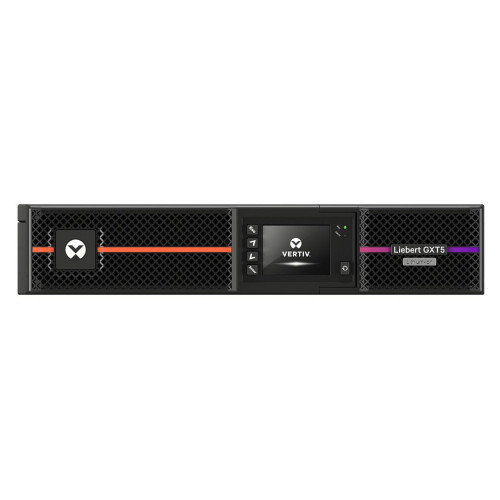
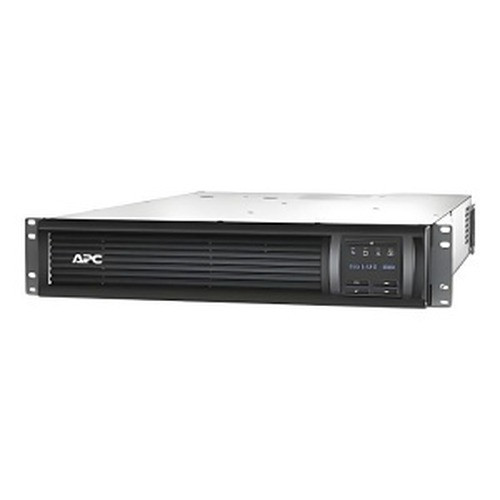
Both the Vertiv Liebert GXT5-3000LVRT2UXL and the APC Smart-UPS SMT3000RM2UCUS are 2U rack-mount UPS units rated at 3000VA/2700W for 120V single-phase loads, making them direct cross-shop candidates for IT closets, edge deployments, and light data-center rows. The comparison pivots on three axes that drive UPS purchasing decisions: topology and output quality, physical and environmental fit, and management depth and runtime scalability.
In This Guide
- Which topology and output quality best protects sensitive loads?
- How do physical footprint, weight, battery, and environmental ratings compare?
- Which unit offers deeper management integration and runtime scalability?
- Which should you choose: the GXT5-3000LVRT2UXL or the SMT3000RM2UCUS?
- Side-by-Side Specs
- FAQ
Which topology and output quality best protects sensitive loads?
The GXT5-3000LVRT2UXL uses Online Double-Conversion topology, meaning utility power is continuously rectified and reinverted so the load never draws from raw AC. Transfer time is zero milliseconds. Output voltage is user-configurable at 110, 115, 120, or 125 VAC ±3%, output frequency is held to ±0.1 Hz in battery mode, and the waveform is a pure sinewave. Power factor is 0.9, yielding 2700W from 3000VA.
The SMT3000RM2UCUS uses Line-Interactive topology. Under normal conditions the load runs on conditioned but unconverted utility power; on power failure the inverter engages with a specified transfer time of 6 ms typical, 10 ms maximum. Output voltage is 120 VAC, waveform is listed as sine wave, and harmonic distortion is rated at less than 5%. Rated power is also 2700W, but the rated VA is listed as 2880VA, implying a power factor of approximately 0.9375.
For loads intolerant of even brief transfer gaps or frequency variations—virtualization hosts, precision instruments, or generator-fed installations with unstable frequency—the zero-transfer online topology of the GXT5 provides a measurably harder guarantee. The SMT's 6–10 ms transfer window meets most server ATX specifications but is a design constraint to verify against load sensitivity.
How do physical footprint, weight, battery, and environmental ratings compare?
Both units are 2U rack-mount with identical rack-unit count. Height is identical at 3.4 in (86 mm). The GXT5-3000LVRT2UXL is 16.9 in wide and 21.3 in deep, weighing 66 lb (30 kg). The SMT3000RM2UCUS is 17.008 in wide and 26.9 in deep, weighing 97.62 lb (44.28 kg). The APC unit is therefore 5.6 in deeper and 31.62 lb heavier—material considerations for shallow-depth racks or weight-constrained floor ratings.
Battery handling differs significantly. The GXT5 specifies VRLA batteries that are hot-swappable and supports external battery cabinets (EBCs) for extended runtime scalability. APC specifies Lead-Acid with a 3-hour typical recharge time and a rated battery life of 3–5 years; hot-swap capability and external battery expansion are not stated in the provided specs.
Operating temperature range is identical: 32–104°F (0–40°C). The GXT5 specifies storage down to -4°F (-20°C); the SMT specifies storage down to 5°F (-15°C). Storage altitude for the SMT is stated at up to 50,000 ft; the GXT5 spec does not list a storage altitude. Operating altitude for both is up to 10,000 ft, with the GXT5 noting derating above that threshold. Audible noise is rated at less than 45 dBA for the GXT5 versus 55 dBA for the SMT—a 10 dBA difference.
Which unit offers deeper management integration and runtime scalability?
The GXT5-3000LVRT2UXL includes USB and RS-232 serial ports as standard connectivity and adds an Intellislot expansion bay that accepts optional network management cards supporting SNMP, Modbus, and BACnet protocols. The front panel provides an LCD for local status and configuration. Outlet-level load segmentation is available through programmable outlet groups (six of the seven outlets are independently controllable). Management software compatibility includes Vertiv Environet and NUT (Network UPS Tools). Emergency Power Off (EPO) input is specified. TAA compliance, Energy Star 2.0, and UL 1778 certifications are listed.
The SMT3000RM2UCUS lists one free expansion slot and carries the SmartConnect designation, which APC uses to denote cloud-based remote monitoring capability, though specific protocol support (SNMP, Modbus) is not enumerated in the provided specs. Output connections are six NEMA 5-15R receptacles; outlet-group segmentation is not stated in the provided specs. Surge energy rating is specified at 459 J. Certifications listed are cULus, Energy Star V2.0, and TAA compliance.
For environments requiring protocol-level integration with a BMS, DCIM platform, or NMS via SNMP or Modbus, the GXT5's Intellislot architecture provides a documented expansion path. Runtime scalability via EBCs is an explicit GXT5 feature; the APC spec does not address external battery expansion.
Which should you choose: the GXT5-3000LVRT2UXL or the SMT3000RM2UCUS?
Our take: The GXT5-3000LVRT2UXL is the stronger choice when load sensitivity, runtime scalability, or deep network integration are primary requirements. Three concrete spec deltas: (1) topology—Online Double-Conversion with zero-millisecond transfer versus Line-Interactive with a 6–10 ms transfer window; (2) physical depth and weight—the GXT5 is 5.6 in shallower (21.3 in vs 26.9 in) and 31.62 lb lighter (66 lb vs 97.62 lb), critical for shallow or weight-constrained racks; (3) noise—the GXT5 is rated below 45 dBA versus 55 dBA for the SMT, a 10 dBA difference relevant in occupied spaces. The SMT3000RM2UCUS carries a longer stated battery service life (3–5 years specified) and its 2880VA rating marginally exceeds the GXT5's 3000VA at a lower power factor. Buyers deploying the SMT into standard IT rack environments with tolerant server loads and predictable utility power will find it a capable, lighter-management option; the GXT5 is indicated where generator compatibility, BACnet/Modbus integration, hot-swap batteries, or EBC expansion are required.
Side-by-Side Comparison
Spec-for-spec, from manufacturer data.
| Specification | Vertiv GXT5-3000LVRT2UXL | APC by Schneider Electric SMT3000RM2UCUS |
|---|---|---|
| Topology | Online Double-Conversion | Line-Interactive |
| Capacity (VA) | 3000 VA | 2880 VA |
| Capacity (Watts) | 2700 W | 2700 W |
| Power Factor | 0.9 | ~0.9375 (derived) |
| Transfer Time | 0 ms (online) | 6 ms typical / 10 ms max |
| Output Waveform | Pure Sinewave | Sine wave |
| Input Connection | NEMA L5-30P | NEMA L5-30P |
| Output Connections | 1× NEMA L5-30R + 6× NEMA 5-20R | 6× NEMA 5-15R |
| Form Factor | 2U Rack/Tower convertible | 2U Rack-mounted |
| Depth | 21.3 in (541 mm) | 26.9 in (683 mm) |
| Weight | 66 lb (30 kg) | 97.62 lb (44.28 kg) |
| Audible Noise | <45 dBA @ 1 m | 55 dBA |
| Battery Type | VRLA, hot-swappable | Lead-Acid |
| External Battery Expansion | Yes (EBCs supported) | — |
| Network Management | Optional Intellislot (SNMP, Modbus, BACnet) | 1 free expansion slot; SmartConnect listed |
| Certifications | TAA, Energy Star 2.0, UL 1778, FCC Part 15 Class A | cULus, Energy Star V2.0, TAA |
| Warranty | 3-year advanced replacement | 24 months (36 months contractual) |
| Surge Energy Rating | — | 459 J |
Frequently Asked Questions
Which should you choose: the GXT5-3000LVRT2UXL or the SMT3000RM2UCUS?
The GXT5-3000LVRT2UXL is the stronger choice when load sensitivity, runtime scalability, or deep network integration are primary requirements. Three concrete spec deltas: (1) topology—Online Double-Conversion with zero-millisecond transfer versus Line-Interactive with a 6–10 ms transfer window; (2) physical depth and weight—the GXT5 is 5.6 in shallower (21.3 in vs 26.9 in) and 31.62 lb lighter (66 lb vs 97.62 lb), critical for shallow or weight-constrained racks; (3) noise—the GXT5 is rated below 45 dBA versus 55 dBA for the SMT, a 10 dBA difference relevant in occupied spaces. The SMT3000RM2UCUS carries a longer stated battery service life (3–5 years specified) and its 2880VA rating marginally exceeds the GXT5's 3000VA at a lower power factor. Buyers deploying the SMT into standard IT rack environments with tolerant server loads and predictable utility power will find it a capable, lighter-management option; the GXT5 is indicated where generator compatibility, BACnet/Modbus integration, hot-swap batteries, or EBC expansion are required.
Is the GXT5-3000LVRT2UXL or the SMT3000RM2UCUS better for a generator-backed installation?
The GXT5-3000LVRT2UXL explicitly lists generator compatibility in its specifications and holds output frequency to ±0.1 Hz in battery mode via its online double-conversion topology, which re-synthesizes AC regardless of generator frequency variation. The SMT3000RM2UCUS uses line-interactive topology, meaning generator frequency instability passes through to the load during normal operation. Generator compatibility is not stated in the provided SMT specs. For generator-backed deployments, the GXT5's topology is the better-documented fit.
Can I extend runtime on either unit with external battery packs?
The GXT5-3000LVRT2UXL explicitly supports runtime extension through external battery cabinets (EBCs). The provided specifications for the SMT3000RM2UCUS do not mention external battery expansion capability. If scalable runtime is a requirement, the GXT5 has a documented path; the SMT's expandability cannot be confirmed from the specs provided.
Which unit fits better in a shallow rack or a weight-limited environment?
The GXT5-3000LVRT2UXL is 21.3 in deep and weighs 66 lb. The SMT3000RM2UCUS is 26.9 in deep and weighs 97.62 lb. The GXT5 is 5.6 in shallower and 31.62 lb lighter. Both are 2U in rack height. For shallow-depth two-post or wall-mount racks, or for raised-floor tiles with per-tile weight ratings, the GXT5's smaller footprint and lower weight are a measurable advantage.
More UPS Comparisons
- APC by Schneider Electric SMT3000RMI2U vs Vertiv GXT5-3000LVRT2UXL
- APC by Schneider Electric SMT3000RMI2U vs Panduit U03N11L
- APC by Schneider Electric SMT3000RMI2U vs Panduit U03N12L
- APC by Schneider Electric SMT3000RMI2U vs Panduit U03S12V
- APC by Schneider Electric SMT3000RMI2U vs APC by Schneider Electric SRT3000XLT
- APC by Schneider Electric SMT3000RMI2U vs APC by Schneider Electric SRT3000XLW-IEC
UPS Buying Guides
Get a Second Opinion on Your Camera Choice
Share your site layout, coverage goals, and budget. Our team will validate the camera selection, flag anything we would change, and recommend products that match the use case.