
Vertiv GXT5-1500LVRT2UXL vs APC by Schneider Electric SMTL1500RM3UCUS: Specification Comparison
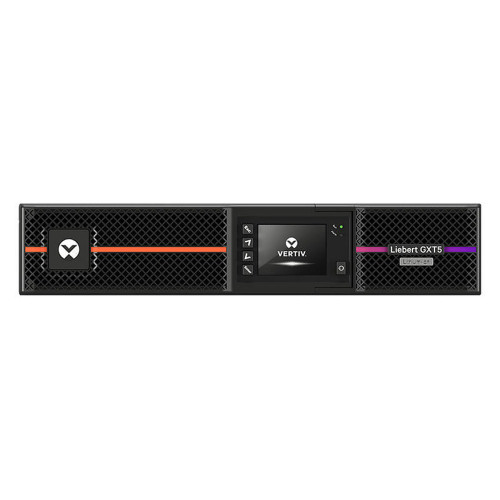
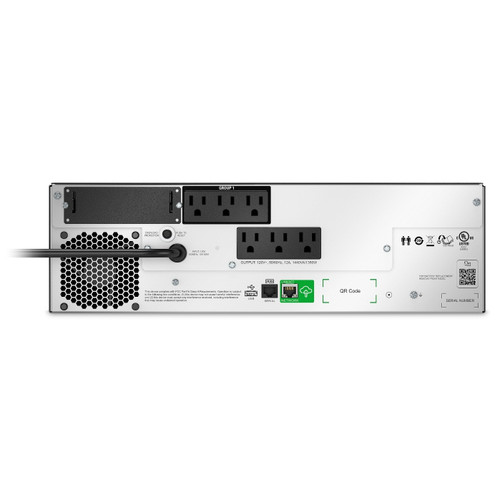
Both the Vertiv Liebert GXT5-1500LVRT2UXL and the APC Smart-UPS SMTL1500RM3UCUS are 1500VA rack-mountable UPS units targeting IT infrastructure, network closets, and edge deployments at the same power class. The comparison turns on meaningful architectural and operational differences: online double-conversion versus line-interactive topology, VRLA versus lithium-ion battery chemistry, hot-swap serviceability, runtime recharge behavior, and compliance posture — all of which carry real weight for installers and IT buyers evaluating total cost of ownership and deployment fit.
In This Guide
- Which UPS delivers cleaner, more reliable power conditioning for sensitive loads?
- How do battery chemistry, expected service life, and on-site replaceability compare?
- Which unit offers broader management options and meets procurement compliance requirements?
- Which should you choose: the GXT5-1500LVRT2UXL or the SMTL1500RM3UCUS?
- Side-by-Side Specs
- FAQ
Which UPS delivers cleaner, more reliable power conditioning for sensitive loads?
The GXT5-1500LVRT2UXL uses online double-conversion topology, meaning utility power is continuously rectified to DC and re-inverted to AC — the load never sees raw mains voltage. Transfer time is zero milliseconds because there is no switching event; the load is always running on inverted power. Output voltage is user-configurable at 110, 115, 120, or 125VAC with ±3% regulation, and the waveform is a pure sinewave. In ECO mode, efficiency reaches up to 98%.
The SMTL1500RM3UCUS specifies a sine wave output and output voltage distortion of less than 5%, with output frequency synchronized to mains at 50/60Hz ±3Hz. Its transfer time is 6ms typical and 10ms maximum — meaning there is a brief switching gap when utility power fails. Its rated capacity is listed as 1.35kW / 1.44kVA. Surge energy rating is 680 joules, with full-time multi-pole noise filtering rated at 0.3% IEEE surge let-through and zero clamping response time per UL 1449. The GXT5-1500LVRT2UXL spec does not enumerate a joules surge rating.
For loads sensitive to even brief power interruptions — real-time control systems, VoIP infrastructure, or storage arrays — the zero-transfer-time double-conversion architecture of the GXT5 is the substantive differentiator. The SMTL's 6–10ms transfer window is within tolerance for most server-class equipment with internal hold-up capacitors, but it is a non-zero risk for edge cases.
How do battery chemistry, expected service life, and on-site replaceability compare?
The SMTL1500RM3UCUS uses lithium-ion battery chemistry. APC specifies an expected battery life of 5–10 years and a typical recharge time of 2 hours with a battery charge power of 154W and a battery volt-amp-hour capacity of 310VAh. Lithium-ion offers a longer calendar life and faster recharge relative to conventional VRLA, and the chemistry is lighter — the SMTL weighs 43 lbs against the GXT5's 46.2 lbs despite a deeper power envelope.
The GXT5-1500LVRT2UXL specifies hot-swappable, user-replaceable battery modules. The provided specs do not state battery chemistry, expected calendar life in years, recharge time, or VAh capacity for the GXT5. Hot-swap capability means batteries can be replaced under load without a maintenance window, which is operationally significant for 24/7 environments where scheduled downtime is costly.
Buyers must weigh two distinct advantages: the SMTL's lithium-ion chemistry brings a documented 5–10 year life expectancy and 2-hour recharge, reducing the frequency of replacement cycles. The GXT5's hot-swap architecture eliminates the downtime cost of any replacement cycle. If the operating environment prioritizes minimizing battery replacement events, the SMTL's chemistry wins; if replacing batteries without a service window matters more, the GXT5's design wins. No hot-swap claim is made in the SMTL spec; no battery life figure is provided in the GXT5 spec.
Which unit offers broader management options and meets procurement compliance requirements?
The GXT5-1500LVRT2UXL provides USB and Serial (DB9) ports as standard, plus an optional Intellislot network card slot for SNMP/network management card expansion. The unit carries TAA compliance and Energy Star 2.0 certification. Output receptacles are 6× NEMA 5-15R organized in programmable outlet groups, enabling load-shedding sequences. Warranty is 3-year advanced replacement.
The SMTL1500RM3UCUS includes an RJ-45 Serial port, a Smart-Slot expansion slot, and USB as standard. Its LCD multi-function control panel provides local status and control. Regulatory approvals listed are CSA C22.2 No. 107.3, FCC Part 15 Class A, NOM, UL 1778, and UL 1973. RoHS and Battery Directive compliance are noted. The SKU name references SmartConnect and TAA compliance. Outlet count and receptacle types are not enumerated in the provided spec block. The box includes rack mounting support rails, RS-232 cable, and USB cable.
Both units offer a Smart-Slot / Intellislot network card path for SNMP management — a requirement in managed IT environments. The GXT5 explicitly lists 6× NEMA 5-15R outlets with programmable groups, which is a concrete spec for load management planning; the SMTL spec does not enumerate outlet count or types in the provided data. Both carry TAA compliance per their respective SKU descriptions, which is a procurement gate for U.S. federal and SLED buyers. The GXT5's 3-year advanced replacement warranty term is documented; the SMTL warranty term is not stated in the provided spec.
Which should you choose: the GXT5-1500LVRT2UXL or the SMTL1500RM3UCUS?
Our take: The GXT5-1500LVRT2UXL is the stronger choice when zero-transfer-time power conditioning, hot-swap battery serviceability, and programmable outlet groups are non-negotiable — particularly for always-on infrastructure where even a 6–10ms switching gap or a planned maintenance window carries operational risk. The online double-conversion topology versus the SMTL's line-interactive architecture is the decisive structural difference. The SMTL1500RM3UCUS, conversely, is the stronger choice when battery longevity and recharge speed drive the decision: its lithium-ion chemistry carries a documented 5–10 year expected life and 2-hour recharge against no equivalent figures in the GXT5 spec. Physical footprint also differs — the SMTL's 11.89-inch depth versus the GXT5's 18.6-inch depth matters in shallow-depth rack environments. Deploy the GXT5 in 24/7 data center rows or security head-end racks where double-conversion quality and hot-swap maintenance are required; deploy the SMTL where shallow rack depth and reduced battery replacement frequency are the primary constraints.
Side-by-Side Comparison
Spec-for-spec, from manufacturer data.
| Specification | Vertiv GXT5-1500LVRT2UXL | APC by Schneider Electric SMTL1500RM3UCUS |
|---|---|---|
| Topology | Online Double Conversion | Line Interactive (Sine Wave) |
| Capacity (VA) | 1500VA | 1440VA |
| Capacity (Watts) | 1350W | 1350W |
| Transfer Time | 0ms (continuous) | 6ms typical / 10ms maximum |
| Output Waveform | Pure Sinewave | Sine Wave |
| Output Voltage Options | 110/115/120/125VAC ±3% (configurable) | Not specified in provided spec |
| Battery Chemistry | Not specified | Lithium Ion |
| Expected Battery Life | Not specified | 5–10 years |
| Battery Recharge Time | Not specified | 2 hours typical |
| Hot-Swap Battery | Yes | Not specified |
| Form Factor | Rack/Tower Convertible (2U) | Rack Mount (3U per height spec) |
| Depth | 18.6 in | 11.89 in (302mm) |
| Weight | 46.2 lbs | 43 lbs |
| Outlets | 6× NEMA 5-15R (programmable groups) | Not enumerated in provided spec |
| Connectivity | USB, DB9 Serial, optional Intellislot NIC | USB, RJ-45 Serial, Smart-Slot |
| TAA Compliant | Yes | Yes (per SKU designation) |
| Energy Star | 2.0 Certified | Not specified in provided spec |
| Warranty | 3-Year Advanced Replacement | Not specified in provided spec |
| Surge Energy Rating | Not specified | 680 Joules |
| Operating Temperature | 32–104°F (0–40°C) | 32–104°F (0–40°C) |
Frequently Asked Questions
Which should you choose: the GXT5-1500LVRT2UXL or the SMTL1500RM3UCUS?
The GXT5-1500LVRT2UXL is the stronger choice when zero-transfer-time power conditioning, hot-swap battery serviceability, and programmable outlet groups are non-negotiable — particularly for always-on infrastructure where even a 6–10ms switching gap or a planned maintenance window carries operational risk. The online double-conversion topology versus the SMTL's line-interactive architecture is the decisive structural difference. The SMTL1500RM3UCUS, conversely, is the stronger choice when battery longevity and recharge speed drive the decision: its lithium-ion chemistry carries a documented 5–10 year expected life and 2-hour recharge against no equivalent figures in the GXT5 spec. Physical footprint also differs — the SMTL's 11.89-inch depth versus the GXT5's 18.6-inch depth matters in shallow-depth rack environments. Deploy the GXT5 in 24/7 data center rows or security head-end racks where double-conversion quality and hot-swap maintenance are required; deploy the SMTL where shallow rack depth and reduced battery replacement frequency are the primary constraints.
Is the GXT5-1500LVRT2UXL or the SMTL1500RM3UCUS better for a shallow-depth network rack?
The SMTL1500RM3UCUS is significantly shallower at 11.89 inches deep versus the GXT5-1500LVRT2UXL at 18.6 inches deep. If rack depth is constrained — common in wall-mount enclosures or telco-style shallow racks — the SMTL fits where the GXT5 does not.
Which unit is better suited for a U.S. federal or SLED procurement that requires TAA compliance?
Both units carry TAA compliance per their provided specifications — the GXT5-1500LVRT2UXL is listed as TAA Compliant, and the SMTL1500RM3UCUS SKU name references TAA compliance. Buyers should verify the current TAA designation on each unit's active GSA Schedule or procurement vehicle, as compliance status can change with model revisions.
How long will the batteries last before replacement is needed, and which unit is easier to replace on-site?
The SMTL1500RM3UCUS specifies a lithium-ion battery with an expected life of 5–10 years; no equivalent calendar-life figure appears in the GXT5-1500LVRT2UXL spec. The GXT5 specifies hot-swappable user-replaceable battery modules, allowing battery replacement under load without powering down connected equipment; the SMTL spec does not make a hot-swap claim. If minimizing replacement frequency is the priority, the SMTL's chemistry is the documented advantage; if replacing batteries without a maintenance window matters, the GXT5's hot-swap design is the advantage.
More UPS Comparisons
- APC by Schneider Electric SMX1500RMI2U vs CyberPower PRL1500RT2UC
- APC by Schneider Electric SMX1500RMI2U vs CyberPower BRG1500AVRLCD2
- APC by Schneider Electric SMX1500RMI2U vs CyberPower PR1500LCD
- APC by Schneider Electric SMX1500RMI2U vs APC by Schneider Electric BR1500MS2
- APC by Schneider Electric SMX1500RMI2U vs APC by Schneider Electric SMTL1500RM3UCUS
- CyberPower PRL1500RT2UC vs APC by Schneider Electric BR1500MS2
UPS Buying Guides
Get a Second Opinion on Your Camera Choice
Share your site layout, coverage goals, and budget. Our team will validate the camera selection, flag anything we would change, and recommend products that match the use case.