
Ubiquiti USW-LITE-16-POE vs Allied Telesis IE340-20GP-980: Specification Comparison
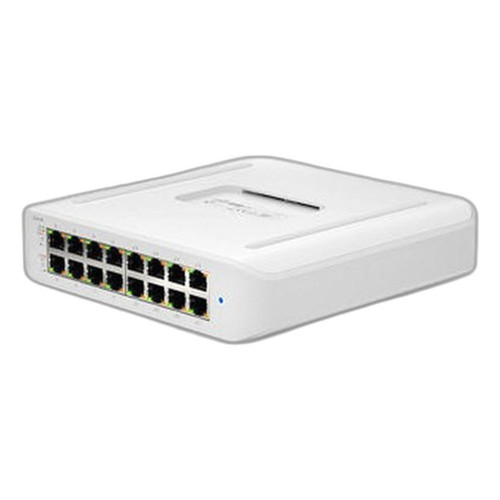
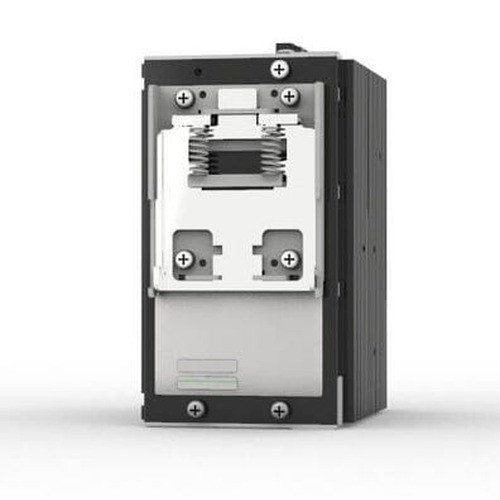
Both the Ubiquiti USW-LITE-16-POE and the Allied Telesis AT-IE340-20GP-980 are 16-port Gigabit PoE network switches targeting installations where powered edge devices—IP cameras, access points, VoIP phones—connect at the access layer. The Ubiquiti is an AC-powered compact desktop/wall-mount unit aimed at commercial or light-duty deployments, while the Allied Telesis is a DC-input, DIN-rail-mounted industrial switch with a substantially larger PoE budget and an aluminum enclosure. Both serve the same general 16-port PoE switch class, making them legitimate cross-shop candidates for installers evaluating fit-for-purpose versus environment requirements.
In This Guide
- Which switch delivers more usable PoE power for connected devices?
- How do the two switches compare on throughput, fabric capacity, and uplink flexibility?
- Which switch is better suited for demanding physical environments and varied power infrastructure?
- Which should you choose: the USW-LITE-16-POE or the IE340-20GP-980?
- Side-by-Side Specs
- FAQ
Which switch delivers more usable PoE power for connected devices?
The AT-IE340-20GP-980 provides a maximum PoE budget of 240W across its 16 powered ports, with the spec sheet indicating support for up to 16 ports at 15W (PoE) or up to 8 ports at 30W (PoE+). This budget is more than five times larger than the USW-LITE-16-POE's 45W total PoE+ output, which must be shared across all 16 ports—averaging just 2.8W per port at full occupancy, or a practical ceiling of one 30W device if the remaining budget is carefully rationed.
The USW-LITE-16-POE spec confirms 802.3at (PoE+, up to 30W per port), but the 45W system cap severely constrains simultaneous high-draw devices. The AT-IE340-20GP-980's 240W budget is far more permissive for mixed camera/AP/VoIP deployments. The Allied Telesis spec also references PoE++ in the product title, though the per-port maximum listed in the spec data is 30W (PoE+); buyers should verify 802.3bt (PoE++, 60W/90W) support directly against the datasheet before assuming higher per-port delivery.
How do the two switches compare on throughput, fabric capacity, and uplink flexibility?
The AT-IE340-20GP-980 holds a measurable edge in raw switching performance: 40 Gbps switching fabric versus 32 Gbps for the USW-LITE-16-POE, and a forwarding rate of 29.7 Mpps versus 24 Mpps. Both are non-blocking designs relative to their port counts, but the Allied Telesis unit's larger fabric provides additional headroom as traffic density increases.
Uplink flexibility further differentiates the two products. The AT-IE340-20GP-980 includes 4 × 100/1000X SFP ports in addition to its 16 copper ports, enabling fiber uplinks to aggregation switches or long-haul runs without consuming PoE ports. The USW-LITE-16-POE spec lists no SFP or dedicated uplink ports; all 16 ports are copper Gigabit PoE+. For installers needing fiber backbone connectivity or uplink redundancy, the Allied Telesis provides the only specified path.
Which switch is better suited for demanding physical environments and varied power infrastructure?
The AT-IE340-20GP-980 is purpose-built for industrial and harsh-environment deployment. Its enclosure is aluminum/sheet metal with an IP30 ingress protection rating, it is fanless (no moving parts, no noise), and it accepts a wide-range DC input of 18–57V, making it compatible with industrial DC power plants, UPS systems, and 48V PoE power shelves. It mounts to a DIN rail or wall, weighing 2.34 kg (DIN) or 2.23 kg (wall). Maximum power consumption is specified at 271W.
The USW-LITE-16-POE uses a polycarbonate enclosure with no IP rating listed in the provided specs. It requires AC mains input (100–240V, 50/60 Hz) with an internal 60W supply, draws 15W excluding PoE output, and operates from -15°C to +40°C. The Allied Telesis operating temperature range is not stated in the provided specs—buyers must consult the AT-IE340-20GP-980 datasheet directly. The Ubiquiti's polycarbonate build and AC-only input limit its suitability for outdoor cabinets, industrial panels, or sites with DC-only power infrastructure.
Which should you choose: the USW-LITE-16-POE or the IE340-20GP-980?
Our take: The USW-LITE-16-POE is the stronger choice when the deployment environment has AC mains power, a controlled indoor climate, a modest connected-device count with low per-port power draw, and a preference for compact desktop or wall-mount form factor. The AT-IE340-20GP-980 is the stronger choice when PoE budget, environmental resilience, or uplink flexibility is the deciding factor: it provides 240W PoE budget versus 45W—a 5.3× advantage—a 40 Gbps fabric versus 32 Gbps, and adds 4 SFP uplink ports the Ubiquiti lacks entirely. Its fanless aluminum construction with IP30 rating and 18–57V DC input suit industrial enclosures, outdoor cabinets, and DIN-rail panels where the Ubiquiti's polycarbonate, AC-only design is not appropriate. Platform matters: the USW-LITE-16-POE is designed for use within the Ubiquiti UniFi ecosystem; the AT-IE340-20GP-980 is a standalone Allied Telesis industrial unit. Buyers already invested in either vendor's management platform should weight ecosystem lock-in accordingly.
Side-by-Side Comparison
Spec-for-spec, from manufacturer data.
| Specification | Ubiquiti USW-LITE-16-POE | Allied Telesis IE340-20GP-980 |
|---|---|---|
| Total Copper Ports | 16 | 16 |
| SFP Uplink Ports | — | 4 × 100/1000X |
| Total Ports | 16 | 20 |
| PoE Standard | 802.3at (PoE+) | PoE+ (802.3at); PoE++ in product name — verify datasheet |
| PoE Budget | 45W | 240W |
| Max PoE per Port | 30W | 30W (per spec sheet) |
| Switching Fabric | 32 Gbps | 40 Gbps |
| Forwarding Rate | 24 Mpps | 29.7 Mpps |
| Power Input | AC 100–240V, 50/60 Hz | DC 18–57V |
| Max Power Consumption | 60W (internal supply) | 271W |
| Enclosure Material | Polycarbonate | Aluminum/Sheet Metal |
| IP Rating | — | IP30 |
| Cooling | — | Fanless |
| Mount Type | Desktop / Wall | DIN Rail / Wall |
| Dimensions (mm) | 192 × 185 × 44 | 91 × 139 × 153 |
| Weight | 1.2 kg (2.6 lb) | 2.34 kg DIN / 2.23 kg Wall |
| Operating Temp | -15°C to +40°C | — |
| NDAA Compliant | Yes | — |
| Certifications | CE, FCC, IC, Anatel | — |
Frequently Asked Questions
Which should you choose: the USW-LITE-16-POE or the IE340-20GP-980?
The USW-LITE-16-POE is the stronger choice when the deployment environment has AC mains power, a controlled indoor climate, a modest connected-device count with low per-port power draw, and a preference for compact desktop or wall-mount form factor. The AT-IE340-20GP-980 is the stronger choice when PoE budget, environmental resilience, or uplink flexibility is the deciding factor: it provides 240W PoE budget versus 45W—a 5.3× advantage—a 40 Gbps fabric versus 32 Gbps, and adds 4 SFP uplink ports the Ubiquiti lacks entirely. Its fanless aluminum construction with IP30 rating and 18–57V DC input suit industrial enclosures, outdoor cabinets, and DIN-rail panels where the Ubiquiti's polycarbonate, AC-only design is not appropriate. Platform matters: the USW-LITE-16-POE is designed for use within the Ubiquiti UniFi ecosystem; the AT-IE340-20GP-980 is a standalone Allied Telesis industrial unit. Buyers already invested in either vendor's management platform should weight ecosystem lock-in accordingly.
Is the USW-LITE-16-POE or the AT-IE340-20GP-980 better for powering a full set of 16 PoE cameras simultaneously?
The AT-IE340-20GP-980 is substantially better suited for that scenario. Its 240W PoE budget allows 16 cameras drawing up to 15W each simultaneously, or 8 cameras at 30W each. The USW-LITE-16-POE's 45W total budget shared across all 16 ports cannot sustain more than a handful of mid-draw cameras at once without exceeding the system cap.
Can either switch connect to a fiber backbone or aggregation switch via fiber uplink?
Only the AT-IE340-20GP-980 includes dedicated fiber uplink capability: 4 × 100/1000X SFP ports are specified. The USW-LITE-16-POE spec lists no SFP ports; all 16 ports are copper RJ-45. If fiber uplinks are required, the Allied Telesis is the only option between these two based on the provided specifications.
Which switch is appropriate for installation in an industrial enclosure or outdoor cabinet with DC power?
The AT-IE340-20GP-980 is designed for exactly that use case: it accepts 18–57V DC input, mounts on a DIN rail, has a fanless aluminum enclosure rated IP30, and is specified at a maximum power consumption of 271W. The USW-LITE-16-POE requires AC mains (100–240V), uses a polycarbonate enclosure with no IP rating listed in its specs, and is sized for desktop or wall-mount indoor use. It is not specified for DC power plant or industrial panel installation.
More Network Switch Comparisons
- Vivotek GEL-205A-260 vs TP-Link SL1218MP
- Vivotek GEL-205A-260 vs Allied Telesis AT-x530L-18GHXm-10
- Vivotek GEL-205A-260 vs Ubiquiti USW-LITE-16-POE
- Vivotek GEL-205A-260 vs Ubiquiti USW-16-POE
- TP-Link SL1218MP vs Allied Telesis AT-x530L-18GHXm-10
- TP-Link SL1218MP vs Ubiquiti USW-LITE-16-POE
Network Switch Buying Guides
Get a Second Opinion on Your Camera Choice
Share your site layout, coverage goals, and budget. Our team will validate the camera selection, flag anything we would change, and recommend products that match the use case.