
Ubiquiti USW-FLEX-MINI-3 vs Ubiquiti USW-FLEX-MINI: Specification Comparison
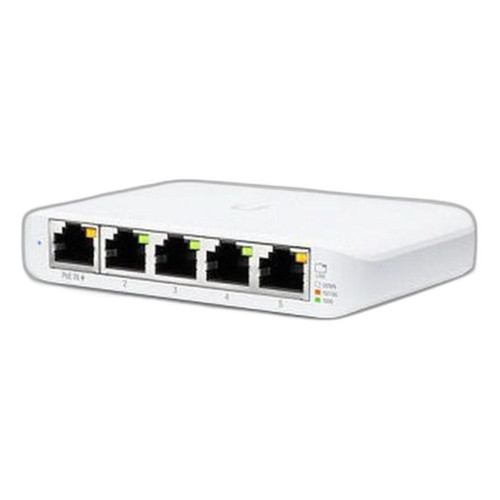
Both the USW-FLEX-MINI-3 and USW-FLEX-MINI are Ubiquiti UniFi-family 5-port gigabit managed switches designed for compact, space-constrained deployments such as branch offices, retail counters, and edge locations. They share the same 10 Gbps switching capacity, 5-port gigabit port count, and operating temperature range. The critical differentiator is power architecture: the USW-FLEX-MINI-3 delivers PoE+ on all five ports, while the USW-FLEX-MINI is a non-PoE switch powered entirely by USB-C. This comparison evaluates which unit fits a given install scenario.

In This Guide
- Which switch actually powers your endpoints — and how much PoE budget does each provide?
- Is the switching performance meaningfully different between these two models?
- How do the two units differ in form factor, management integration, and regulatory compliance?
- Which should you choose: the USW-FLEX-MINI-3 or the USW-FLEX-MINI?
- Side-by-Side Specs
- FAQ
Which switch actually powers your endpoints — and how much PoE budget does each provide?
The USW-FLEX-MINI-3 specifies PoE+ (802.3af/at) power delivery across all five gigabit ports. Its spec lists a 5V, 1A power adapter as its own supply, though PoE+ endpoint delivery is an additional capability on top of this. The forwarding rate is listed at 7.44 Mpps.
The USW-FLEX-MINI delivers no PoE to downstream devices. It is powered by USB Type-C at 5V DC with a maximum system consumption of 2.5W — the entire switch draws less power than a single 802.3af PoE port's minimum. Its forwarding rate is specified at 7 Mpps.
For any deployment where cameras, APs, VoIP phones, or access readers need inline power, the USW-FLEX-MINI-3 is the only viable option between these two. The USW-FLEX-MINI's USB-C power model is an advantage only where 48V PoE infrastructure is absent and endpoints carry their own power.
Is the switching performance meaningfully different between these two models?
Both switches share a 10 Gbps switching capacity. The USW-FLEX-MINI-3 specifies a forwarding rate of 7.44 Mpps; the USW-FLEX-MINI specifies 7 Mpps and adds a non-blocking throughput figure of 5 Gbps. Neither spec set lists an uplink port distinct from the five access ports, so both treat all five ports as equivalent gigabit interfaces.
The USW-FLEX-MINI-3 spec notes VLAN, QoS, Port Mirroring, and IGMP Snooping as supported features. The USW-FLEX-MINI spec states support for up to 1,000 VLANs; QoS, Port Mirroring, and IGMP Snooping are not explicitly listed in its provided spec data.
The 0.44 Mpps forwarding rate delta is unlikely to be a practical differentiator at this port density. The USW-FLEX-MINI's explicit 1,000-VLAN figure is a useful data point for segmentation-heavy designs; that ceiling is not stated for the USW-FLEX-MINI-3 in the provided specs.
How do the two units differ in form factor, management integration, and regulatory compliance?
The USW-FLEX-MINI-3 is specified for desktop or wall-mount installation and weighs 0.330 lb (approximately 150 g). Its provided dimensions of 107.16 x 70.15 x 21.17 inches appear to be a data entry error — the datasheet reference dimensions of 6.1 x 4.3 x 1.5 inches are the physically plausible figure. Management is via UniFi Network controller and Web GUI with full UniFi integration stated. Certifications: CE, FCC, IC. Country of origin: CN.
The USW-FLEX-MINI is specified as a compact desktop unit with polycarbonate enclosure and mount material. It weighs 150 g (5.3 oz) and measures 107 x 70 x 21 mm — consistent with the USW-FLEX-MINI-3's datasheet figures, confirming a near-identical chassis footprint. Management is listed as 'Ethernet' in the structured spec; the USW-FLEX-MINI is a UniFi family device but the provided specs do not explicitly state controller-based management. Certifications: CE, FCC, IC, and Anatel (Brazil). NDAA compliant: Yes. The USW-FLEX-MINI-3 spec does not state NDAA compliance.
Both units operate from -5 to 45°C and carry a manufacturer warranty. The USW-FLEX-MINI carries an additional Anatel certification relevant to Brazil deployments and an explicit NDAA compliance statement, neither of which appears in the USW-FLEX-MINI-3 spec data provided.
Which should you choose: the USW-FLEX-MINI-3 or the USW-FLEX-MINI?
Our take: The USW-FLEX-MINI-3 is the stronger choice when any downstream device requires inline power, as it delivers PoE+ across all five gigabit ports — the USW-FLEX-MINI provides zero PoE output and cannot power cameras, APs, or access control readers. On raw switching performance the gap is narrow: the USW-FLEX-MINI-3 rates 7.44 Mpps versus 7 Mpps for the USW-FLEX-MINI, both on a shared 10 Gbps switching fabric. The USW-FLEX-MINI has two compliance advantages not present in the USW-FLEX-MINI-3's provided specs: an explicit NDAA-compliant designation and an Anatel certification for Brazilian deployments. The USW-FLEX-MINI is suited strictly to environments where all endpoints are self-powered and ultra-low system draw (2.5W) or USB-C convenience power is the priority. For any physical-security edge stack involving PoE cameras or readers, the USW-FLEX-MINI-3 is the applicable model; NDAA-governed projects should verify USW-FLEX-MINI-3 compliance status independently before specifying.
Side-by-Side Comparison
Spec-for-spec, from manufacturer data.
| Specification | Ubiquiti USW-FLEX-MINI-3 | Ubiquiti USW-FLEX-MINI |
|---|---|---|
| SKU | USW-FLEX-MINI-3 | USW-FLEX-MINI |
| Total Ports | 5 | 5 |
| Port Speed | 10/100/1000 Mbps | 10/100/1000 Mbps |
| Switching Capacity | 10 Gbps | 10 Gbps |
| Forwarding Rate | 7.44 Mpps | 7 Mpps |
| Non-Blocking Throughput | — | 5 Gbps |
| PoE Output | PoE+ on all 5 ports | None |
| Power Input | 5V, 1A power adapter | USB Type-C, 5V, 2.5W max |
| System Power Consumption | — | 2.5W |
| VLAN Support | Yes (count not specified) | Up to 1,000 VLANs |
| QoS | Yes (spec stated) | — |
| Port Mirroring | Yes (spec stated) | — |
| IGMP Snooping | Yes (spec stated) | — |
| Management | UniFi Network + Web GUI | Ethernet (UniFi family; controller mgmt not explicitly stated in specs) |
| Operating Temperature | -5 to 45°C | -5 to 45°C |
| Weight | 0.330 lb | 150 g (5.3 oz) |
| Dimensions | 6.1 x 4.3 x 1.5 in (datasheet) | 107 x 70 x 21 mm |
| Form Factor | Desktop / Wall-mount | Desktop |
| Enclosure Material | — | Polycarbonate |
| NDAA Compliant | — | Yes |
| Certifications | CE, FCC, IC | CE, FCC, IC, Anatel |
| Country of Origin | CN | — |
| Warranty | Manufacturer Warranty | Manufacturer Warranty |
Frequently Asked Questions
Which should you choose: the USW-FLEX-MINI-3 or the USW-FLEX-MINI?
The USW-FLEX-MINI-3 is the stronger choice when any downstream device requires inline power, as it delivers PoE+ across all five gigabit ports — the USW-FLEX-MINI provides zero PoE output and cannot power cameras, APs, or access control readers. On raw switching performance the gap is narrow: the USW-FLEX-MINI-3 rates 7.44 Mpps versus 7 Mpps for the USW-FLEX-MINI, both on a shared 10 Gbps switching fabric. The USW-FLEX-MINI has two compliance advantages not present in the USW-FLEX-MINI-3's provided specs: an explicit NDAA-compliant designation and an Anatel certification for Brazilian deployments. The USW-FLEX-MINI is suited strictly to environments where all endpoints are self-powered and ultra-low system draw (2.5W) or USB-C convenience power is the priority. For any physical-security edge stack involving PoE cameras or readers, the USW-FLEX-MINI-3 is the applicable model; NDAA-governed projects should verify USW-FLEX-MINI-3 compliance status independently before specifying.
Can the USW-FLEX-MINI power a PoE security camera?
No. The USW-FLEX-MINI draws only 2.5W from a USB-C source for its own operation and provides no PoE output on any port. The USW-FLEX-MINI-3 specifies PoE+ delivery across all five ports and is the correct model for powering PoE cameras or access control readers.
Are the USW-FLEX-MINI-3 and USW-FLEX-MINI the same physical size?
The physical dimensions are effectively identical. The USW-FLEX-MINI is specified at 107 x 70 x 21 mm; the USW-FLEX-MINI-3 datasheet cites 6.1 x 4.3 x 1.5 inches (approximately 155 x 109 x 38 mm per the structured spec field, though that field appears to contain erroneous data). The USW-FLEX-MINI-3 adds a wall-mount option not stated for the USW-FLEX-MINI.
Is either switch NDAA compliant for U.S. federal or government deployments?
The USW-FLEX-MINI spec explicitly states NDAA Compliant: Yes. The USW-FLEX-MINI-3 spec data provided does not include an NDAA compliance statement. Buyers with NDAA requirements should verify USW-FLEX-MINI-3 compliance status directly with Ubiquiti or their procurement authority before specifying.
More Network Switch Comparisons
- TP-Link ES205GP vs Ubiquiti USW-FLEX
- TP-Link ES205GP vs Ubiquiti USW-FLEX-MINI
- TP-Link ES205GP vs Ubiquiti USW-FLEX-3
- TP-Link ES205GP vs Ubiquiti USW-FLEX-MINI-3
- TP-Link ES205GP vs TP-Link SG105PP-M2
- TP-Link SG105PP-M2 vs Ubiquiti USW-FLEX
Network Switch Buying Guides
Get a Second Opinion on Your Camera Choice
Share your site layout, coverage goals, and budget. Our team will validate the camera selection, flag anything we would change, and recommend products that match the use case.