
Ubiquiti USW-16-POE vs Allied Telesis IE340-20GP-980: Specification Comparison
The Ubiquiti USW-16-POE and Allied Telesis AT-IE340-20GP-980 are both 16-port Gigabit PoE managed switches targeting networked device deployments such as IP cameras and wireless access points. The USW-16-POE is a 1U rack-mount unit drawing standard AC power, while the AT-IE340-20GP-980 is a compact DIN-rail industrial switch running on wide-range DC input. The two models are legitimately cross-shopped by installers choosing between an IT-closet architecture and a panel-mounted industrial deployment.

In This Guide
- Which switch delivers more PoE power and how many devices can it realistically drive?
- How do the two switches compare on fabric capacity, forwarding rate, and VLAN scalability?
- Which unit is better suited to harsh or non-standard installation environments?
- Which should you choose: the USW-16-POE or the IE340-20GP-980?
- Side-by-Side Specs
- FAQ
Which switch delivers more PoE power and how many devices can it realistically drive?
The AT-IE340-20GP-980 provides a maximum PoE power budget of 240W across its 16 PoE-enabled ports, supporting up to 16 ports at 15W (PoE) or 8 ports simultaneously at 30W (PoE+). Its PoE++ designation indicates support for higher per-port wattage allocations within that 240W envelope. The USW-16-POE, by contrast, specifies a total PoE budget of 42W across all 16 RJ45 ports using the PoE+ (802.3at) standard. That 42W total averages roughly 2.6W per port if all 16 are loaded simultaneously, which in practice limits the switch to powering a small number of devices at their rated draw — approximately 8 to 10 low-wattage access points per the product's own documentation. For deployments with multiple full-wattage PoE cameras or PTZ units, the 240W budget of the AT-IE340-20GP-980 is substantially more permissive.
Uplink capacity also differs: the USW-16-POE includes 2 SFP uplink ports, while the AT-IE340-20GP-980 provides 4 SFP uplink ports, offering greater aggregation redundancy or multi-uplink flexibility in larger topologies.
How do the two switches compare on fabric capacity, forwarding rate, and VLAN scalability?
The AT-IE340-20GP-980 specifies a switching fabric of 40Gbps and a forwarding rate of 29.7Mpps. The USW-16-POE specifies a switching capacity of 36Gbps with 18Gbps non-blocking throughput and a forwarding rate of 27Mpps. Both switches support wire-speed Gigabit forwarding for their 16 access ports plus uplinks, so real-world traffic performance will be comparable at typical access-layer loads. The AT-IE340-20GP-980 has a modest edge in raw fabric and forwarding figures.
On VLAN support, the USW-16-POE specifies support for 1,000 VLANs — the AT-IE340-20GP-980 datasheet as provided does not state a VLAN count. Buyers requiring segmented multi-tenant or multi-zone VLAN architectures should verify AT-IE340-20GP-980 VLAN capacity directly with Allied Telesis.
Which unit is better suited to harsh or non-standard installation environments?
The USW-16-POE is a conventional 1U rack-mount device in an SGCC steel enclosure, drawing 100–240V AC from a standard IEC outlet. Its rated operating temperature range is -5 to 40°C. It requires a conditioned IT room or equipment rack environment. Weight is 2.8kg without mounting brackets. Cooling method is not specified in the provided specifications.
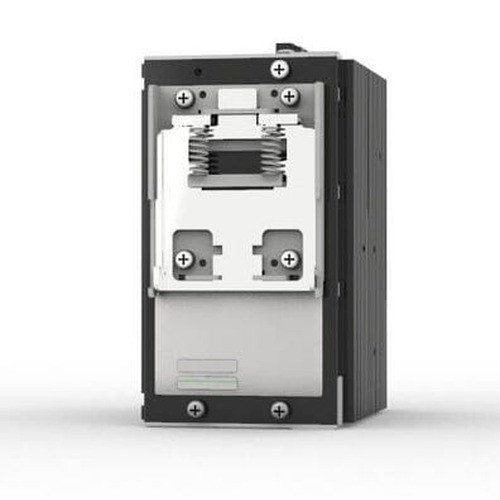
The AT-IE340-20GP-980 is designed explicitly for industrial deployment. It mounts on a DIN rail (panel-mount), measures 91×139×153mm — considerably smaller than a 1U rack shelf — and operates from an 18–57V DC wide-range input, compatible with industrial DC bus systems and UPS-backed DC panels without an AC inverter. It is fanless, eliminating moving-part failure in dusty or vibration-prone environments. Its enclosure is aluminum/sheet metal rated to IP30, providing basic protection against solid-particle ingress. Maximum power consumption is 271W (including full PoE load). Operating temperature range is not stated in the provided specifications for the AT-IE340-20GP-980 — buyers should verify this with Allied Telesis, particularly for outdoor cabinet or transit installations. Weight is 2.34kg (DIN rail configuration).
Which should you choose: the USW-16-POE or the IE340-20GP-980?
Our take: The AT-IE340-20GP-980 is the stronger choice when PoE power budget and industrial mounting flexibility are the primary requirements. Its 240W PoE budget is nearly six times the USW-16-POE's 42W, allowing all 16 ports to power full-wattage devices simultaneously rather than rationing a shared 42W pool. Its 40Gbps fabric and 29.7Mpps forwarding rate modestly exceed the USW-16-POE's 36Gbps/27Mpps figures, and four SFP uplinks versus two expand aggregation options. The fanless, DIN-rail, wide-range DC design makes it the only candidate of the two for panel-mount or industrial enclosure installations. Conversely, the USW-16-POE is the appropriate choice for standard AC-powered IT rack environments where PoE load is light, where Ubiquiti's UniFi management ecosystem is already deployed, and where the specified 1,000-VLAN capacity is a requirement — the AT-IE340-20GP-980 does not state a VLAN count in the provided specifications.
Side-by-Side Comparison
Spec-for-spec, from manufacturer data.
| Specification | Ubiquiti USW-16-POE | Allied Telesis IE340-20GP-980 |
|---|---|---|
| PoE-Enabled Ports | 16 (RJ45, PoE+) | 16 (RJ45, PoE++) |
| Total PoE Power Budget | 42W | 240W |
| PoE Standard | PoE+ (802.3at) | PoE / PoE+ (up to PoE++) |
| SFP Uplink Ports | 2 | 4 |
| Switching Fabric | 36Gbps | 40Gbps |
| Non-Blocking Throughput | 18Gbps | — |
| Forwarding Rate | 27Mpps | 29.7Mpps |
| VLAN Support | 1,000 | — |
| Mount Type | 1U Rack Mount | DIN Rail |
| Power Input | 100–240V AC, 50/60Hz | 18–57V DC |
| Max Power Consumption | 60W (PSU rated) | 271W |
| Cooling | — | Fanless |
| Enclosure | SGCC Steel | Aluminium / Sheet Metal |
| Enclosure Rating | — | IP30 |
| Dimensions (mm) | 442 × 200 × 44 | 91 × 139 × 153 |
| Weight | 2.8kg (6.2lb) | 2.34kg DIN / 2.23kg Wall |
Frequently Asked Questions
Which should you choose: the USW-16-POE or the IE340-20GP-980?
The AT-IE340-20GP-980 is the stronger choice when PoE power budget and industrial mounting flexibility are the primary requirements. Its 240W PoE budget is nearly six times the USW-16-POE's 42W, allowing all 16 ports to power full-wattage devices simultaneously rather than rationing a shared 42W pool. Its 40Gbps fabric and 29.7Mpps forwarding rate modestly exceed the USW-16-POE's 36Gbps/27Mpps figures, and four SFP uplinks versus two expand aggregation options. The fanless, DIN-rail, wide-range DC design makes it the only candidate of the two for panel-mount or industrial enclosure installations. Conversely, the USW-16-POE is the appropriate choice for standard AC-powered IT rack environments where PoE load is light, where Ubiquiti's UniFi management ecosystem is already deployed, and where the specified 1,000-VLAN capacity is a requirement — the AT-IE340-20GP-980 does not state a VLAN count in the provided specifications.
Is the USW-16-POE or the AT-IE340-20GP-980 better for powering multiple IP cameras?
The AT-IE340-20GP-980 is substantially better suited for multi-camera PoE deployments. Its 240W total PoE budget can support 16 cameras drawing up to 15W each simultaneously, or 8 cameras at 30W each. The USW-16-POE's 42W total budget limits real simultaneous PoE delivery to a small subset of ports at full wattage — adequate for a handful of low-power cameras or access points but not a full 16-port camera deployment.
Can either switch be installed in an outdoor cabinet or industrial panel without a rack?
The AT-IE340-20GP-980 is designed for exactly this use case: it mounts on a standard DIN rail, runs from 18–57V DC (compatible with industrial DC supplies), and uses a fanless aluminum enclosure rated IP30. The USW-16-POE requires a 1U equipment rack and a standard 100–240V AC outlet — it is not DIN-rail compatible and is not described as fanless or industrially hardened in the provided specifications.
Which switch is easier to integrate into an existing Ubiquiti UniFi network?
The USW-16-POE is a Ubiquiti product and is designed to be managed within the UniFi controller ecosystem. The AT-IE340-20GP-980 is an Allied Telesis product; the provided specifications do not describe compatibility with UniFi or any third-party management platform. Installers with existing Ubiquiti infrastructure should verify AT-IE340-20GP-980 management integration requirements directly with Allied Telesis before specifying it in a UniFi-managed environment.
More Network Switch Comparisons
- Vivotek GEL-205A-260 vs TP-Link SL1218MP
- Vivotek GEL-205A-260 vs Allied Telesis AT-x530L-18GHXm-10
- Vivotek GEL-205A-260 vs Ubiquiti USW-LITE-16-POE
- Vivotek GEL-205A-260 vs Ubiquiti USW-16-POE
- TP-Link SL1218MP vs Allied Telesis AT-x530L-18GHXm-10
- TP-Link SL1218MP vs Ubiquiti USW-LITE-16-POE
Network Switch Buying Guides
Get a Second Opinion on Your Camera Choice
Share your site layout, coverage goals, and budget. Our team will validate the camera selection, flag anything we would change, and recommend products that match the use case.