
Transition Networks SM24T6DPA-NA vs Transition Networks SM4T4DPA-NA: Specification Comparison
Both the SM24T6DPA-NA and SM4T4DPA-NA are 24-port Gigabit Ethernet unmanaged switches from Transition Networks, targeting plug-and-play deployments in IP surveillance, access control, and distributed network environments. Neither unit offers PoE, and both carry a lifetime warranty. This comparison examines the three most decision-relevant dimensions for buyers evaluating these two models: port throughput and switching capacity, physical form factor and weight, and switching architecture and traffic management behavior.

In This Guide
Which switch delivers higher throughput and switching capacity?
The SM4T4DPA-NA specifies a switching capacity of 48 Gbps, which represents full non-blocking wire-speed performance across all 24 Gigabit ports (24 ports × 1 Gbps full-duplex × 2 = 48 Gbps). This figure is explicitly stated in the product specifications.
The SM24T6DPA-NA does not list a switching capacity figure in the provided specifications. Both switches run all 24 ports at Gigabit speed, and both support full-duplex operation per their respective spec entries. Buyers requiring a confirmed, spec-documented throughput number for procurement or network planning will find only the SM4T4DPA-NA provides that data point.
How do these switches differ in physical form factor and deployment footprint?
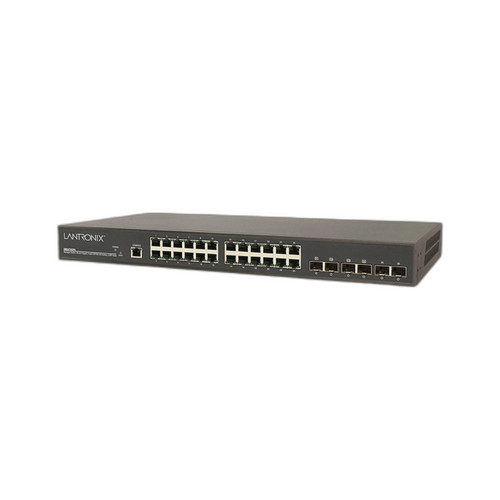
The SM4T4DPA-NA is explicitly described as rack-mountable, with mounting brackets sold separately. Its weight is 3.85 lbs, making it a relatively lightweight option for rack or wall deployment in an IDF closet or equipment cabinet.
The SM24T6DPA-NA weighs 5.3 lbs — approximately 38% heavier than the SM4T4DPA-NA. Its provided specifications do not mention rack-mounting capability or bracket availability. The SM24T6DPA-NA is positioned for distributed sites, remote locations, and simplified networks, suggesting a desktop or surface-mount deployment profile rather than rack integration.
For installers working in structured rack environments, the SM4T4DPA-NA's documented rack-mount support and lower weight are meaningful practical advantages. The SM24T6DPA-NA's heavier chassis without stated rack-mount specs may suit surface or DIN-mounted edge deployments.
How do these switches handle frame processing and traffic management?
The SM4T4DPA-NA uses a store-and-forward switching architecture. This method buffers each incoming frame in full before forwarding, enabling error checking and bad-frame filtering — a meaningful reliability benefit on camera networks where corrupted frames from long cable runs or marginal connectors would otherwise propagate.
The SM24T6DPA-NA employs 802.1D STP (Spanning Tree Protocol) switching. STP prevents broadcast storms when redundant or accidental loop paths exist in the cabling topology — a useful safeguard in multi-switch ring or daisy-chain layouts. The SM24T6DPA-NA's spec also mentions 'VLAN and Private management of up to 8 traffic types' under its Management field, while the Architecture field contradicts this by stating 'No VLAN or remote management support.' This inconsistency in the provided specifications should be clarified with the manufacturer before purchase.
Neither switch offers remote management, web GUI, SNMP, or CLI configuration. Both are true unmanaged plug-and-play devices.
Which should you choose: the SM24T6DPA-NA or the SM4T4DPA-NA?
Our take: The SM4T4DPA-NA is the stronger choice when documented switching capacity, rack-mount integration, and verified frame-error filtering are priorities. Its 48 Gbps non-blocking throughput is explicitly specified — the SM24T6DPA-NA provides no equivalent figure. The SM4T4DPA-NA also weighs 1.45 lbs less (3.85 vs. 5.3 lbs) and is confirmed rack-mountable with available brackets, versus the SM24T6DPA-NA's unspecified mounting options. The SM24T6DPA-NA's 802.1D STP support offers a concrete advantage in topologies with redundant cable paths where loop prevention is needed. Note that the SM24T6DPA-NA's specifications contain an internal contradiction regarding VLAN capability that must be resolved with Transition Networks before deployment in any traffic-segmented environment. Both carry lifetime warranties. Choose the SM4T4DPA-NA for rack-based closet deployments; consider the SM24T6DPA-NA only if STP loop protection on a non-rack edge site is the deciding requirement.
Side-by-Side Comparison
Spec-for-spec, from manufacturer data.
| Specification | Transition Networks SM24T6DPA-NA | Transition Networks SM4T4DPA-NA |
|---|---|---|
| SKU | SM24T6DPA-NA | SM4T4DPA-NA |
| Product Type | Switch | Switch |
| Managed | Unmanaged | Unmanaged |
| Total Ports | 24 | 24 |
| Port Type | Gigabit Ethernet | Gigabit Ethernet (RJ45) |
| Port Speed | 1 Gbps | 1000 Mbps (1 Gbps) |
| SFP Slots | 0 | 0 |
| Switching Capacity | — | 48 Gbps |
| Switching Architecture | 802.1D STP | Store-and-forward |
| VLAN Support | Contradictory in specs — verify with manufacturer | Not specified |
| Form Factor | Not specified | Rack-mountable |
| Mounting Brackets | Not specified | Sold separately |
| Weight | 5.3 lbs | 3.85 lbs |
| Warranty | Lifetime | Lifetime |
| Target Deployment | Distributed sites, remote locations | Plug-and-play network access |
| Datasheet | /content/product-datasheets/SM24T6DPA-NA.pdf | /content/product-datasheets/SM4T4DPA-NA.pdf |
Frequently Asked Questions
Which should you choose: the SM24T6DPA-NA or the SM4T4DPA-NA?
The SM4T4DPA-NA is the stronger choice when documented switching capacity, rack-mount integration, and verified frame-error filtering are priorities. Its 48 Gbps non-blocking throughput is explicitly specified — the SM24T6DPA-NA provides no equivalent figure. The SM4T4DPA-NA also weighs 1.45 lbs less (3.85 vs. 5.3 lbs) and is confirmed rack-mountable with available brackets, versus the SM24T6DPA-NA's unspecified mounting options. The SM24T6DPA-NA's 802.1D STP support offers a concrete advantage in topologies with redundant cable paths where loop prevention is needed. Note that the SM24T6DPA-NA's specifications contain an internal contradiction regarding VLAN capability that must be resolved with Transition Networks before deployment in any traffic-segmented environment. Both carry lifetime warranties. Choose the SM4T4DPA-NA for rack-based closet deployments; consider the SM24T6DPA-NA only if STP loop protection on a non-rack edge site is the deciding requirement.
Is the SM24T6DPA-NA or SM4T4DPA-NA better for a rack-mounted IDF closet installation?
The SM4T4DPA-NA is the better fit for rack installations. It is explicitly spec'd as rack-mountable with brackets available separately and weighs 3.85 lbs. The SM24T6DPA-NA's specifications do not mention rack-mounting capability, and at 5.3 lbs it is heavier. If a standard rack-unit form factor is required, confirm rack dimensions with Transition Networks for the SM24T6DPA-NA before purchasing.
Do either of these switches support VLANs for separating camera traffic from other network traffic?
Neither switch is a managed device, and both are described as unmanaged plug-and-play. The SM4T4DPA-NA specifications make no VLAN claim. The SM24T6DPA-NA specifications contain a contradiction: the Management field references 'VLAN and Private management of up to 8 traffic types,' while the Architecture field states 'No VLAN or remote management support.' This inconsistency should be resolved directly with Transition Networks before relying on VLAN functionality.
Which switch has a higher total switching throughput for dense IP camera deployments?
The SM4T4DPA-NA specifies 48 Gbps switching capacity — full non-blocking wire speed across all 24 Gigabit ports. The SM24T6DPA-NA does not list a switching capacity figure in its provided specifications. For deployments requiring a confirmed throughput specification for network design or procurement documentation, the SM4T4DPA-NA is the only model here with that data point available.
More Network Switch Comparisons
- TP-Link S5500-24GP4XF vs NETGEAR GS728TP-300NAS
- TP-Link S5500-24GP4XF vs Comnet CNGE24FX12TX12MSPOE
- TP-Link S5500-24GP4XF vs Ubiquiti USW-24
- TP-Link S5500-24GP4XF vs Ubiquiti USW-ENTERPRISEXG-24
- TP-Link S5500-24GP4XF vs TP-Link SL2428P
- TP-Link S5500-24GP4XF vs TP-Link SG3428XPP-M2
Network Switch Buying Guides
Get a Second Opinion on Your Camera Choice
Share your site layout, coverage goals, and budget. Our team will validate the camera selection, flag anything we would change, and recommend products that match the use case.