
Transition Networks S3290-24-NA vs Transition Networks SM24T6DPA-NA: Specification Comparison
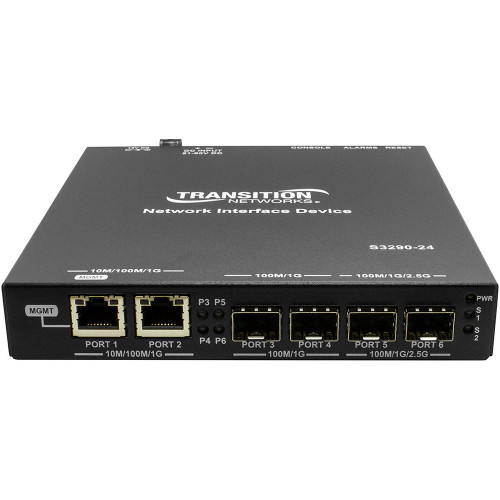
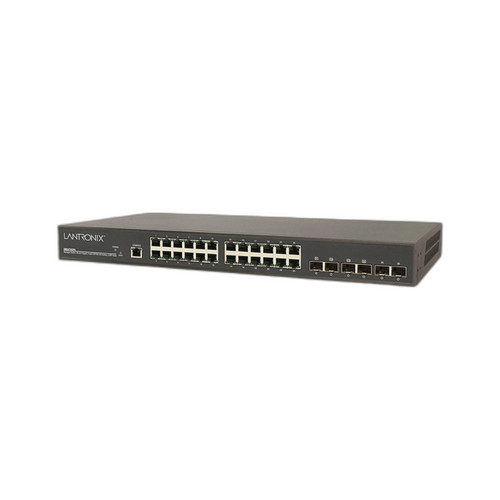
Both the Transition Networks S3290-24-NA and SM24T6DPA-NA are 24-port, unmanaged, non-PoE Ethernet switches from the same manufacturer — a product class physical-security integrators commonly deploy for IP camera backhaul and access-control device aggregation. The comparison turns on a fundamental throughput and connectivity divide: the S3290-24-NA operates at 10 Gigabit per port with mixed copper/fiber uplink capability, while the SM24T6DPA-NA operates at 1 Gigabit per port with copper-only connectivity and no SFP expansion slots.
In This Guide
- Which switch delivers the port speed and aggregate throughput your deployment requires?
- Which switch supports fiber uplinks and extended cable-run distances?
- Which switch is rated for industrial or non-conditioned environments, and what traffic management is available?
- Which should you choose: the S3290-24-NA or the SM24T6DPA-NA?
- Side-by-Side Specs
- FAQ
Which switch delivers the port speed and aggregate throughput your deployment requires?
The S3290-24-NA provides 24 ports at 10G per port, yielding a theoretical aggregate of 240 Gbps across all copper ports, plus 4 additional SFP slots for fiber or additional 10G uplinks. The SM24T6DPA-NA provides 24 ports at Gigabit (1G) per port with zero SFP expansion slots — a tenfold reduction in per-port throughput compared to the S3290-24-NA.
For deployments aggregating high-bitrate 4K or multi-sensor cameras, NVR uplinks, or high-density access-control panels, the per-port speed gap is material. The SM24T6DPA-NA's Gigabit ports are adequate for individual IP cameras and card readers in standard-definition to 1080p ranges, but the S3290-24-NA's 10G ports are better positioned for trunk links or NVR-facing aggregation where sustained high-bandwidth streams converge.
Which switch supports fiber uplinks and extended cable-run distances?
The S3290-24-NA includes 4 SFP module slots alongside its 24 copper RJ45 ports. The product specifications note 2 twisted-pair ports and 4 SFP module slots as package contents, enabling mixed copper-and-fiber connectivity. SFP slots allow single-mode or multi-mode fiber modules to be installed, supporting extended cable runs beyond the 100-meter copper limit — the specific fiber reach depends on the SFP module selected, which is not detailed in the provided specifications.
The SM24T6DPA-NA has zero SFP slots per its specifications. All 24 ports are copper Gigabit Ethernet. Buyers who need to span buildings, connect across parking structures, or link to a head-end farther than 100 meters via fiber cannot do so with the SM24T6DPA-NA without an external media converter. The S3290-24-NA eliminates that need for up to 4 fiber runs natively.
Which switch is rated for industrial or non-conditioned environments, and what traffic management is available?
The S3290-24-NA is specified with an Industrial operating temperature rating, indicating an extended temperature range suitable for telecom enclosures, outdoor cabinets, or unconditioned spaces. The SM24T6DPA-NA does not carry an industrial temperature designation in the provided specifications — its operating environment rating is not stated.
Both switches are unmanaged. The S3290-24-NA offers zero-touch, no-IP-configuration operation. The SM24T6DPA-NA is also unmanaged plug-and-play but includes 802.1D Spanning Tree Protocol (STP) switching, which provides loop protection if redundant cable paths are present. The SM24T6DPA-NA specifications also reference 'VLAN and Private management of up to 8 traffic types' under the Management field — this conflicts with its Unmanaged designation and with the Architecture field stating 'No VLAN or remote management support'; buyers should verify with Transition Networks documentation before relying on VLAN capability. The S3290-24-NA specifications do not reference STP or VLAN capabilities.
Which should you choose: the S3290-24-NA or the SM24T6DPA-NA?
Our take: The S3290-24-NA is the stronger choice when port throughput, fiber uplink capability, or industrial operating temperatures are requirements. Its 10G per-port speed represents a tenfold increase over the SM24T6DPA-NA's 1G ports, its 4 SFP slots add fiber connectivity the SM24T6DPA-NA entirely lacks, and its Industrial temperature rating suits unconditioned enclosures where the SM24T6DPA-NA's operating environment is unspecified. Conversely, the SM24T6DPA-NA is a lower-complexity option for standard 1G IP camera or access-control deployments in conditioned spaces where copper runs are under 100 meters, and its documented 802.1D STP support provides broadcast-storm protection the S3290-24-NA does not list. Both carry Lifetime warranties. Buyers should note the SM24T6DPA-NA's conflicting VLAN references in its spec sheet and confirm with Transition Networks before designing any traffic-segmentation scheme around that model.
Side-by-Side Comparison
Spec-for-spec, from manufacturer data.
| Specification | Transition Networks S3290-24-NA | Transition Networks SM24T6DPA-NA |
|---|---|---|
| Product Type | Switch | Switch |
| SKU | S3290-24-NA | SM24T6DPA-NA |
| Total Port Count | 24 + 4 SFP | 24 |
| Port Speed | 10G | Gigabit (1G) |
| SFP Slots | 4 | 0 |
| Fiber Connectivity | Yes (via SFP slots) | No |
| Copper Ports | 24x RJ45 (10G) | 24x RJ45 (1G) |
| Management | Unmanaged | Unmanaged |
| Spanning Tree (STP) | Not specified | 802.1D STP |
| VLAN Support | Not specified | Conflicting spec — verify with mfr |
| Operating Temperature | Industrial (extended range) | Not specified |
| PoE | Not specified | Not specified |
| Warranty | Lifetime | Lifetime |
| Weight | Not specified | 5.3 lbs |
| Datasheet | /content/product-datasheets/S3290-24-NA.pdf | /content/product-datasheets/SM24T6DPA-NA.pdf |
Frequently Asked Questions
Which should you choose: the S3290-24-NA or the SM24T6DPA-NA?
The S3290-24-NA is the stronger choice when port throughput, fiber uplink capability, or industrial operating temperatures are requirements. Its 10G per-port speed represents a tenfold increase over the SM24T6DPA-NA's 1G ports, its 4 SFP slots add fiber connectivity the SM24T6DPA-NA entirely lacks, and its Industrial temperature rating suits unconditioned enclosures where the SM24T6DPA-NA's operating environment is unspecified. Conversely, the SM24T6DPA-NA is a lower-complexity option for standard 1G IP camera or access-control deployments in conditioned spaces where copper runs are under 100 meters, and its documented 802.1D STP support provides broadcast-storm protection the S3290-24-NA does not list. Both carry Lifetime warranties. Buyers should note the SM24T6DPA-NA's conflicting VLAN references in its spec sheet and confirm with Transition Networks before designing any traffic-segmentation scheme around that model.
Is the S3290-24-NA or SM24T6DPA-NA better for connecting an NVR to high-bitrate 4K cameras?
The S3290-24-NA is better suited for that workload. Its 24 ports each run at 10G, providing far more headroom for sustained high-bitrate streams from multiple 4K cameras converging on an NVR uplink. The SM24T6DPA-NA's 1G ports can handle individual 4K camera feeds at typical H.265 bitrates, but aggregate throughput to an NVR becomes a constraint as camera count and resolution rise.
Can either switch connect to a fiber backbone without an external media converter?
Only the S3290-24-NA supports direct fiber connectivity. It includes 4 SFP module slots that accept field-installed SFP transceivers for single-mode or multi-mode fiber runs. The SM24T6DPA-NA has zero SFP slots and no fiber capability per its specifications — fiber integration would require a separate media converter.
Which switch is suitable for an outdoor or unconditioned equipment cabinet?
The S3290-24-NA carries an Industrial operating temperature rating, indicating it is designed for extended temperature environments such as outdoor enclosures or telecom cabinets. The SM24T6DPA-NA does not specify an industrial or extended temperature rating in the provided specifications, so its suitability for unconditioned environments cannot be confirmed from the available data.
More Network Switch Comparisons
- TP-Link S5500-24GP4XF vs NETGEAR GS728TP-300NAS
- TP-Link S5500-24GP4XF vs Comnet CNGE24FX12TX12MSPOE
- TP-Link S5500-24GP4XF vs Ubiquiti USW-24
- TP-Link S5500-24GP4XF vs Ubiquiti USW-ENTERPRISEXG-24
- TP-Link S5500-24GP4XF vs TP-Link SL2428P
- TP-Link S5500-24GP4XF vs TP-Link SG3428XPP-M2
Network Switch Buying Guides
Get a Second Opinion on Your Camera Choice
Share your site layout, coverage goals, and budget. Our team will validate the camera selection, flag anything we would change, and recommend products that match the use case.