
TP-Link SG3428MP vs Transition Networks SM24DP4XA-NA: Specification Comparison
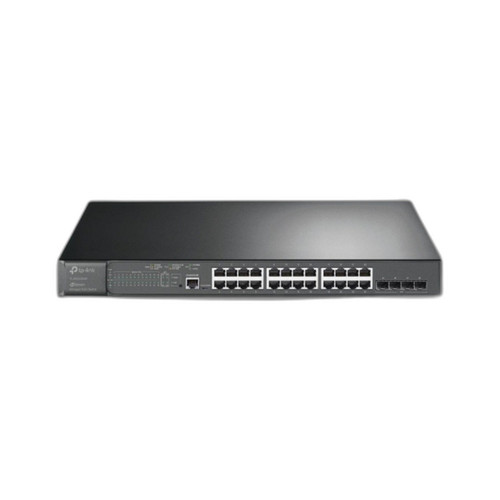
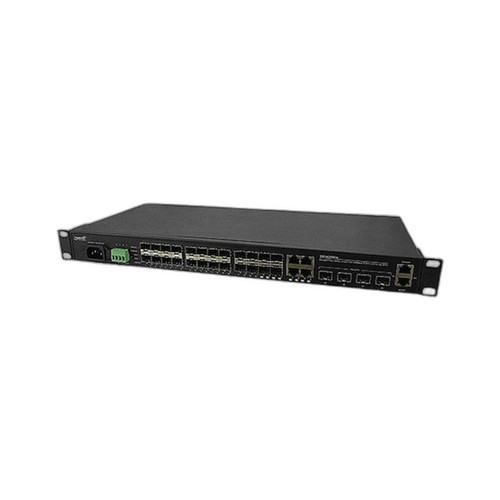
Both the TP-Link SG3428MP and the Transition Networks SM24DP4XA-NA are 28-port Gigabit managed switches aimed at physical-security and enterprise LAN deployments, making them genuine cross-shop candidates at the aggregation or edge layer. The comparison turns on a fundamental architectural split: the SG3428MP is a PoE+ access-layer switch purpose-built to power IP cameras and access-control devices directly, while the SM24DP4XA-NA is a non-PoE aggregation/distribution switch with dual AC/DC power input and Layer 2/3 routing capability.
In This Guide
- Which switch delivers the PoE power budget your camera and access-control deployment actually needs?
- How does each switch handle power-source redundancy and site power conditions?
- What management depth, security protocols, and Layer 3 features does each switch support?
- Which should you choose: the SG3428MP or the SM24DP4XA-NA?
- Side-by-Side Specs
- FAQ
Which switch delivers the PoE power budget your camera and access-control deployment actually needs?
The TP-Link SG3428MP provides 24 IEEE 802.3at PoE+ ports with a total power budget of 384 W. At the 12–15 W draw typical of dual-sensor dome cameras with integrated heaters, that budget can sustain roughly 25–32 simultaneous powered devices before the budget ceiling is reached. Every PoE port carries Gigabit throughput via RJ45, and four SFP slots handle uplinks or fiber segments.
The Transition Networks SM24DP4XA-NA does not list PoE capability in the provided specifications. No PoE standard, no per-port wattage, and no total power budget are documented for this model. Buyers who need to power IP cameras or access readers directly from the switch must supply external PoE injectors or mid-span panels if they choose the SM24DP4XA-NA, adding cost and rack space. The SG3428MP holds a decisive advantage on this dimension for powered-device deployments.
How does each switch handle power-source redundancy and site power conditions?
The Transition Networks SM24DP4XA-NA specifies an AC/DC dual power supply, accepting both AC (110–240 VAC is the implied range for enterprise gear, though exact input voltage is not confirmed in the provided specs) and DC (24–60 VDC per the compatible-accessories field). This dual-input architecture allows the switch to run on a UPS-fed AC circuit and simultaneously accept a 48 V DC feed from a generator-backed system or a telecom-style rectifier, a meaningful resilience feature for critical-infrastructure or remote-site installations.
The TP-Link SG3428MP lists 384 W total power consumption but provides no specification for redundant or dual-source power input in the data supplied. Operating environment parameters such as temperature range, humidity rating, and MTBF are not present in the provided specifications for either model, so a direct environmental comparison cannot be made from available data.
What management depth, security protocols, and Layer 3 features does each switch support?
The Transition Networks SM24DP4XA-NA is documented as a Layer 2/3 managed switch supporting IEEE 802.1X port authentication, RADIUS, and TACACS+ AAA, SSH and SSL for encrypted management sessions, DHCP Relay, DHCP Option 82, VLAN segmentation, and jumbo frames up to 4,776 bytes. The Layer 3 capability enables inter-VLAN routing without an external router, which matters in segmented camera-network architectures with separate VLANs per device class.
The TP-Link SG3428MP is classified as L2+ Managed. The provided specifications do not enumerate supported security protocols, authentication methods, or Layer 3 routing features. TP-Link's JetStream L2+ platform typically includes VLAN, QoS, RSTP, and IGMP snooping, but none of those capabilities are confirmed in the specs provided and cannot be cited. Buyers requiring documented AAA, RADIUS, or TACACS+ support must verify those features independently before specifying the SG3428MP.
Which should you choose: the SG3428MP or the SM24DP4XA-NA?
Our take: The SG3428MP is the stronger choice when the primary requirement is powering a dense layer of IP cameras and access-control devices directly from the switch: its 384 W PoE+ budget across 24 ports eliminates the cost and complexity of external injectors, and 4 SFP uplink slots support fiber aggregation. The SM24DP4XA-NA is the stronger choice for aggregation or distribution tiers where powered endpoints are not connected directly: its dual AC/DC input provides documented power-source redundancy the SG3428MP spec sheet does not confirm, its Layer 2/3 capability enables inter-VLAN routing without an upstream router, and its documented 802.1X, RADIUS, TACACS+, SSH, and SSL feature set satisfies stricter network-security mandates. Specify the SG3428MP at the access layer feeding cameras; specify the SM24DP4XA-NA upstream at the distribution layer or wherever dual-feed power resilience and Layer 3 routing are required.
Side-by-Side Comparison
Spec-for-spec, from manufacturer data.
| Specification | TP-Link SG3428MP | Transition Networks SM24DP4XA-NA |
|---|---|---|
| MPN | SG3428MP | SM24DP4XA-NA |
| Brand | TP-Link | Transition Networks |
| Total Ports | 28 | 28 |
| Port Speed | Gigabit (1G) | Gigabit (1G) |
| PoE Standard | 802.3at (PoE+) | — |
| PoE-Capable Ports | 24 | — |
| Total PoE Budget | 384 W | — |
| SFP / Uplink Slots | 4 × SFP | — |
| Management Level | L2+ Managed | Layer 2/3 Managed |
| Power Input | — | Dual AC/DC |
| DC Input Range | — | 24–60 VDC (per spec) |
| Authentication | — | IEEE 802.1X, RADIUS, TACACS+ |
| Encrypted Management | — | SSH / SSL |
| VLAN Support | — | Yes |
| Jumbo Frame Support | — | Up to 4,776 bytes |
| Connector Type | RJ45 | — |
Frequently Asked Questions
Which should you choose: the SG3428MP or the SM24DP4XA-NA?
The SG3428MP is the stronger choice when the primary requirement is powering a dense layer of IP cameras and access-control devices directly from the switch: its 384 W PoE+ budget across 24 ports eliminates the cost and complexity of external injectors, and 4 SFP uplink slots support fiber aggregation. The SM24DP4XA-NA is the stronger choice for aggregation or distribution tiers where powered endpoints are not connected directly: its dual AC/DC input provides documented power-source redundancy the SG3428MP spec sheet does not confirm, its Layer 2/3 capability enables inter-VLAN routing without an upstream router, and its documented 802.1X, RADIUS, TACACS+, SSH, and SSL feature set satisfies stricter network-security mandates. Specify the SG3428MP at the access layer feeding cameras; specify the SM24DP4XA-NA upstream at the distribution layer or wherever dual-feed power resilience and Layer 3 routing are required.
Can the SM24DP4XA-NA power IP cameras directly the way the SG3428MP does?
No. The SM24DP4XA-NA does not list any PoE standard, per-port wattage, or total PoE budget in the provided specifications. The SG3428MP supplies 802.3at PoE+ on 24 ports with a 384 W budget, making it the appropriate choice for directly powering IP cameras, intercoms, or access readers.
Which switch is better suited for a site with unreliable utility power or a DC backup plant?
The SM24DP4XA-NA specifies a dual AC/DC power supply capable of accepting both AC and DC input (24–60 VDC per available specs), making it compatible with telecom-style DC rectifier plants and generator-backed UPS systems. The SG3428MP does not document a dual or redundant power-input capability in the specs provided, so the SM24DP4XA-NA has a documented advantage for power-resilient sites.
Does the SG3428MP or SM24DP4XA-NA support RADIUS and 802.1X for stricter network-access control?
The SM24DP4XA-NA explicitly lists IEEE 802.1X, RADIUS, and TACACS+ support in the provided specifications, along with SSH/SSL for encrypted management. The SG3428MP is classified as L2+ Managed, but the provided specifications do not confirm RADIUS, TACACS+, or 802.1X support. Buyers with documented AAA requirements should verify TP-Link's feature set through the official datasheet before specifying the SG3428MP.
More Network Switch Comparisons
- TP-Link S5500-24GP4F vs Transition Networks SM24DP4XA-NA
- TP-Link S5500-24GP4F vs Comnet CWX28F4T24MPB
- TP-Link S5500-24GP4F vs TP-Link SG3428MP
- TP-Link SG3428MP vs Comnet CWX28F4T24MPB
- Transition Networks SM24DP4XA-NA vs Comnet CWX28F4T24MPB
Network Switch Buying Guides
Get a Second Opinion on Your Camera Choice
Share your site layout, coverage goals, and budget. Our team will validate the camera selection, flag anything we would change, and recommend products that match the use case.