
TP-Link SG2210MP vs Vivotek FGT-100P-110: Specification Comparison
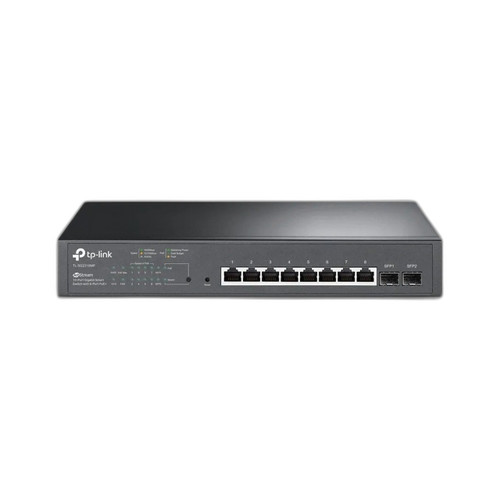
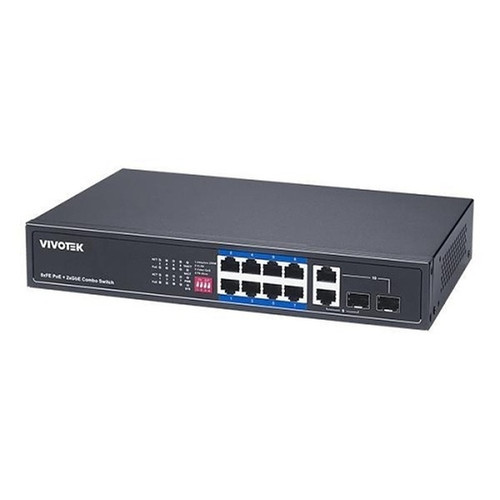
Both the TP-Link SG2210MP and the Vivotek AW-FGT-100P-110 are 10-port PoE Gigabit switches targeting physical security and IP camera deployments in rack or cabinet environments. They share the same basic port count and PoE power-delivery purpose, making them a legitimate cross-shop for integrators specifying network infrastructure for surveillance systems. The critical dividing line is management capability and PoE standard: one is a fully managed smart switch with fiber uplinks, the other an unmanaged plug-and-play device limited to 802.3af power delivery.
In This Guide
- Which switch delivers more PoE power and supports more demanding endpoint devices?
- Which switch offers the network management and uplink architecture needed for scalable deployments?
- How do the two switches compare on physical installation, environmental tolerance, and endpoint compatibility?
- Which should you choose: the SG2210MP or the FGT-100P-110?
- Side-by-Side Specs
- FAQ
Which switch delivers more PoE power and supports more demanding endpoint devices?
The SG2210MP provides 8 PoE+ ports rated to 802.3at (up to 30 W per port) with a total PoE budget of 150 W across those 8 ports. This supports higher-draw devices such as PTZ cameras, multi-sensor cameras, pan-tilt heads, and access control panels that exceed the 15.4 W ceiling of 802.3af.
The AW-FGT-100P-110 delivers PoE on all 10 ports, but the spec explicitly lists 802.3af only — capped at 15.4 W per port. Total PoE budget is not stated in the provided specifications. Simultaneous all-port PoE delivery is claimed, but without a published watt budget, integrators cannot verify whether power is shared or independently sourced per port.
For deployments mixing fixed IP cameras with PTZ units, intercoms, or multi-sensor domes, the SG2210MP's 802.3at support and confirmed 150 W budget is a concrete, verifiable advantage. The AW-FGT-100P-110 is limited to 802.3af endpoints; pairing it with any 802.3at-only device will result in non-powered or degraded operation.
Which switch offers the network management and uplink architecture needed for scalable deployments?
The SG2210MP is a managed smart switch with Omada SDN controller integration. It provides two SFP slots supporting both multi-mode and single-mode fiber, enabling long-distance uplinks to a core switch or NVR aggregation layer. The managed feature set implies VLAN segmentation, QoS prioritization, port mirroring, storm control, and link aggregation — critical capabilities for separating camera traffic from corporate LAN and for troubleshooting.
The AW-FGT-100P-110 is explicitly unmanaged and plug-and-play with automatic MDI/MDIX crossover. No management interface, VLAN, QoS, or fiber uplink capability is listed in the provided specifications. The spec sheet fields labeled 'Management: Tools' and 'Analytics: Object Analytics' appear to be navigation elements from a product page rather than device features, and are not treated as confirmed specifications here.
For any installation requiring network segmentation, traffic prioritization, or remote monitoring, the SG2210MP is the only option of the two with confirmed management capability. The AW-FGT-100P-110 suits simple, isolated camera-only LANs where zero configuration is the priority.
How do the two switches compare on physical installation, environmental tolerance, and endpoint compatibility?
The SG2210MP occupies a 1U rack form factor in a 13-inch footprint with a specified operating temperature of 0°C to 40°C. Copper PoE range is 100 m per IEEE standard; fiber uplink range is limited only by the SFP module selected. The Omada ecosystem implies compatibility with TP-Link Omada APs, cameras, and routers under unified controller management.
The AW-FGT-100P-110 is described as compact and rack/cabinet mountable with a mounting kit included and a weight of 1.0 lb. Housing color is white. No operating temperature range is provided in the supplied specifications. The product is positioned specifically for IP camera applications under the Vivotek ecosystem.
The SG2210MP's 0°C–40°C rating gives installers a confirmed thermal envelope for IDF closets. The AW-FGT-100P-110's operating temperature is not specified, which requires installers to consult the full datasheet before deploying in thermally challenged enclosures. The Vivotek switch's lighter weight and white housing may suit surface-mount or small-cabinet installs where rack space is not formatted for a 1U chassis.
Which should you choose: the SG2210MP or the FGT-100P-110?
Our take: The SG2210MP is the stronger choice when the deployment requires PoE+ power budgeting, network management, or fiber uplinks. Concretely: (1) it supports 802.3at at 150 W total versus the AW-FGT-100P-110's 802.3af-only standard with no published watt budget, directly affecting compatibility with PTZ cameras and multi-sensor heads; (2) it includes 2 SFP fiber uplink slots — multi-mode and single-mode — while the AW-FGT-100P-110 lists no fiber capability; (3) it is a managed smart switch with Omada SDN integration versus the AW-FGT-100P-110's unmanaged, zero-configuration architecture. The AW-FGT-100P-110 suits small, isolated 802.3af-only camera clusters where simplicity and fast deployment outweigh control — particularly within a Vivotek-native stack. Choose the SG2210MP for any installation requiring VLAN, QoS, or mixed 802.3af/at endpoints.
Side-by-Side Comparison
Spec-for-spec, from manufacturer data.
| Specification | TP-Link SG2210MP | Vivotek FGT-100P-110 |
|---|---|---|
| Product Type | Managed Smart Switch | Unmanaged Switch |
| Total Ports | 10 | 10 |
| PoE Ports | 8 | 10 |
| PoE Standard | 802.3at (PoE+) | 802.3af |
| Max PoE per Port | 30 W (802.3at) | 15.4 W (802.3af) |
| Total PoE Budget | 150 W | Not specified |
| Uplink / SFP Slots | 2 SFP (multi-mode & single-mode) | — |
| Fiber Support | Yes (multi-mode & single-mode) | — |
| Management | Yes — Omada SDN | None (plug-and-play) |
| VLAN / QoS | Supported (managed) | Not supported |
| Form Factor | 1U rack, 13-inch footprint | Compact, rack/cabinet mountable |
| Weight | Not specified | 1.0 lb |
| Housing Color | Not specified | White |
| Copper Range | 100 m | Not specified |
| Operating Temp | 0°C to 40°C | Not specified |
| Mounting | Rack mount | Rack/cabinet mount (kit included) |
Frequently Asked Questions
Which should you choose: the SG2210MP or the FGT-100P-110?
The SG2210MP is the stronger choice when the deployment requires PoE+ power budgeting, network management, or fiber uplinks. Concretely: (1) it supports 802.3at at 150 W total versus the AW-FGT-100P-110's 802.3af-only standard with no published watt budget, directly affecting compatibility with PTZ cameras and multi-sensor heads; (2) it includes 2 SFP fiber uplink slots — multi-mode and single-mode — while the AW-FGT-100P-110 lists no fiber capability; (3) it is a managed smart switch with Omada SDN integration versus the AW-FGT-100P-110's unmanaged, zero-configuration architecture. The AW-FGT-100P-110 suits small, isolated 802.3af-only camera clusters where simplicity and fast deployment outweigh control — particularly within a Vivotek-native stack. Choose the SG2210MP for any installation requiring VLAN, QoS, or mixed 802.3af/at endpoints.
Can either switch power a PTZ camera or a multi-sensor dome that needs more than 15 watts?
Only the SG2210MP supports 802.3at (PoE+), which delivers up to 30 W per port within a 150 W total budget. The AW-FGT-100P-110 is rated for 802.3af only, capping each port at 15.4 W. Any endpoint requiring 802.3at will not be powered correctly on the AW-FGT-100P-110.
Is the SG2210MP or AW-FGT-100P-110 better for a large deployment with multiple VLANs separating camera and corporate traffic?
The SG2210MP is the only option of the two that supports network management, including VLAN configuration, as a managed smart switch with Omada SDN controller integration. The AW-FGT-100P-110 is unmanaged and provides no VLAN, QoS, or remote management capability per its stated specifications.
Which switch is easier to install in a small, pre-wired surveillance cabinet with no IT staff on site?
The AW-FGT-100P-110 is explicitly designed for zero-configuration plug-and-play use with automatic MDI/MDIX crossover and simultaneous all-port PoE. It requires no login, no software, and no provisioning. The SG2210MP is a managed switch that offers more control but requires initial configuration of VLANs, QoS, or Omada controller settings to utilize its full feature set.
More Network Switch Comparisons
- TP-Link SG2210MP vs Lantronix SISPM1242-582-LRT
- TP-Link SG2210MP vs Speco Technologies P8S10G
- TP-Link SG2210MP vs TP-Link SG1210MPE
- Lantronix SISPM1242-582-LRT vs TP-Link SG1210MPE
- Lantronix SISPM1242-582-LRT vs Vivotek FGT-100P-110
- Lantronix SISPM1242-582-LRT vs Speco Technologies P8S10G
Network Switch Buying Guides
Get a Second Opinion on Your Camera Choice
Share your site layout, coverage goals, and budget. Our team will validate the camera selection, flag anything we would change, and recommend products that match the use case.