
TP-Link SG1210MPE vs Vivotek FGT-100P-110: Specification Comparison
Both the TP-Link TL-SG1210MPE and the Vivotek AW-FGT-100P-110 are 10-port Gigabit PoE switches targeting IP camera and surveillance deployments — a class a buyer would legitimately cross-shop when equipping a small-to-mid camera network. The comparison centers on three axes that matter most in this segment: PoE standard, budget, and per-port power delivery; management capability and uplink flexibility; and form factor, application fit, and documented specifications depth.
In This Guide
- Which switch delivers more PoE power, and does it support higher-wattage cameras?
- Which switch gives installers more control over traffic and supports fiber uplinks?
- Which switch is better suited to rack-mount surveillance enclosures and documented for physical installation?
- Which should you choose: the SG1210MPE or the FGT-100P-110?
- Side-by-Side Specs
- FAQ
Which switch delivers more PoE power, and does it support higher-wattage cameras?
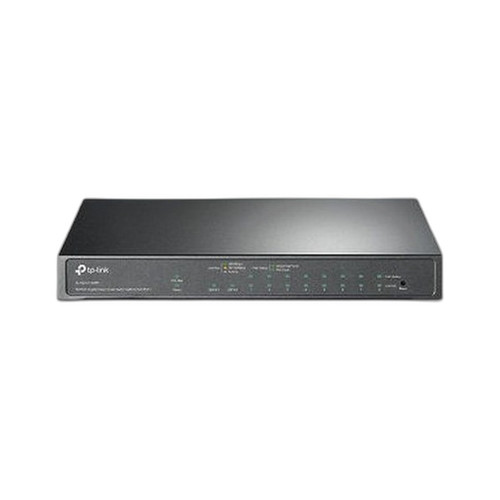
The TL-SG1210MPE supports IEEE 802.3at (PoE+) on its eight dedicated PoE ports, with a total budget of 123 W and a maximum of 30 W per port. This accommodates PTZ cameras, pan-tilt units, access control panels, and other devices that exceed the 15.4 W ceiling of the older 802.3af standard.
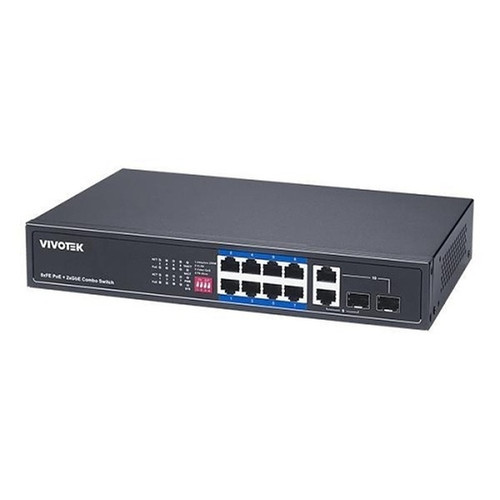
The AW-FGT-100P-110 is specified at IEEE 802.3af only across all 10 ports. The per-port maximum under 802.3af is 15.4 W; total PoE budget is not stated in the provided specifications. Buyers powering 802.3af-only fixed cameras may find either switch adequate, but anyone requiring PoE+ (802.3at) power levels cannot substitute the Vivotek unit — the standard it implements hard-caps per-port delivery below what PoE+ devices require.
Which switch gives installers more control over traffic and supports fiber uplinks?
The TL-SG1210MPE is classified as an Easy Smart Managed switch with a web-based UI. This provides VLAN segmentation, QoS, port mirroring, and similar Layer 2 tools without requiring a full CLI-managed platform. It also includes one combo SFP/RJ45 slot, supporting both single-mode and multi-mode fiber uplinks to a core switch or NVR — useful in larger buildings or where copper distance limits apply.
The AW-FGT-100P-110 is specified as unmanaged and plug-and-play with automatic MDI/MDIX crossover. No management interface, VLAN capability, or CLI access is documented. There is no SFP or fiber uplink slot listed in the provided specifications. For installers who need to isolate camera traffic, prioritize video streams, or backhaul over fiber, the Vivotek unit does not provide those capabilities as specified.
Which switch is better suited to rack-mount surveillance enclosures and documented for physical installation?
The AW-FGT-100P-110 is documented as compact and rack/cabinet mountable, with a listed weight of 1.0 lb and a housing color of white. The specification explicitly targets IP camera applications and notes simultaneous all-port PoE delivery across all 10 ports.
The TL-SG1210MPE specifications do not state a chassis weight, housing color, or explicit rack-mount designation in the provided data. Its port layout is 9× RJ45 plus 1× SFP combo, giving one fewer copper PoE port than the Vivotek's 10 copper PoE ports — a relevant difference when every port must power a camera. Physical installation documentation beyond the datasheet reference is absent from the provided specs for this unit.
Which should you choose: the SG1210MPE or the FGT-100P-110?
Our take: The TL-SG1210MPE is the stronger choice when cameras require PoE+ power levels, when the network requires VLAN segmentation or QoS, or when a fiber uplink is needed — the AW-FGT-100P-110 supports none of those capabilities as specified. Key spec deltas: the TP-Link delivers up to 30 W per port (802.3at) versus the Vivotek's 15.4 W ceiling (802.3af), provides a 123 W documented total PoE budget versus no stated budget for the Vivotek, and includes a web management UI plus a combo SFP uplink slot that the Vivotek entirely lacks. The AW-FGT-100P-110 is a defensible choice only in installations limited strictly to 802.3af fixed cameras, where zero configuration is a priority, and where all 10 ports must deliver PoE simultaneously to cameras — its 10 copper PoE ports versus the TP-Link's 8 gives one additional powered device slot on copper.
Side-by-Side Comparison
Spec-for-spec, from manufacturer data.
| Specification | TP-Link SG1210MPE | Vivotek FGT-100P-110 |
|---|---|---|
| Product Type | Easy Smart Managed Switch | Unmanaged PoE Switch |
| Total Ports | 10 (9× RJ45 + 1× SFP combo) | 10 (10× RJ45) |
| PoE Ports | 8 | 10 |
| PoE Standard | 802.3at (PoE+) | 802.3af |
| Max Per-Port PoE Power | 30 W | 15.4 W (802.3af ceiling) |
| Total PoE Budget | 123 W | — |
| Uplink / SFP Slot | 1× combo SFP/RJ45 (SM/MM fiber) | — |
| Speed | 1000 Mbps (Gigabit) | — |
| Management | Web-based UI | None (plug-and-play) |
| VLAN / QoS Support | Yes (Easy Smart managed features) | — |
| MDI/MDIX | — | Automatic crossover |
| Rack Mountable | — | Yes |
| Chassis Weight | — | 1.0 lb |
| Housing Color | — | White |
| Target Application | General surveillance / mixed PoE | IP camera dedicated |
| Datasheet Available | Yes (/content/datasheets/TL-SG1210MPE.pdf) | Yes (/content/product-datasheets/AW-FGT-100P-110.pdf) |
Frequently Asked Questions
Which should you choose: the SG1210MPE or the FGT-100P-110?
The TL-SG1210MPE is the stronger choice when cameras require PoE+ power levels, when the network requires VLAN segmentation or QoS, or when a fiber uplink is needed — the AW-FGT-100P-110 supports none of those capabilities as specified. Key spec deltas: the TP-Link delivers up to 30 W per port (802.3at) versus the Vivotek's 15.4 W ceiling (802.3af), provides a 123 W documented total PoE budget versus no stated budget for the Vivotek, and includes a web management UI plus a combo SFP uplink slot that the Vivotek entirely lacks. The AW-FGT-100P-110 is a defensible choice only in installations limited strictly to 802.3af fixed cameras, where zero configuration is a priority, and where all 10 ports must deliver PoE simultaneously to cameras — its 10 copper PoE ports versus the TP-Link's 8 gives one additional powered device slot on copper.
Can the AW-FGT-100P-110 power PTZ cameras or multi-sensor cameras that need more than 15 W?
Not as specified. The AW-FGT-100P-110 is documented as IEEE 802.3af only, which caps per-port delivery at 15.4 W. PTZ cameras and many multi-sensor or IR cameras require 802.3at (PoE+) at up to 30 W. The TL-SG1210MPE supports 802.3at at 30 W per port and is the appropriate choice for those devices.
Is the TL-SG1210MPE or AW-FGT-100P-110 better for a zero-touch, plug-and-play camera installation?
The AW-FGT-100P-110 is explicitly specified as unmanaged and plug-and-play with automatic MDI/MDIX crossover — no configuration is required. The TL-SG1210MPE includes a web-based management UI, which adds capability but also adds a setup step. For a simple, no-config camera drop-in where all devices are 802.3af-compatible, the Vivotek unit fits that workflow as documented.
Which switch supports connecting to a fiber backbone or a distant core switch?
Only the TL-SG1210MPE. It includes one combo SFP/RJ45 slot documented as compatible with both single-mode and multi-mode fiber. The AW-FGT-100P-110 specifications list no SFP slot or fiber uplink capability.
More Network Switch Comparisons
- TP-Link SG2210MP vs Lantronix SISPM1242-582-LRT
- TP-Link SG2210MP vs Vivotek FGT-100P-110
- TP-Link SG2210MP vs Speco Technologies P8S10G
- TP-Link SG2210MP vs TP-Link SG1210MPE
- Lantronix SISPM1242-582-LRT vs TP-Link SG1210MPE
- Lantronix SISPM1242-582-LRT vs Vivotek FGT-100P-110
Network Switch Buying Guides
Get a Second Opinion on Your Camera Choice
Share your site layout, coverage goals, and budget. Our team will validate the camera selection, flag anything we would change, and recommend products that match the use case.