
TP-Link SG105PP-M2 vs Ubiquiti USW-FLEX-MINI: Specification Comparison
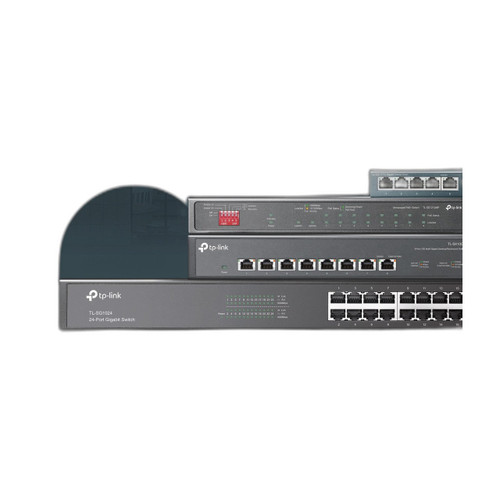
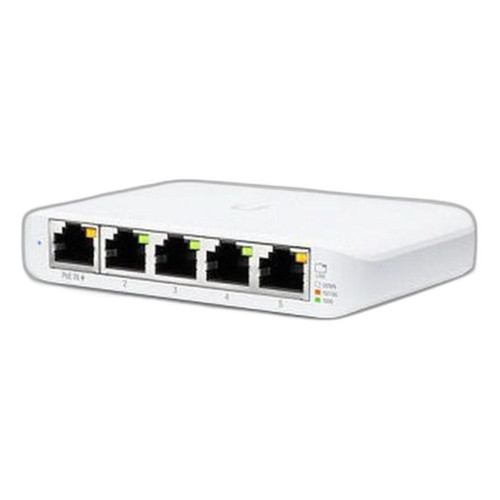
Both units are compact 5-port desktop switches aimed at small-site and edge deployments, making them a legitimate cross-shop for installers evaluating edge switching. The comparison covers the TP-Link TL-SG105PP-M2, a 2.5G multi-gigabit unmanaged PoE++ switch, against the Ubiquiti USW-FLEX-MINI, a managed gigabit switch powered by USB-C. Key decision axes are port speed and PoE delivery capability, power architecture and physical footprint, and management depth and VLAN support.
In This Guide
- Which switch delivers more bandwidth and PoE power per port?
- How do the two switches differ in power supply, size, and operating environment?
- Which switch offers more network management capability and ecosystem integration?
- Which should you choose: the SG105PP-M2 or the USW-FLEX-MINI?
- Side-by-Side Specs
- FAQ
Which switch delivers more bandwidth and PoE power per port?
The TL-SG105PP-M2 provides five 2.5G RJ45 ports—four of which support PoE++ (802.3bt) up to the 65W total PoE budget, with a maximum power draw of 123W for the unit. The switching capacity is 19 Gbps with a forwarding rate of 119.0 Mpps at peak, and the spec lists a 250 m extended PoE transmission range. This makes it capable of powering high-wattage devices such as 802.3bt PTZ cameras, Wi-Fi 6E access points, or multi-sensor units directly from a single port.
The USW-FLEX-MINI offers five 1G Ethernet ports with a 10 Gbps switching capacity and a forwarding rate of 7 Mpps. Critically, the spec lists the device's own power consumption at 2.5W maximum and its supply as USB-C 5V; no per-port PoE output budget is specified anywhere in the provided data. The ~Card_Bullet_1 field references non-blocking throughput, and _Poe Power lists '802.3af,' but no PoE output wattage budget is provided in the specs, so installers cannot confirm any powered-device support from the spec sheet alone.
On raw bandwidth, the TL-SG105PP-M2 runs at 2.5× the port speed (2.5G vs 1G) and nearly 17× the forwarding rate (119.0 Mpps vs 7 Mpps). For sites running multi-gigabit cameras, NVRs pulling high bitrate streams, or next-generation APs, the TP-Link unit's port speed advantage is material. The USW-FLEX-MINI's throughput is adequate for standard 1080p/4MP camera streams but will bottleneck any device with a 2.5G NIC.
How do the two switches differ in power supply, size, and operating environment?
The TL-SG105PP-M2 operates from 100–240 VAC, 50/60 Hz via an external DC power adapter, drawing up to 123W under full PoE load. Its physical dimensions are 294 × 180 × 44 mm and the spec notes wall and rack mount options. Operating temperature is listed as 0–50°C (32–122°F), with a secondary range of 0–40°C also noted in the spec data.
The USW-FLEX-MINI draws only 2.5W from a USB-C (5V, 4.8–5.2V DC) source, with the spec noting an external 5W AC/DC supply. Its footprint is 107 × 70 × 21 mm and it weighs 150 g—roughly one-third the linear size of the TP-Link unit in each dimension. The polycarbonate enclosure suits concealed or desk deployments. Its operating temperature range is −5 to 45°C (23 to 113°F), meaning it tolerates slightly colder ambient conditions at the low end.
The power architecture difference is significant: the USW-FLEX-MINI can be powered from any USB-C port or power bank, which suits retrofit or temporary installations where running 100–240 VAC is impractical. The TP-Link unit requires a dedicated AC outlet and draws up to 123W, which must be accounted for in circuit load planning. For permanent fixed installations with AC access and powered devices to support, the TP-Link's infrastructure is appropriate; for space-constrained or low-power edge nodes, the USW-FLEX-MINI's USB-C power is a genuine differentiator.
Which switch offers more network management capability and ecosystem integration?
The TL-SG105PP-M2 is explicitly listed as unmanaged (both 'Managed: No' and '_managed: Unmanaged' in the spec). It supports auto-negotiation and PoE Auto Recovery—a watchdog function that cycles PoE power to a hung downstream device—but offers no VLAN support, no web GUI, no CLI, and no remote monitoring capability as specified.
The USW-FLEX-MINI is listed as managed via Ethernet and supports up to 1,000 VLANs. It carries CE, FCC, IC, and Anatel certifications and is noted as NDAA compliant in the spec. Ubiquiti's UniFi ecosystem management is implied by the brand and product line, though no specific software platform name is stated in the provided spec data. The VLAN support enables traffic segmentation between camera, guest, and administrative networks from a single device.
For deployments that require network segmentation, remote management, or compliance documentation (NDAA), the USW-FLEX-MINI has a clear advantage. For plug-and-play installations where simplicity is prioritized and managed features are handled upstream, the TL-SG105PP-M2's unmanaged operation avoids configuration overhead. Installers integrating into a UniFi environment will benefit from the USW-FLEX-MINI's managed capabilities; those deploying standalone edge nodes powering high-watt devices will find the TP-Link's feature set sufficient and its PoE++ output decisive.
Which should you choose: the SG105PP-M2 or the USW-FLEX-MINI?
Our take: The TL-SG105PP-M2 is the stronger choice when the primary requirement is powering 802.3bt devices or delivering multi-gigabit throughput at the edge. It provides 2.5G ports versus the USW-FLEX-MINI's 1G, a documented 65W PoE budget versus no confirmed PoE output budget in the USW-FLEX-MINI spec, and a forwarding rate of 119.0 Mpps versus 7 Mpps. Conversely, the USW-FLEX-MINI is the better fit when management depth matters: it supports 1,000 VLANs and carries NDAA compliance—neither of which the TL-SG105PP-M2 provides. Its 2.5W USB-C power and 107 × 70 × 21 mm footprint also suit concealed or power-constrained edge nodes where running 123W AC infrastructure is impractical. Choose the TP-Link for high-power PoE++ camera or AP deployments on multi-gigabit links; choose the Ubiquiti for managed, VLAN-segmented, low-power edge nodes within a unified network management platform.
Side-by-Side Comparison
Spec-for-spec, from manufacturer data.
| Specification | TP-Link SG105PP-M2 | Ubiquiti USW-FLEX-MINI |
|---|---|---|
| Port Count | 5 | 5 |
| Port Speed | 2.5G Multi-Gigabit | 1G Gigabit |
| PoE Standard | 802.3bt (PoE++) | 802.3af (per spec field; output budget not stated) |
| PoE Budget | 65W | Not specified |
| PoE Ports | 4 | Not specified |
| Switching Capacity | 19 Gbps | 10 Gbps |
| Forwarding Rate | 119.0 Mpps | 7 Mpps |
| Managed | No (Unmanaged) | Yes (Ethernet-managed) |
| VLAN Support | Not specified | Up to 1,000 VLANs |
| NDAA Compliant | Not specified | Yes |
| Power Supply | 100–240 VAC, 50/60 Hz DC Adapter | USB-C, 5V DC (4.8–5.2V) |
| Max Power Draw | 123W | 2.5W |
| Dimensions | 294 × 180 × 44 mm | 107 × 70 × 21 mm |
| Weight | Not specified | 150 g (5.3 oz) |
| Operating Temp | 0–50°C (32–122°F) | −5 to 45°C (23 to 113°F) |
| Certifications | Not specified | CE, FCC, IC, Anatel |
Frequently Asked Questions
Which should you choose: the SG105PP-M2 or the USW-FLEX-MINI?
The TL-SG105PP-M2 is the stronger choice when the primary requirement is powering 802.3bt devices or delivering multi-gigabit throughput at the edge. It provides 2.5G ports versus the USW-FLEX-MINI's 1G, a documented 65W PoE budget versus no confirmed PoE output budget in the USW-FLEX-MINI spec, and a forwarding rate of 119.0 Mpps versus 7 Mpps. Conversely, the USW-FLEX-MINI is the better fit when management depth matters: it supports 1,000 VLANs and carries NDAA compliance—neither of which the TL-SG105PP-M2 provides. Its 2.5W USB-C power and 107 × 70 × 21 mm footprint also suit concealed or power-constrained edge nodes where running 123W AC infrastructure is impractical. Choose the TP-Link for high-power PoE++ camera or AP deployments on multi-gigabit links; choose the Ubiquiti for managed, VLAN-segmented, low-power edge nodes within a unified network management platform.
Can the USW-FLEX-MINI power PoE cameras the same way the TL-SG105PP-M2 can?
The USW-FLEX-MINI spec lists '_Poe Power: PoE (802.3af)' but provides no PoE output budget wattage. Its total power consumption is only 2.5W from a USB-C source, which is insufficient to supply meaningful PoE output. The TL-SG105PP-M2 specifies a 65W PoE budget across four PoE++ (802.3bt) ports with 123W total unit draw. Buyers who need confirmed PoE delivery for cameras or APs should rely on the TL-SG105PP-M2's documented budget; the USW-FLEX-MINI's PoE output capability cannot be confirmed from the provided specs.
Does either switch support VLANs for separating camera traffic from the rest of the network?
Only the USW-FLEX-MINI specifies VLAN support—up to 1,000 VLANs per its spec. The TL-SG105PP-M2 is unmanaged and has no VLAN capability listed in its specifications. Installers who need to segment camera, guest, and administrative traffic at the edge switch level must use the USW-FLEX-MINI or a different managed switch; the TP-Link unit cannot perform this function.
Is the TL-SG105PP-M2 or USW-FLEX-MINI better for a multi-gigabit camera or Wi-Fi 6E AP deployment?
The TL-SG105PP-M2 is better suited for multi-gigabit deployments. All five of its ports run at 2.5G, it delivers PoE++ (802.3bt) on four ports with a 65W budget, and its switching capacity is 19 Gbps with a 119.0 Mpps forwarding rate. The USW-FLEX-MINI tops out at 1G per port with a 10 Gbps switching capacity and 7 Mpps forwarding rate, and its PoE output budget is not specified. For 2.5G NIC cameras, high-density APs, or NVRs requiring sustained multi-gigabit throughput, the TL-SG105PP-M2's specs are the appropriate fit.
More Network Switch Comparisons
- TP-Link ES205GP vs Ubiquiti USW-FLEX
- TP-Link ES205GP vs Ubiquiti USW-FLEX-MINI
- TP-Link ES205GP vs Ubiquiti USW-FLEX-3
- TP-Link ES205GP vs Ubiquiti USW-FLEX-MINI-3
- TP-Link ES205GP vs TP-Link SG105PP-M2
- TP-Link SG105PP-M2 vs Ubiquiti USW-FLEX
Network Switch Buying Guides
Get a Second Opinion on Your Camera Choice
Share your site layout, coverage goals, and budget. Our team will validate the camera selection, flag anything we would change, and recommend products that match the use case.