
TP-Link SG105PE vs Ubiquiti USW-FLEX-2.5G-5: Specification Comparison
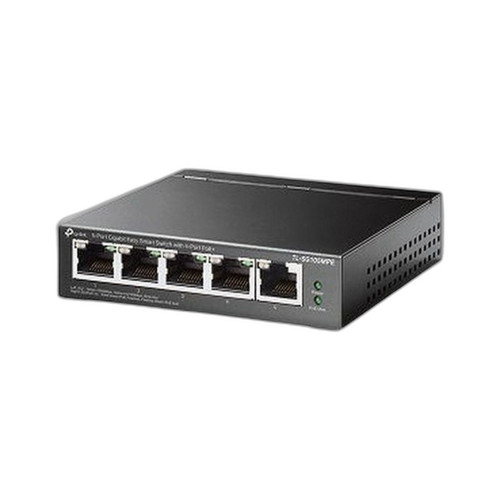
Both products are 5-port compact unmanaged-to-managed network switches aimed at edge and small-office deployments, but they diverge sharply on port speed, PoE delivery versus PoE input, and management depth. The TP-Link TL-SG105PE targets cost-sensitive installers who need to power four IP cameras or access points over Gigabit Ethernet from a single budget switch. The Ubiquiti USW-FLEX-2.5G-5 addresses buyers upgrading to 2.5G infrastructure who want full Layer 2+ management, NDAA compliance, and flexible USB-C or PoE-in powering at the network edge.

In This Guide
- Which switch delivers the port speed and throughput your infrastructure actually needs?
- How do the two switches handle PoE delivery, power input, and operating environment?
- What management capabilities and compliance certifications does each switch offer?
- Which should you choose: the SG105PE or the USW-FLEX-2.5G-5?
- Side-by-Side Specs
- FAQ
Which switch delivers the port speed and throughput your infrastructure actually needs?
The TL-SG105PE provides five RJ45 ports all running at 10/100/1000 Mbps (Gigabit). No switching capacity or forwarding rate is stated in the provided specifications, so aggregate throughput figures cannot be quoted for this model.
The USW-FLEX-2.5G-5 provides five ports each capable of 2.5G/1G/100M/10M auto-negotiation. The specified switching capacity is 25 Gbps with a non-blocking throughput of 12.5 Gbps and a forwarding rate of 19 Mpps. For environments already deploying 2.5G Wi-Fi 6/6E access points, NVRs, or workstations, the Ubiquiti's 2.5× per-port bandwidth headroom is a concrete spec advantage. For all-Gigabit device fleets, the additional speed is unused capacity.
How do the two switches handle PoE delivery, power input, and operating environment?
The TL-SG105PE is a PoE+ provider: four of its five ports supply up to 802.3at (30 W per port) with a total PoE budget of 65 W. This allows simultaneous powering of multiple IP cameras, access points, or VoIP phones without a separate injector or power shelf. Total power consumption is listed at 65 W. Operating temperature range is not specified in the provided data.
The USW-FLEX-2.5G-5 is a PoE consumer, not a PoE provider in the traditional sense. It accepts power via USB-C (5 V DC, 1 A) or PoE input (802.3af), with a power consumption of 5 W (AC/DC input) and 6.4 W (PoE input). It does not deliver PoE to downstream devices based on the provided specifications. Its operating temperature is rated −20 to 45 °C (−4 to 113 °F), making it suitable for unconditioned spaces. Enclosure is polycarbonate; weight is 206 g.
The two switches occupy opposite roles in a PoE topology: the SG105PE sits upstream powering devices; the USW-FLEX-2.5G-5 sits downstream being powered by an upstream PoE switch or USB-C adapter.
What management capabilities and compliance certifications does each switch offer?
The TL-SG105PE is classified as 'Easy Smart' managed, meaning it offers a web GUI with basic VLAN, QoS, and port-monitoring features beyond a pure unmanaged switch, but below a full Layer 2 CLI-managed device. Specific VLAN count, MAC table size, and management protocol details are not provided in the supplied specifications. NDAA compliance status is not stated.
The USW-FLEX-2.5G-5 is a Layer 2+ fully managed switch controlled via UniFi Network (Ethernet management interface). It supports 256 VLANs, a 4,000-entry MAC address table, and integrates into the UniFi controller ecosystem for centralized configuration, monitoring, and firmware management. It carries NDAA compliance certification alongside CE, FCC, IC, and Anatel. For federal, state, or enterprise deployments with NDAA supply-chain requirements, the Ubiquiti is the only option of the two confirmed compliant by the provided specs.
Which should you choose: the SG105PE or the USW-FLEX-2.5G-5?
Our take: The TL-SG105PE is the stronger choice when the primary requirement is powering multiple PoE+ devices—cameras, APs, or VoIP phones—on a Gigabit network without an external injector: its 65 W PoE budget across four 802.3at ports is a capability the USW-FLEX-2.5G-5 simply does not offer, as that model is PoE-powered rather than PoE-providing. Conversely, the USW-FLEX-2.5G-5 is the stronger choice when port speed, management depth, and compliance matter: it delivers 2.5G per port versus 1G, 25 Gbps switching capacity versus an unspecified figure, full Layer 2+ UniFi management with 256 VLANs versus Easy Smart, and confirmed NDAA compliance versus an unstated status. Platform lock-in is a real consideration: the Ubiquiti requires or strongly benefits from a UniFi controller environment, while the TP-Link operates as a standalone Easy Smart device.
Side-by-Side Comparison
Spec-for-spec, from manufacturer data.
| Specification | TP-Link SG105PE | Ubiquiti USW-FLEX-2.5G-5 |
|---|---|---|
| Product Class | 5-Port Gigabit Easy Smart PoE+ Switch | 5-Port 2.5G Layer 2+ Managed Switch |
| Port Count | 5 × RJ45 | 5 × RJ45 |
| Port Speed | 10/100/1000 Mbps (Gigabit) | 2.5G / 1G / 100M / 10M (multi-speed) |
| Switching Capacity | — | 25 Gbps |
| Non-Blocking Throughput | — | 12.5 Gbps |
| Forwarding Rate | — | 19 Mpps |
| PoE Role | PoE+ Provider (4 ports, 802.3at) | PoE Consumer (802.3af input only) |
| PoE Budget (output) | 65 W total / 30 W per port | — |
| Max PoE per Port | 30 W (802.3at) | — |
| Power Input | AC mains (implied) | USB-C 5V DC 1A or PoE 802.3af input |
| Power Consumption | 65 W | 5 W (AC/DC) / 6.4 W (PoE input) |
| Management Level | Easy Smart (web GUI) | Layer 2+ Managed (UniFi) |
| VLAN Support | — | 256 VLANs |
| MAC Address Table | — | 4,000 entries |
| NDAA Compliant | — | Yes |
| Operating Temperature | — | −20 to 45 °C (−4 to 113 °F) |
| Form Factor / Mount | Box / Wall-mount | Compact desktop / Desktop |
| Dimensions | — | 117.1 × 90 × 21.2 mm |
| Weight | — | 206 g (7.3 oz) |
| Certifications | — | NDAA, CE, FCC, IC, Anatel |
Frequently Asked Questions
Which should you choose: the SG105PE or the USW-FLEX-2.5G-5?
The TL-SG105PE is the stronger choice when the primary requirement is powering multiple PoE+ devices—cameras, APs, or VoIP phones—on a Gigabit network without an external injector: its 65 W PoE budget across four 802.3at ports is a capability the USW-FLEX-2.5G-5 simply does not offer, as that model is PoE-powered rather than PoE-providing. Conversely, the USW-FLEX-2.5G-5 is the stronger choice when port speed, management depth, and compliance matter: it delivers 2.5G per port versus 1G, 25 Gbps switching capacity versus an unspecified figure, full Layer 2+ UniFi management with 256 VLANs versus Easy Smart, and confirmed NDAA compliance versus an unstated status. Platform lock-in is a real consideration: the Ubiquiti requires or strongly benefits from a UniFi controller environment, while the TP-Link operates as a standalone Easy Smart device.
Can the USW-FLEX-2.5G-5 power my IP cameras the way the TL-SG105PE does?
No. Based on the provided specifications, the USW-FLEX-2.5G-5 is powered by PoE (802.3af input) or USB-C and does not supply PoE to downstream devices. The TL-SG105PE provides up to 65 W of 802.3at PoE+ across four ports at up to 30 W per port, making it the appropriate choice for powering IP cameras, access points, or other PoE devices.
Does either switch meet NDAA compliance requirements for government or federal installations?
The USW-FLEX-2.5G-5 is specified as NDAA compliant in the provided data. NDAA compliance is not stated in the TL-SG105PE specifications supplied, so that status cannot be confirmed from available data.
Is the USW-FLEX-2.5G-5 worth the 2.5G upgrade if my current devices are all Gigabit?
Based solely on the provided specifications, the USW-FLEX-2.5G-5's 2.5G ports auto-negotiate down to 1G/100M/10M, so it is backward compatible with existing Gigabit devices. Whether the upgrade is justified depends on your device roadmap: if you plan to deploy 2.5G-capable Wi-Fi 6/6E APs or NVRs, the headroom is usable. If your fleet will remain all-Gigabit, the TL-SG105PE's Gigabit ports are functionally equivalent at that speed tier.
More Network Switch Comparisons
- TP-Link SG2005P-PD vs Ubiquiti USW-FLEX-2.5G-5
- TP-Link SG2005P-PD vs TP-Link ES205G
- TP-Link SG2005P-PD vs TP-Link DS105G
- TP-Link ES205G vs Ubiquiti USW-FLEX-2.5G-5
- TP-Link ES205G vs TP-Link DS105G
- Ubiquiti USW-FLEX-2.5G-5 vs TP-Link DS105G
Network Switch Buying Guides
Get a Second Opinion on Your Camera Choice
Share your site layout, coverage goals, and budget. Our team will validate the camera selection, flag anything we would change, and recommend products that match the use case.