
Star Micronics 39657910 vs Epson C31CK50021: Specification Comparison
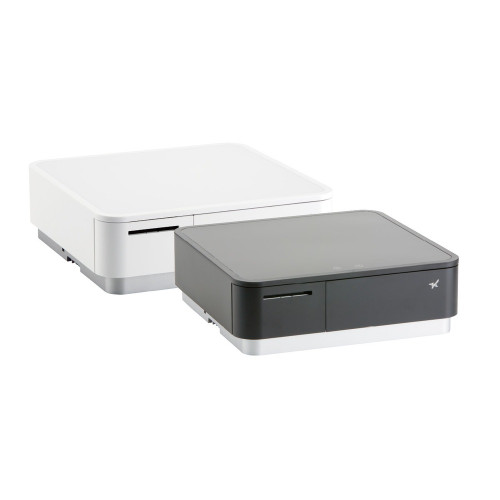
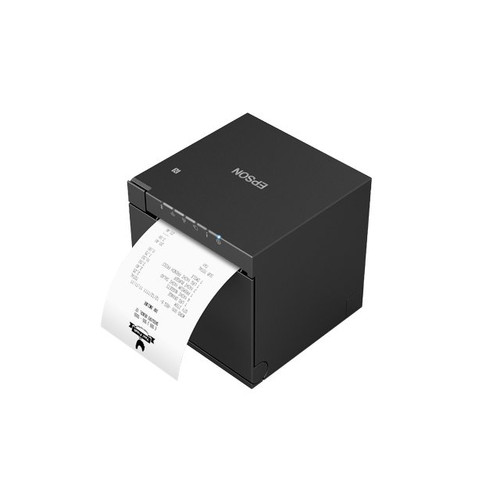
The Star Micronics 39657910 POP10CBi-F and the Epson TM-m30III (C31CK50021) are both direct thermal POS printers targeting retail and hospitality countertop environments. The Star unit is positioned as a combination receipt and label printer with linerless media support and an integrated cash drawer interface, while the Epson is a dedicated 3-inch receipt printer emphasizing multi-interface wireless connectivity. This comparison evaluates how each model performs across the three dimensions that most directly drive a POS deployment decision.
In This Guide
- Which printer delivers faster throughput for high-volume POS transactions?
- Which printer offers broader host and network compatibility?
- Which printer better fits physical space constraints, media flexibility needs, and peripheral integration requirements?
- Which should you choose: the 39657910 or the C31CK50021?
- Side-by-Side Specs
- FAQ
Which printer delivers faster throughput for high-volume POS transactions?
The Epson TM-m30III is spec-rated at 708.7 ips (inches per minute, as stated in the product specifications) at maximum monochrome output, printing on 3-inch (80 mm) wide thermal receipt paper at 203 dpi resolution. The spec also references sub-2-second receipts in a compact form factor, suggesting suitability for high-transaction-volume environments such as quick-service restaurants or busy retail counters.
The Star Micronics 39657910 is rated at 58 mm/s. The Star specification does not state a resolution in dpi, nor does it provide a maximum lines-per-minute figure. The thermal head is rated at 18 million lines MCBF, which speaks to longevity rather than raw speed. At 58 mm/s, the Star's throughput is substantially lower than the Epson's stated maximum, though direct unit-for-unit comparison is limited because the Star spec expresses speed in mm/s while the Epson spec expresses its value in ips/inches per minute and no mm/s equivalent is provided in either spec sheet.
Which printer offers broader host and network compatibility?
The Epson TM-m30III lists USB, USB-C, Ethernet, Wi-Fi, and Bluetooth 5.0 dual-mode as connectivity options. Ethernet enables wired LAN integration for centralized POS systems; Wi-Fi and Bluetooth allow cordless placement flexibility. The USB-C interface future-proofs the unit against hosts transitioning away from legacy USB-A. The spec notes that a dual Wi-Fi/Bluetooth interface is available and references an optional wireless USB adapter (OT-WL06).
The Star Micronics 39657910 lists Wired connectivity and Android Open Accessory (AOA) as its interfaces. AOA enables direct USB communication with Android devices without requiring a network stack, which suits Android-based POS tablets in environments where Wi-Fi printing is not required or desired. However, Ethernet, Wi-Fi, and Bluetooth are not listed in the Star's specifications. Buyers requiring wireless connectivity or multi-host LAN environments will find the Epson's interface roster significantly broader.
Which printer better fits physical space constraints, media flexibility needs, and peripheral integration requirements?
The Star Micronics 39657910 measures 12 x 12 x 4 inches and weighs 7.8 lbs (both figures excluding cable, optional parts, and accessories). It supports both label and linerless media types, and its spec explicitly states an integrated cash drawer interface, making it a practical choice when a single unit must handle receipt printing, label output, and cash drawer control without an external interface box. The package also includes a handheld 1D/2D USB barcode scanner.
The Epson TM-m30III weighs 2.87 lbs (1,300 g) and is described as a compact form factor unit. Exact external dimensions are not provided in the supplied specifications. It supports wall, column, and rack mounting options, adding deployment flexibility for space-constrained counters. Its media type is listed as thermal receipt paper; linerless or label media support is not stated in the provided specs. A cash drawer interface is not listed among the Epson's stated specifications. Power is supplied via an external adapter (PS-190).
Which should you choose: the 39657910 or the C31CK50021?
Our take: The C31CK50021 is the stronger choice when throughput, wireless connectivity, and deployment flexibility are the primary requirements. The Epson's 708.7 ips rated speed vastly exceeds the Star's 58 mm/s, making it the clear pick for high-transaction environments. The Epson also supports five interface types—USB, USB-C, Ethernet, Wi-Fi, and Bluetooth 5.0—versus the Star's wired and AOA-only options, enabling network-integrated or cordless deployments the Star cannot match. The Epson's 2.87 lb weight is also significantly lower than the Star's 7.8 lbs. Conversely, the 39657910 is the stronger choice when linerless label printing, an integrated cash drawer interface, and Android AOA compatibility are required in a single unit, particularly for Android-native POS setups that do not need wireless networking. Buyers running Windows or Linux POS over a LAN, or high-volume hospitality lines, should strongly favor the Epson.
Side-by-Side Comparison
Spec-for-spec, from manufacturer data.
| Specification | Star Micronics 39657910 | Epson C31CK50021 |
|---|---|---|
| Product Type | Label / Receipt Printer | Receipt Printer |
| Print Method | Direct Thermal (no ribbon) | Direct Thermal (no ribbon) |
| Print Speed | 58 mm/s | 708.7 ips (inches per minute) |
| Print Resolution | — | 203 dpi |
| Print Width / Paper Width | — | 3 inches (80 mm) |
| Media Type | Labels; Linerless | Thermal receipt paper |
| Connectivity — Wired USB | Wired | USB, USB-C |
| Connectivity — Ethernet | — | Ethernet |
| Connectivity — Wi-Fi | — | Wi-Fi |
| Connectivity — Bluetooth | — | Bluetooth 5.0 dual mode |
| Android Open Accessory (AOA) | Yes | — |
| Cash Drawer Interface | Integrated | — |
| Thermal Head Durability | 18 Million Lines MCBF | — |
| Weight | 7.8 lbs | 2.87 lbs (1,300 g) |
| Dimensions | 12 x 12 x 4 inches | — |
| Warranty | 2 years | 1 year |
Frequently Asked Questions
Which should you choose: the 39657910 or the C31CK50021?
The C31CK50021 is the stronger choice when throughput, wireless connectivity, and deployment flexibility are the primary requirements. The Epson's 708.7 ips rated speed vastly exceeds the Star's 58 mm/s, making it the clear pick for high-transaction environments. The Epson also supports five interface types—USB, USB-C, Ethernet, Wi-Fi, and Bluetooth 5.0—versus the Star's wired and AOA-only options, enabling network-integrated or cordless deployments the Star cannot match. The Epson's 2.87 lb weight is also significantly lower than the Star's 7.8 lbs. Conversely, the 39657910 is the stronger choice when linerless label printing, an integrated cash drawer interface, and Android AOA compatibility are required in a single unit, particularly for Android-native POS setups that do not need wireless networking. Buyers running Windows or Linux POS over a LAN, or high-volume hospitality lines, should strongly favor the Epson.
Can either printer handle linerless labels, not just receipts?
Yes — the Star Micronics 39657910 explicitly lists linerless as a supported media type alongside labels. The Epson TM-m30III's provided specifications list only thermal receipt paper as its media type; linerless or label support is not stated.
Do I need a separate cash drawer controller if I use the Epson TM-m30III?
The Epson TM-m30III's provided specifications do not list a cash drawer interface. The Star Micronics 39657910 explicitly states an integrated cash drawer interface. Buyers who require cash drawer control from the printer itself should verify Epson cash drawer support directly with Epson documentation before purchasing.
Which printer is better for an Android tablet POS that cannot connect to a Wi-Fi network?
The Star Micronics 39657910 supports Android Open Accessory (AOA), which allows direct wired USB communication with Android devices without requiring a network connection. The Epson TM-m30III offers Bluetooth and Wi-Fi options that can work with Android, but AOA wired-direct support is not listed in its provided specifications. For a network-free, wired Android setup, the Star's AOA interface is the specified solution.
More Label Printer Comparisons
- Epson C31CK00A9991 vs Brother RJ4230B
- Epson C31CK00A9991 vs Star Micronics TSP1043D
- Epson C31CK00A9991 vs Epson C31CJ99A9981
- Epson C31CK00A9991 vs Epson C31CJ57012
- Epson C31CJ99A9981 vs Brother RJ4230B
- Epson C31CJ99A9981 vs Star Micronics TSP1043D
Label Printer Buying Guides
Get a Second Opinion on Your Camera Choice
Share your site layout, coverage goals, and budget. Our team will validate the camera selection, flag anything we would change, and recommend products that match the use case.