
Star Micronics 39657910 vs Epson C31CJ57012: Specification Comparison
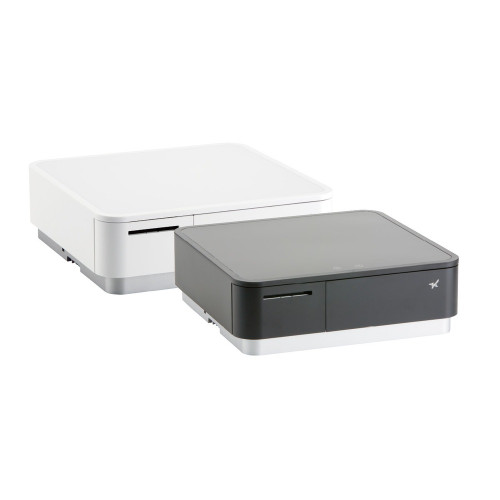
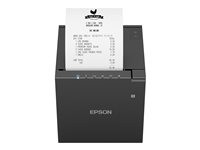
Both the Star Micronics 39657910 POP10CBi-F and the Epson C31CJ57012 are direct thermal receipt printers aimed at point-of-sale environments, sharing a ribbon-free print method and thermal media. The Star unit positions itself toward mobile and tablet-driven POS with Android Open Accessory connectivity and an integrated cash drawer interface, while the Epson targets higher-volume fixed countertop or under-counter installations via Ethernet, USB, and Serial connectivity at a substantially faster rated print speed. This comparison evaluates their suitability across print performance, connectivity and integration, and physical/warranty profile.
In This Guide
- Which printer delivers faster throughput and what print quality does each specify?
- How do the connectivity options and POS integration capabilities compare?
- What are the physical footprint, media handling, and warranty coverage differences?
- Which should you choose: the 39657910 or the C31CJ57012?
- Side-by-Side Specs
- FAQ
Which printer delivers faster throughput and what print quality does each specify?
Print speed is the starkest measurable difference between these two units. The Epson C31CJ57012 is rated at 500 mm/s (approximately 20 inches per second), while the Star Micronics 39657910 is rated at 58 mm/s — a roughly 8.6× speed advantage for the Epson at rated conditions. For high-volume retail, food service, or ticketing environments where queue throughput matters, the Epson's rated speed represents a significant operational difference.
On print resolution, the Epson C31CJ57012 specifies 180 dpi monochrome. The Star Micronics 39657910 provides no print resolution figure in the supplied specifications. Both units use direct thermal technology, eliminating ribbon or toner consumable costs, but buyers requiring a confirmed dpi spec for barcode legibility compliance can only verify that figure for the Epson from the data provided.
The Star Micronics 39657910 does specify thermal head durability at 18 million lines MCBF (mean cycles between failures), a longevity metric absent from the Epson's supplied specifications. This figure is relevant for estimating head replacement intervals in continuous-use deployments but cannot be compared directly without equivalent data from Epson.
How do the connectivity options and POS integration capabilities compare?
The Star Micronics 39657910 specifies wired connectivity and Android Open Accessory (AOA) support, plus an integrated cash drawer interface. AOA enables direct USB-host communication with Android devices without a separate driver layer, which is relevant for tablet-based POS systems running Android. The integrated cash drawer interface consolidates cabling at the printer rather than requiring a separate drawer controller.
The Epson C31CJ57012 specifies Serial, Ethernet, and USB connectivity. Ethernet enables network-attached printing across a LAN, supporting multi-terminal POS architectures where more than one register drives a single printer, or where the printer must reside away from the host terminal. Serial connectivity supports legacy POS hardware and some specialized industrial controllers. The Epson specifications also reference an optional wireless LAN interface (OT-WL06), though this is listed as an accessory and not a built-in feature.
The Star 39657910 does not list Ethernet or Serial interfaces in the provided specifications, limiting it to direct-attached single-host configurations. The Epson C31CJ57012 does not list an AOA interface or a built-in cash drawer interface in the provided specifications. Buyers integrating into Android tablet POS with a cash drawer requirement have a direct-connect path on the Star; buyers needing networked, multi-terminal, or legacy-serial POS integration have those options available on the Epson.
What are the physical footprint, media handling, and warranty coverage differences?
The Star Micronics 39657910 has stated dimensions of 12 × 12 × 4 inches (L × W × H) and a weight of 7.8 lbs, both measured excluding cable and optional accessories. The Epson C31CJ57012 does not provide dimensions or weight in the supplied specifications, so a direct footprint or bench-space comparison cannot be made from available data.
On media, the Star 39657910 specifies support for both labels and linerless media in addition to standard receipt stock, which provides flexibility for environments printing shelf labels or linerless receipts from a single device. The Epson C31CJ57012 specifies thermal receipt roll media; label or linerless capability is not stated in the provided specifications.
Warranty coverage differs: the Star Micronics 39657910 carries a 2-year warranty, while the Epson C31CJ57012 carries a 1-year warranty. All other warranty terms — on-site versus depot, coverage scope — are not specified in the provided data for either unit.
Which should you choose: the 39657910 or the C31CJ57012?
Our take: The Epson C31CJ57012 is the stronger choice when raw throughput, network connectivity, or mixed-interface POS environments are the primary requirements. At 500 mm/s versus the Star's 58 mm/s, the Epson prints receipts approximately 8.6× faster under rated conditions — a decisive advantage in high-transaction-volume settings such as quick-service restaurants or busy retail lanes. The Epson also supports Ethernet and Serial alongside USB, enabling networked multi-terminal deployments and legacy POS integration that the Star's specified wired and AOA-only connectivity does not cover. Conversely, the Star Micronics 39657910 is the more suitable choice for Android tablet-based POS requiring AOA direct connection, environments needing an integrated cash drawer interface, or operations requiring linerless or label media from a single printer. The Star also provides a longer 2-year warranty versus the Epson's 1-year coverage. Dimensions and weight are only specified for the Star (12 × 12 × 4 in, 7.8 lbs); the Epson's physical profile cannot be compared from available data.
Side-by-Side Comparison
Spec-for-spec, from manufacturer data.
| Specification | Star Micronics 39657910 | Epson C31CJ57012 |
|---|---|---|
| Product Type | Label Printer (receipt-capable) | Receipt Printer |
| Print Method | Direct Thermal (no ribbon) | Direct Thermal (no ribbon) |
| Print Speed | 58 mm/s | 500 mm/s (20 in/sec) |
| Print Resolution | — | 180 dpi monochrome |
| Connectivity | Wired; Android Open Accessory (AOA) | Serial, Ethernet, USB |
| Optional Wireless | — | OT-WL06 (accessory, not built-in) |
| Cash Drawer Interface | Integrated | — |
| Media Type | Labels; Linerless; Receipt | Thermal receipt roll |
| Thermal Head Durability | 18 million lines MCBF | — |
| Form Factor | — | Compact countertop / under-counter |
| Dimensions (L×W×H) | 12 × 12 × 4 inches | — |
| Weight | 7.8 lbs | — |
| Warranty | 2-year | 1-year |
| Package Includes | 1D/2D USB barcode scanner/imager | — |
Frequently Asked Questions
Which should you choose: the 39657910 or the C31CJ57012?
The Epson C31CJ57012 is the stronger choice when raw throughput, network connectivity, or mixed-interface POS environments are the primary requirements. At 500 mm/s versus the Star's 58 mm/s, the Epson prints receipts approximately 8.6× faster under rated conditions — a decisive advantage in high-transaction-volume settings such as quick-service restaurants or busy retail lanes. The Epson also supports Ethernet and Serial alongside USB, enabling networked multi-terminal deployments and legacy POS integration that the Star's specified wired and AOA-only connectivity does not cover. Conversely, the Star Micronics 39657910 is the more suitable choice for Android tablet-based POS requiring AOA direct connection, environments needing an integrated cash drawer interface, or operations requiring linerless or label media from a single printer. The Star also provides a longer 2-year warranty versus the Epson's 1-year coverage. Dimensions and weight are only specified for the Star (12 × 12 × 4 in, 7.8 lbs); the Epson's physical profile cannot be compared from available data.
Is the Star Micronics 39657910 or the Epson C31CJ57012 better for a high-volume retail checkout lane?
Based on the provided specifications, the Epson C31CJ57012 is better suited to high-volume checkout. Its rated print speed of 500 mm/s is approximately 8.6 times faster than the Star 39657910's rated 58 mm/s, which directly reduces per-transaction print time during peak traffic. The Epson also supports Ethernet for network-attached operation, useful in multi-lane environments.
Can either printer connect to an Android tablet POS system?
The Star Micronics 39657910 explicitly supports Android Open Accessory (AOA), which allows direct USB connection to Android host devices without a separate driver. The Epson C31CJ57012's provided specifications list Serial, Ethernet, and USB connectivity but do not specify AOA support. For a native Android tablet POS integration, the Star's AOA capability is a confirmed option; Android compatibility of the Epson cannot be confirmed from the provided specifications alone.
Which printer includes cash drawer support, and does either handle label or linerless media?
The Star Micronics 39657910 specifies an integrated cash drawer interface and supports both label and linerless media in addition to receipt stock. The Epson C31CJ57012 does not list a cash drawer interface or label/linerless media support in the provided specifications. If a combined receipt, cash drawer, and label printing solution is required from a single device, only the Star addresses all three from the available spec data.
More Label Printer Comparisons
- Epson C31CK00A9991 vs Brother RJ4230B
- Epson C31CK00A9991 vs Star Micronics TSP1043D
- Epson C31CK00A9991 vs Epson C31CJ99A9981
- Epson C31CK00A9991 vs Epson C31CJ57012
- Epson C31CJ99A9981 vs Brother RJ4230B
- Epson C31CJ99A9981 vs Star Micronics TSP1043D
Label Printer Buying Guides
Get a Second Opinion on Your Camera Choice
Share your site layout, coverage goals, and budget. Our team will validate the camera selection, flag anything we would change, and recommend products that match the use case.