
Socket Mobile CX4623-3894 vs Datalogic QBT2500-BK-BTK: Specification Comparison
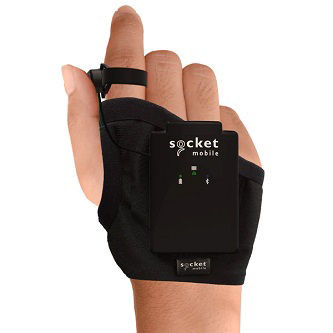
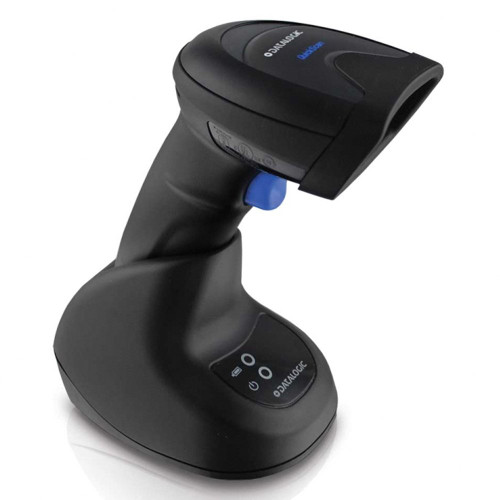
Both the Socket Mobile CX4623-3894 and the Datalogic QBT2500-BK-BTK+ are wireless handheld barcode scanners aimed at mobile and point-of-sale environments. The CX4623-3894 is a compact Bluetooth LE 1D/2D imager rated IP67, while the QBT2500-BK-BTK+ is a 1D linear imager with Bluetooth, USB, and RS-232 base support rated IP52. Buyers evaluating these two will weigh scan engine capability, environmental ruggedness, connectivity flexibility, and warranty coverage across retail, warehouse, and legacy POS deployments.
In This Guide
Which scanner reads a wider range of barcode types?
The CX4623-3894 uses a dual-engine 1D/2D design that natively reads UPC, Code 128, QR Code, Data Matrix, and PDF417 according to its specifications. This makes it suitable for environments where 2D matrix codes—such as those on mobile coupons, patient wristbands, or serialized assets—are present alongside traditional linear barcodes.
The QBT2500-BK-BTK+ is specified as a 1D linear imager. Its listed symbologies include QR Code, Data Matrix, PDF417, Code 39, UPC, and EAN, which suggests 2D capability in its spec sheet, but its stated scan type is explicitly '1D Linear Imager' both in the product type field and the enriched tagline. Buyers requiring confirmed 2D matrix decoding should verify this discrepancy with Datalogic documentation before purchasing. For unambiguous 2D support, the CX4623-3894's dual-engine spec is the clearer claim.
Which unit is better suited to harsh or wet environments?
The CX4623-3894 carries an IP67 rating, meaning it is fully dust-tight and can withstand immersion in water up to 1 meter for 30 minutes. This level of protection is appropriate for food-processing floors, outdoor receiving docks, or any environment with regular liquid exposure.
The QBT2500-BK-BTK+ is rated IP52, which provides protection against dust ingress sufficient to prevent harmful deposits and against water dripping at a 15-degree angle. IP52 is adequate for typical indoor retail or light-warehouse use but does not provide submersion or jet-water protection. For environments where the scanner may be dropped in standing water or hosed down, the CX4623-3894's IP67 rating is the materially stronger specification.
Which scanner offers broader connectivity and longer warranty coverage?
The CX4623-3894 connects via Bluetooth LE and USB. Bluetooth LE pairing targets iOS, Android, and Windows hosts directly without a dedicated base or dongle, which suits mobile tablet-based POS and inventory workflows. No RS-232 interface is listed in the provided specifications.
The QBT2500-BK-BTK+ supports Bluetooth, USB, and RS-232 via its base station, and the interface field also lists Wi-Fi, though Wi-Fi is not confirmed in the core spec fields. The multi-interface base makes it backward-compatible with legacy POS terminals that require serial connections. On warranty, the QBT2500-BK-BTK+ carries a 3-year limited warranty versus a 1-year warranty for the CX4623-3894—a meaningful difference for total cost of ownership calculations in large deployments.
Which should you choose: the CX4623-3894 or the QBT2500-BK-BTK?
Our take: The CX4623-3894 is the stronger choice when confirmed 2D scan capability and high environmental ruggedness are required, while the QBT2500-BK-BTK+ is the stronger choice for legacy-POS compatibility and lower long-term replacement risk. Key spec deltas: IP rating is IP67 on the CX4623-3894 versus IP52 on the QBT2500-BK-BTK+, a meaningful gap for wet or outdoor environments; warranty is 1 year versus 3 years, favoring the Datalogic for cost-of-ownership-sensitive deployments; and the QBT2500-BK-BTK+ adds RS-232 base support absent from the CX4623-3894's listed interfaces, making it the better fit where serial-connected legacy terminals remain in use. Choose the CX4623-3894 for mobile-first, tablet-based workflows in demanding environments; choose the QBT2500-BK-BTK+ for traditional multi-lane retail or mixed-interface POS infrastructure where a longer warranty and serial compatibility matter.
Side-by-Side Comparison
Spec-for-spec, from manufacturer data.
| Specification | Socket Mobile CX4623-3894 | Datalogic QBT2500-BK-BTK |
|---|---|---|
| Product Type | Handheld Barcode Scanner | Wireless Handheld Barcode Scanner |
| Scan Engine | Dual 1D/2D | 1D Linear Imager (2D symbologies listed — verify with manufacturer) |
| Symbologies | UPC, Code 128, QR, Data Matrix, PDF417 | UPC, EAN, Code 39, QR Code, Data Matrix, PDF417 |
| Connectivity | Bluetooth LE, USB | Bluetooth, USB, RS-232 via base |
| Bluetooth Version | Bluetooth LE (BLE) | Bluetooth (version not specified) |
| IP Rating | IP67 | IP52 |
| Battery Capacity | — | 3250 mAh Li-Ion |
| Weight | 0.05 kg | 159 g (0.46 kg per spec field) |
| Dimensions | — | 69 × 127 × 124 mm |
| Input Voltage | — | 5 VDC |
| Warranty | 1-Year | 3-Year Limited |
| Visual Scan Feedback | — | Datalogic Green Spot |
| RoHS Compliance | EN 50581 | — |
| Wi-Fi | — | Listed in interface field; not confirmed in core specs |
| Host Compatibility | iOS, Android, Windows (BLE direct) | Legacy POS via RS-232 base, modern via USB/Bluetooth |
| Series / Family | — | QuickScan QBT2131 |
Frequently Asked Questions
Which should you choose: the CX4623-3894 or the QBT2500-BK-BTK?
The CX4623-3894 is the stronger choice when confirmed 2D scan capability and high environmental ruggedness are required, while the QBT2500-BK-BTK+ is the stronger choice for legacy-POS compatibility and lower long-term replacement risk. Key spec deltas: IP rating is IP67 on the CX4623-3894 versus IP52 on the QBT2500-BK-BTK+, a meaningful gap for wet or outdoor environments; warranty is 1 year versus 3 years, favoring the Datalogic for cost-of-ownership-sensitive deployments; and the QBT2500-BK-BTK+ adds RS-232 base support absent from the CX4623-3894's listed interfaces, making it the better fit where serial-connected legacy terminals remain in use. Choose the CX4623-3894 for mobile-first, tablet-based workflows in demanding environments; choose the QBT2500-BK-BTK+ for traditional multi-lane retail or mixed-interface POS infrastructure where a longer warranty and serial compatibility matter.
Can either scanner read QR codes and 2D barcodes reliably?
The CX4623-3894 is explicitly specified as a dual 1D/2D scan engine and lists QR Code, Data Matrix, and PDF417 among its symbologies. The QBT2500-BK-BTK+ lists those same symbologies but its scan type is stated as '1D Linear Imager,' creating an inconsistency in the provided specifications. Buyers who need confirmed 2D decoding should verify the QBT2500-BK-BTK+'s actual imager capability directly with Datalogic before selecting it for 2D workflows.
Which scanner holds up better if it gets wet or is dropped in a warehouse environment?
The CX4623-3894 is rated IP67, meaning it is fully sealed against dust and survives 1-meter water submersion for 30 minutes. The QBT2500-BK-BTK+ is rated IP52, which covers limited dust and drip protection only. For wet receiving docks, food-service floors, or outdoor use, the CX4623-3894 provides significantly stronger ingress protection per the published specifications.
Is the CX4623-3894 or QBT2500-BK-BTK+ better for larger deployments where warranty coverage matters?
The QBT2500-BK-BTK+ carries a 3-year limited warranty compared to 1 year for the CX4623-3894. For large fleet deployments where replacement and repair costs accumulate over time, the Datalogic's longer warranty period represents a lower risk profile. Additionally, the QBT2500-BK-BTK+'s multi-interface base (Bluetooth, USB, RS-232) supports a wider range of existing POS hardware, reducing infrastructure upgrade costs in mixed-terminal environments.
More Barcode Scanner Comparisons
- Datalogic QBT2131 vs Honeywell 1962HSR-5USB-WC-N
- Datalogic QBT2131 vs CipherLab A2500SCBSU0T1
- Datalogic QBT2131 vs Socket Mobile CX4523-3764
- Datalogic QBT2131 vs Socket Mobile CX4619-3886
- Datalogic QBT2131 vs Datalogic QBT2500-BK-BTK
- Datalogic QBT2500-BK-BTK vs Honeywell 1962HSR-5USB-WC-N
Barcode Scanner Buying Guides
Get a Second Opinion on Your Camera Choice
Share your site layout, coverage goals, and budget. Our team will validate the camera selection, flag anything we would change, and recommend products that match the use case.