
Datalogic QBT2131 vs CipherLab A2500SCBSU0T1: Specification Comparison
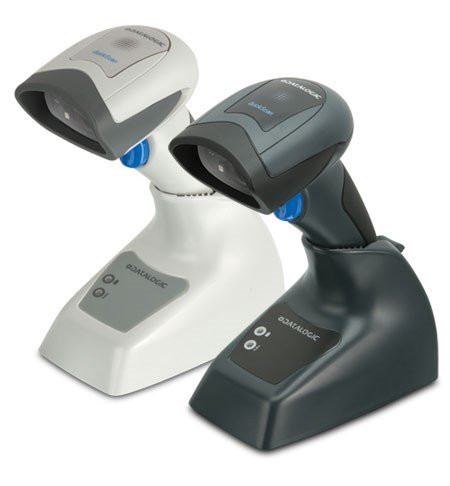
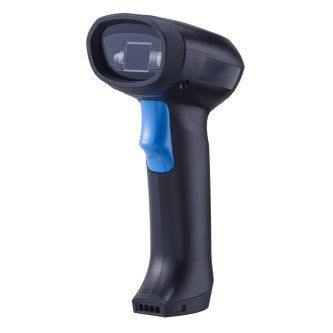
Both the Datalogic QuickScan QBT2131 and CipherLab A2500SCBSU0T1 are handheld, Bluetooth-connected 1D linear imager barcode scanners in the same cordless handheld class, making them direct cross-shop candidates for retail and warehouse deployments. This comparison evaluates them across the three dimensions that most influence a buying decision for this product type: wireless performance and connectivity options, scan engine capability and speed, and physical durability plus ergonomics — drawing only on the specifications provided for each unit.
In This Guide
- How do the QBT2131 and A2500SCBSU0T1 differ in wireless range and connectivity options?
- Which scanner delivers faster throughput and broader symbology support for 1D barcode tasks?
- How do the two scanners compare on physical durability, weight, and suitability for demanding environments?
- Which should you choose: the QBT2131 or the A2500SCBSU0T1?
- Side-by-Side Specs
- FAQ
How do the QBT2131 and A2500SCBSU0T1 differ in wireless range and connectivity options?
The Datalogic QBT2131 specifies a Bluetooth wireless range of up to 25 m (82 ft) and connects via Bluetooth HID profile, USB, and RS-232 through its base station. The RS-232 path via base gives installers a legacy serial option not listed for the CipherLab unit.
The CipherLab A2500SCBSU0T1 lists Bluetooth and USB connectivity but does not specify a numeric Bluetooth range in the provided specifications. It does not list RS-232 as an available interface. The A2500SCBSU0T1 also does not specify a Bluetooth version or profile beyond 'Bluetooth' in its spec data.
For buyers who need to quantify wireless coverage area in a facility plan, the QBT2131's stated 25 m / 82 ft figure provides a concrete planning number; the A2500SCBSU0T1's range is not specified here and cannot be compared directly.
Which scanner delivers faster throughput and broader symbology support for 1D barcode tasks?
The CipherLab A2500SCBSU0T1 specifies a scan rate of 578 scans per second and a minimum resolution of 3 mil. Its stated symbology set is extensive: Codabar, Code 39, Code 93, Code 128, GS1 DataBar (RSS), Industrial 2 of 5, Interleave 2 of 5, ISBT-128, Italian and French Pharmacodes, Matrix 2 of 5, MSI, Plessey, Telepen, UPC/EAN/GS1-128, and Code 11. A scan range of 3–60 cm on Code 39 and 0.5–38 cm on UPC-A is also documented.
The Datalogic QBT2131 does not specify a numeric scan rate or minimum print resolution in the provided specifications. Its scan engine is described as a 1D linear imager with a Green Spot visual and auditory feedback indicator — a useful operator cue for re-scan reduction — but no scan-per-second figure is available to compare against the A2500SCBSU0T1's 578 scans/second.
Symbology coverage for the QBT2131 is not enumerated in the provided specs. Buyers operating in healthcare (ISBT-128), pharmaceutical (French/Italian Pharmacodes), or specialized retail (GS1 DataBar) should note the CipherLab's explicit listing of those symbologies; the QBT2131 cannot be confirmed for those codes from available data.
How do the two scanners compare on physical durability, weight, and suitability for demanding environments?
The CipherLab A2500SCBSU0T1 carries an IP65 rating, meaning it is fully dust-tight and protected against low-pressure water jets. This makes it a specified option for environments where the scanner may be exposed to dust, splashes, or washdown conditions common in warehousing, food distribution, and light manufacturing.
The Datalogic QBT2131 does not list an IP rating in the provided specifications, so dust and moisture ingress protection cannot be confirmed or compared. The QBT2131 does document a weight of 159 g and physical dimensions of 69 × 127 × 124 mm, giving facilities managers a concrete ergonomic reference. The battery is specified as a user-replaceable lithium-ion cell, and the unit offers a batch mode memory of more than 500 codes for operation outside Bluetooth range.
Weight and dimensions for the A2500SCBSU0T1 are not provided in the available specifications, so a direct ergonomic weight comparison cannot be made. The QBT2131's 159 g figure and user-replaceable battery are the only quantified physical attributes between the two units from the data at hand.
Which should you choose: the QBT2131 or the A2500SCBSU0T1?
Our take: The A2500SCBSU0T1 is the stronger choice when environmental durability, high-throughput scanning, and broad 1D symbology coverage are primary requirements. Its IP65 rating gives it a documented edge in dusty or damp environments where the QBT2131 has no confirmed ingress protection. At 578 scans per second with a 3 mil minimum resolution and an explicit list of 16-plus symbologies — including ISBT-128, GS1 DataBar, and Pharmacodes — it outspecifies the QBT2131 on scan engine data points where the QBT2131 provides none. Conversely, the QBT2131 is the stronger choice when legacy RS-232 connectivity is required, wireless range needs to be planned against a specific 25 m / 82 ft figure, or a user-replaceable battery and 500-code batch mode are operationally important. Buyers on a platform still running serial interfaces should shortlist the QBT2131; those in industrial or high-volume pick-pack environments where IP sealing and scan speed are prioritized should shortlist the A2500SCBSU0T1.
Side-by-Side Comparison
Spec-for-spec, from manufacturer data.
| Specification | Datalogic QBT2131 | CipherLab A2500SCBSU0T1 |
|---|---|---|
| Product Type | Wireless Handheld Barcode Scanner | Barcode Scanner |
| Scan Engine | 1D Linear Imager | 1D Linear Imager, 3 mil resolution |
| Scan Rate | — | 578 scans/second |
| Bluetooth Wireless Range | Up to 25 m / 82 ft | — |
| Connectivity | Bluetooth, USB, RS-232 via base | Bluetooth, USB |
| Bluetooth Interface Profile | Bluetooth HID | Bluetooth (profile not specified) |
| IP Rating | — | IP65 |
| Weight | 159 g | — |
| Dimensions | 69 × 127 × 124 mm | — |
| Battery | User-replaceable lithium-ion | — |
| Batch Memory | 500+ codes | — |
| Scan Range (Code 39) | — | 3–60 cm |
| Scan Range (UPC-A) | — | 0.5–38 cm |
| Min. Print Contrast | — | 15% |
| Symbologies (1D) | — | Codabar, Code 39, Code 93, Code 128, GS1 DataBar, ISBT-128, ITF, MSI, Plessey, Telepen, UPC/EAN, Code 11, Pharmacodes |
| Warranty | 3-Year Limited | 2-Year |
Frequently Asked Questions
Which should you choose: the QBT2131 or the A2500SCBSU0T1?
The A2500SCBSU0T1 is the stronger choice when environmental durability, high-throughput scanning, and broad 1D symbology coverage are primary requirements. Its IP65 rating gives it a documented edge in dusty or damp environments where the QBT2131 has no confirmed ingress protection. At 578 scans per second with a 3 mil minimum resolution and an explicit list of 16-plus symbologies — including ISBT-128, GS1 DataBar, and Pharmacodes — it outspecifies the QBT2131 on scan engine data points where the QBT2131 provides none. Conversely, the QBT2131 is the stronger choice when legacy RS-232 connectivity is required, wireless range needs to be planned against a specific 25 m / 82 ft figure, or a user-replaceable battery and 500-code batch mode are operationally important. Buyers on a platform still running serial interfaces should shortlist the QBT2131; those in industrial or high-volume pick-pack environments where IP sealing and scan speed are prioritized should shortlist the A2500SCBSU0T1.
Is the QBT2131 or A2500SCBSU0T1 better for a warehouse with dusty or wet conditions?
Based on the provided specifications, the CipherLab A2500SCBSU0T1 is the documented choice for those conditions. It carries an IP65 rating, which certifies full dust protection and resistance to low-pressure water jets. The Datalogic QBT2131 does not list an IP rating in its specifications, so dust and moisture protection cannot be confirmed for that unit.
Which scanner works with older RS-232 serial systems?
The Datalogic QBT2131 lists RS-232 connectivity via its base station as a supported interface. The CipherLab A2500SCBSU0T1 does not list RS-232 in the provided specifications. If your point-of-sale or host system still uses a serial RS-232 port, the QBT2131 is the only one of these two units that confirms that interface.
Does either scanner support specialized barcodes like ISBT-128 or GS1 DataBar?
The CipherLab A2500SCBSU0T1 explicitly lists both ISBT-128 and GS1 DataBar (RSS) among its supported symbologies, along with Italian and French Pharmacodes and 13 other 1D symbologies. The Datalogic QBT2131's supported symbologies are not enumerated in the provided specifications, so compatibility with ISBT-128, GS1 DataBar, or Pharmacodes cannot be confirmed from the available data.
More Barcode Scanner Comparisons
- Datalogic QBT2131 vs Honeywell 1962HSR-5USB-WC-N
- Datalogic QBT2131 vs Socket Mobile CX4523-3764
- Datalogic QBT2131 vs Socket Mobile CX4619-3886
- Datalogic QBT2131 vs Datalogic QBT2500-BK-BTK
- Datalogic QBT2500-BK-BTK vs Honeywell 1962HSR-5USB-WC-N
- Datalogic QBT2500-BK-BTK vs CipherLab A2500SCBSU0T1
Barcode Scanner Buying Guides
Get a Second Opinion on Your Camera Choice
Share your site layout, coverage goals, and budget. Our team will validate the camera selection, flag anything we would change, and recommend products that match the use case.