
Datalogic QBT2131 vs Datalogic QBT2500-BK-BTK: Specification Comparison
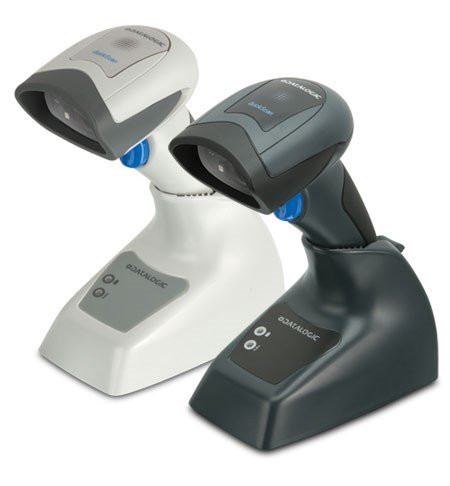
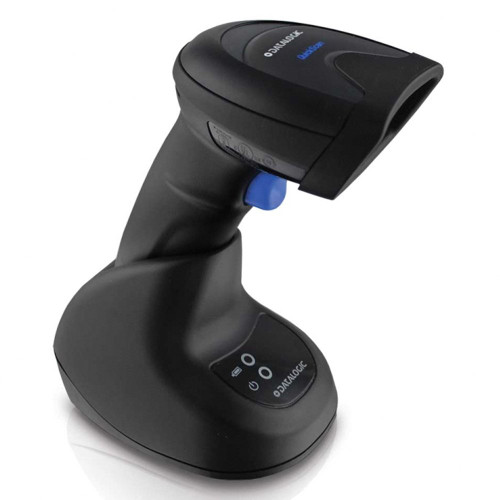
Both the Datalogic QuickScan QBT2131 (SKU QBT2131-WH) and the Datalogic QBT2500-BK-BTK+ are wireless handheld barcode scanners sharing the same cordless, Bluetooth-connected form factor and multi-interface base station design. The comparison centers on the core trade-off buyers face when choosing between a dedicated 1D linear imager and a 2D area imager: scan engine capability, ruggedization level, and battery specification. Note: several tilde-prefixed fields in the QBT2500-BK-BTK+ spec sheet appear to carry over QBT2131 data; all claims below are drawn from the structured underscore-prefixed fields only.
In This Guide
- Which scanner reads the barcode types your operation actually uses?
- How does each scanner hold up to drops, dust, and a full shift on a single charge?
- Which interfaces and wireless protocols does each scanner support, and how do they integrate with existing infrastructure?
- Which should you choose: the QBT2131 or the QBT2500-BK-BTK?
- Side-by-Side Specs
- FAQ
Which scanner reads the barcode types your operation actually uses?
The QBT2131 is equipped with a 1D linear imager, capable of reading standard linear symbologies such as UPC, EAN, Code 39, and Code 128. This is purpose-built for environments where all barcodes are printed 1D labels — traditional retail POS lanes, shipping carton labels, and warehouse bin locations that have not migrated to 2D symbologies. Batch mode stores more than 500 codes when out of Bluetooth range, a practical feature for stockroom or back-of-house collection tasks.
The QBT2500-BK-BTK+ is specified with a 2D scan engine and an explicit symbology list that includes QR Code, Data Matrix, and PDF417 alongside Code 39, UPC, and EAN. This means it can decode mobile wallet screens, patient wristbands, driver's licenses, and any 2D-encoded label without a second device. A 2D imager also reads 1D barcodes omnidirectionally, which reduces the need to align the scanner with the label orientation. Buyers whose workflows include even occasional 2D scanning should note that only the QBT2500-BK-BTK+ supports those symbologies per the structured specifications provided.
Neither product's specifications state a guaranteed scan rate (scans per second) or minimum print contrast; buyers requiring those parameters should consult the respective datasheets before finalizing a decision.
How does each scanner hold up to drops, dust, and a full shift on a single charge?
The QBT2131 specifications do not include an IP ingress-protection rating. The battery is described as a user-replaceable lithium-ion cell, but no capacity in mAh is provided in the structured specs. 'User-replaceable' is operationally significant in high-volume deployments: a spare battery can be swapped mid-shift without taking the scanner off the floor or waiting for a charge cycle.
The QBT2500-BK-BTK+ carries an IP52 rating per the structured spec field, indicating protection against dust particles greater than 12.5 mm and dripping water falling at up to 15 degrees from vertical. Its battery is rated at 3,250 mAh. IP52 is a modest rating — it is not sealed against jets or immersion — but it does provide a defined minimum threshold for environmental resistance that the QBT2131 spec does not establish. The 5 VDC input voltage spec confirms standard USB-compatible charging.
Neither specification sheet provides a drop-shock rating (e.g., IEC 68-2-32 or MIL-STD) or an operating temperature range. Buyers in cold-storage, outdoor receiving docks, or industrial environments should verify those parameters against the respective datasheets.
Which interfaces and wireless protocols does each scanner support, and how do they integrate with existing infrastructure?
The QBT2131 connects via Bluetooth HID profile, USB, and RS-232 through its base station. Wireless range is explicitly stated at up to 25 m (82 ft). Bluetooth HID emulates a keyboard, which means it requires no proprietary driver on the host — a practical advantage for legacy POS terminals and any platform where IT cannot install custom software. The structured spec does not list Wi-Fi as a confirmed connectivity option in the underscore fields; a tilde field mentions Wi-Fi, but that field appears to carry over from inconsistent source data and is not corroborated by the structured interface list.
The QBT2500-BK-BTK+ structured interface field lists USB, RS-232, Bluetooth, and WiFi. If the Wi-Fi spec is accurate, it would enable direct network integration without a paired base station, which is relevant for large warehouse floors or multi-level facilities where Bluetooth range creates coverage gaps. However, Bluetooth wireless range for the QBT2500-BK-BTK+ is not stated in any provided spec field. Buyers should confirm Wi-Fi band (2.4 GHz vs. 5 GHz) and supported network security protocols (WPA2/WPA3) before assuming enterprise Wi-Fi compatibility.
Both units support RS-232 via base station, which preserves compatibility with older POS and ERP terminal connections. Neither spec lists a specific Bluetooth version number (e.g., 4.0, 5.0), which may matter for range, pairing reliability, and battery efficiency in dense RF environments.
Which should you choose: the QBT2131 or the QBT2500-BK-BTK?
Our take: The QBT2500-BK-BTK+ is the stronger choice when operations require 2D barcode reading, a defined environmental rating, or a larger battery. Its 2D scan engine supports QR Code, Data Matrix, and PDF417 — symbologies the QBT2131 cannot decode at all — and its IP52 rating establishes a minimum dust and drip resistance threshold that the QBT2131 spec does not provide. The 3,250 mAh battery capacity gives buyers a concrete figure for shift-length planning, whereas the QBT2131 battery capacity is not stated in the provided specs. Conversely, the QBT2131 is the appropriate selection for pure 1D environments where user-replaceable batteries are operationally critical, wireless range is confirmed at 25 m, and batch mode storage of 500+ codes is needed for offline collection. Buyers running legacy 1D-only POS with a strong preference for swappable batteries and a known Bluetooth range figure should choose the QBT2131; those scanning any 2D symbology, or needing a documented IP rating, should select the QBT2500-BK-BTK+.
Side-by-Side Comparison
Spec-for-spec, from manufacturer data.
| Specification | Datalogic QBT2131 | Datalogic QBT2500-BK-BTK |
|---|---|---|
| Scan Engine | 1D Linear Imager | 2D Imager |
| 2D Symbologies (QR, Data Matrix, PDF417) | Not supported | QR Code, Data Matrix, PDF417 |
| 1D Symbologies | UPC, EAN, Code 39, Code 128 (implied by 1D) | Code 39, UPC, EAN (explicitly listed) |
| Wireless Technology | Bluetooth | Bluetooth; WiFi |
| Bluetooth Wireless Range | Up to 25 m / 82 ft | Not stated in provided specs |
| Bluetooth Profile | Bluetooth HID | Not specified in provided specs |
| IP Rating | Not stated in provided specs | IP52 |
| Battery Type | User-replaceable Lithium-Ion | Lithium-Ion |
| Battery Capacity | Not stated in provided specs | 3,250 mAh |
| Input Voltage | Not stated in provided specs | 5 VDC |
| Interfaces | USB; RS-232; Bluetooth HID | USB; RS-232; Bluetooth; WiFi |
| Offline Batch Mode | Yes — stores 500+ codes | Not stated in provided specs |
| Weight | 159 g | Not stated in structured specs (tilde field: 159 g — may be carry-over data) |
| Dimensions | 69 × 127 × 124 mm | Not stated in structured specs (tilde field mirrors QBT2131 — may be carry-over data) |
| Warranty | 3-Year Limited | 3-Year Limited |
| Form Factor | Handheld | Handheld |
Frequently Asked Questions
Which should you choose: the QBT2131 or the QBT2500-BK-BTK?
The QBT2500-BK-BTK+ is the stronger choice when operations require 2D barcode reading, a defined environmental rating, or a larger battery. Its 2D scan engine supports QR Code, Data Matrix, and PDF417 — symbologies the QBT2131 cannot decode at all — and its IP52 rating establishes a minimum dust and drip resistance threshold that the QBT2131 spec does not provide. The 3,250 mAh battery capacity gives buyers a concrete figure for shift-length planning, whereas the QBT2131 battery capacity is not stated in the provided specs. Conversely, the QBT2131 is the appropriate selection for pure 1D environments where user-replaceable batteries are operationally critical, wireless range is confirmed at 25 m, and batch mode storage of 500+ codes is needed for offline collection. Buyers running legacy 1D-only POS with a strong preference for swappable batteries and a known Bluetooth range figure should choose the QBT2131; those scanning any 2D symbology, or needing a documented IP rating, should select the QBT2500-BK-BTK+.
Can the QBT2131 scan QR codes or mobile wallet screens?
No. The QBT2131 is specified with a 1D linear imager, which cannot decode 2D symbologies such as QR Code or Data Matrix. If your workflow includes mobile coupons, patient wristbands, or any 2D-encoded label, the QBT2500-BK-BTK+ — which lists QR Code, Data Matrix, and PDF417 in its structured symbology spec — is the appropriate choice.
Is the QBT2500-BK-BTK+ meaningfully more rugged than the QBT2131?
By the provided specs, yes in one measurable way: the QBT2500-BK-BTK+ carries an IP52 rating, confirming resistance to particles larger than 12.5 mm and light dripping water, while no IP rating is stated for the QBT2131. IP52 is not a high ruggedization tier — it does not cover dust-tight sealing or water jets — but it establishes a defined floor that the QBT2131 spec does not. Neither model provides a drop-shock rating in the supplied specs.
Which scanner is better suited for a large warehouse deployment where scanners need to reach distant access points?
The QBT2131 provides a confirmed Bluetooth wireless range of 25 m (82 ft). No wireless range figure is stated for the QBT2500-BK-BTK+ in the provided specs, though its interface list includes Wi-Fi, which — if confirmed accurate — could extend coverage beyond Bluetooth range limits. Buyers planning large-floor deployments should verify the QBT2500-BK-BTK+'s wireless range and Wi-Fi band specifications directly from Datalogic's datasheet before assuming it covers more ground.
More Barcode Scanner Comparisons
- Datalogic QBT2131 vs Honeywell 1962HSR-5USB-WC-N
- Datalogic QBT2131 vs CipherLab A2500SCBSU0T1
- Datalogic QBT2131 vs Socket Mobile CX4523-3764
- Datalogic QBT2131 vs Socket Mobile CX4619-3886
- Datalogic QBT2500-BK-BTK vs Honeywell 1962HSR-5USB-WC-N
- Datalogic QBT2500-BK-BTK vs CipherLab A2500SCBSU0T1
Barcode Scanner Buying Guides
Get a Second Opinion on Your Camera Choice
Share your site layout, coverage goals, and budget. Our team will validate the camera selection, flag anything we would change, and recommend products that match the use case.