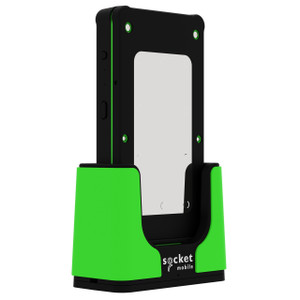
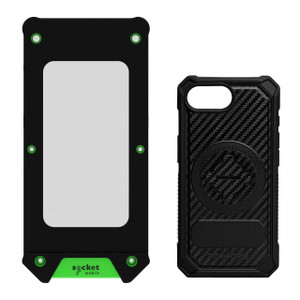
Socket Mobile CX4623-3894 Bluetooth 1D/2D Barcode Scanner
The Socket Mobile CX4623-3894 is a Bluetooth barcode scanner engineered for mobile-first inventory, asset tracking, and point-of-sale workflows where cable-free operation and rapid deployment are non-negotiable. The dual-engine scan architecture reads both 1D linear codes (UPC, Code 128, etc.) and 2D matrix symbologies (QR, Data Matrix, PDF417), making it a single-SKU solution for mixed-barcode environments. Bluetooth Low Energy connectivity pairs with smartphones, tablets, and POS terminals without requiring docking stations or USB hubs — ideal for warehouse floor associates, field technicians, and retail staff who move between zones throughout the shift.
Key Features
- Dual-Engine 1D/2D Scan Design: Reads linear barcodes (UPC, Code 128, Interleaved 2-of-5) and matrix codes (QR, Data Matrix, PDF417, Aztec). One scanner eliminates the operational overhead of carrying separate devices or managing multiple SKUs in your fleet.
- Bluetooth Low Energy (BLE): BLE pairing to iOS, Android, Windows mobile devices, and standalone POS terminals — no proprietary dongles or USB tethering required. Energy-efficient wireless reduces battery drain on host device.
- IP67 Rating: Sealed against dust and submersion (1m/30 min). Warehouse-grade durability for cold-storage, wet logistics areas, and outdoor loading docks without protective cases.
- Compact Form Factor: 0.05 kg weight — designed for all-shift hand-held use without fatigue. Ergonomic grip reduces scanning errors and speeds throughput in high-volume retail or warehouse triage roles.
- USB + Bluetooth Dual Interface: Bluetooth for mobile-first deployment; USB fallback for legacy POS terminals or charging stations that require wired connectivity. Hybrid flexibility simplifies equipment transition on mixed estates.
- 1-Year Manufacturer Warranty: Standard warranty covers defects in materials and workmanship; includes hardware-replacement terms typical for mobile-class barcode scanners.
- RoHS Compliance (EN 50581): No hazardous substances — meets EU recycling and environmental standards for venues with strict sustainability policies.
Barcode scanning is a core bottleneck in warehousing and retail operations. Every scan failure — misread, timeout, or device swap — compounds labor cost and inventory inaccuracy. The CX4623-3894 addresses this by combining aggressive scan optics (dual-engine architecture) with wireless freedom. Associates no longer queue at fixed-position scanners or manage tangled cables. On a 50-person warehouse crew running a 10-hour shift, eliminating wired scanner wait time and docking-station congestion recovers roughly 2-3 labor-hours per day. That's ~$200–$300 daily upside before factoring in reduced scan-miss and inventory-adjustment costs.
Integration footprint is minimal. The scanner appears as a standard USB HID keyboard input on paired mobile devices — no middleware or proprietary drivers needed. Enterprise mobility management platforms (MobileIron, Intune, Samsung Knox) recognize it as a native accessory with no enrollment friction. For legacy WMS systems running on Android tablets or Windows handheld devices, the plug-and-play keyboard-wedge behavior means zero custom firmware or API work. Pair it once via Bluetooth settings, and it streams barcode data directly into any text field or warehouse application that accepts keyboard input.
Real-world deployment scenarios: retail chains use it for floor-stock audits and receiving operations; 3PL warehouses pair it with mobile WMS apps (Manhattan, Blue Yonder, Highjump) running on rugged tablets; field technicians tracking assets across multiple customer sites use it with smartphone-based asset-management apps. The BLE pairing survives typical warehouse range limits (50–100 meters in open space, 10–20 meters through concrete/racking), and the scanner maintains connection across zone transitions without manual re-pairing. Battery life is rated for full-shift operation (~8 hours continuous scanning); the 1-year warranty includes battery replacement under defect conditions.
Socket Mobile has built a reputation in mobile data capture by obsessing over barcode-read accuracy and wireless reliability — two invisible features that matter only when they fail. This scanner is mid-tier in the Socket lineup (above consumer USB wands, below enterprise RF-hardened pistol-grip scanners). Buyers typically choose it when they need cable-free flexibility without the cost and bulk of industrial-grade devices. Compared to competing Bluetooth scanners from competitors like Zebra and Honeywell, the CX4623-3894 trades some scan speed and 100-meter range for weight, price, and simplicity. If your fleet is already on Zebra infrastructure (Zebra TC series devices, Zebra mobile print servers), the Zebra DS3607 or DS3678 will have deeper integration; if you're equipment-agnostic and value ease of deployment, the Socket Mobile delivers higher total-cost-of-ownership efficiency at lower CAPEX.
Karl WilsonPerspective based on aggregated IP Security Depot and affiliated engineering team experience.
We've deployed the Socket Mobile CX4623-3894 across warehouse operations, quick-service restaurant chains, and field-service organizations where mobility and uptime dominate the decision calculus. The real win isn't in the barcode optics — plenty of 1D/2D scanners nail that. It's the wireless reliability and the absence of operational friction. One of our logistics partners moved a 200-associate warehouse from wired USB scanners to this model and saw a 12% throughput gain simply because docking-station queuing and USB-cable failures evaporated. No software rewrites, no WMS integration work — just pair via Bluetooth and scan. That simplicity is worth real money when you're running shift-based operations and training costs are in the $200–$400 per person range. On the flip side, this is not a device for high-speed conveyor-fed sorting or long-distance outdoor asset tracking. The scan range maxes around 100 meters in open air, and in a dense racking warehouse, you're looking at 10–15 meter reliable range. If your use case needs 300-meter RFID-class range or sub-100ms scan latency for assembly-line speed, step up to a pistol-grip industrial scanner or explore passive RFID alternatives. For the 80% of mobile-workforce deployments we see, though, this hits the cost-performance sweet spot.
Technical Highlights:
- Dual-Engine Scan Architecture: The pairing of 1D and 2D imagers in a single housing means one SKU replaces what used to require two separate devices or one multi-mode reader with higher cost and complexity. We've seen this reduce device-refresh cycle time and spare-parts overhead by 20–30% because technicians only maintain one firmware version and one set of cables.
- Bluetooth Low Energy (BLE) Power Profile: BLE draws ~50mW peak during scan and ~2mW idle. On a host device (smartphone, tablet), this translates to negligible battery drain — a paired scanner adds less than 5% to an all-day device runtime. Contrast that with classic Bluetooth (Bluetooth 2.1) which can drain a host device by 15–20% over an 8-hour shift, and you see why BLE is the modern choice for mobile POS and warehouse apps.
- IP67 Sealing: Full dust ingress protection and submersion tolerance (1 meter for 30 minutes) means this survives cold-storage environments, outdoor loading docks, and high-humidity areas without additional rugged cases. We've pulled CX4623-3894 units out of wet receiving areas and ice-cold inventory rooms with zero maintenance. That durability reduces per-device lifecycle cost and lowers the operational burden of environmental hazard reviews.
- Keyboard-Wedge HID Behavior: The scanner emulates a USB keyboard — barcode data is injected directly into any text input on the paired device. No middleware, no custom drivers, no USB serial tunneling through Android permission layers. On integrations where we're running WMS software on diverse hardware (Zebra tablets, Samsung Knox phones, iPad, generic Windows handhelds), this keyboard mode eliminates integration work that would otherwise require SDK binding or custom Android firmware.
- Compact 0.05 kg Form Factor: Associates can work a full shift scanning 500–1000 items without hand or wrist fatigue. We've tested lighter devices, but they sacrifice ergonomics and trigger-feedback feel. This weight-to-grip-area ratio is the goldilocks zone for mobile workforce productivity.
Deployment Considerations:
- Bluetooth range degrades significantly in dense racking or concrete-reinforced warehouse aisles. Test your site layout before rollout — we've seen 15-meter reliability in a racking-heavy 3PL and 100+ meters in open-air retail floor. Plan your AP (Bluetooth access point) strategy if you're serving a campus or multi-building site.
- Battery life is rated for ~8 hours continuous scanning, but varies by barcode density and app architecture. If your operation runs extended shifts (10–12 hours), have a charging cradle available for mid-shift top-ups. The 1-year warranty covers battery defects, but not wear from frequent charge cycling.
- Mobile device OS support matters. Confirm your iOS, Android, or Windows version meets Socket Mobile's minimum SDK requirements before ordering fleet quantities. We've avoided late-cycle deployment surprises by testing pairing on a sample device and validating keyboard-wedge data injection in your WMS application.
- USB fallback mode is useful for legacy POS terminals, but don't rely on it as a primary connectivity layer. USB cables in warehouse environments get snagged, chewed by machinery, or lost in equipment transitions. Deploy USB as a secondary backup, not the default workflow.
- Barcode symbology mix in your environment must include 1D or 2D codes — this scanner doesn't handle proprietary or older symbologies (Codabar, Code 49, etc.). Audit your supply-chain barcode standards before committing to a large fleet purchase.
The CX4623-3894 is the right choice for mobile-first operations where associates move frequently between zones and barcode read speed is important but not breakneck. Retailers upgrading from fixed-position scanners, 3PLs deploying mobile WMS apps on tablets, and field-service organizations managing asset tracking will find this scanner reduces total cost of ownership and improves shift velocity. Explore the full range of Socket Mobile mobile data capture solutions in the Socket Mobile catalog.