
Sato WWCT04441-WDR vs Sato WWCT04241-WCN: Specification Comparison
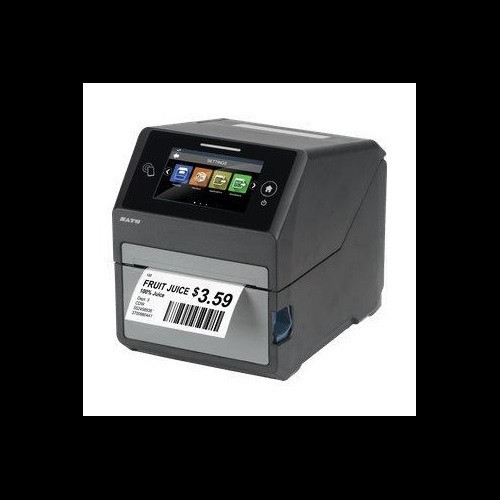
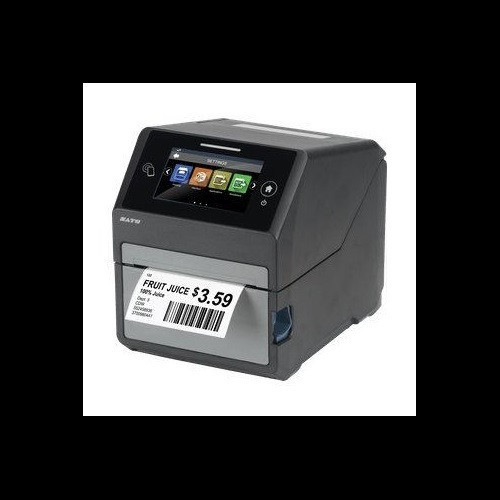
Both the WWCT04441-WDR and WWCT04241-WCN are Sato CT4-LX 305 dpi desktop thermal printers sharing the same physical chassis, print engine, memory, and connectivity platform. The defining difference is RFID frequency band: the WWCT04441-WDR encodes HF/NFC inlays at 13.56 MHz, while the WWCT04241-WCN encodes UHF inlays at 860–960 MHz (EPC C1G2). Buyers cross-shopping these two are choosing between RFID ecosystems, not between different printer tiers.
In This Guide
- Which RFID frequency band does each printer support, and what does that mean for inlay compatibility?
- Do the two models differ in print speed or label throughput?
- Are memory, connectivity, and operator interface equivalent across both models?
- Which should you choose: the WWCT04441-WDR or the WWCT04241-WCN?
- Side-by-Side Specs
- FAQ
Which RFID frequency band does each printer support, and what does that mean for inlay compatibility?
The WWCT04441-WDR operates at 13.56 MHz, the HF/NFC band. Its spec explicitly notes 'HF/NFC with RF Analyze,' a SATO feature that auto-tunes the antenna for each inlay type. HF/NFC is the standard for smart labels used in pharmaceutical unit-dose, library item tracking, contactless payment-adjacent applications, and any workflow where a smartphone or NFC reader must interact directly with the tag at close range.
The WWCT04241-WCN operates at 860–960 MHz UHF, conforming to the EPC Class 1 Generation 2 standard. UHF is the dominant protocol for supply-chain, retail inventory, and logistics applications where readers must interrogate multiple tags simultaneously at distances beyond a few centimeters. The spec card claims 1,000–2,000 labels per hour on EPC C1G2 inlays; however, this figure appears only in marketing bullets, not in the structured spec fields, so buyers should verify it directly with Sato before specifying throughput SLAs.
The two frequency bands are not interchangeable. Tags encoded by the HF printer cannot be read by UHF infrastructure and vice versa. Buyers must match the printer to their existing or planned reader infrastructure before evaluating any other spec.
Do the two models differ in print speed or label throughput?
The structured spec fields for both models list print speed as 8 ips. However, the WWCT04241-WCN marketing data sheet entry lists print speed as 6 ips — a conflict internal to that product's own spec data. Because the structured '_Print Speed' field and the tilde-prefixed datasheet field disagree (8 ips vs. 6 ips), buyers should treat the UHF model's print speed as unconfirmed at 6 or 8 ips and request clarification from Sato or the distributor before committing to a line-rate specification.
The WWCT04441-WDR has no such conflict: both its structured field and its datasheet summary agree at 8 ips. All other throughput-relevant specs — max print width 4.09 inches, media width range 1–4.1 inches, maximum roll diameter 5 inches, and ribbon capacity 984 feet — are identical between the two models per the provided specifications.
Are memory, connectivity, and operator interface equivalent across both models?
Memory is identical: 4 GB Flash, 1 GB DDR3, 2 GB user storage on both models. This shared platform means label library capacity, firmware storage, and runtime performance are the same regardless of RFID band chosen.
Connectivity is specified as Ethernet, Wi-Fi, Bluetooth, and USB on both models. The WWCT04241-WCN datasheet summary also lists 'NFC' as an interface, which the WWCT04441-WDR datasheet does not call out separately — though the HF/NFC printer's RFID module inherently supports NFC proximity interaction. Buyers integrating with NFC-based mobile workflows should confirm whether the UHF model's listed NFC interface is a dedicated secondary module or a spec-entry artifact.
Both models carry a 4.3-inch full-color touchscreen, identical physical dimensions (7.0 × 9.375 × 8.4375 inches), identical weight (7.3 lb / 3.3 kg), the same AC 100–240 V 50/60 Hz power supply, and the same operating range of 32°F–104°F (0°C–40°C). The operator experience and installation footprint are functionally identical.
Which should you choose: the WWCT04441-WDR or the WWCT04241-WCN?
Our take: The WWCT04441-WDR is the stronger choice when the deployment uses HF/NFC reader infrastructure or requires smartphone-readable smart labels, while the WWCT04241-WCN is the correct selection when the site runs UHF EPC C1G2 readers for supply-chain or inventory applications. Beyond RFID band, three concrete spec differences stand out: (1) The WWCT04441-WDR includes the SATO RF Analyze antenna auto-tuning feature, which is not listed for the UHF model. (2) The WWCT04241-WCN carries an internal print-speed conflict — 8 ips in structured specs versus 6 ips in its datasheet summary — that must be resolved before specifying throughput requirements. (3) The WWCT04241-WCN lists NFC as a separate interface, a distinction absent from the HF model's connectivity list. All other specs — chassis, memory, display, media handling, power, and operating environment — are identical. Platform qualifier: neither model is superior in print hardware; the decision is driven entirely by the RFID ecosystem already in place at the site.
Side-by-Side Comparison
Spec-for-spec, from manufacturer data.
| Specification | Sato WWCT04441-WDR | Sato WWCT04241-WCN |
|---|---|---|
| SKU | WWCT04441-WDR | WWCT04241-WCN |
| RFID Frequency | 13.56 MHz (HF/NFC) | 860–960 MHz (UHF) |
| RFID Standard | HF/NFC | EPC Class 1 Gen 2 |
| RF Analyze Auto-Tuning | Yes (specified) | — |
| Print Resolution | 305 dpi | 305 dpi |
| Print Speed (structured spec) | 8 ips | 8 ips |
| Print Speed (datasheet summary) | 8 ips | 6 ips (conflicts with structured spec) |
| Max Print Width | 4.09 inches | 4.09 inches |
| Media Width Range | 1 inch – 4.1 inches | 1 inch – 4.1 inches |
| Max Roll Diameter | 5 inches | 5 inches |
| Max Ribbon Length | 984 feet | 984 feet |
| Flash Memory | 4 GB | 4 GB |
| DDR3 Memory | 1 GB | 1 GB |
| User Storage | 2 GB | 2 GB |
| Display | 4.3-inch full-color touchscreen | 4.3-inch full-color touchscreen |
| Connectivity | Ethernet, Wi-Fi, Bluetooth, USB | Ethernet, Wi-Fi, Bluetooth, USB, NFC (datasheet) |
| Dimensions (W×D×H) | 7.0 × 9.375 × 8.4375 inches | 7.0 × 9.375 × 8.4375 inches |
| Weight | 7.3 lb / 3.3 kg | 7.3 lb / 3.3 kg |
| Power | AC 100–240 V, 50/60 Hz | AC 100–240 V, 50/60 Hz |
| Operating Temperature | 32°F–104°F (0°C–40°C) | 32°F–104°F (0°C–40°C) |
| Warranty | 1-year | 1-year |
| Mount Type | Desktop | Desktop |
Frequently Asked Questions
Which should you choose: the WWCT04441-WDR or the WWCT04241-WCN?
The WWCT04441-WDR is the stronger choice when the deployment uses HF/NFC reader infrastructure or requires smartphone-readable smart labels, while the WWCT04241-WCN is the correct selection when the site runs UHF EPC C1G2 readers for supply-chain or inventory applications. Beyond RFID band, three concrete spec differences stand out: (1) The WWCT04441-WDR includes the SATO RF Analyze antenna auto-tuning feature, which is not listed for the UHF model. (2) The WWCT04241-WCN carries an internal print-speed conflict — 8 ips in structured specs versus 6 ips in its datasheet summary — that must be resolved before specifying throughput requirements. (3) The WWCT04241-WCN lists NFC as a separate interface, a distinction absent from the HF model's connectivity list. All other specs — chassis, memory, display, media handling, power, and operating environment — are identical. Platform qualifier: neither model is superior in print hardware; the decision is driven entirely by the RFID ecosystem already in place at the site.
Can I use the WWCT04441-WDR and WWCT04241-WCN interchangeably on the same RFID network?
No. The WWCT04441-WDR encodes HF/NFC tags at 13.56 MHz and the WWCT04241-WCN encodes UHF tags at 860–960 MHz (EPC C1G2). Tags encoded by one cannot be read by the other's reader infrastructure. The choice must be made based on the frequency band your existing or planned readers support.
Which model prints faster — the WWCT04441-WDR or the WWCT04241-WCN?
The WWCT04441-WDR is specified at 8 ips in both its structured spec field and its datasheet summary. The WWCT04241-WCN shows a conflict: its structured spec field says 8 ips but its datasheet summary says 6 ips. That discrepancy in the provided specifications is unresolved, so the UHF model's actual print speed should be confirmed directly with Sato before making a throughput-dependent purchasing decision.
Is there any difference in memory, display, or physical size between the two models?
No. Per the provided specifications, both models are physically identical: same dimensions (7.0 × 9.375 × 8.4375 inches), same weight (7.3 lb), same 4.3-inch full-color touchscreen, same memory (4 GB Flash, 1 GB DDR3, 2 GB user storage), same connectivity (Ethernet, Wi-Fi, Bluetooth, USB), same power supply, and same operating temperature range. The only confirmed hardware difference is the RFID frequency module.
More Label Printer Comparisons
- Brother TD4550DNWB vs Sato WWCT04241-WCN
- Brother TD4550DNWB vs Sato WWCT04241-NDR
- Brother TD4550DNWB vs Sato WT212-404CW-EX1-2
- Brother TD4550DNWB vs Sato WWCT04441-WDR
- Brother TD4550DNWB vs Brother TD4420DNC
- Brother TD4550DNWB vs Brother TD4410D
Label Printer Buying Guides
Get a Second Opinion on Your Camera Choice
Share your site layout, coverage goals, and budget. Our team will validate the camera selection, flag anything we would change, and recommend products that match the use case.