
Sato WWCT04441-WDR vs Brother TD4210D: Specification Comparison
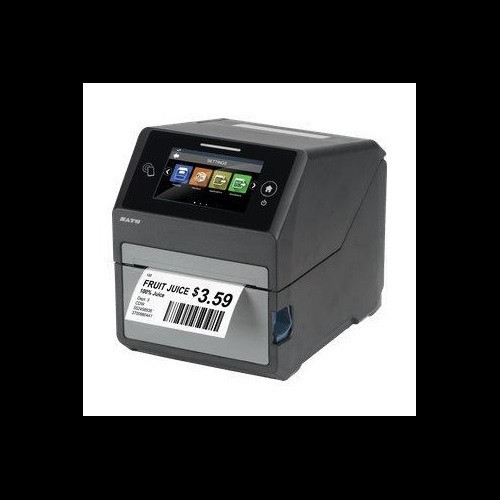
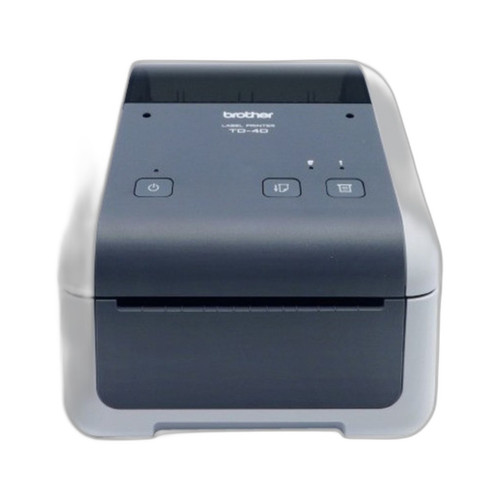
Both the Sato WWCT04441-WDR (CT4-LX) and the Brother TD4210D are desktop-form-factor direct thermal label and receipt printers targeting warehouse, logistics, and POS environments. A buyer evaluating a 4-inch-class desktop thermal printer for label, tag, or receipt output would reasonably encounter both. The CT4-LX adds thermal transfer capability and HF/NFC RFID encoding; the TD4210D is a direct-thermal-only unit without RFID. This comparison covers print performance, connectivity and memory, and media/RFID capability — the three axes most relevant to this product class.
In This Guide
Which printer delivers faster output at higher resolution?
The Sato WWCT04441-WDR prints at 305 dpi and 8 ips. The Brother TD4210D prints at 203 dpi and 5 ips. On both resolution and speed, the Sato unit holds a measurable lead: resolution is 50% higher (305 vs. 203 dpi), which directly affects barcode density, small-font legibility, and fine-detail graphics on labels. Print speed is 60% faster (8 vs. 5 ips), a meaningful difference in high-volume label runs where throughput directly affects line productivity.
The Sato CT4-LX also supports thermal transfer in addition to direct thermal, meaning it can print on a broader range of media including synthetics and materials requiring ribbon-based permanence. The TD4210D is direct thermal only — no ribbon support is specified. Max print width on the Sato is 4.09 inches; the Brother's is 4.3 inches, giving the TD4210D a slight edge on media width capacity.
Which unit offers broader connectivity and onboard resource capacity?
The Sato WWCT04441-WDR provides four interface options: USB, Ethernet, Wi-Fi, and Bluetooth. It also includes a 4.3-inch full-color touchscreen display, 4 GB flash memory, 1 GB DDR3 RAM, and 2 GB user storage. These resources support local label template storage, firmware, and font libraries without host dependency.
The Brother TD4210D specifies USB and Serial (RS-232) connectivity only. No Ethernet, Wi-Fi, or Bluetooth is listed in the provided specifications. No onboard memory figures, display, or user storage are specified for the TD4210D. Buyers requiring wireless connectivity, network printing, or standalone template management will find no basis in the available specs to confirm those capabilities in the Brother unit.
Which printer supports RFID encoding and what media ranges do they cover?
The Sato WWCT04441-WDR includes integrated HF/NFC RFID encoding at 13.56 MHz, with SATO RF Analyze described in the spec sheet as auto-tuning the antenna per inlay. This makes it suitable for smart-label applications in asset tracking, healthcare, retail, and supply chain where RFID inlay encoding is required at print time. Media width range is 1.0 to 4.1 inches; max roll diameter is 5 inches; max ribbon length is 984 feet.
The Brother TD4210D has no RFID capability specified. Its media types are listed as receipts, labels, and tags. No media width range, max roll diameter, or ribbon length is provided in the available specifications. Operating environment data (temperature range, weight, power input) are not specified for the TD4210D in the provided specs, whereas the Sato unit specifies 32°F–104°F operating range, AC 100–240V input, and a 7.3 lb / 3.3 kg weight.
Which should you choose: the WWCT04441-WDR or the TD4210D?
Our take: The WWCT04441-WDR is the stronger choice when print quality, connectivity flexibility, or HF/NFC RFID encoding are requirements. It leads on resolution (305 vs. 203 dpi), print speed (8 vs. 5 ips), and connectivity (USB + Ethernet + Wi-Fi + Bluetooth vs. USB + Serial only), and is the only unit of the two with specified onboard memory (4 GB flash, 1 GB DDR3, 2 GB user storage) and a touchscreen interface. It also supports thermal transfer media and integrated RFID encoding at 13.56 MHz — capabilities entirely absent from the TD4210D's listed specifications. The TD4210D offers a marginally wider max print width (4.3 vs. 4.09 inches) and a ribbon-free direct thermal design, which reduces consumable overhead in receipt or simple label applications. It is better suited to basic POS receipt or label output over USB or legacy RS-232, where RFID, wireless, and high-resolution output are not needed.
Side-by-Side Comparison
Spec-for-spec, from manufacturer data.
| Specification | Sato WWCT04441-WDR | Brother TD4210D |
|---|---|---|
| Print Method | Direct Thermal / Thermal Transfer | Direct Thermal only |
| Print Resolution | 305 dpi | 203 dpi |
| Print Speed | 8 ips | 5 ips |
| Max Print Width | 4.09 inches | 4.3 inches |
| Connectivity | USB, Ethernet, Wi-Fi, Bluetooth | USB, Serial (RS-232) |
| Display | 4.3" full-color touchscreen | — |
| Flash Memory | 4 GB | — |
| RAM | 1 GB DDR3 | — |
| User Storage | 2 GB | — |
| RFID | 13.56 MHz HF/NFC | — |
| Media Width Range | 1.0" to 4.1" | Up to 4.3" (range not specified) |
| Max Roll Diameter | 5 inches | — |
| Max Ribbon Length | 984 feet | Not applicable (direct thermal only) |
| Operating Temperature | 32°F to 104°F (0°C to 40°C) | — |
| Power Input | AC 100–240V, 50/60Hz | — |
| Weight | 7.3 lbs / 3.3 kg | — |
| Warranty | 1-year | Manufacturer Warranty (duration not specified) |
| Form Factor | Desktop | Desktop |
Frequently Asked Questions
Which should you choose: the WWCT04441-WDR or the TD4210D?
The WWCT04441-WDR is the stronger choice when print quality, connectivity flexibility, or HF/NFC RFID encoding are requirements. It leads on resolution (305 vs. 203 dpi), print speed (8 vs. 5 ips), and connectivity (USB + Ethernet + Wi-Fi + Bluetooth vs. USB + Serial only), and is the only unit of the two with specified onboard memory (4 GB flash, 1 GB DDR3, 2 GB user storage) and a touchscreen interface. It also supports thermal transfer media and integrated RFID encoding at 13.56 MHz — capabilities entirely absent from the TD4210D's listed specifications. The TD4210D offers a marginally wider max print width (4.3 vs. 4.09 inches) and a ribbon-free direct thermal design, which reduces consumable overhead in receipt or simple label applications. It is better suited to basic POS receipt or label output over USB or legacy RS-232, where RFID, wireless, and high-resolution output are not needed.
Can the TD4210D encode RFID smart labels like the WWCT04441-WDR?
No. The Sato WWCT04441-WDR includes integrated HF/NFC RFID encoding at 13.56 MHz with SATO RF Analyze antenna tuning. The Brother TD4210D has no RFID capability listed in its specifications.
Does the TD4210D support Wi-Fi or Ethernet like the WWCT04441-WDR?
Not based on the provided specifications. The Sato CT4-LX lists USB, Ethernet, Wi-Fi, and Bluetooth. The Brother TD4210D lists only USB and Serial (RS-232). No wireless or network connectivity is specified for the TD4210D.
Is the WWCT04441-WDR or TD4210D better for a high-volume label print environment?
Based on available specs, the Sato WWCT04441-WDR is faster (8 ips vs. 5 ips) and prints at higher resolution (305 vs. 203 dpi), and includes onboard memory for template storage. For high-volume or networked label print environments, the spec advantage belongs to the Sato unit. The TD4210D's specs do not include throughput, memory, or network data to support a comparable claim.
More Label Printer Comparisons
- Brother TD4550DNWB vs Sato WWCT04241-WCN
- Brother TD4550DNWB vs Sato WWCT04241-NDR
- Brother TD4550DNWB vs Sato WT212-404CW-EX1-2
- Brother TD4550DNWB vs Sato WWCT04441-WDR
- Brother TD4550DNWB vs Brother TD4420DNC
- Brother TD4550DNWB vs Brother TD4410D
Label Printer Buying Guides
Get a Second Opinion on Your Camera Choice
Share your site layout, coverage goals, and budget. Our team will validate the camera selection, flag anything we would change, and recommend products that match the use case.