
Sato WWCT04441-WAR vs Brother TD4420DNC: Specification Comparison
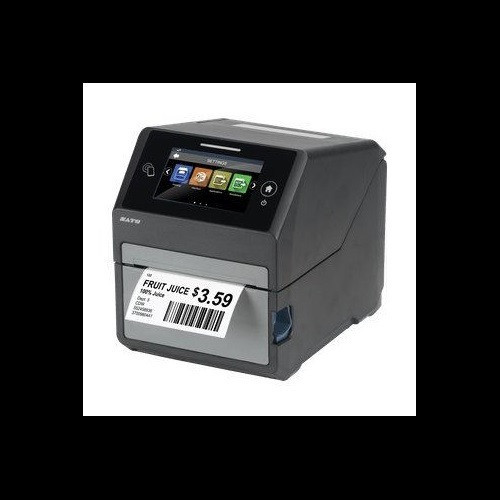
Both the Sato CT4-LX (WWCT04441-WAR) and Brother TD4420DNC are desktop direct-thermal label and receipt printers targeting warehouse, retail, and light industrial environments. They share the same desktop form factor, 8 ips print speed, and USB/Ethernet connectivity, making them credible cross-shop candidates for buyers evaluating a 4-inch-class desktop thermal printer. Key differentiators are print resolution, supported print methods, RFID capability, wireless options, memory, and media handling — each of which carries real workflow implications depending on the deployment.

In This Guide
- What print engine, resolution, and output quality does each printer deliver?
- How do connectivity and RFID capability compare between the two models?
- Which printer offers more capable media handling, memory, and physical build?
- Which should you choose: the WWCT04441-WAR or the TD4420DNC?
- Side-by-Side Specs
- FAQ
What print engine, resolution, and output quality does each printer deliver?
The Sato CT4-LX supports both Direct Thermal and Thermal Transfer print methods at 305 dpi, while the Brother TD4420DNC is Direct Thermal only at 203 dpi. The CT4-LX's 305 dpi output produces finer barcode bars and smaller readable text — relevant for GS1 DataMatrix, QR codes, or any label requiring tight pitch. The TD4420DNC's 203 dpi is the standard for general retail receipts and shipping labels at typical scanner distances, which its own spec bullets confirm as adequate for that use case.
Thermal Transfer support on the CT4-LX means it can use ribbon-based printing for long-life labels on synthetic or coated stocks — plastics, polyesters, and outdoor-grade media — that Direct Thermal cannot produce durably. The TD4420DNC's Direct Thermal-only engine is appropriate where label longevity under heat, light, or chemical exposure is not a requirement.
Maximum print width differs slightly: CT4-LX is rated 4.09 inches; TD4420DNC is rated 4.27–4.30 inches (specs show both figures). Neither value dramatically limits a standard 4-inch label format, but the Brother accepts marginally wider media.
How do connectivity and RFID capability compare between the two models?
The Sato CT4-LX ships with Ethernet, Wi-Fi, Bluetooth, and USB as standard interfaces. The Brother TD4420DNC provides USB, Serial, and Ethernet LAN; Wi-Fi and Bluetooth are not listed in the provided specifications. For deployments requiring wireless placement — mobile carts, floor-level stations without cable runs — the CT4-LX's built-in Wi-Fi and Bluetooth are directly relevant; the TD4420DNC would require a wired drop or an unspecified wireless adapter.
The CT4-LX integrates HF/NFC RFID encoding at 13.56 MHz with auto-antenna tuning, enabling simultaneous print-and-encode of smart labels in a single pass. No RFID capability is listed for the TD4420DNC. For pharma serialization, asset tracking, library, or access-card applications that require embedded RFID inlays, the CT4-LX is the only option between the two.
The TD4420DNC lists programming language support for ZPL II, CPCL, Raster Graphics, and ESC P — broad POS/WMS compatibility. No equivalent programming language list is provided in the Sato CT4-LX specifications as supplied.
Which printer offers more capable media handling, memory, and physical build?
Memory is substantially larger on the CT4-LX: 4 GB Flash, 1 GB DDR3 RAM, and 2 GB user storage. The TD4420DNC provides 64 MB Flash (40 MB usable for templates/database) and 256 MB SDRAM. For format-heavy deployments storing many label templates, fonts, or graphics locally, the CT4-LX's memory capacity is orders of magnitude greater.
The CT4-LX accommodates a 5-inch OD media roll with media widths from 1 to 4.1 inches, and accepts ribbon up to 984 feet. The TD4420DNC's media width range is listed as 0.75 to 4.65 inches — wider on both the narrow and wide ends — and it includes an integrated label cutter, which the CT4-LX spec does not list. Both have a 4.3-inch display.
Weight and dimensions differ: CT4-LX is 7.3 lbs at 7.0" W × 9.375" D × 8.4375" H; TD4420DNC is 5.3 lbs at 7.08" W × 9.50" D × 6.10" H. The Brother is meaningfully lighter and shorter in height, which may matter for crowded counter or cart installations. Both are rated for AC 100–240 V; operating temperature range is specified only for the CT4-LX (32°F–104°F / 0°C–40°C); the TD4420DNC's operating temperature is not provided in the supplied specifications.
Which should you choose: the WWCT04441-WAR or the TD4420DNC?
Our take: The WWCT04441-WAR is the stronger choice when the deployment requires HF/NFC RFID encoding, Thermal Transfer for durable labels, wireless connectivity, or high-capacity local storage for template-heavy workflows. Concretely: the CT4-LX prints at 305 dpi versus the TD4420DNC's 203 dpi; it carries 4 GB Flash and 1 GB DDR3 against the Brother's 64 MB Flash and 256 MB SDRAM; and it adds Wi-Fi, Bluetooth, and 13.56 MHz RFID encoding that are entirely absent from the TD4420DNC's listed specifications. The TD4420DNC is the stronger choice for straightforward POS receipt or shipping-label printing where an integrated cutter, a lighter chassis (5.3 vs 7.3 lbs), broader media-width range, and ZPL II / CPCL / ESC P language compatibility at lower acquisition cost are the deciding factors. Buyers in retail POS or light logistics without RFID or wireless requirements will find the TD4420DNC adequate; healthcare, supply-chain, and smart-label applications should specify the CT4-LX.
Side-by-Side Comparison
Spec-for-spec, from manufacturer data.
| Specification | Sato WWCT04441-WAR | Brother TD4420DNC |
|---|---|---|
| Print Method | Direct Thermal & Thermal Transfer | Direct Thermal only |
| Print Resolution | 305 dpi | 203 dpi |
| Print Speed | 8 ips | 8 ips |
| Max Print Width | 4.09" | 4.27" – 4.30" |
| Media Width Range | 1" – 4.1" | 0.75" – 4.65" |
| Max Media OD | 5" | — |
| Max Ribbon Length | 984 ft | N/A (Direct Thermal only) |
| RFID | HF/NFC 13.56 MHz with encoding | — |
| Connectivity | Ethernet, Wi-Fi, Bluetooth, USB | USB, Serial, Ethernet LAN |
| Flash Memory | 4 GB | 64 MB (40 MB usable) |
| RAM | 1 GB DDR3 | 256 MB SDRAM |
| User Storage | 2 GB | — |
| Display | 4.3" touchscreen | 4.3" |
| Integrated Cutter | — | Yes |
| Weight | 7.3 lbs (3.3 kg) | 5.3 lbs (2.41 kg) |
| Dimensions (W×D×H) | 7.0" × 9.375" × 8.4375" | 7.08" × 9.50" × 6.10" |
Frequently Asked Questions
Which should you choose: the WWCT04441-WAR or the TD4420DNC?
The WWCT04441-WAR is the stronger choice when the deployment requires HF/NFC RFID encoding, Thermal Transfer for durable labels, wireless connectivity, or high-capacity local storage for template-heavy workflows. Concretely: the CT4-LX prints at 305 dpi versus the TD4420DNC's 203 dpi; it carries 4 GB Flash and 1 GB DDR3 against the Brother's 64 MB Flash and 256 MB SDRAM; and it adds Wi-Fi, Bluetooth, and 13.56 MHz RFID encoding that are entirely absent from the TD4420DNC's listed specifications. The TD4420DNC is the stronger choice for straightforward POS receipt or shipping-label printing where an integrated cutter, a lighter chassis (5.3 vs 7.3 lbs), broader media-width range, and ZPL II / CPCL / ESC P language compatibility at lower acquisition cost are the deciding factors. Buyers in retail POS or light logistics without RFID or wireless requirements will find the TD4420DNC adequate; healthcare, supply-chain, and smart-label applications should specify the CT4-LX.
Does the Sato WWCT04441-WAR or the Brother TD4420DNC support RFID label encoding?
Only the Sato CT4-LX (WWCT04441-WAR) supports RFID encoding — specifically HF/NFC at 13.56 MHz with auto-antenna tuning for simultaneous print-and-encode. No RFID capability is listed in the provided specifications for the Brother TD4420DNC.
Which printer is better suited for a wireless or mobile cart installation?
The Sato CT4-LX lists Ethernet, Wi-Fi, Bluetooth, and USB as standard interfaces. The Brother TD4420DNC lists USB, Serial, and Ethernet LAN only — Wi-Fi and Bluetooth are not present in its provided specifications. For wireless placement without a fixed cable drop, the CT4-LX is the specified choice.
Is the Brother TD4420DNC or the Sato CT4-LX a better fit for a high-volume POS receipt and label environment requiring an integrated cutter?
The Brother TD4420DNC lists an integrated cutter and supports ZPL II, CPCL, Raster Graphics, and ESC P programming languages — directly relevant for POS and WMS environments. The CT4-LX spec supplied does not list a built-in cutter. For cut-on-demand receipt or label printing in a wired POS environment, the TD4420DNC's feature set aligns more closely with that use case.
More Label Printer Comparisons
- Brother TD4550DNWB vs Sato WWCT04241-WCN
- Brother TD4550DNWB vs Sato WWCT04241-NDR
- Brother TD4550DNWB vs Sato WT212-404CW-EX1-2
- Brother TD4550DNWB vs Sato WWCT04441-WDR
- Brother TD4550DNWB vs Brother TD4420DNC
- Brother TD4550DNWB vs Brother TD4410D
Label Printer Buying Guides
Get a Second Opinion on Your Camera Choice
Share your site layout, coverage goals, and budget. Our team will validate the camera selection, flag anything we would change, and recommend products that match the use case.