
Sato WWCT04441-WAR vs Brother TD4410D: Specification Comparison
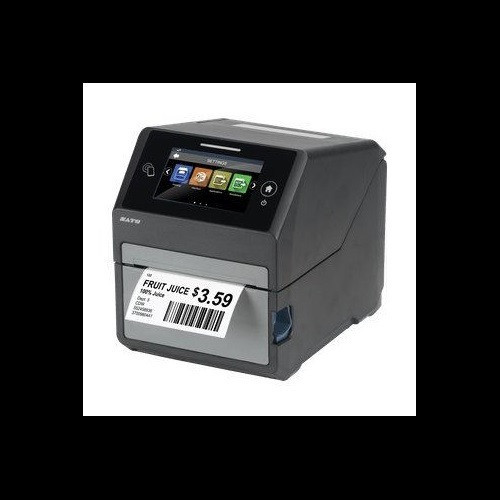
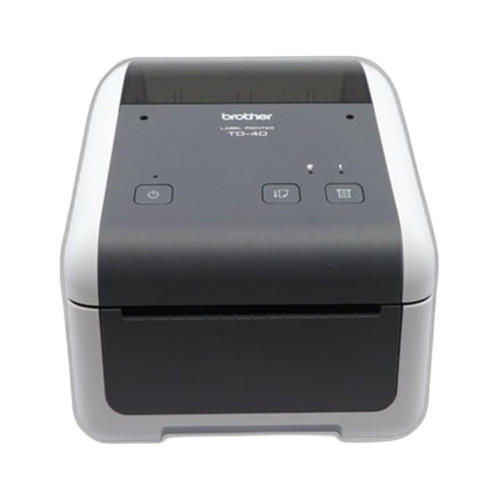
Both the Sato CT4-LX (WWCT04441-WAR) and the Brother TD4410D are desktop direct thermal label printers targeting warehouse, logistics, retail, and asset-tracking environments. The CT4-LX adds thermal transfer capability and integrated HF/NFC RFID encoding at 305 dpi, while the TD4410D is a direct-thermal-only unit at 203 dpi with a broader programming-language footprint. Buyers choosing between them are weighing RFID encoding capability and higher print resolution against a simpler, lighter, legacy-compatible label printer at a likely lower price point.
In This Guide
- How do print resolution, method, and media handling compare between the two printers?
- Which printer offers broader connectivity and does either support RFID encoding?
- How do memory, programming language support, and operating environment differ?
- Which should you choose: the WWCT04441-WAR or the TD4410D?
- Side-by-Side Specs
- FAQ
How do print resolution, method, and media handling compare between the two printers?
The Sato CT4-LX prints at 305 dpi via both direct thermal and thermal transfer, delivering sharper barcodes and fine text suitable for small labels or dense GS1 symbologies. The Brother TD4410D is direct thermal only at 203 dpi — adequate for standard 1D/2D barcodes and receipts but noticeably coarser on small fonts or high-density codes.
Both printers reach 8 ips print speed. On media width, the TD4410D accepts paper from 0.75" to 4.65" and prints up to a specified 4.27"–4.3" wide, while the CT4-LX handles 1" to 4.1" media with a 4.09" max print width — slightly narrower. The CT4-LX also supports thermal transfer ribbon up to 984 ft, opening consumable flexibility the direct-thermal-only TD4410D cannot match.
Media roll capacity: the CT4-LX accepts a maximum 5" outer-diameter roll. The TD4410D spec does not state a maximum roll OD. Both support labels, tags, and wristbands; the TD4410D explicitly adds receipts to its media list.
Which printer offers broader connectivity and does either support RFID encoding?
The Sato CT4-LX ships with Ethernet, Wi-Fi, Bluetooth, and USB — four interfaces covering networked enterprise deployment, wireless mobility, and direct host connection simultaneously. It also carries a 4.3" touchscreen for on-device operation and job management.
The Brother TD4410D provides USB and 9-pin Serial only. There is no Ethernet, Wi-Fi, or Bluetooth listed in its specifications. Serial connectivity is an advantage only in legacy POS or industrial controller environments that require it; for modern networked warehouses the TD4410D would require a print server or host-side workaround.
RFID encoding is exclusive to the CT4-LX: it encodes HF/NFC tags at 13.56 MHz with auto-antenna tuning. The TD4410D has no RFID capability per its specifications. For any deployment requiring RFID smart labels — pharmaceutical, retail EPC, or asset tracking — the TD4410D is categorically out of scope.
How do memory, programming language support, and operating environment differ?
The Sato CT4-LX carries 4 GB Flash (with 2 GB user storage) and 1 GB DDR3 RAM — a substantially larger memory footprint suited for storing large font libraries, graphics, and format databases on-device. The Brother TD4410D provides 64 MB Flash (40 MB available for templates/database) and 256 MB SDRAM — sufficient for moderate label template libraries but far less headroom for complex or multilingual jobs.
On programming languages, the TD4410D explicitly supports ZPL II, CPCL, Raster Graphics, and ESC/P — a broad set that enables drop-in replacement in Zebra ZPL or legacy CPCL environments without reprinting middleware. The CT4-LX specification provided does not enumerate supported programming languages or emulations; buyers integrating into ZPL-based WMS stacks should verify CT4-LX language support directly with Sato before purchase.
Operating environment: the CT4-LX is rated 32°F–104°F (0°C–40°C). The TD4410D specification does not state an operating temperature range. The CT4-LX weighs 7.3 lbs vs the TD4410D at 4.58 lbs; the TD4410D is the more portable unit. Power: CT4-LX is AC 100–240V universal; TD4410D power input is not specified in the provided data.
Which should you choose: the WWCT04441-WAR or the TD4410D?
Our take: The WWCT04441-WAR (Sato CT4-LX) is the stronger choice when the deployment requires RFID smart-label encoding, higher print resolution, or networked/wireless connectivity. It prints at 305 dpi versus the TD4410D's 203 dpi — a 50% resolution advantage that matters for small labels and dense barcodes. It adds thermal transfer support (984 ft ribbon) where the TD4410D is direct-thermal-only, and it ships with Ethernet, Wi-Fi, Bluetooth, and USB versus the TD4410D's USB and Serial only. The CT4-LX's 4 GB Flash and 1 GB DDR3 also dwarf the TD4410D's 64 MB Flash and 256 MB SDRAM. Conversely, the TD4410D is the more straightforward choice for ZPL II / CPCL / ESC/P legacy stacks where language compatibility is the primary integration concern, or in weight-sensitive or serial-interface environments — and its programming language support is explicitly documented where the CT4-LX's is not.
Side-by-Side Comparison
Spec-for-spec, from manufacturer data.
| Specification | Sato WWCT04441-WAR | Brother TD4410D |
|---|---|---|
| Print Resolution | 305 dpi | 203 dpi |
| Print Method | Direct Thermal & Thermal Transfer | Direct Thermal only |
| Print Speed | 8 ips | 8 ips |
| Max Print Width | 4.09" | 4.27" – 4.3" |
| Media Width Range | 1" – 4.1" | 0.75" – 4.65" |
| Max Media Roll OD | 5" | — |
| Max Ribbon Length | 984 ft | N/A (no ribbon) |
| Connectivity | Ethernet, Wi-Fi, Bluetooth, USB | USB, Serial (9-pin) |
| RFID | HF/NFC 13.56 MHz with encoding | — |
| Touchscreen | 4.3" | — |
| Flash Memory | 4 GB (2 GB user storage) | 64 MB (40 MB templates/DB) |
| RAM | 1 GB DDR3 | 256 MB SDRAM |
| Programming Languages | — | ZPL II, CPCL, Raster, ESC/P |
| Weight | 7.3 lbs (3.3 kg) | 4.58 lbs |
| Dimensions (W×D×H) | 7.0" × 9.375" × 8.4375" | 7.08" × 8.82" × 6.10" |
| Warranty | 1-year | Manufacturer Warranty (duration not specified) |
Frequently Asked Questions
Which should you choose: the WWCT04441-WAR or the TD4410D?
The WWCT04441-WAR (Sato CT4-LX) is the stronger choice when the deployment requires RFID smart-label encoding, higher print resolution, or networked/wireless connectivity. It prints at 305 dpi versus the TD4410D's 203 dpi — a 50% resolution advantage that matters for small labels and dense barcodes. It adds thermal transfer support (984 ft ribbon) where the TD4410D is direct-thermal-only, and it ships with Ethernet, Wi-Fi, Bluetooth, and USB versus the TD4410D's USB and Serial only. The CT4-LX's 4 GB Flash and 1 GB DDR3 also dwarf the TD4410D's 64 MB Flash and 256 MB SDRAM. Conversely, the TD4410D is the more straightforward choice for ZPL II / CPCL / ESC/P legacy stacks where language compatibility is the primary integration concern, or in weight-sensitive or serial-interface environments — and its programming language support is explicitly documented where the CT4-LX's is not.
Can the TD4410D encode RFID tags like the Sato CT4-LX?
No. RFID encoding is not present in the TD4410D specification. Only the Sato CT4-LX (WWCT04441-WAR) supports RFID, operating at 13.56 MHz HF/NFC with auto-antenna tuning. If your label run includes smart RFID inlays, the TD4410D cannot be used for that application.
Is the Brother TD4410D compatible with Zebra ZPL label formats?
Yes, per its specifications the TD4410D explicitly supports ZPL II alongside CPCL, Raster Graphics, and ESC/P. This makes it a viable drop-in replacement in environments already using ZPL-based label software or WMS platforms. The Sato CT4-LX specification provided does not list supported programming languages, so ZPL compatibility for the CT4-LX should be confirmed with Sato before deployment in a ZPL-driven environment.
Which printer is better suited for a networked warehouse with multiple workstations?
The Sato CT4-LX (WWCT04441-WAR) is better suited for networked deployment: it includes Ethernet, Wi-Fi, and Bluetooth in addition to USB, allowing it to integrate directly into a wired or wireless network without additional hardware. The Brother TD4410D provides only USB and 9-pin Serial per its specifications, which would require a print server or direct host connection for each unit in a multi-workstation setup.
More Label Printer Comparisons
- Brother TD4550DNWB vs Sato WWCT04241-WCN
- Brother TD4550DNWB vs Sato WWCT04241-NDR
- Brother TD4550DNWB vs Sato WT212-404CW-EX1-2
- Brother TD4550DNWB vs Sato WWCT04441-WDR
- Brother TD4550DNWB vs Brother TD4420DNC
- Brother TD4550DNWB vs Brother TD4410D
Label Printer Buying Guides
Get a Second Opinion on Your Camera Choice
Share your site layout, coverage goals, and budget. Our team will validate the camera selection, flag anything we would change, and recommend products that match the use case.