
Sato WWCT04441-WAR vs Brother TD4210D: Specification Comparison
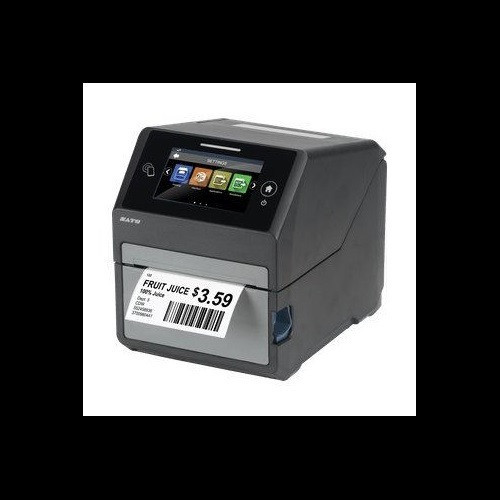
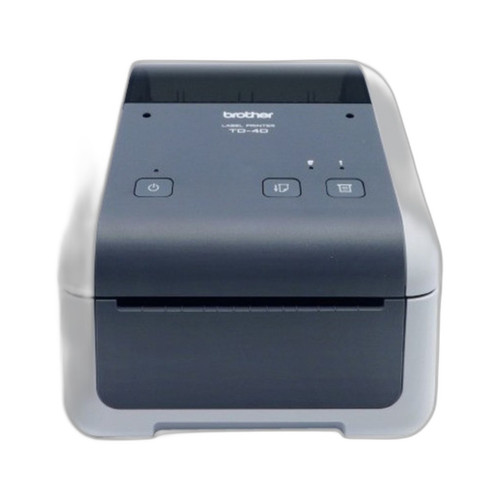
Both the Sato CT4-LX (WWCT04441-WAR) and the Brother TD4210D are desktop-class direct thermal label and receipt printers targeting industrial, warehouse, and logistics environments. The CT4-LX adds thermal transfer capability and integrated HF RFID encoding, while the TD4210D focuses on ribbon-free direct thermal output with legacy-friendly serial connectivity. This comparison evaluates print performance, media and connectivity flexibility, and RFID/advanced feature availability to help buyers match each unit to their operational requirements.
In This Guide
- Which printer delivers faster throughput and sharper output for barcodes and labels?
- Which unit offers broader media compatibility and more integration options?
- Which printer supports RFID encoding and advanced deployment scenarios?
- Which should you choose: the WWCT04441-WAR or the TD4210D?
- Side-by-Side Specs
- FAQ
Which printer delivers faster throughput and sharper output for barcodes and labels?
The Sato CT4-LX prints at 8 ips at 305 dpi, while the Brother TD4210D prints at 5 ips at 203 dpi. The CT4-LX's 305 dpi resolution produces finer barcode elements and smaller human-readable text, which matters in high-density label formats or pharmaceutical/compliance applications. The TD4210D's 203 dpi is adequate for standard 1D and common 2D symbologies on receipts and shelf labels, but fine-detail print jobs will show the difference.
On throughput, the CT4-LX's 8 ips versus the TD4210D's 5 ips represents a 60% speed advantage, which compounds meaningfully in high-volume batch runs. The CT4-LX also supports both direct thermal and thermal transfer, so it can print on coated synthetics and polyester labels using ribbon — a substrate class the TD4210D cannot handle at all, being direct thermal only.
Which unit offers broader media compatibility and more integration options?
The Sato CT4-LX accepts media widths from 1 inch to 4.1 inches with a maximum roll outer diameter of 5 inches and supports ribbon up to 984 ft. Its connectivity suite includes Ethernet, Wi-Fi, Bluetooth, and USB. The 4 GB flash, 1 GB DDR3 RAM, and 2 GB user storage support large label libraries and embedded fonts. A 4.3-inch touchscreen provides on-device configuration without a host PC.
The Brother TD4210D handles media up to 4.3 inches wide — slightly wider than the CT4-LX's 4.09-inch maximum — and connects via USB and RS-232 serial only. No Ethernet, Wi-Fi, or Bluetooth interface is specified. Maximum roll diameter and ribbon specs are not provided in the available data. The TD4210D has no touchscreen; panel controls are not detailed in the supplied specifications.
Which printer supports RFID encoding and advanced deployment scenarios?
The Sato CT4-LX includes integrated HF/NFC RFID encoding at 13.56 MHz with auto-antenna tuning. This enables simultaneous print-and-encode workflows for asset tracking, pharmaceutical serialization, and NFC-interactive labels without a separate encoder. The spec sheet confirms RFID as a native, built-in feature of this SKU.
The Brother TD4210D has no RFID capability specified anywhere in its supplied data. Its positioning as a receipt and label printer for POS and warehouse logistics does not include any encoding function. Buyers requiring RFID encoding — even as a future option — cannot satisfy that requirement with the TD4210D based on available specifications. The CT4-LX's warranty is documented as 1 year; the TD4210D's warranty is listed only as 'Manufacturer Warranty' with no duration specified.
Which should you choose: the WWCT04441-WAR or the TD4210D?
Our take: The WWCT04441-WAR is the stronger choice when the deployment requires RFID encoding, thermal transfer media, network connectivity, or higher throughput. Concretely: it prints at 8 ips versus the TD4210D's 5 ips; it resolves at 305 dpi versus 203 dpi; and it adds Ethernet, Wi-Fi, and Bluetooth where the TD4210D offers only USB and RS-232. The integrated 13.56 MHz HF/NFC encoder is absent entirely from the TD4210D. The TD4210D holds a narrow media-width edge (4.3 inches vs 4.09 inches) and its ribbon-free direct thermal design lowers per-label consumable cost for receipt and basic label work. Choose the TD4210D for lightweight POS or single-workstation label printing with legacy serial systems and no RFID requirement; choose the CT4-LX for networked, multi-protocol, or RFID-enabled industrial label operations.
Side-by-Side Comparison
Spec-for-spec, from manufacturer data.
| Specification | Sato WWCT04441-WAR | Brother TD4210D |
|---|---|---|
| Print Method | Direct Thermal & Thermal Transfer | Direct Thermal only |
| Print Resolution | 305 dpi | 203 dpi |
| Print Speed | 8 ips | 5 ips |
| Max Print Width | 4.09" | 4.3" |
| Connectivity | Ethernet, Wi-Fi, Bluetooth, USB | USB, RS-232 Serial |
| RFID | HF/NFC 13.56 MHz, integrated encoder | — |
| Touchscreen | 4.3" | — |
| Flash Memory | 4 GB | — |
| RAM | 1 GB DDR3 | — |
| User Storage | 2 GB | — |
| Max Roll OD | 5" | — |
| Max Ribbon Length | 984 ft | Not applicable (no ribbon) |
| Media Width Range | 1" to 4.1" | Up to 4.3" |
| Form Factor | Desktop | Desktop |
| Power Supply | AC 100–240V, 50/60 Hz | — |
| Warranty | 1 Year | Manufacturer Warranty (duration not specified) |
Frequently Asked Questions
Which should you choose: the WWCT04441-WAR or the TD4210D?
The WWCT04441-WAR is the stronger choice when the deployment requires RFID encoding, thermal transfer media, network connectivity, or higher throughput. Concretely: it prints at 8 ips versus the TD4210D's 5 ips; it resolves at 305 dpi versus 203 dpi; and it adds Ethernet, Wi-Fi, and Bluetooth where the TD4210D offers only USB and RS-232. The integrated 13.56 MHz HF/NFC encoder is absent entirely from the TD4210D. The TD4210D holds a narrow media-width edge (4.3 inches vs 4.09 inches) and its ribbon-free direct thermal design lowers per-label consumable cost for receipt and basic label work. Choose the TD4210D for lightweight POS or single-workstation label printing with legacy serial systems and no RFID requirement; choose the CT4-LX for networked, multi-protocol, or RFID-enabled industrial label operations.
Can either printer encode RFID tags directly, or do I need a separate encoder?
Only the Sato CT4-LX (WWCT04441-WAR) includes integrated RFID encoding — specifically HF/NFC at 13.56 MHz with auto-antenna tuning, allowing simultaneous print-and-encode in a single pass. The Brother TD4210D has no RFID capability specified in its available data, so a separate encoder would be required if RFID is needed.
Which printer is better suited for a networked warehouse where multiple workstations need to send jobs wirelessly?
The Sato CT4-LX supports Ethernet, Wi-Fi, Bluetooth, and USB, making it suitable for shared networked or wireless deployments. The Brother TD4210D is limited to USB and RS-232 serial interfaces per its supplied specifications — no wireless or Ethernet connectivity is listed — so it is not suited for multi-workstation wireless printing without additional hardware.
Does the Brother TD4210D support thermal transfer printing for durable synthetic labels?
No. The Brother TD4210D is a direct thermal-only printer; thermal transfer printing is not specified in its available data. The Sato CT4-LX supports both direct thermal and thermal transfer, enabling it to print on ribbon-dependent substrates such as polyester and coated synthetics for applications requiring greater label durability.
More Label Printer Comparisons
- Brother TD4550DNWB vs Sato WWCT04241-WCN
- Brother TD4550DNWB vs Sato WWCT04241-NDR
- Brother TD4550DNWB vs Sato WT212-404CW-EX1-2
- Brother TD4550DNWB vs Sato WWCT04441-WDR
- Brother TD4550DNWB vs Brother TD4420DNC
- Brother TD4550DNWB vs Brother TD4410D
Label Printer Buying Guides
Get a Second Opinion on Your Camera Choice
Share your site layout, coverage goals, and budget. Our team will validate the camera selection, flag anything we would change, and recommend products that match the use case.