
Sato WWCT0424C-WDN vs Brother TD4210D: Specification Comparison
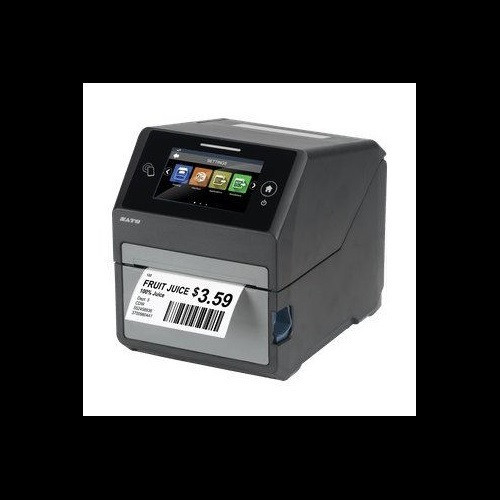
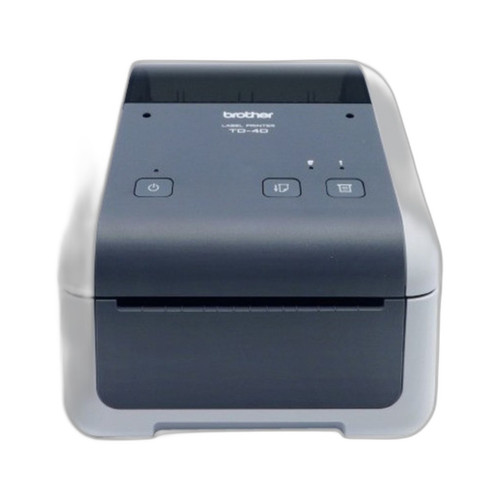
Both the Sato CT4-LX (WWCT0424C-WDN) and the Brother TD4210D are desktop direct-thermal label and receipt printers targeting warehouse, logistics, and light industrial environments. While they share a form factor and direct-thermal print method, they diverge sharply in resolution, connectivity, feature depth, and RFID capability. This comparison evaluates the two on print performance, media handling and connectivity, and advanced functionality to help installers and IT buyers determine which unit fits their deployment requirements.
In This Guide
- Which printer delivers higher resolution and faster throughput for barcode and label accuracy?
- How do the two printers compare on interface options, media capacity, and physical dimensions?
- Which unit supports RFID encoding, onboard intelligence, and richer operator interaction?
- Which should you choose: the WWCT0424C-WDN or the TD4210D?
- Side-by-Side Specs
- FAQ
Which printer delivers higher resolution and faster throughput for barcode and label accuracy?
The Sato CT4-LX (WWCT0424C-WDN) prints at 305 dpi and 8 ips, while the Brother TD4210D prints at 203 dpi and 5 ips. The Sato's 305 dpi output produces finer barcode elements and smaller readable text, which matters for high-density 2D codes (QR, DataMatrix) or small-pitch 1D barcodes on asset tags. At 8 ips versus 5 ips, the Sato delivers 60% higher throughput — relevant in high-volume label runs where print speed is a production bottleneck.
The Brother TD4210D's 203 dpi at 5 ips is adequate for standard POS receipts, shipping labels, and warehouse pick tickets where label density requirements are modest. Neither unit's resolution spec is disputed in the provided data, though Sato's datasheet lists a secondary '203' value under Print Resolution alongside the primary '305 dpi at 8 ips' spec — the 305 dpi figure is consistently cited in the principal spec block and card bullets and is treated as the operating resolution here.
The CT4-LX also supports thermal transfer in addition to direct thermal, meaning it can use ribbon-based printing for labels requiring greater durability (chemical resistance, outdoor exposure). The TD4210D is direct thermal only, which is ribbon-free and lower in consumable cost but limits label substrate options where longevity under harsh conditions is needed.
How do the two printers compare on interface options, media capacity, and physical dimensions?
The Sato CT4-LX provides Ethernet, Wi-Fi, Bluetooth, and USB 2.0 — four distinct connectivity paths. The Brother TD4210D offers USB and Serial (RS-232) only. No wireless interfaces are specified for the TD4210D. For networked environments, shared-printer deployments, or mobile trigger printing via Bluetooth, only the CT4-LX is specified to support those topologies.
On media handling, the CT4-LX accepts media widths from 1 inch to 4.1 inches on a 1.5-inch core, with a maximum roll diameter of 5 inches, and supports ribbon lengths up to 984 ft (300 m). The TD4210D supports a print width of 4.3 inches — slightly wider than the CT4-LX's 4.09-inch maximum — but no media core diameter, roll diameter, or ribbon capacity is specified in the provided data. Buyers requiring media roll depth specs for the TD4210D should consult the manufacturer datasheet directly.
Physically, the CT4-LX measures 7.0" × 9.375" × 8.4375" and weighs 7.3 lb (3.3 kg). No dimensions or weight are specified for the TD4210D. The CT4-LX runs on AC 100–240 V, 50/60 Hz; power input for the TD4210D is not provided in the available specs.
Which unit supports RFID encoding, onboard intelligence, and richer operator interaction?
The Sato CT4-LX integrates a UHF RFID encoder operating at 860–960 MHz, EPC Class 1 Gen 2 compliant, with auto-antenna tuning specified in card bullets. This enables simultaneous print-and-encode of RFID smart labels in a single pass — a capability the Brother TD4210D does not offer; no RFID functionality of any kind is specified for the TD4210D.
Memory on the CT4-LX is specified at 4 GB Flash, 1 GB DDR3, and 2 GB user storage — substantial onboard resources for firmware, stored label formats, fonts, and graphics libraries. The CT4-LX also includes a 4.3-inch full-color touchscreen for operator-driven job selection, configuration, and status feedback. No memory specifications and no display specifications are provided for the TD4210D.
The CT4-LX carries a stated 1-year warranty. The TD4210D lists 'Manufacturer Warranty' without duration. Buyers requiring a confirmed warranty term for the TD4210D should verify directly with the manufacturer or distributor.
Which should you choose: the WWCT0424C-WDN or the TD4210D?
Our take: The WWCT0424C-WDN (Sato CT4-LX) is the stronger choice when print quality, throughput, network connectivity, or RFID encoding are requirements. It prints at 305 dpi versus the TD4210D's 203 dpi — a 50% resolution advantage — and at 8 ips versus 5 ips, meaning materially faster label runs. It adds Ethernet, Wi-Fi, and Bluetooth where the TD4210D is limited to USB and RS-232, and it is the only unit of the two with UHF RFID (860–960 MHz, EPC C1G2) encoding capability. The TD4210D's narrow case is its 4.3-inch print width — marginally wider than the CT4-LX's 4.09-inch maximum — and its ribbon-free direct-thermal-only design reduces consumable complexity for simple receipt or label stock. The TD4210D suits low-volume, wired POS or logistics stations where receipts and basic labels are the only output. The CT4-LX is the appropriate selection for networked, high-throughput, RFID-enabled asset-tracking or smart-label production environments.
Side-by-Side Comparison
Spec-for-spec, from manufacturer data.
| Specification | Sato WWCT0424C-WDN | Brother TD4210D |
|---|---|---|
| SKU | WWCT0424C-WDN | TD4210D |
| Print Method | Direct Thermal / Thermal Transfer | Direct Thermal only |
| Print Resolution | 305 dpi | 203 dpi |
| Print Speed | 8 ips | 5 ips |
| Max Print Width | 4.09 in | 4.3 in |
| Connectivity | Ethernet, Wi-Fi, Bluetooth, USB 2.0 | USB, Serial (RS-232) |
| RFID Capability | UHF 860–960 MHz, EPC C1G2 | — |
| Display | 4.3-inch full-color touchscreen | — |
| Memory | 4 GB Flash + 1 GB DDR3 + 2 GB user | — |
| Media Width Range | 1 in to 4.1 in | Up to 4.3 in |
| Max Media Roll Diameter | 5 in | — |
| Media Core | 1.5 in | — |
| Max Ribbon Length | 984 ft (300 m) | N/A (direct thermal only) |
| Dimensions (W×D×H) | 7.0" × 9.375" × 8.4375" | — |
| Weight | 7.3 lb (3.3 kg) | — |
| Power Input | AC 100–240 V, 50/60 Hz | — |
| Warranty | 1 year | Manufacturer Warranty (duration not specified) |
Frequently Asked Questions
Which should you choose: the WWCT0424C-WDN or the TD4210D?
The WWCT0424C-WDN (Sato CT4-LX) is the stronger choice when print quality, throughput, network connectivity, or RFID encoding are requirements. It prints at 305 dpi versus the TD4210D's 203 dpi — a 50% resolution advantage — and at 8 ips versus 5 ips, meaning materially faster label runs. It adds Ethernet, Wi-Fi, and Bluetooth where the TD4210D is limited to USB and RS-232, and it is the only unit of the two with UHF RFID (860–960 MHz, EPC C1G2) encoding capability. The TD4210D's narrow case is its 4.3-inch print width — marginally wider than the CT4-LX's 4.09-inch maximum — and its ribbon-free direct-thermal-only design reduces consumable complexity for simple receipt or label stock. The TD4210D suits low-volume, wired POS or logistics stations where receipts and basic labels are the only output. The CT4-LX is the appropriate selection for networked, high-throughput, RFID-enabled asset-tracking or smart-label production environments.
Do I need RFID encoding — does that rule out the TD4210D entirely?
Yes, based on the provided specifications. The Sato CT4-LX (WWCT0424C-WDN) is the only unit of the two with a specified UHF RFID encoder (860–960 MHz, EPC C1G2). No RFID capability of any kind is listed for the Brother TD4210D. If your application requires print-and-encode of RFID smart labels — asset tracking, retail EPC compliance, supply-chain serialization — the TD4210D is not specified to support that workflow.
Can either printer connect to a wireless network or be shared across multiple workstations without a USB hub?
Only the Sato CT4-LX is specified with network-capable interfaces: Ethernet (wired LAN) and Wi-Fi, plus Bluetooth. The Brother TD4210D is specified with USB and RS-232 Serial only — no wireless or Ethernet interfaces are listed in the available specs. For shared or wirelessly triggered printing, the CT4-LX is the only option of the two with confirmed connectivity to support that topology.
Is the TD4210D's slightly wider 4.3-inch print width a meaningful advantage over the CT4-LX's 4.09-inch maximum?
It depends on your label stock. The Brother TD4210D's specified print width of 4.3 inches exceeds the Sato CT4-LX's 4.09-inch maximum by approximately 0.21 inches. For standard 4-inch label stock this difference is irrelevant. If your label design bleeds to exactly 4.3 inches, only the TD4210D can accommodate it as specified. However, the CT4-LX's advantages in resolution (305 vs. 203 dpi), speed (8 vs. 5 ips), connectivity, and RFID capability will outweigh the width delta for most enterprise deployments.
More Label Printer Comparisons
- Brother TD4550DNWB vs Sato WWCT04241-WCN
- Brother TD4550DNWB vs Sato WWCT04241-NDR
- Brother TD4550DNWB vs Sato WT212-404CW-EX1-2
- Brother TD4550DNWB vs Sato WWCT04441-WDR
- Brother TD4550DNWB vs Brother TD4420DNC
- Brother TD4550DNWB vs Brother TD4410D
Label Printer Buying Guides
Get a Second Opinion on Your Camera Choice
Share your site layout, coverage goals, and budget. Our team will validate the camera selection, flag anything we would change, and recommend products that match the use case.