
Sato WWCT04241-NDR vs Brother TD4210D: Specification Comparison
Both the Sato CT4-LX (WWCT04241-NDR) and Brother TD4210D are desktop-class direct thermal label and receipt printers aimed at light-to-medium-duty barcode, label, and receipt workflows. The comparison spans print technology, resolution, speed, connectivity, and ancillary capabilities. The Sato adds thermal transfer support and integrated UHF RFID; the Brother is a ribbon-free direct thermal-only unit. Buyers evaluating either are likely choosing between a feature-rich RFID-capable workstation printer and a lean, lower-complexity receipt/label printer for POS or warehouse environments.
In This Guide
- How do the print engine, resolution, and speed compare between the WWCT04241-NDR and TD4210D?
- What connectivity and RFID capabilities differentiate the WWCT04241-NDR from the TD4210D?
- How do media handling, user interface, memory, and physical footprint compare?
- Which should you choose: the WWCT04241-NDR or the TD4210D?
- Side-by-Side Specs
- FAQ
How do the print engine, resolution, and speed compare between the WWCT04241-NDR and TD4210D?
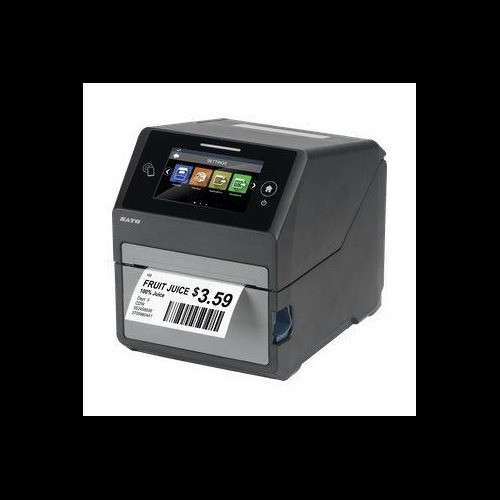
The Sato WWCT04241-NDR supports both Direct Thermal and Thermal Transfer printing at 305 dpi and 8 ips. Thermal Transfer enables the use of ribbon media for more durable, long-lasting labels on synthetic or specialty stock, while the 305 dpi resolution produces finer detail than the Brother.
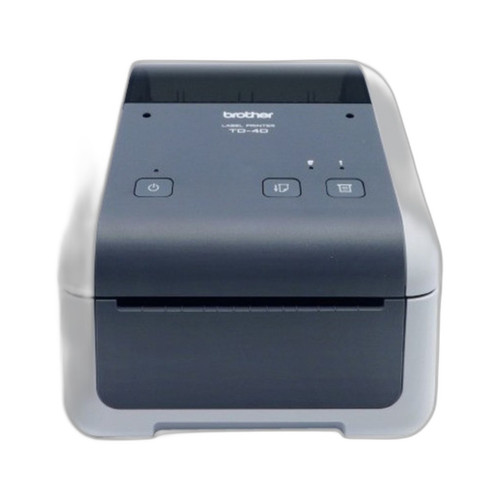
The Brother TD4210D is Direct Thermal only—no ribbon is required or supported—at 203 dpi and 5 ips. This simplifies consumable management and reduces mechanical complexity, but limits the printer to heat-sensitive media and precludes use with ribbon-dependent synthetic substrates.
On every measurable print-engine dimension the Sato leads: 305 vs. 203 dpi (50% higher resolution), 8 vs. 5 ips (60% faster throughput), and dual vs. single print method. The Brother's ribbon-free design is an operational simplicity advantage for high-turnover POS or receipt environments where label durability is not a priority.
What connectivity and RFID capabilities differentiate the WWCT04241-NDR from the TD4210D?
The Sato WWCT04241-NDR provides four connectivity options: Ethernet (wired LAN), Wi-Fi, Bluetooth, and USB. This supports integration into networked enterprise environments, wireless deployments on factory floors or warehouses, and direct USB tethering to a host. It also includes integrated UHF RFID encoding at 860–960 MHz, EPC Class 1 Gen 2 standard, with intelligent antenna optimization as noted in the product spec.
The Brother TD4210D offers USB and Serial (RS-232) connectivity only. There is no Ethernet, Wi-Fi, or Bluetooth listed in the provided specifications. RFID capability is absent from the Brother's spec data entirely.
For any deployment requiring network-attached printing, wireless mobility, or RFID label encoding, the Sato is the only option of the two. The Brother's RS-232 port is a meaningful advantage for legacy POS systems and older warehouse management platforms that still rely on serial interfaces—a scenario where the Sato's spec sheet does not list RS-232 support.
How do media handling, user interface, memory, and physical footprint compare?
The Sato WWCT04241-NDR supports media widths from 1" to 4.1" with a maximum media outer diameter of 5" and ribbon lengths up to 984 ft (300 m). It includes a 4.3" full-color touchscreen display, 4 GB Flash, 1 GB DDR3 RAM, and 2 GB user storage. Physical dimensions are 7.0" × 9.375" × 8.4375" and it weighs 7.3 lbs (3.3 kg). Power is AC 100–240 V, 50/60 Hz. Warranty is stated as 1 year.
The Brother TD4210D lists a maximum print/media width of 4.3"—slightly wider than the Sato's 4.1" max media width. No display size, memory specifications, maximum media roll diameter, ribbon capacity, or physical dimensions are provided in the supplied Brother spec data. Warranty is listed as 'Manufacturer Warranty' without a stated duration.
The Sato's wider media width spec is 4.1" versus the Brother's 4.3" print width—a 0.2" difference that may matter for full-bleed 4" label formats. The Sato's touchscreen and onboard memory allow standalone operation and local job storage; no comparable UI or storage spec exists for the Brother in the provided data.
Which should you choose: the WWCT04241-NDR or the TD4210D?
Our take: The WWCT04241-NDR is the stronger choice when the deployment requires RFID label encoding, networked or wireless connectivity, higher print resolution, or faster throughput. The Sato prints at 305 dpi versus the Brother's 203 dpi, runs at 8 ips versus 5 ips, and adds Ethernet, Wi-Fi, and Bluetooth where the Brother provides only USB and RS-232. The Sato's integrated UHF RFID (860–960 MHz EPC C1G2) has no equivalent on the Brother. The TD4210D is the more appropriate choice for straightforward ribbon-free receipt or label printing in POS or legacy serial-interface environments—its RS-232 port, absent from the Sato's listed specs, supports older host systems, and its ribbon-free design reduces consumable overhead. Where RFID encoding, network integration, or label quality at fine detail are requirements, the specs support selecting the Sato. Where simplicity, legacy serial connectivity, and lower consumable complexity are the priority, the Brother is fit for purpose.
Side-by-Side Comparison
Spec-for-spec, from manufacturer data.
| Specification | Sato WWCT04241-NDR | Brother TD4210D |
|---|---|---|
| Print Method | Direct Thermal / Thermal Transfer | Direct Thermal only |
| Print Resolution | 305 dpi | 203 dpi |
| Print Speed | 8 ips | 5 ips |
| Max Media / Print Width | 4.1" | 4.3" |
| RFID Capability | UHF 860–960 MHz, EPC C1G2 | — |
| Connectivity | Ethernet, Wi-Fi, Bluetooth, USB | USB, RS-232 (Serial) |
| Display | 4.3" Full-Color Touchscreen | — |
| Flash Memory | 4 GB | — |
| RAM | 1 GB DDR3 | — |
| User Storage | 2 GB | — |
| Max Ribbon Length | 984 ft (300 m) | N/A (no ribbon) |
| Max Media Roll OD | 5" | — |
| Dimensions (W×D×H) | 7.0" × 9.375" × 8.4375" | — |
| Weight | 7.3 lbs (3.3 kg) | — |
| Power Supply | AC 100–240 V, 50/60 Hz | — |
| Warranty | 1 Year | Manufacturer Warranty (duration not specified) |
Frequently Asked Questions
Which should you choose: the WWCT04241-NDR or the TD4210D?
The WWCT04241-NDR is the stronger choice when the deployment requires RFID label encoding, networked or wireless connectivity, higher print resolution, or faster throughput. The Sato prints at 305 dpi versus the Brother's 203 dpi, runs at 8 ips versus 5 ips, and adds Ethernet, Wi-Fi, and Bluetooth where the Brother provides only USB and RS-232. The Sato's integrated UHF RFID (860–960 MHz EPC C1G2) has no equivalent on the Brother. The TD4210D is the more appropriate choice for straightforward ribbon-free receipt or label printing in POS or legacy serial-interface environments—its RS-232 port, absent from the Sato's listed specs, supports older host systems, and its ribbon-free design reduces consumable overhead. Where RFID encoding, network integration, or label quality at fine detail are requirements, the specs support selecting the Sato. Where simplicity, legacy serial connectivity, and lower consumable complexity are the priority, the Brother is fit for purpose.
Can the TD4210D encode RFID labels the way the WWCT04241-NDR can?
No. Based on the provided specifications, the Brother TD4210D has no RFID capability. The Sato WWCT04241-NDR includes integrated UHF RFID encoding at 860–960 MHz, EPC Class 1 Gen 2, making it the only option of the two for RFID label workflows.
Is the WWCT04241-NDR or TD4210D better suited to a legacy POS system with a serial port?
The Brother TD4210D lists RS-232 (Serial) as a supported interface alongside USB. The Sato WWCT04241-NDR's provided specifications do not list RS-232 support—its connectivity is Ethernet, Wi-Fi, Bluetooth, and USB. For a host system that requires a serial connection, the Brother TD4210D is the compatible choice based on the available spec data.
Which printer handles wider media stock—the WWCT04241-NDR or the TD4210D?
The Brother TD4210D lists a maximum print/media width of 4.3 inches. The Sato WWCT04241-NDR lists a maximum media width of 4.1 inches. Based solely on the provided specifications, the Brother supports slightly wider media by 0.2 inches. No maximum roll diameter or media thickness spec is provided for the Brother for further comparison.
More Label Printer Comparisons
- Brother TD4550DNWB vs Sato WWCT04241-WCN
- Brother TD4550DNWB vs Sato WWCT04241-NDR
- Brother TD4550DNWB vs Sato WT212-404CW-EX1-2
- Brother TD4550DNWB vs Sato WWCT04441-WDR
- Brother TD4550DNWB vs Brother TD4420DNC
- Brother TD4550DNWB vs Brother TD4410D
Label Printer Buying Guides
Get a Second Opinion on Your Camera Choice
Share your site layout, coverage goals, and budget. Our team will validate the camera selection, flag anything we would change, and recommend products that match the use case.