
Sato WWCLP1B01-WAR vs Sato WM8430031: Specification Comparison
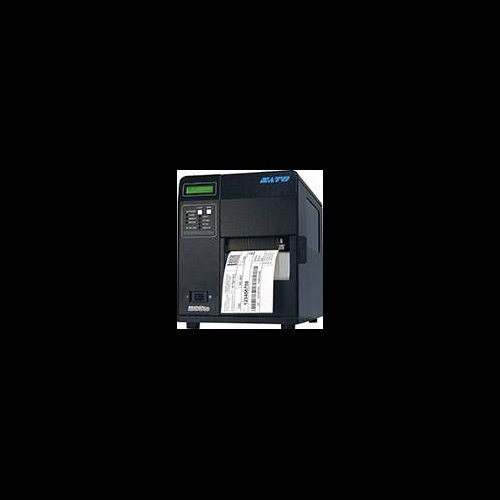
Both the Sato CL4NX Plus (WWCLP1B01-WAR) and the Sato M84Pro (WM8430031) are industrial-grade, dual-mode thermal printers running at 203 dpi, positioned for demanding label printing environments such as manufacturing, logistics, and warehousing. They share the same print resolution, dual print-mode capability, and universal AC power input, making them legitimate cross-shop candidates. The key differentiators lie in RFID capability, print speed, memory architecture, media handling range, and connectivity breadth.
In This Guide
Which printer wins on throughput and RFID capability?
The CL4NX Plus (WWCLP1B01-WAR) prints at 14 ips versus the M84Pro (WM8430031) at 10 ips — a 40% speed advantage at identical 203 dpi resolution. For high-volume label runs, this difference translates directly into throughput capacity per shift.
The CL4NX Plus also integrates HF RFID encoding at 13.56 MHz with SATO RF Analyze tuning, enabling simultaneous print-and-encode workflows for smart labels. The M84Pro spec set lists no RFID capability whatsoever. Buyers whose operations require RFID smart-label production have only one viable option in this pairing.
How do memory, storage, and media handling compare?
Memory architecture differs substantially. The CL4NX Plus carries 256 MB SDRAM and 2 GB Flash with 100 MB user storage. The M84Pro is specified at 16 MB SDRAM and only 2 MB Flash with 2 MB user storage. For operations storing large font libraries, graphics, or complex label formats on-device, the CL4NX Plus offers dramatically more headroom.
On media handling, the CL4NX Plus accepts widths from 0.87" to 5.04" and rolls up to 10" OD. The M84Pro handles 1" to 4.5" width and rolls up to 8.6" OD. The CL4NX Plus accommodates a broader range of media, including narrower specialty labels down to 0.87" and larger roll stock that reduces changeover frequency.
What are the differences in connectivity, build, and operating environment?
Both printers operate over the same AC 100–240V, 50/60Hz power input and share an identical operating temperature range of 41°F to 104°F (5°C to 40°C), so neither has an environmental advantage for standard industrial deployments.
Connectivity differs. The CL4NX Plus spec sheet lists Ethernet, Wi-Fi, and USB in its primary spec fields; its supplemental fields also reference Bluetooth and RS-232C. The M84Pro spec lists Ethernet, USB, RS-232C, and Parallel — no Wi-Fi is specified. For wireless network integration, the CL4NX Plus is the clear choice. For legacy parallel-port host systems, the M84Pro is the only option in this pair.
The M84Pro explicitly notes an industrial metal housing. The CL4NX Plus spec does not state housing material. The M84Pro weighs 39.7 lbs versus the CL4NX Plus at 33 lbs, suggesting a heavier chassis construction for the M84Pro despite its smaller memory spec. Both include a 3.5" color LCD display.
Which should you choose: the WWCLP1B01-WAR or the WM8430031?
Our take: The WWCLP1B01-WAR (CL4NX Plus) is the stronger choice when RFID smart-label encoding, higher throughput, or wireless connectivity are operational requirements. It prints at 14 ips versus the WM8430031's 10 ips — a 40% speed delta — and is the only unit in this pair with HF 13.56 MHz RFID encoding capability. Its memory architecture (256 MB SDRAM / 2 GB Flash / 100 MB user storage) dwarfs the M84Pro's (16 MB SDRAM / 2 MB Flash / 2 MB user storage), making it far better suited to complex on-printer format and font libraries. Media range on the CL4NX Plus extends from 0.87" to 10" OD roll versus 1" to 8.6" on the M84Pro. The WM8430031 (M84Pro) remains relevant for fixed-location deployments tied to legacy parallel-port hosts, where its explicitly noted industrial metal housing and wired-only footprint are sufficient and RFID is not required.
Side-by-Side Comparison
Spec-for-spec, from manufacturer data.
| Specification | Sato WWCLP1B01-WAR | Sato WM8430031 |
|---|---|---|
| MPN | WWCLP1B01-WAR | WM8430031 |
| Model | CL4NX Plus | M84Pro |
| Print Resolution | 203 dpi | 203 dpi |
| Print Speed | 14 ips | 10 ips |
| Print Method | Direct Thermal / Thermal Transfer | Direct Thermal / Thermal Transfer |
| Max Print Width | 4.09" | 4.1" |
| RFID | HF 13.56 MHz encoding | — |
| Connectivity | Ethernet, Wi-Fi, USB (+ Bluetooth, RS-232C per supplemental spec) | Ethernet, USB, RS-232C, Parallel |
| Display | 3.5" Full-Color LCD | 3.5" Color LCD |
| Flash Memory | 2 GB | 2 MB |
| SDRAM | 256 MB | 16 MB |
| User Storage | 100 MB | 2 MB |
| Media Width Range | 0.87" – 5.04" | 1" – 4.5" |
| Max Roll Diameter | 10" | 8.6" |
| Max Ribbon Length | 1,968 ft | 1,968 ft |
| Weight | 33 lbs (15 kg) | 39.7 lbs (spec note: 24.3 lbs also listed) |
| Power | AC 100–240V, 50/60Hz | AC 100–240V, 50/60Hz |
| Operating Temperature | 41°F – 104°F (5°C – 40°C) | 41°F – 104°F (5°C – 40°C) |
| Housing | — | Industrial metal |
| Warranty | 1-year | 1-year |
Frequently Asked Questions
Which should you choose: the WWCLP1B01-WAR or the WM8430031?
The WWCLP1B01-WAR (CL4NX Plus) is the stronger choice when RFID smart-label encoding, higher throughput, or wireless connectivity are operational requirements. It prints at 14 ips versus the WM8430031's 10 ips — a 40% speed delta — and is the only unit in this pair with HF 13.56 MHz RFID encoding capability. Its memory architecture (256 MB SDRAM / 2 GB Flash / 100 MB user storage) dwarfs the M84Pro's (16 MB SDRAM / 2 MB Flash / 2 MB user storage), making it far better suited to complex on-printer format and font libraries. Media range on the CL4NX Plus extends from 0.87" to 10" OD roll versus 1" to 8.6" on the M84Pro. The WM8430031 (M84Pro) remains relevant for fixed-location deployments tied to legacy parallel-port hosts, where its explicitly noted industrial metal housing and wired-only footprint are sufficient and RFID is not required.
Is the WWCLP1B01-WAR or WM8430031 better for RFID smart-label production lines?
The WWCLP1B01-WAR (CL4NX Plus) is the only option in this pair with RFID capability — specifically HF 13.56 MHz encoding with SATO RF Analyze tuning. The WM8430031 (M84Pro) has no RFID capability listed in its specifications, so it cannot perform print-and-encode workflows.
Which printer handles higher label volumes per shift?
The WWCLP1B01-WAR prints at 14 ips versus the WM8430031's 10 ips at the same 203 dpi resolution, giving it a 40% throughput advantage at equivalent print quality. For sustained high-volume runs, the CL4NX Plus will complete jobs faster and support larger roll stock (up to 10" OD versus 8.6" OD), reducing changeover frequency.
Can either printer connect to a wireless network?
The WWCLP1B01-WAR (CL4NX Plus) specifies Wi-Fi connectivity alongside Ethernet and USB. The WM8430031 (M84Pro) lists only Ethernet, USB, RS-232C, and Parallel — no Wi-Fi is specified. If wireless network integration is required, only the CL4NX Plus supports it based on the available specifications.
More Label Printer Comparisons
- Sato WM8430031 vs Zebra ZT62062-T210100Z
- Sato WM8430031 vs Sato WM8430231
- Sato WM8430031 vs Sato WM8430221
- Sato WM8430231 vs Sato WM8430221
- Sato WM8430221 vs Zebra ZT62062-T210100Z
- Sato WM8430021 vs Zebra ZT62062-T210100Z
Label Printer Buying Guides
Get a Second Opinion on Your Camera Choice
Share your site layout, coverage goals, and budget. Our team will validate the camera selection, flag anything we would change, and recommend products that match the use case.