
Panduit U10N12V vs APC by Schneider Electric SRT10KRMXLT-10KTF: Specification Comparison
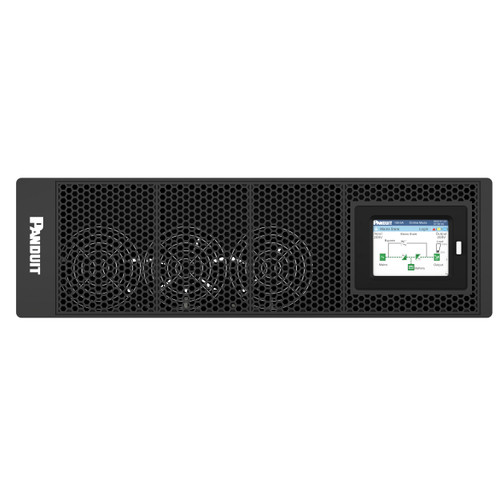
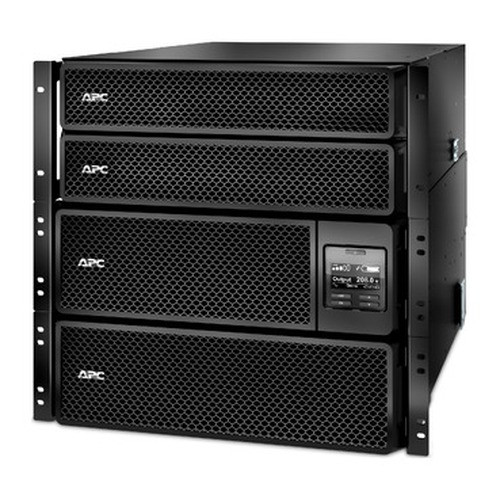
Both the Panduit U10N12V and the APC by Schneider Electric SRT10KRMXLT-10KTF are 10 kVA true online double-conversion rack-mount UPS units designed for data center, enterprise, and edge power protection. The Panduit carries the SteadySine sub-brand in a 2U chassis with a 120V output focus, while the APC Smart-UPS SRT bundles a 208/240V-to-120V step-down transformer, targeting facilities with higher-voltage power distribution that must deliver 120V to downstream loads. This comparison evaluates input tolerance and voltage flexibility, runtime and battery serviceability, and management and protection feature depth.
In This Guide
- Which unit handles a wider input voltage range, and how do their runtime and battery serviceability compare?
- How do output power quality, surge protection, and load handling compare between these two units?
- What management interfaces, monitoring capabilities, and physical integration options does each unit provide?
- Which should you choose: the U10N12V or the SRT10KRMXLT-10KTF?
- Side-by-Side Specs
- FAQ
Which unit handles a wider input voltage range, and how do their runtime and battery serviceability compare?
The Panduit U10N12V specifies an input operating range of 160–280V AC, a 120V span centered on European/international single-phase levels, and delivers a manufacturer-stated runtime of 5–8 minutes at full 10 kVA load. Its battery modules are hot-swappable sealed lead-acid units accessible from the front of the 2U chassis, enabling battery replacement without powering down connected equipment or sliding the unit out of the rack.
The APC SRT10KRMXLT-10KTF specifies an input operating range of 100–275V AC, a 175V span that extends lower than the Panduit and accommodates 100V Japanese grid voltage as well as standard North American 120V and international 208/240V feeds. Its bundled step-down transformer allows connection to a 208/240V facility circuit while delivering 120V output. APC does not publish a runtime figure in the provided specification set, so a direct runtime comparison cannot be made from available data. Battery serviceability terms for this model are not stated in the provided specs.
How do output power quality, surge protection, and load handling compare between these two units?
The Panduit U10N12V specifies an output voltage of 120V AC held within ±2% regulation under double-conversion topology. Output waveform is implied as sine (SteadySine sub-brand), but THD, surge energy rating, crest factor, and noise level are not stated in the provided specifications. The unit's 2U form factor constrains thermal design relative to taller chassis but is not further quantified.
The APC SRT10KRMXLT-10KTF specifies 10,000 W (10 kVA at unity power factor) output, a sine waveform, output voltage THD of 2%, a crest factor of 3:1, a surge energy rating of 480 J, surge protection enabled, an audible alarm, and an Emergency Power Off (EPO) function. Output voltage range spans 120–240V AC, giving connected equipment flexibility. Noise level is rated at 55 dB. The APC's published protection feature set is substantially more detailed than the Panduit's in the available spec data.
What management interfaces, monitoring capabilities, and physical integration options does each unit provide?
The Panduit U10N12V provides an LCD front-panel status monitor for local visibility, SNMP v1/v2c/v3 for integration with enterprise NMS platforms, and HTTP-based web management. The unit measures 17.3 in (440 mm) wide × 10.3 in (262 mm) high (2U), fits standard 19-inch rack rails, and is positioned by Panduit for data center, edge, and MTDC deployments. Front-accessible components support in-rack servicing without extraction.
The APC SRT10KRMXLT-10KTF confirms web-based management and an audible alarm. Specific interface protocols (SNMP version support, HTTP/HTTPS) are not enumerated in the provided specifications. The unit also supports EPO, a safety-critical function for emergency shutdown that the Panduit spec set does not mention. Physical dimensions, rack unit height, and weight are not provided for the APC in the available data, making a direct physical footprint comparison impossible.
Which should you choose: the U10N12V or the SRT10KRMXLT-10KTF?
Our take: The SRT10KRMXLT-10KTF is the stronger choice when the facility distributes 208/240V power and must step it down to 120V for rack loads, or when output protection depth—480 J surge rating, 2% output THD, 3:1 crest factor, EPO, and 55 dB noise—must be verified against a published spec sheet before purchase. The APC also accepts input as low as 100V versus the Panduit's 160V floor, a meaningful advantage in mixed-voltage or international environments. The U10N12V has the edge for installations that already run 160–280V single-phase input with no step-down requirement, where front-accessible hot-swap batteries and SNMP v1/v2c/v3 with explicit version confirmation matter, and where a 5–8 minute full-load runtime figure is needed for runtime planning—specs the APC set does not supply. Buyers in North American data centers running 208V PDUs and 120V server loads should favor the APC bundle; single-phase 120V-output edge and MTDC deployments with confirmed service-access constraints should evaluate the Panduit.
Side-by-Side Comparison
Spec-for-spec, from manufacturer data.
| Specification | Panduit U10N12V | APC by Schneider Electric SRT10KRMXLT-10KTF |
|---|---|---|
| Product Type | Online Double-Conversion UPS | Online Double-Conversion UPS |
| Capacity (VA) | 10,000 VA (10 kVA) | 10,000 VA (10 kVA) |
| Output Power (W) | — | 10,000 W |
| Output Waveform | Sine (SteadySine) | Sine |
| Input Voltage Range | 160–280V AC | 100–275V AC |
| Input Frequency Range | — | 40–70 Hz |
| Output Voltage | 120V AC ±2% | 120–240V AC |
| Output Voltage THD | — | 2% |
| Surge Energy Rating | — | 480 J |
| Crest Factor | — | 3:1 |
| Emergency Power Off (EPO) | — | Yes |
| Audible Alarm | — | Yes |
| Noise Level | — | 55 dB |
| Hot-Swap Batteries | Yes (front-accessible) | — |
| Runtime at Full Load | 5–8 min at 10 kVA | — |
| Management Interface | SNMP v1/v2c/v3, HTTP, LCD | Web-based management |
| Form Factor | 2U Rack-Mount | — |
| Width | 17.3 in (440 mm) | — |
| Height | 10.3 in / 2U (262 mm) | — |
| Step-Down Transformer Included | — | Yes (208/240V to 120V) |
Frequently Asked Questions
Which should you choose: the U10N12V or the SRT10KRMXLT-10KTF?
The SRT10KRMXLT-10KTF is the stronger choice when the facility distributes 208/240V power and must step it down to 120V for rack loads, or when output protection depth—480 J surge rating, 2% output THD, 3:1 crest factor, EPO, and 55 dB noise—must be verified against a published spec sheet before purchase. The APC also accepts input as low as 100V versus the Panduit's 160V floor, a meaningful advantage in mixed-voltage or international environments. The U10N12V has the edge for installations that already run 160–280V single-phase input with no step-down requirement, where front-accessible hot-swap batteries and SNMP v1/v2c/v3 with explicit version confirmation matter, and where a 5–8 minute full-load runtime figure is needed for runtime planning—specs the APC set does not supply. Buyers in North American data centers running 208V PDUs and 120V server loads should favor the APC bundle; single-phase 120V-output edge and MTDC deployments with confirmed service-access constraints should evaluate the Panduit.
Can either unit connect directly to a standard 208V data center PDU circuit?
The APC SRT10KRMXLT-10KTF is explicitly designed for this: it includes a bundled 208/240V-to-120V step-down transformer, accepting input up to 275V and delivering 120V output to connected loads. The Panduit U10N12V specifies a 120V output and an input range of 160–280V AC, but the provided specifications do not describe a built-in step-down transformer or confirm 208V input compatibility; buyers should verify the input connector and wiring requirements with Panduit before connecting to a 208V circuit.
Which UPS makes it easier to replace batteries without a maintenance window?
The Panduit U10N12V explicitly states hot-swappable, front-accessible sealed lead-acid battery modules, meaning batteries can be changed while the unit remains in service and without sliding it out of the rack. The APC SRT10KRMXLT-10KTF's battery replacement procedure and hot-swap capability are not described in the provided specifications, so a confirmed comparison on this point is not possible from available data alone.
Does either unit support emergency power off (EPO) for compliance with raised-floor data center safety requirements?
Yes—the APC SRT10KRMXLT-10KTF lists EPO as a confirmed feature in its specifications. EPO support is not mentioned in the provided specification set for the Panduit U10N12V, so buyers with EPO requirements should confirm directly with Panduit whether that capability is present before specifying the U10N12V.
More UPS Comparisons
- APC by Schneider Electric SRTL10KRM4UT-5KTF2 vs Panduit U10N32V
- APC by Schneider Electric SRTL10KRM4UT-5KTF2 vs Panduit U10N11V
- APC by Schneider Electric SRTL10KRM4UT-5KTF2 vs Panduit U10N12V
- APC by Schneider Electric SRTL10KRM4UT-5KTF2 vs Vertiv GXT5-10KHVRT5UXLN
- APC by Schneider Electric SRTL10KRM4UT-5KTF2 vs APC by Schneider Electric E3SUPS10KFBS
- APC by Schneider Electric SRTL10KRM4UT-5KTF2 vs APC by Schneider Electric SRT10KRMXLT-10KTF
UPS Buying Guides
Get a Second Opinion on Your Camera Choice
Share your site layout, coverage goals, and budget. Our team will validate the camera selection, flag anything we would change, and recommend products that match the use case.