
Panduit U06N11V vs CyberPower OL6KRTHW: Specification Comparison
Both the Panduit U06N11V and the CyberPower OL6KRTHW are rack-mounted, 6 kVA-class uninterruptible power supplies targeting data center and enterprise environments. The Panduit unit carries the SteadySine sub-brand and is specified for Data Center, Edge, and Enterprise MTDC deployments. The CyberPower unit is a double-conversion online UPS with a unity power factor (PF=1) in a 6U chassis. This comparison examines topology and output quality, physical and environmental specifications, and input/output electrical parameters to help installers and IT buyers choose between them.
In This Guide
Which UPS delivers cleaner, more reliable output power?
The CyberPower OL6KRTHW specifies a double-conversion (online) topology, meaning utility power is continuously rectified to DC and re-inverted to AC, providing zero transfer time and full isolation from input disturbances. It delivers a sine-wave output with Total Harmonic Distortion (THD) of ≤5% and a crest factor of 3:1, with an output power factor of 1.0 — meaning all 6 kVA is usable as 6,000 W of real power. The Panduit U06N11V lists 'SteadySine' branding, implying sine-wave output, but the provided specifications do not state the UPS topology (double-conversion, line-interactive, or standby), THD, crest factor, or output power factor. Buyers who require a confirmed double-conversion topology with quantified output quality must rely solely on the CyberPower spec sheet for those figures.
Which unit handles a wider range of input conditions and output voltages?
The CyberPower OL6KRTHW specifies an input operating range of 120–280 V and an input frequency range of 40–70 Hz, with an input power factor of 0.99. Output voltage is selectable from 120–240 V at 50/60 Hz, providing flexibility for mixed North American and international rack equipment. Surge protection is confirmed present. EMI/RFI noise filtering is explicitly listed as 'No'. The Panduit U06N11V lists a rated voltage of 208/240 V, suggesting it is designed for North American 208 V three-phase-derived or 240 V single-phase circuits, but no input voltage range, frequency range, input power factor, or surge-protection status is provided in the supplied specifications. For environments requiring a wide input window or dual-voltage output, the CyberPower provides documented flexibility; the Panduit's actual operating window is not spec-confirmed.
How do the physical dimensions and rack footprint compare?
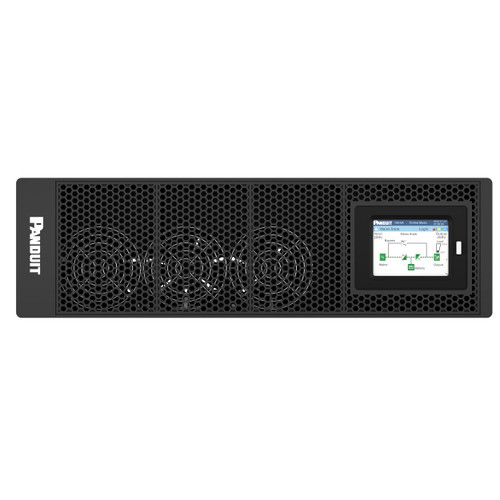
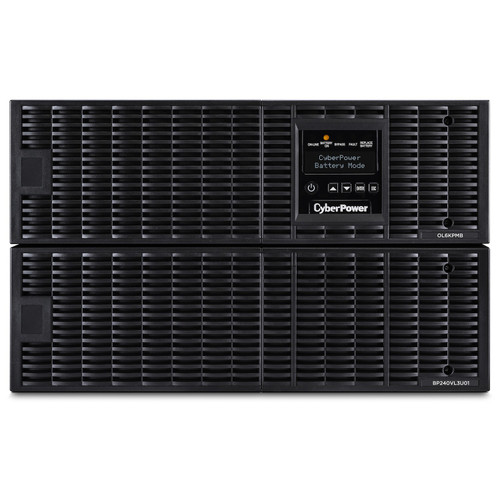
The Panduit U06N11V is specified at 3U rack height (10.3 in / 262 mm tall) and 17.3 in (440 mm) wide, fitting a standard 19-inch rack. The CyberPower OL6KRTHW is specified as a 6U chassis. Neither product's provided specifications include depth or weight, which are critical for rack planning and floor-load calculations. The Panduit's 3U footprint is a concrete advantage in density-constrained racks, consuming half the vertical space of the CyberPower's 6U form factor. However, the tradeoff in battery capacity, runtime, or internal component layout that accompanies the smaller Panduit chassis cannot be assessed from the supplied data.
Which should you choose: the U06N11V or the OL6KRTHW?
Our take: The OL6KRTHW is the stronger choice when a confirmed double-conversion topology, quantified output quality, and wide input-voltage flexibility are required. CyberPower provides a documented double-conversion online topology, ≤5% output THD, a unity power factor delivering the full 6,000 W of real power, and an input range of 120–280 V versus the Panduit's stated 208/240 V — none of those parameters are confirmed in the Panduit's supplied specifications. The U06N11V holds a concrete advantage in rack density at 3U versus the OL6KRTHW's 6U, which matters in fully populated high-density cabinets. Buyers deploying in Data Center or Enterprise MTDC environments where topology and output-quality guarantees are non-negotiable should prioritize the CyberPower until Panduit's datasheet confirms equivalent parameters; installers with space-constrained racks and an existing preference for the Panduit SteadySine platform should verify topology and THD directly against the U06N11V datasheet before selection.
Side-by-Side Comparison
Spec-for-spec, from manufacturer data.
| Specification | Panduit U06N11V | CyberPower OL6KRTHW |
|---|---|---|
| Product Type | UPS | UPS |
| Rated Capacity | 6 kVA | 6 kVA / 6,000 W |
| UPS Topology | — | Double-conversion (Online) |
| Output Waveform | Sine (SteadySine brand) | Sine |
| Output Power Factor | — | 1.0 |
| Output THD | — | ≤5% |
| Crest Factor | — | 3:1 |
| Input Voltage (Rated/Range) | 208/240 V | 120–280 V |
| Input Frequency | — | 40–70 Hz |
| Input Power Factor | — | 0.99 |
| Output Voltage Range | — | 120–240 V |
| Output Frequency | — | 50/60 Hz |
| Rack Height | 3U (10.3 in / 262 mm) | 6U |
| Width | 17.3 in / 440 mm | — |
| Surge Protection | — | Yes |
| EMI/RFI Filtering | — | No |
Frequently Asked Questions
Which should you choose: the U06N11V or the OL6KRTHW?
The OL6KRTHW is the stronger choice when a confirmed double-conversion topology, quantified output quality, and wide input-voltage flexibility are required. CyberPower provides a documented double-conversion online topology, ≤5% output THD, a unity power factor delivering the full 6,000 W of real power, and an input range of 120–280 V versus the Panduit's stated 208/240 V — none of those parameters are confirmed in the Panduit's supplied specifications. The U06N11V holds a concrete advantage in rack density at 3U versus the OL6KRTHW's 6U, which matters in fully populated high-density cabinets. Buyers deploying in Data Center or Enterprise MTDC environments where topology and output-quality guarantees are non-negotiable should prioritize the CyberPower until Panduit's datasheet confirms equivalent parameters; installers with space-constrained racks and an existing preference for the Panduit SteadySine platform should verify topology and THD directly against the U06N11V datasheet before selection.
Is the U06N11V or OL6KRTHW a better fit for a high-density data center rack?
Based on the provided specs, the Panduit U06N11V has a clear advantage in rack density at 3U versus the CyberPower OL6KRTHW's 6U. If vertical space is constrained, the Panduit consumes half the rack units. However, depth and weight are not specified for either unit, so full rack planning requires consulting each product's full datasheet.
Does either UPS confirm a double-conversion online topology?
Yes — the CyberPower OL6KRTHW explicitly specifies a double-conversion (online) topology, which provides zero transfer time and full input-to-output isolation. The Panduit U06N11V's supplied specifications do not state a topology. The SteadySine branding implies sine-wave output but does not confirm double-conversion. Verify against Panduit's published datasheet (U06N11V.pdf) before specifying for applications where topology is a hard requirement.
Which unit supports a wider range of input voltages?
The CyberPower OL6KRTHW specifies an input operating range of 120–280 V and 40–70 Hz, accommodating a broad range of utility conditions. The Panduit U06N11V lists a rated voltage of 208/240 V but provides no minimum/maximum input range in the supplied specifications. For environments with unstable or variable utility power, the CyberPower's documented input window is the only spec-confirmed option between these two.
More UPS Comparisons
- APC by Schneider Electric SYH6K6RMT vs CyberPower OL6KRTHW
- APC by Schneider Electric SYH6K6RMT vs CyberPower OL6KRTHD
- APC by Schneider Electric SYH6K6RMT vs Vertiv GXT5-6000MVRT4UXLN
- APC by Schneider Electric SYH6K6RMT vs Vertiv GXT5-6KL630RT5UXLN
- APC by Schneider Electric SYH6K6RMT vs APC by Schneider Electric SYH6K6RMI
- APC by Schneider Electric SYH6K6RMT vs APC by Schneider Electric SYH6K6RMT-TF3
UPS Buying Guides
Get a Second Opinion on Your Camera Choice
Share your site layout, coverage goals, and budget. Our team will validate the camera selection, flag anything we would change, and recommend products that match the use case.