
Panduit U03N15L vs APC by Schneider Electric SMX3000LVNCUS: Specification Comparison
Both the Panduit U03N15L (SteadySine™ series) and the APC by Schneider Electric SMX3000LVNCUS (Smart-UPS X) are 3 kVA uninterruptible power supplies targeting data center, edge, and enterprise rack environments. This comparison evaluates their electrical performance, physical form factor, and management capabilities — the three axes most relevant to installers and IT buyers selecting a 3 kVA UPS. Note that Panduit's published spec set for the U03N15L is largely limited to physical dimensions; electrical and management specifications are not present in the provided data and are noted as absent throughout.
In This Guide
- How do the two UPS units compare on electrical output, topology, and power quality?
- Which unit fits better in standard rack cabinets, and how do their physical footprints compare?
- What monitoring, alarm, and protection capabilities does each unit offer for data center operations?
- Which should you choose: the U03N15L or the SMX3000LVNCUS?
- Side-by-Side Specs
- FAQ
How do the two UPS units compare on electrical output, topology, and power quality?
The APC SMX3000LVNCUS is specified as a Line-Interactive topology delivering 2,700 W / 2.88 kVA of output with a true sine-wave waveform and output voltage THD of 5%. Its input operating range spans 70 V to 153 V (at 50/60 Hz), providing a wide tolerance window before the unit transfers to battery — a meaningful advantage in facilities with unstable utility power. Automatic Voltage Regulation (AVR) is listed as present, and output frequency tracks at 50/60 Hz. Maximum output current is rated at 15 A, and surge energy absorption is 540 J.
For the Panduit U03N15L, the provided specifications do not include UPS topology, output wattage, waveform type, input voltage range, AVR status, THD, output current, or surge joule rating. The sub-brand designation 'SteadySine™' implies a sine-wave output, but no electrical parameters are confirmed in the supplied data. Buyers requiring verified electrical performance figures for the U03N15L must consult Panduit's datasheet directly (referenced path: /content/product-datasheets/U03N15L.pdf).
Which unit fits better in standard rack cabinets, and how do their physical footprints compare?
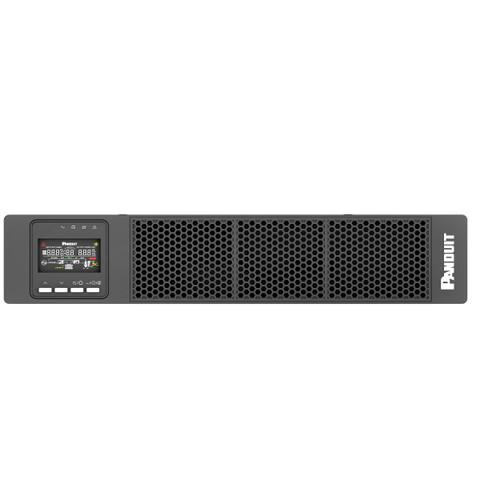
The Panduit U03N15L is specified at 3.41 in (86.5 mm) height and 17.3 in (440 mm) width. A height of 3.41 inches corresponds to approximately 2U in standard 19-inch rack terminology, though the provided specs do not explicitly state rack unit count or depth. Width at 17.3 in / 440 mm is consistent with rack-mount form factor but is narrower than the standard 19-inch EIA rail width, suggesting a slide-in chassis or non-full-width mount — buyers should verify depth and mounting rail compatibility independently.
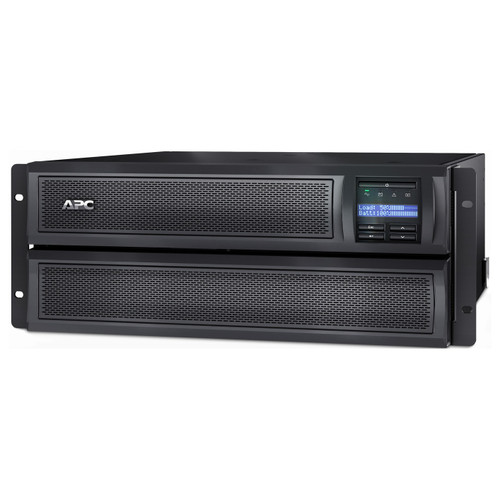
The APC SMX3000LVNCUS is described as a Rack/Tower convertible unit, confirming dual-deployment capability without specifying exact rack-unit height, width in inches, or depth in the provided data. No dimensional figures (height mm/in, width mm/in) are present in the APC spec block. Buyers needing to confirm rack-unit footprint for the SMX3000LVNCUS must reference APC's published dimensional drawings. In summary, the U03N15L provides more physical dimension data in the supplied specs, while the SMX3000LVNCUS confirms rack/tower convertibility — a deployment flexibility advantage not confirmed for the U03N15L from available data.
What monitoring, alarm, and protection capabilities does each unit offer for data center operations?
The APC SMX3000LVNCUS carries a meaningful management feature set in its provided specs: web-based management is confirmed (Yes), audible alarms are present (Yes), Emergency Power Off (EPO) is supported (Yes), and EMI/RFI noise filtering is rated at 55 dB. Power protection features include overload protection. EPO support is particularly relevant for data centers operating under NEC or local fire/safety codes that mandate remote shutdown capability. The 55 dB EMI/RFI filtering figure is a quantified noise-rejection value useful for sensitive network or audio-adjacent equipment.
For the Panduit U03N15L, none of the management or protection features — including network management card compatibility, EPO support, audible alarms, EMI/RFI filtering, or overload protection — are present in the supplied specification data. The application field lists Data Center, Edge, and Enterprise MTDC, suggesting the product is designed for these environments, but no management or protection specifications can be cited from the provided data. Installers specifying the U03N15L for managed data center deployments should obtain the full datasheet to verify these capabilities before committing.
Which should you choose: the U03N15L or the SMX3000LVNCUS?
Our take: The SMX3000LVNCUS is the stronger choice when verified electrical and management specifications are required at the point of specification. APC's published data confirms a 2,700 W / 2.88 kVA Line-Interactive output with true sine wave and 5% THD, a wide 70–153 V input tolerance with AVR, 540 J surge absorption, 55 dB EMI/RFI filtering, EPO support, and web-based management — seven concrete, quantified capabilities. The Panduit U03N15L provides only physical dimensions (3.41 in H × 17.3 in W) and a 'SteadySine™' sub-brand label in the supplied data; no electrical, protection, or management parameters are confirmed. This does not mean the U03N15L is a lesser product — Panduit's full datasheet may reveal comparable or superior specs — but buyers cannot verify parity from the available data. Specify the SMX3000LVNCUS where EPO compliance, web management, and a confirmed 70 V low-end input tolerance are hard requirements; revisit the U03N15L only after obtaining Panduit's complete electrical specification sheet.
Side-by-Side Comparison
Spec-for-spec, from manufacturer data.
| Specification | Panduit U03N15L | APC by Schneider Electric SMX3000LVNCUS |
|---|---|---|
| UPS Topology | — | Line-Interactive |
| Output Power (kVA) | 3 kVA (nominal; no rated output spec provided) | 2.88 kVA |
| Output Power (Watts) | — | 2,700 W |
| Waveform | Sine (implied by SteadySine™ sub-brand; not spec-confirmed) | Sine wave (confirmed) |
| Input Voltage Range | — | 70 V – 153 V |
| Input Frequency | — | 50/60 Hz |
| Output Voltage (max) | — | 120 V |
| Automatic Voltage Regulation (AVR) | — | Yes |
| Surge Energy Rating | — | 540 J |
| EMI/RFI Noise Filtering | — | 55 dB |
| Emergency Power Off (EPO) | — | Yes |
| Output THD | — | 5% |
| Web-Based Management | — | Yes |
| Form Factor | Rack-mount (3.41 in H × 17.3 in W / 86.5 mm × 440 mm) | Rack / Tower convertible |
| Target Application | Data Center, Edge, Enterprise MTDC | — |
| Sub-Brand / Series | SteadySine™ | Smart-UPS X |
Frequently Asked Questions
Which should you choose: the U03N15L or the SMX3000LVNCUS?
The SMX3000LVNCUS is the stronger choice when verified electrical and management specifications are required at the point of specification. APC's published data confirms a 2,700 W / 2.88 kVA Line-Interactive output with true sine wave and 5% THD, a wide 70–153 V input tolerance with AVR, 540 J surge absorption, 55 dB EMI/RFI filtering, EPO support, and web-based management — seven concrete, quantified capabilities. The Panduit U03N15L provides only physical dimensions (3.41 in H × 17.3 in W) and a 'SteadySine™' sub-brand label in the supplied data; no electrical, protection, or management parameters are confirmed. This does not mean the U03N15L is a lesser product — Panduit's full datasheet may reveal comparable or superior specs — but buyers cannot verify parity from the available data. Specify the SMX3000LVNCUS where EPO compliance, web management, and a confirmed 70 V low-end input tolerance are hard requirements; revisit the U03N15L only after obtaining Panduit's complete electrical specification sheet.
Does either UPS support Emergency Power Off (EPO) for data center compliance?
EPO is confirmed for the APC SMX3000LVNCUS (listed as Yes in the provided specs). The Panduit U03N15L's provided specifications do not include any EPO field, so EPO support cannot be confirmed or denied from available data — consult Panduit's datasheet (U03N15L.pdf) before specifying for facilities where EPO is a code or policy requirement.
Can either unit tolerate significant utility voltage sags without switching to battery?
The APC SMX3000LVNCUS specifies a minimum input operating voltage of 70 V, meaning it can ride through deep sags to 70 V via AVR before transferring to battery — useful in environments with unstable utility feeds. No input voltage range or AVR specification is present for the Panduit U03N15L in the supplied data, so its sag tolerance cannot be evaluated from these specs.
Which UPS is better suited for a managed data center rack deployment requiring remote monitoring?
The APC SMX3000LVNCUS explicitly confirms web-based management in its provided specifications, along with rack/tower convertibility. The Panduit U03N15L is positioned for Data Center, Edge, and Enterprise MTDC applications per its spec sheet, but no management interface, network card support, or remote monitoring capability is listed in the provided data. Buyers requiring confirmed remote management should select the SMX3000LVNCUS or obtain Panduit's full electrical and feature specification sheet before making a final decision.
More UPS Comparisons
- APC by Schneider Electric SMT3000RMT2U vs Panduit U03S12L
- APC by Schneider Electric SMT3000RMT2U vs Vertiv GXT5-3KL620RT2UXL
- APC by Schneider Electric SMT3000RMT2U vs Vertiv GXT5-3KL630RT2UXL
- APC by Schneider Electric SMT3000RMT2U vs Panduit U03N11V
- APC by Schneider Electric SMT3000RMT2U vs APC by Schneider Electric SMTL3000RM2UCNC
- APC by Schneider Electric SMT3000RMT2U vs APC by Schneider Electric SMX3000HV
UPS Buying Guides
Get a Second Opinion on Your Camera Choice
Share your site layout, coverage goals, and budget. Our team will validate the camera selection, flag anything we would change, and recommend products that match the use case.