
Panduit U03N12L vs Panduit U03S12V: Specification Comparison
Both the Panduit U03N12L and U03S12V are SteadySine-series 2U rackmount uninterruptible power supplies rated at 3000VA / 2700W, designed for data center, edge, and enterprise MTDC environments. They share identical physical dimensions and battery technology but differ meaningfully in input voltage range, output receptacle configuration, transfer time, and management interface depth. This comparison helps installers and IT buyers determine which unit suits their specific power infrastructure, outlet requirements, and monitoring capabilities.
In This Guide
Which UPS delivers better power conditioning and input compatibility?
The U03N12L specifies an input voltage AVR range of 160–290V, indicating a wide-range universal input suitable for environments where mains voltage can vary significantly—common in international deployments or facilities with unstable utility power. It also lists a power factor correction of 0.99 (typical) and total harmonic distortion of less than 3% at full load, both strong indicators of clean power delivery to sensitive loads.
The U03S12V specifies a fixed 120V AC input at 50/60 Hz with auto-sensing frequency, and confirms Automatic Voltage Regulation (AVR) is present, but does not publish an AVR range, a power factor correction figure, or a THD specification in the provided data. Its output voltage is explicitly stated as 120V AC. Buyers in North American single-phase 120V environments will find the U03S12V natively matched to that infrastructure, while the U03N12L's wider input window suits dual-voltage or international rack builds.
How do transfer time and output receptacle configuration compare?
Transfer time is a critical spec for loads sensitive to even brief power interruptions. The U03N12L specifies a transfer time of less than 1ms, which is effectively zero-transfer for most connected equipment and is appropriate for highly sensitive server or storage loads. The U03S12V specifies a transfer time of 4ms typical—within the tolerance of most ATX power supplies and network equipment, but measurably slower than the U03N12L.
On output receptacles, the U03S12V explicitly lists 8× NEMA 5-15R outlets, broken down as 6 battery-backed plus surge-protected and 2 surge-only. This gives installers a concrete outlet count for rack planning. The U03N12L's provided specifications do not enumerate output receptacle type or count, which is a gap buyers should resolve by consulting the full datasheet before finalizing a deployment design.
Which unit offers more management and monitoring flexibility?
The U03S12V lists three management interfaces directly in its specifications: USB, 10/100 Ethernet, and SNMP. This means out-of-the-box remote monitoring via standard SNMP polling and network-connected management without requiring an add-on card. It also confirms Cold Start capability, allowing the UPS to power up from battery alone with no mains present.
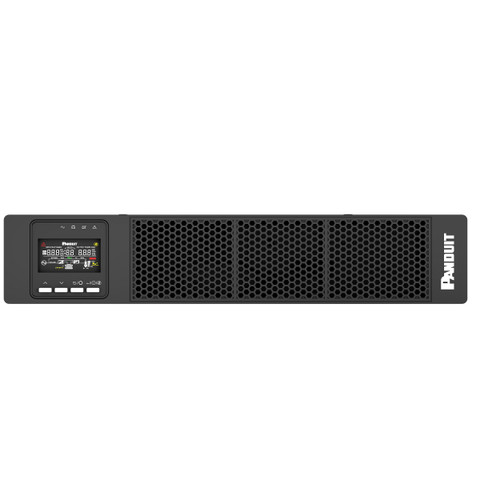
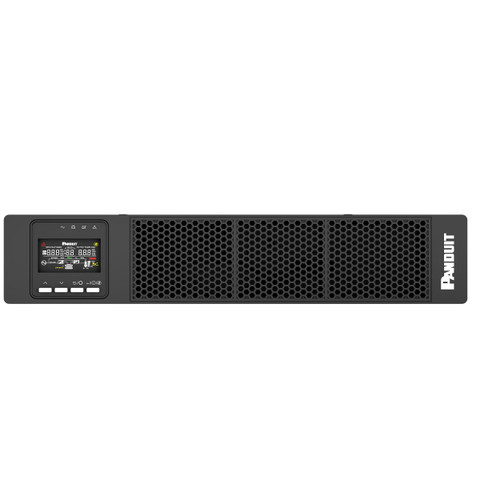
The U03N12L describes its management interface as a 'network management card slot (SNMP),' implying that network and SNMP capability requires installation of a separately purchased management card rather than being built in. It also features an LCD front panel with real-time load and runtime display, which the U03S12V does not mention in its provided specifications. Cold start capability is not noted for the U03N12L in the available spec data. Buyers who need plug-and-play network management should note this architectural difference.
Which should you choose: the U03N12L or the U03S12V?
Our take: The U03N12L is the stronger choice when the deployment demands sub-millisecond transfer times, wide input voltage tolerance (160–290V), and high power quality metrics (0.99 PF, <3% THD), but the buyer is prepared to source and install a network management card separately. The U03S12V is the stronger choice for straightforward North American 120V single-phase racks where built-in USB, Ethernet, and SNMP management are required out of the box, cold start is needed, and a 4ms transfer time is acceptable. Three concrete deltas: transfer time is <1ms (U03N12L) vs. 4ms typical (U03S12V); management is card-slot/add-on (U03N12L) vs. USB+Ethernet+SNMP built-in (U03S12V); input range is 160–290V wide-range (U03N12L) vs. 120V fixed (U03S12V). Specify U03N12L for international or variable-mains data halls; specify U03S12V for domestic 120V racks needing zero-card managed power.
Side-by-Side Comparison
Spec-for-spec, from manufacturer data.
| Specification | Panduit U03N12L | Panduit U03S12V |
|---|---|---|
| Product Type | Uninterruptible Power Supply (UPS) | Uninterruptible Power Supply (UPS) |
| Sub-Brand | SteadySine | SteadySine™ |
| Capacity (VA) | 3000 VA | 3000 VA |
| Capacity (Watts) | 2700 W | 2700 W |
| Form Factor | 2U Rackmount | 2U Rack-Mount |
| Overall Height | 3.4" (86.5 mm) | 3.4" (86.5 mm) |
| Overall Width | 17.3" (440 mm) | 17.3" (440 mm) |
| Output Waveform | Pure Sine Wave | True Sine Wave |
| Input Voltage | 160–290V (AVR range) | 120V AC, 50/60 Hz auto-sensing |
| Output Voltage | — | 120V AC |
| Transfer Time | <1 ms | 4 ms typical |
| Output Receptacles | — | 8× NEMA 5-15R (6 battery+surge, 2 surge-only) |
| Battery Type | Hot-swappable Sealed Lead-Acid | Sealed Lead-Acid, hot-swappable |
| Management Interfaces | Network management card slot (SNMP) | USB, 10/100 Ethernet, SNMP (built-in) |
| Power Factor Correction | 0.99 (typical) | — |
| Total Harmonic Distortion | <3% at full load | — |
| Cold Start Capability | — | Yes |
| Front Panel Display | LCD (load and runtime) | — |
| Automatic Voltage Regulation | Yes (160–290V range stated) | Yes (confirmed, range not specified) |
Frequently Asked Questions
Which should you choose: the U03N12L or the U03S12V?
The U03N12L is the stronger choice when the deployment demands sub-millisecond transfer times, wide input voltage tolerance (160–290V), and high power quality metrics (0.99 PF, <3% THD), but the buyer is prepared to source and install a network management card separately. The U03S12V is the stronger choice for straightforward North American 120V single-phase racks where built-in USB, Ethernet, and SNMP management are required out of the box, cold start is needed, and a 4ms transfer time is acceptable. Three concrete deltas: transfer time is <1ms (U03N12L) vs. 4ms typical (U03S12V); management is card-slot/add-on (U03N12L) vs. USB+Ethernet+SNMP built-in (U03S12V); input range is 160–290V wide-range (U03N12L) vs. 120V fixed (U03S12V). Specify U03N12L for international or variable-mains data halls; specify U03S12V for domestic 120V racks needing zero-card managed power.
Which UPS is better for a rack that needs immediate SNMP monitoring without buying extra hardware?
The U03S12V includes USB, 10/100 Ethernet, and SNMP interfaces as built-in features per its specifications, so no additional card purchase is required. The U03N12L specifies a network management card slot, meaning SNMP capability depends on a separately installed card. If out-of-the-box network monitoring matters, the U03S12V is the lower-friction option.
Does the transfer time difference between the U03N12L and U03S12V matter for my servers?
It depends on the connected load. The U03N12L specifies less than 1ms transfer time; the U03S12V specifies 4ms typical. Most modern ATX server power supplies tolerate up to 8–10ms without issue, so both units will protect standard servers. However, for loads explicitly requiring sub-millisecond continuity—certain industrial controllers, older double-conversion-sensitive equipment, or applications where even 4ms is outside tolerance—the U03N12L's spec is the safer choice.
Can either UPS be used in a facility with 208V or 230V mains power?
Based on the provided specifications, only the U03N12L lists a wide input voltage AVR range of 160–290V, which would accommodate 208V and 230V single-phase mains. The U03S12V is specified at 120V AC input only. The U03N12L is therefore the appropriate selection for non-120V North American or international power environments; buyers should confirm via the full datasheet whether a specific plug configuration is required.
More UPS Comparisons
- APC by Schneider Electric SMT3000RMI2U vs Vertiv GXT5-3000LVRT2UXL
- APC by Schneider Electric SMT3000RMI2U vs Panduit U03N11L
- APC by Schneider Electric SMT3000RMI2U vs Panduit U03N12L
- APC by Schneider Electric SMT3000RMI2U vs Panduit U03S12V
- APC by Schneider Electric SMT3000RMI2U vs APC by Schneider Electric SRT3000XLT
- APC by Schneider Electric SMT3000RMI2U vs APC by Schneider Electric SRT3000XLW-IEC
UPS Buying Guides
Get a Second Opinion on Your Camera Choice
Share your site layout, coverage goals, and budget. Our team will validate the camera selection, flag anything we would change, and recommend products that match the use case.