
Panduit U02S12V vs APC by Schneider Electric SMX2000LV: Specification Comparison
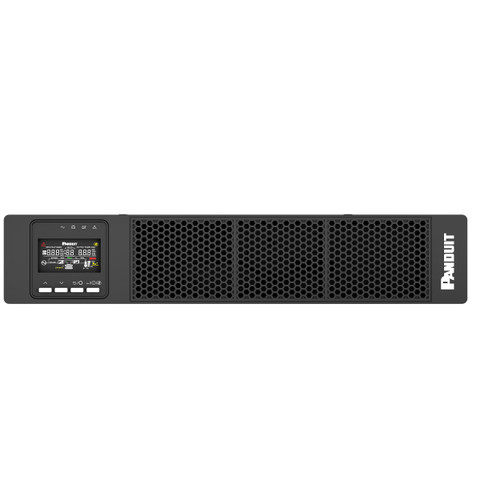
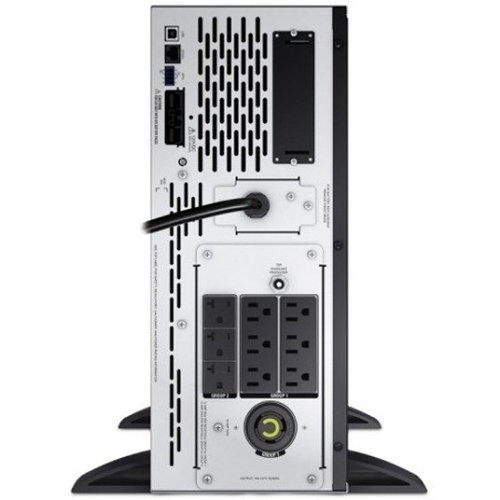
Both the Panduit U02S12V and APC SMX2000LV are rack-mount, line-interactive UPS units in the 2000VA class designed to protect IT and data center loads on 120V infrastructure. The Panduit is a 2U 2000VA unit marketed for edge and enterprise data centers, while the APC is a 4U 2000VA/1800W unit positioned as an extended-runtime Smart-UPS with broad management integration. This comparison evaluates the three dimensions most critical to installers and IT buyers: power delivery and output quality, physical and environmental fit, and monitoring and management capability.
In This Guide
- Which unit delivers better power quality and output capacity for sensitive IT loads?
- How do the two units compare on rack space, physical dimensions, and environmental operating range?
- Which unit offers broader monitoring, management, and ecosystem integration?
- Which should you choose: the U02S12V or the SMX2000LV?
- Side-by-Side Specs
- FAQ
Which unit delivers better power quality and output capacity for sensitive IT loads?
The Panduit U02S12V is rated at 2000VA with no watt figure disclosed in the provided specifications. Its output waveform is documented as Pure Sine Wave with Total Harmonic Distortion below 3%, voltage regulation via automatic AVR, and frequency regulation held to 60Hz ±0.1Hz. Transfer time is specified at less than 4ms.
The APC SMX2000LV is rated at 1920VA / 1800W, giving a 0.9375 power factor. Its waveform is listed as Sine Wave with harmonic distortion below 5%. Transfer time is documented as 2–4ms typical, with 8ms maximum. Output frequency tracks mains at 50/60Hz ±3Hz when synchronized. Voltage output is 120V primary with 100V, 110V, and 127V as declared alternatives.
On waveform purity the Panduit holds a measurable edge: <3% THD versus APC's <5% THD. The APC's 8ms worst-case transfer time represents a wider tolerance window than the Panduit's <4ms single-figure spec. The APC's watt rating (1800W) and VA rating (1920VA) are explicitly stated; the Panduit provides no watt figure in the supplied specifications, which limits direct real-power comparison. The APC's frequency regulation is looser (±3Hz sync-to-mains) against the Panduit's ±0.1Hz governed output—relevant for frequency-sensitive equipment.
How do the two units compare on rack space, physical dimensions, and environmental operating range?
The Panduit U02S12V occupies 2U of rack space (3.4 in / 86.5mm height, 17.3 in / 440mm width) and is specified for 19-inch EIA-310 rack mounting. No depth, weight, or acoustic level is provided in the supplied specifications.
The APC SMX2000LV occupies 4U of rack space. Its listed width is 17.0 in (432mm). No operating depth is listed directly, though shipping dimensions are 23.06 in W × 24.94 in D × 13.0 in H. Weight is 85.0 lbs (38.64 kg). The unit generates 55 dBA acoustically and 203 Btu/h heat. Operating altitude is 0–10,000 ft; storage altitude extends to 50,000 ft. Operating humidity is 0–95% non-condensing; storage temperature range is 5–113°F (−15–45°C).
The Panduit's 2U footprint versus the APC's 4U is a significant differentiator in space-constrained racks—the APC consumes twice the rack units. The Panduit's width (440mm) is slightly wider than the APC (432mm), though both mount in standard 19-inch EIA racks. Environmental operating range data (temperature, humidity, altitude) is absent for the Panduit in the provided specifications, preventing a direct comparison on those parameters. The APC's full environmental envelope is documented and well-suited to standard data center conditions.
Which unit offers broader monitoring, management, and ecosystem integration?
The APC SMX2000LV provides an extensive management stack documented in the specifications: a multi-function LCD front panel with load, battery, and diagnostics readout; LED status indicators; USB (HID-compliant) and DB9 RS-232 serial ports; one SmartSlot for an optional network management card; EPO contact closure; compatibility with APC PowerChute Network Shutdown; SNMP/web monitoring when a network card is installed; firmware update capability via the management interface; event logging via management software; and configurable alarm delays. Battery runtime is extendable via up to 10 SMX120BP external battery modules (documented VAh values up to 14,490 VAh at 10 modules). Replacement battery is identified as APCRBC143. Recharge time is 3 hours.
The Panduit U02S12V specifications provided do not disclose any management interfaces, communication ports, software compatibility, network management options, alarm configuration, front-panel display features, battery runtime extension options, or replacement battery identification.
On management and integration, the APC SMX2000LV is substantially more documented. Every monitoring, communication, and extensibility parameter available for installer or IT buyer evaluation is present for the APC and absent for the Panduit in the supplied specifications. Buyers requiring documented SNMP integration, software shutdown, or extended runtime planning will find only the APC's specifications actionable at this stage. This does not establish that the Panduit lacks these features—only that they are not present in the provided spec data.
Which should you choose: the U02S12V or the SMX2000LV?
Our take: The SMX2000LV is the stronger documented choice for deployments requiring verified management integration and extended runtime capability, while the U02S12V presents a compelling physical footprint advantage where rack space is constrained. Three concrete spec deltas define the decision: the Panduit's <3% THD versus the APC's <5% THD favors the Panduit for frequency- or waveform-sensitive loads; the Panduit's 2U versus the APC's 4U halves the rack footprint cost; and the APC's fully documented communication stack—USB, RS-232, SmartSlot, EPO, PowerChute compatibility—versus no disclosed interfaces for the Panduit tips management-dependent deployments firmly toward the APC. For an edge or MTDC installation prioritizing rack density and tight frequency regulation, the U02S12V's specs are attractive but incomplete. For an enterprise IT room requiring auditable monitoring, software shutdown, and battery scalability, the SMX2000LV's specification set is fully actionable.
Side-by-Side Comparison
Spec-for-spec, from manufacturer data.
| Specification | Panduit U02S12V | APC by Schneider Electric SMX2000LV |
|---|---|---|
| Product Type | UPS | UPS |
| Topology | — | Line Interactive |
| VA Rating | 2000VA | 1920VA |
| Watt Rating | — | 1800W |
| Output Waveform | Pure Sine Wave | Sine Wave |
| Total Harmonic Distortion | <3% THD | <5% THD |
| Transfer Time | <4ms | 2–4ms typical; 8ms maximum |
| Frequency Regulation | 60Hz ±0.1Hz | 50/60Hz ±3Hz (sync to mains) |
| Voltage Regulation | Automatic AVR | 120V (100/110/127V also listed) |
| Form Factor / Rack Units | 2U Rack-mount | 4U Rack/Tower |
| Width | 17.3 in (440mm) | 17.0 in (432mm) |
| Weight | — | 85.0 lbs (38.64 kg) |
| Acoustic Level | — | 55 dBA |
| Heat Dissipation | — | 203 Btu/h |
| Communication Interfaces | — | USB (HID), RS-232, SmartSlot, EPO |
| Battery Runtime Extension | — | Up to 10 × SMX120BP modules |
| Standards Compliance | UL 1778, cUL | — |
| Operating Altitude | — | 0–10,000 ft |
Frequently Asked Questions
Which should you choose: the U02S12V or the SMX2000LV?
The SMX2000LV is the stronger documented choice for deployments requiring verified management integration and extended runtime capability, while the U02S12V presents a compelling physical footprint advantage where rack space is constrained. Three concrete spec deltas define the decision: the Panduit's <3% THD versus the APC's <5% THD favors the Panduit for frequency- or waveform-sensitive loads; the Panduit's 2U versus the APC's 4U halves the rack footprint cost; and the APC's fully documented communication stack—USB, RS-232, SmartSlot, EPO, PowerChute compatibility—versus no disclosed interfaces for the Panduit tips management-dependent deployments firmly toward the APC. For an edge or MTDC installation prioritizing rack density and tight frequency regulation, the U02S12V's specs are attractive but incomplete. For an enterprise IT room requiring auditable monitoring, software shutdown, and battery scalability, the SMX2000LV's specification set is fully actionable.
Does the Panduit U02S12V support network management or software shutdown like the APC SMX2000LV?
The provided specifications for the Panduit U02S12V do not disclose any network management slot, communication ports, or software compatibility. The APC SMX2000LV documents USB, RS-232, a SmartSlot for an optional network card, and compatibility with APC PowerChute Network Shutdown. Buyers requiring these features should verify Panduit's interface options directly with Panduit before specifying the U02S12V.
Which unit takes up less rack space, and does that matter for my deployment?
The Panduit U02S12V is a 2U unit (3.4 in / 86.5mm height); the APC SMX2000LV is a 4U unit. If rack space is at a premium—common in edge deployments, MDAs, or densely populated enterprise racks—the Panduit's 2U profile consumes half the vertical space of the APC. For installations where rack units are not constrained, this difference may be secondary to management or runtime requirements.
Can the APC SMX2000LV or the Panduit U02S12V be expanded with external battery modules for longer runtime?
The APC SMX2000LV explicitly supports external battery expansion via up to 10 SMX120BP battery modules, with documented VAh values ranging from 2,070 VAh (1 module) to 14,490 VAh (10 modules). The provided specifications for the Panduit U02S12V do not reference any external battery module compatibility or extended runtime options. Confirm with Panduit whether the U02S12V supports battery expansion before specifying it for applications requiring extended runtime.
More UPS Comparisons
- APC by Schneider Electric SMX2000LV vs CyberPower PR2000RTXL2UC
- APC by Schneider Electric SMX2000LV vs CyberPower CP2000PFCRM2U
- APC by Schneider Electric SMX2000LV vs CyberPower PR2000RT2UCN
- APC by Schneider Electric SMX2000LV vs Middle Atlantic UPX-EXPANRUN-OL20
- APC by Schneider Electric SMX2000LV vs APC by Schneider Electric SMX2000LVNCUS
- APC by Schneider Electric SMX2000LV vs APC by Schneider Electric SMX2000RMLV2U
UPS Buying Guides
Get a Second Opinion on Your Camera Choice
Share your site layout, coverage goals, and budget. Our team will validate the camera selection, flag anything we would change, and recommend products that match the use case.