
Panduit U02N12V vs Panduit U02S12L: Specification Comparison
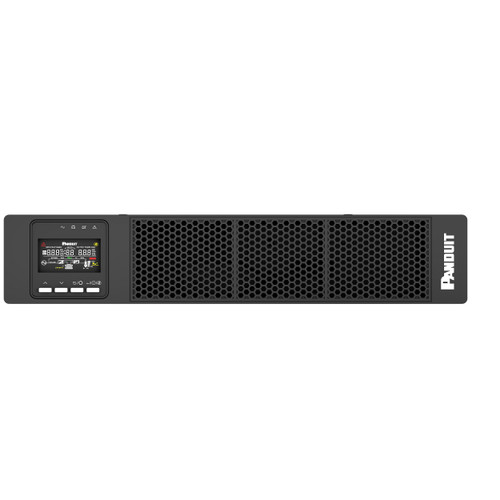
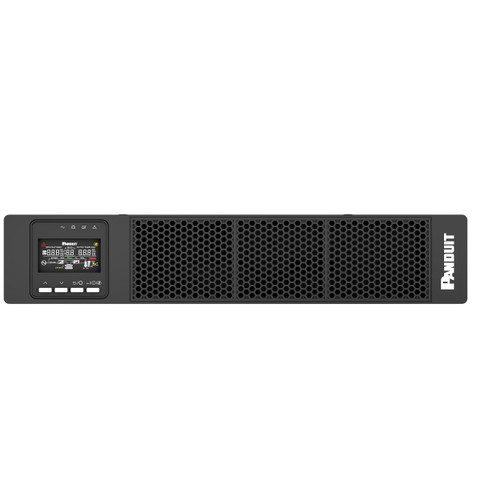
Both units are 2 kVA / 1800 W rack-mount UPS appliances sharing Panduit's SteadySine sub-brand and an identical 2U, 17.3" × 3.4" footprint — a natural cross-shop for data-center, edge, and MTDC buyers sizing power protection at the 2 kVA tier. The comparison pivots on three axes that drive purchasing decisions at this level: UPS topology and transfer behavior; battery technology and service life; and voltage range, efficiency, and management integration.
In This Guide
Which topology and transfer behavior better protects sensitive loads?
The U02N12V operates as a Line-Interactive UPS with AVR (Automatic Voltage Regulation) across a 120 VAC ±20% input window. Under normal conditions utility power feeds the load directly through the AVR stage; the inverter only engages on outage, producing a transfer gap the spec states as less than 2 ms. That figure meets most server and network equipment tolerances, but it is a non-zero break.
The U02S12L uses Double Conversion Online topology. The rectifier continuously draws AC, charges the LiFePO4 battery bus, and the inverter continuously synthesizes the output — so the load never sees utility power directly. Transfer time is zero because there is no transfer event; the inverter is always online. The spec also lists an ECO Mode, which bypasses the double-conversion path for efficiency gains at the cost of reintroducing a small transfer window, though no ECO-mode transfer time figure is provided in the supplied specs.
For loads requiring absolute zero-interruption power — precision instruments, latency-sensitive edge compute, or equipment with tight hold-up times — the U02S12L's continuous conversion eliminates the sub-2 ms risk entirely. The U02N12V's line-interactive topology is well-proven and its <2 ms transfer is adequate for the vast majority of IT equipment.
How do battery chemistry and expected service life compare?
The U02N12V uses hot-swappable sealed lead-acid (VRLA/SLA) batteries. The spec confirms hot-swap capability, meaning batteries can be replaced under load without shutting down the protected equipment. No battery service life figure is stated in the provided specifications for this model.
The U02S12L uses Lithium Iron Phosphate (LiFePO4) chemistry. The spec explicitly claims a battery service life of 10+ years at 25°C. LiFePO4 chemistry also tolerates a wider operating temperature range: the U02S12L is rated from -10°C to 50°C versus the U02N12V's 0°C to 40°C — a meaningful advantage in unconditioned edge or industrial enclosures.
Lead-acid UPS batteries in this class typically require replacement every 3–5 years under normal data-center conditions, though no figure appears in the U02N12V spec sheet provided. If the U02S12L's 10-year claim holds, total cost of ownership favors lithium substantially over a 10-year deployment, since battery replacement labor and parts are eliminated. The U02N12V's hot-swap feature partially offsets this by reducing downtime during the replacement cycle.
Which unit fits your voltage infrastructure, efficiency targets, and management platform?
Voltage compatibility is the sharpest differentiator between these two models. The U02N12V is rated for 120 VAC input and output — North American single-phase infrastructure. The U02S12L is rated for 230 VAC input and output, targeting international or European single-phase circuits. These are not interchangeable; deploying either unit on the wrong voltage infrastructure will void compatibility and potentially damage equipment.
On efficiency, both units reach 95% under their primary operating modes. The U02S12L adds an ECO Mode rated at 98% efficiency, which can reduce energy cost in deployments where the small transfer risk of ECO Mode is acceptable. The U02N12V's 95% figure is for Normal (line-interactive) mode; no ECO or bypass-efficiency figure is provided in its spec.
For management, the U02N12V provides a multi-function LCD display and an SNMP/HTTP card slot — the card is sold separately, so out-of-box remote monitoring requires an additional purchase. The U02S12L integrates with Panduit's SmartZone platform; no separate card slot or display spec is listed in the provided data for that model. Buyers already invested in SmartZone infrastructure will find the U02S12L's native integration more operationally cohesive.
Which should you choose: the U02N12V or the U02S12L?
Our take: The U02N12V is the stronger choice when deploying on 120 VAC North American circuits with a preference for hot-swappable lead-acid batteries and proven line-interactive protection at a 2 kVA scale. The U02S12L is the stronger choice for 230 VAC international deployments, zero-transfer-time protection under double-conversion topology, and long-lifecycle lithium battery chemistry rated at 10+ years versus an unstated lead-acid interval. Key spec deltas: topology (line-interactive <2 ms transfer vs. online double-conversion zero transfer), battery life (unspecified SLA vs. 10+ year LiFePO4), and operating temperature floor (0°C vs. -10°C). Voltage compatibility is non-negotiable — 120 VAC sites must use the U02N12V; 230 VAC sites must use the U02S12L. Within the correct voltage class, the U02S12L's double-conversion topology and lithium chemistry favor mission-critical or edge environments where battery replacement costs and momentary transfer risk are primary concerns.
Side-by-Side Comparison
Spec-for-spec, from manufacturer data.
| Specification | Panduit U02N12V | Panduit U02S12L |
|---|---|---|
| UPS Topology | Line-Interactive | Double Conversion Online |
| Output Power | 2000 VA / 1800 W | 2 kVA / 1800 W |
| Input Voltage | 120 VAC ±20% | 230 VAC |
| Output Voltage | 120 VAC ±5% | 230 VAC |
| Transfer Time | < 2 ms | Zero (continuous conversion) |
| Waveform | Pure Sine Wave (SteadySine) | Pure Sine Wave (SteadySine) |
| Battery Technology | Sealed Lead-Acid (VRLA) | Lithium-Ion (LiFePO4) |
| Battery Service Life | — | 10+ years at 25°C |
| Hot-Swap Battery | Yes | — |
| Efficiency (Normal Mode) | 95% | Up to 95% |
| Efficiency (ECO Mode) | — | 98% |
| Operating Temperature | 0°C to 40°C | -10°C to 50°C |
| Form Factor | 2U Rack Mount | 2U Rack-Mount |
| Dimensions (H × W × D) | 3.4" × 17.3" × 22" | 3.4" × 17.3" × depth not specified |
| Management Interface | SNMP/HTTP Card Slot (card sold separately) | SmartZone Integration |
| Display | Multi-Function LCD | — |
Frequently Asked Questions
Which should you choose: the U02N12V or the U02S12L?
The U02N12V is the stronger choice when deploying on 120 VAC North American circuits with a preference for hot-swappable lead-acid batteries and proven line-interactive protection at a 2 kVA scale. The U02S12L is the stronger choice for 230 VAC international deployments, zero-transfer-time protection under double-conversion topology, and long-lifecycle lithium battery chemistry rated at 10+ years versus an unstated lead-acid interval. Key spec deltas: topology (line-interactive <2 ms transfer vs. online double-conversion zero transfer), battery life (unspecified SLA vs. 10+ year LiFePO4), and operating temperature floor (0°C vs. -10°C). Voltage compatibility is non-negotiable — 120 VAC sites must use the U02N12V; 230 VAC sites must use the U02S12L. Within the correct voltage class, the U02S12L's double-conversion topology and lithium chemistry favor mission-critical or edge environments where battery replacement costs and momentary transfer risk are primary concerns.
Can I use either UPS on a standard US wall outlet?
Only the U02N12V is rated for 120 VAC, which matches standard North American circuits. The U02S12L is rated for 230 VAC input and output — it is not compatible with standard US 120 VAC infrastructure. Confirm your facility's voltage before ordering.
Does the U02S12L really never transfer to battery, and does that matter for servers?
Yes — double-conversion online topology means the inverter continuously synthesizes output power from the DC bus; there is no transfer event. The U02N12V specifies a transfer time of less than 2 ms, which is within most server hold-up tolerances, but is a non-zero gap. For loads with strict hold-up requirements or high sensitivity to micro-interruptions, the U02S12L's zero-transfer design eliminates that risk.
Which unit will cost less to maintain over a 10-year period?
The U02S12L's LiFePO4 battery is specified at 10+ years of service life at 25°C, meaning battery replacement may not be required within a 10-year window. The U02N12V uses sealed lead-acid chemistry; no service life figure is stated in the provided specifications. Typical lead-acid UPS batteries require replacement every 3–5 years, adding parts and labor cost over the same period. The U02N12V does offer hot-swap capability, which reduces downtime during replacement, but does not eliminate the replacement cost itself.
More UPS Comparisons
- Panduit U02N12V vs Middle Atlantic OL2000R-2
- Panduit U02N12V vs Panduit U02N12L
- Panduit U02N12L vs Middle Atlantic OL2000R-2
- Panduit U02N12L vs Panduit U02S12L
- Middle Atlantic FWD-CBS-2KVA-BGR32 vs Panduit U02N14L
- Middle Atlantic FWD-CBS-2KVA-BGR32 vs Middle Atlantic FWD-CBS-2KVA-BGR38
UPS Buying Guides
Get a Second Opinion on Your Camera Choice
Share your site layout, coverage goals, and budget. Our team will validate the camera selection, flag anything we would change, and recommend products that match the use case.