
Panduit U02N12V vs Middle Atlantic OL2000R-2: Specification Comparison
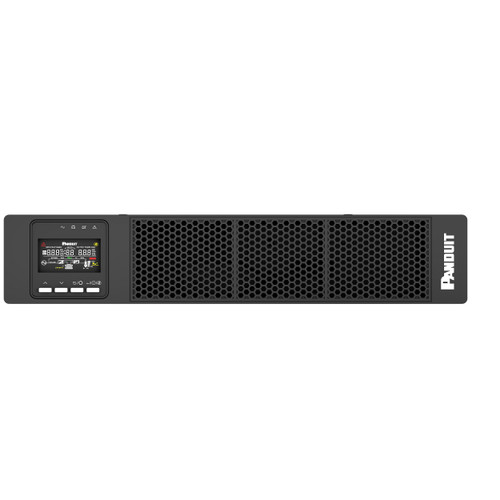
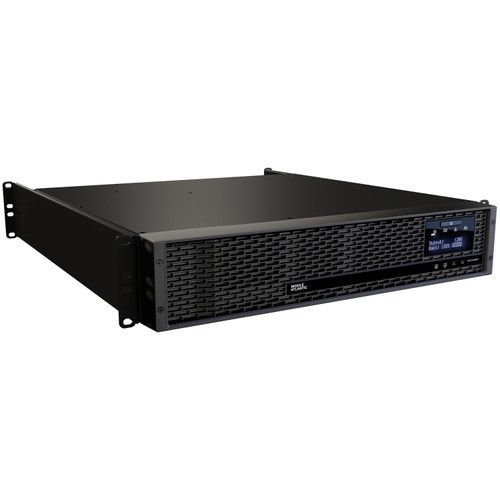
Both the Panduit U02N12V and Middle Atlantic UPX-OL2000R-2 are 2000 VA / 1800 W rack-mount UPS units targeting the same power capacity tier. They differ fundamentally in UPS topology — the Panduit is Line-Interactive while the Middle Atlantic is Online (double-conversion) — and in management depth and outlet-level control. Installers specifying power protection for security head-ends, AV racks, or edge IT closets will encounter both models as direct 2kVA alternatives and need to weigh topology, transfer behavior, and management against rack-space and budget.
In This Guide
How do the UPS topologies and transfer characteristics compare?
The Panduit U02N12V is a Line-Interactive UPS. It conditions incoming power through AVR across an input range of 120 VAC ±20% and delivers output regulated to 120 VAC ±5%. When utility power fails or falls outside that window, the unit transfers to battery with a specified transfer time of less than 2 ms. This is fast enough for most ATX and server-class power supplies, which typically bridge 8–20 ms.
The Middle Atlantic UPX-OL2000R-2 uses an Online (double-conversion) topology. In Online operation, the inverter continuously supplies conditioned output power; the battery and charger are always in the power path. True transfer time is effectively 0 ms because the inverter never drops out during normal-to-battery transitions. The spec sheet lists AC voltage output as 110–127 VAC and does not state an explicit input voltage range, AVR window, or output voltage regulation tolerance.
For loads sensitive to even sub-2 ms disruptions — medical-grade equipment, certain storage arrays, or synchronous processes — Online topology is the more robust choice. For standard IP camera NVRs, switches, and AV controllers that tolerate brief gaps, Line-Interactive at <2 ms is widely accepted and imposes less heat and wear on internal components.
Which unit offers more outlet control and remote management capability?
The Middle Atlantic UPX-OL2000R-2 provides 8 NEMA 5-20R receptacles with Bank-level outlet control. The spec identifies the outlet control type as 'Bank,' meaning receptacles can be switched or sequenced in groups, useful for staged load shedding or sequenced power-on in AV or security head-end racks. Plug type is NEMA 5-20P (20 A input). No management interface (SNMP card, HTTP, or serial port) is listed in the provided specifications.
The Panduit U02N12V includes a dedicated SNMP/HTTP card slot. The management card is sold separately, but the slot is present, enabling integration with DCIM platforms, NMS polling via SNMP traps, and browser-based monitoring once the card is installed. Outlet count and per-outlet switching capability are not specified for the Panduit. The unit also provides a multi-function LCD for local status monitoring.
For installations requiring centralized UPS monitoring and alerting within an SNMP or HTTP management framework, the Panduit's card slot gives it an integration path the Middle Atlantic's published specs do not document. For deployments where staged outlet control matters more than remote polling, the Middle Atlantic's bank-switched 8-outlet design is the documented advantage.
How do efficiency, physical footprint, and certifications compare?
The Panduit U02N12V specifies 95% efficiency in Normal Mode, a figure meaningful for calculating heat load and operating cost in always-on deployments. The Middle Atlantic UPX-OL2000R-2 does not list an efficiency percentage in the provided specifications. Note that Online topology inherently incurs inverter losses that typically yield lower efficiency than Line-Interactive at the same load; without a published figure, a direct numeric comparison cannot be made for the Middle Atlantic.
Physically, the Panduit occupies 2U at 3.4" H × 17.3" W × 22" D and weighs approximately 45 lbs. The Middle Atlantic is 3.5" H (also effectively 2U) × 19" W × 16" D and weighs 45.2 lbs. The Panduit is notably deeper (22" vs. 16") but narrower (17.3" vs. 19"), with a maximum mounting depth of 34" and minimum of 22" documented for the Middle Atlantic. Both units list the same operating temperature range of 0°C to 40°C.
On certifications, the Panduit carries UL 1778, FCC Part 15 Class A, and Energy Star. The Middle Atlantic lists cTUVus (CSA field), Energy Star 2.0, REACH (FCC field), and notes TAA Non-Compliant status explicitly. The Panduit does not state TAA compliance or non-compliance in the provided specs. For government or GSA-schedule procurement, the Middle Atlantic's explicit TAA Non-Compliant flag is a disqualifier.
Which should you choose: the U02N12V or the OL2000R-2?
Our take: The UPX-OL2000R-2 is the stronger choice when zero-transfer-time power conditioning and bank-switched outlet control are required, as its Online double-conversion topology eliminates the <2 ms transfer gap present in the Panduit U02N12V and its 8 NEMA 5-20R outlets support staged load management not documented for the Panduit. Conversely, the U02N12V holds clear advantages in three documented areas: a published 95% efficiency figure (no equivalent stated for the Middle Atlantic), an SNMP/HTTP card slot enabling standards-based remote monitoring, and explicit UL 1778 plus FCC Part 15 Class A certifications alongside Energy Star — versus the Middle Atlantic's cTUVus, Energy Star 2.0, and an explicit TAA Non-Compliant designation that disqualifies it from federal or GSA procurement. The Panduit is also shallower by 6 inches (22" vs. 16" body depth) — a relevant constraint in shallow-depth wall racks. Choose the Middle Atlantic for AV or security head-ends demanding continuous online conditioning with outlet sequencing; specify the Panduit where SNMP management integration, TAA compliance status, or published efficiency matter.
Side-by-Side Comparison
Spec-for-spec, from manufacturer data.
| Specification | Panduit U02N12V | Middle Atlantic OL2000R-2 |
|---|---|---|
| UPS Topology | Line-Interactive | Online (Double-Conversion) |
| VA Rating | 2000 VA | 2000 VA |
| Watt Rating | 1800 W | 1800 W |
| Transfer Time | < 2 ms | 0 ms (continuous inverter) |
| Output Voltage | 120 VAC ±5% | 110–127 VAC |
| Input Voltage Range / AVR | 120 VAC ±20% with AVR | — |
| Waveform | Pure Sine Wave (SteadySine) | — |
| Efficiency (Normal Mode) | 95% | — |
| Outlet Count | — | 8 × NEMA 5-20R |
| Outlet Control | — | Bank |
| Input Plug | — | NEMA 5-20P (20 A) |
| Management Interface | SNMP/HTTP Card Slot (card sold separately) | — |
| Display | Multi-Function LCD | — |
| Battery | Hot-Swappable Sealed Lead-Acid | — |
| Form Factor | 2U Rack Mount | 2U Rack Mount |
| Dimensions (H × W × D) | 3.4" × 17.3" × 22" | 3.5" × 19" × 16" |
| Weight | ~45 lbs (20.4 kg) | 45.2 lbs (20.5 kg) |
| Operating Temperature | 0°C – 40°C | 0°C – 40°C (32°–104°F) |
| Certifications | UL 1778, FCC Part 15 Class A, Energy Star | cTUVus, Energy Star 2.0, REACH |
| TAA Compliant | — | No |
| Frequency Range | 47–63 Hz (Generator Compatible) | — |
| UPC | 061305682534 | 656747397820 |
Frequently Asked Questions
Which should you choose: the U02N12V or the OL2000R-2?
The UPX-OL2000R-2 is the stronger choice when zero-transfer-time power conditioning and bank-switched outlet control are required, as its Online double-conversion topology eliminates the <2 ms transfer gap present in the Panduit U02N12V and its 8 NEMA 5-20R outlets support staged load management not documented for the Panduit. Conversely, the U02N12V holds clear advantages in three documented areas: a published 95% efficiency figure (no equivalent stated for the Middle Atlantic), an SNMP/HTTP card slot enabling standards-based remote monitoring, and explicit UL 1778 plus FCC Part 15 Class A certifications alongside Energy Star — versus the Middle Atlantic's cTUVus, Energy Star 2.0, and an explicit TAA Non-Compliant designation that disqualifies it from federal or GSA procurement. The Panduit is also shallower by 6 inches (22" vs. 16" body depth) — a relevant constraint in shallow-depth wall racks. Choose the Middle Atlantic for AV or security head-ends demanding continuous online conditioning with outlet sequencing; specify the Panduit where SNMP management integration, TAA compliance status, or published efficiency matter.
Is the Panduit U02N12V or the Middle Atlantic UPX-OL2000R-2 better for a government or GSA-schedule rack deployment?
The Middle Atlantic UPX-OL2000R-2 is explicitly marked TAA Non-Compliant in its specifications, which disqualifies it from most federal and GSA-schedule procurements. The Panduit U02N12V does not state TAA compliance status in the provided specs — buyers should confirm directly with Panduit before specifying for a TAA-required contract.
Which UPS will protect sensitive loads — like NVRs or storage arrays — better against power disturbances?
The Middle Atlantic UPX-OL2000R-2 uses Online (double-conversion) topology, meaning the inverter continuously powers the load with zero transfer time. The Panduit U02N12V is Line-Interactive with a documented transfer time of less than 2 ms. Most commercial NVR and server power supplies tolerate a <2 ms gap, but loads that cannot tolerate any discontinuity — or that require continuous power conditioning against harmonic distortion — benefit from the Online topology of the Middle Atlantic.
Can either unit be monitored remotely through an NMS or DCIM platform?
The Panduit U02N12V includes an SNMP/HTTP card slot (card sold separately) that, once populated, enables integration with SNMP-based network management systems and HTTP monitoring. The Middle Atlantic UPX-OL2000R-2's provided specifications do not document any SNMP card slot, network management interface, or remote monitoring capability. Buyers requiring out-of-band UPS polling or alerting should verify directly with Middle Atlantic whether a management accessory exists.
More UPS Comparisons
- Panduit U02N12V vs Panduit U02N12L
- Panduit U02N12V vs Panduit U02S12L
- Panduit U02N12L vs Middle Atlantic OL2000R-2
- Panduit U02N12L vs Panduit U02S12L
- Middle Atlantic FWD-CBS-2KVA-BGR32 vs Panduit U02N14L
- Middle Atlantic FWD-CBS-2KVA-BGR32 vs Middle Atlantic FWD-CBS-2KVA-BGR38
UPS Buying Guides
Get a Second Opinion on Your Camera Choice
Share your site layout, coverage goals, and budget. Our team will validate the camera selection, flag anything we would change, and recommend products that match the use case.