
Panduit U02N12V vs Panduit U02N12L: Specification Comparison
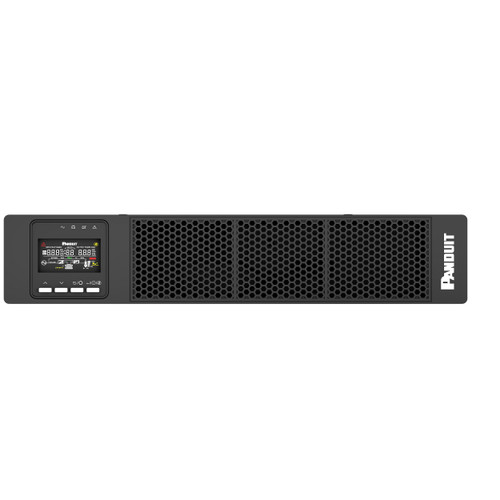
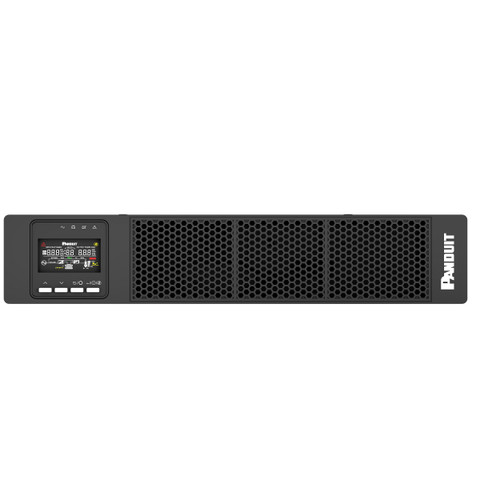
Both units are 2 kVA, 2U rack-mount UPS systems from Panduit's SteadySine™ sub-brand, targeting data center, edge, and enterprise MTDC environments — a direct cross-shop scenario. The U02N12V is a Line-Interactive model running at 120 VAC with sealed lead-acid batteries, while the U02N12L is a True Online Double-Conversion model running at 230 VAC with lithium-ion batteries. Buyers choosing between them face three fundamental axes: topology and power protection depth, battery technology and lifecycle, and voltage region plus management capability.
In This Guide
- Which topology delivers deeper power protection for sensitive loads?
- How do battery technology and replacement lifecycle compare between these two models?
- How do voltage region, management interfaces, and deployment flexibility differ?
- Which should you choose: the U02N12V or the U02N12L?
- Side-by-Side Specs
- FAQ
Which topology delivers deeper power protection for sensitive loads?
The U02N12V uses Line-Interactive topology with Active Voltage Regulation (AVR), covering an input range of 120 VAC ±20%. Transfer to battery occurs in under 2 ms — fast enough for most servers but not zero-transfer. Pure sine wave output (SteadySine) is confirmed at 120 VAC ±5% regulation, which is compatible with active PFC power supplies found in modern servers and network gear.
The U02N12L uses True Online Double-Conversion topology, meaning the load is always powered through the inverter with no transfer time to battery whatsoever. Input is 230 VAC single-phase; output is 230 VAC single-phase. Double-conversion continuously regenerates clean AC, providing complete isolation from input anomalies — sags, surges, frequency deviations, and noise — rather than simply correcting for them. For ultra-sensitive or high-availability loads, double-conversion is the more robust protection architecture. The U02N12V's sub-2 ms transfer time is spec-stated; the U02N12L's zero transfer time is inherent to the double-conversion design.
How do battery technology and replacement lifecycle compare between these two models?
The U02N12V uses hot-swappable sealed lead-acid (SLA) batteries. SLA is the established UPS battery chemistry: low upfront cost, well-understood failure modes, and widely available replacements. Typical SLA service life in UPS applications is 3–5 years under normal conditions, though the spec sheet for the U02N12V does not state a rated battery life figure explicitly.
The U02N12L uses hot-swappable lithium-ion batteries. One spec source for the U02N12L cites a battery life of 8–10 years, substantially longer than typical SLA. Lithium-ion also offers faster recharge, lighter weight per energy stored, and no sulfation degradation from partial-state-of-charge cycling. Both models support hot-swappable battery replacement, so runtime can be extended without shutting down the load. For installations where battery replacement labor and downtime carry high cost — co-location, remote edge, or understaffed facilities — the U02N12L's lithium-ion chemistry provides a meaningful total-cost-of-ownership advantage over a multi-year horizon, though the U02N12V's SLA is easier to source and replace locally.
How do voltage region, management interfaces, and deployment flexibility differ?
Voltage region is a hard deployment constraint. The U02N12V is rated for 120 VAC input and output — it is a North American / Taiwan / Japan market unit. The U02N12L is rated for 230 VAC input and output — it is a European, Middle Eastern, Asian, or Australian market unit. These two models cannot be substituted for each other based on voltage region alone in most real installations.
On management, the U02N12V includes an SNMP/HTTP card slot with the card sold separately, plus a multi-function LCD display. The U02N12L ships with an Intelligent Network Card included (one spec source specifies SNMP v3), plus an LCD display with diagnostics. Buyers on the U02N12V platform must budget for the add-on management card if remote monitoring is required; U02N12L buyers receive that capability out of the box. The U02N12L also ships with an adjustable 2-post/4-post rail kit (24"–36" depth); rail kit inclusion is not stated in the U02N12V specs.
Compliance certifications differ: U02N12V carries UL 1778, FCC Part 15 Class A, and Energy Star. U02N12L carries UL 1778, CE, and RoHS — consistent with its 230 VAC / international market positioning. Operating temperature for the U02N12V is stated as 0°C to 40°C; the U02N12L spec sheet does not state an operating temperature range in the provided data.
Which should you choose: the U02N12V or the U02N12L?
Our take: The U02N12V is the stronger choice when the installation is 120 VAC North American infrastructure, budget sensitivity favors deferring the SNMP management card, and SLA battery availability is not a concern. The U02N12L is the stronger choice when the installation is 230 VAC, when double-conversion zero-transfer-time topology is required for ultra-sensitive loads, or when lithium-ion's cited 8–10 year battery life reduces long-term replacement overhead versus SLA's typical 3–5 year cycle. The U02N12L also ships with its network management card included, eliminating a separate line-item cost. Critically, the 120 VAC vs. 230 VAC difference is a hard constraint in most deployments — not a preference. Confirm the facility's branch-circuit voltage before cross-shopping these two models on any other dimension.
Side-by-Side Comparison
Spec-for-spec, from manufacturer data.
| Specification | Panduit U02N12V | Panduit U02N12L |
|---|---|---|
| SKU | U02N12V | U02N12L |
| Sub-Brand | SteadySine™ | SteadySine™ |
| Topology | Line-Interactive | True Online Double-Conversion |
| Power Rating | 2000 VA / 1800 W | 2000 VA (Watts not stated in specs) |
| Input Voltage | 120 VAC ±20% | 230 VAC Single-Phase |
| Output Voltage | 120 VAC ±5% | 230 VAC Single-Phase |
| Waveform | Pure Sine Wave | Pure Sine Wave (implied by double-conversion) |
| Transfer Time | < 2 ms | Zero (double-conversion, always on inverter) |
| Battery Type | Sealed Lead-Acid (SLA) | Lithium-Ion |
| Battery Life (Rated) | — | 8–10 Years (per spec source) |
| Hot-Swappable Battery | Yes | Yes |
| Form Factor | 2U Rack Mount | 2U Rack Mount |
| Dimensions (H × W × D) | 3.4" × 17.3" × 22" | 3.4" × 17.3" × — (depth not stated) |
| Network Management | SNMP/HTTP Card Slot (card sold separately) | Intelligent Network Card Included (SNMP v3) |
| Display | Multi-Function LCD | LCD with Diagnostics |
| Efficiency | 95% (Normal Mode) | — |
| Certifications | UL 1778, FCC Part 15 Class A, Energy Star | UL 1778, CE, RoHS |
| Operating Temperature | 0°C to 40°C | — |
| Weight | ~45 lbs (20.4 kg) | — |
| Rail Kit Included | — | Adjustable 2-Post/4-Post, 24"–36" Depth |
Frequently Asked Questions
Which should you choose: the U02N12V or the U02N12L?
The U02N12V is the stronger choice when the installation is 120 VAC North American infrastructure, budget sensitivity favors deferring the SNMP management card, and SLA battery availability is not a concern. The U02N12L is the stronger choice when the installation is 230 VAC, when double-conversion zero-transfer-time topology is required for ultra-sensitive loads, or when lithium-ion's cited 8–10 year battery life reduces long-term replacement overhead versus SLA's typical 3–5 year cycle. The U02N12L also ships with its network management card included, eliminating a separate line-item cost. Critically, the 120 VAC vs. 230 VAC difference is a hard constraint in most deployments — not a preference. Confirm the facility's branch-circuit voltage before cross-shopping these two models on any other dimension.
Can I use the U02N12V and U02N12L interchangeably in the same rack?
No. The U02N12V is rated for 120 VAC input and output; the U02N12L is rated for 230 VAC input and output. These are different voltage regions. Substituting one for the other would require the facility's branch circuits and connected equipment to also operate at the corresponding voltage, which is not interchangeable in a standard deployment.
Does either model include a network management card, or is that an extra cost?
The U02N12L includes an Intelligent Network Card (one source specifies SNMP v3) in the box. The U02N12V has an SNMP/HTTP card slot but the card is sold separately — buyers needing remote monitoring should budget for that additional purchase.
Which model has lower long-term battery replacement costs?
Based on the provided specs, the U02N12L's lithium-ion batteries carry a cited life of 8–10 years versus sealed lead-acid in the U02N12V, which typically runs 3–5 years in UPS service (no rated life is stated in the U02N12V spec sheet). Over a 10-year deployment, the U02N12L may require fewer battery replacements, reducing both parts cost and labor. Both models support hot-swappable batteries, so replacement does not require a shutdown in either case.
More UPS Comparisons
- Panduit U02N12V vs Middle Atlantic OL2000R-2
- Panduit U02N12V vs Panduit U02S12L
- Panduit U02N12L vs Middle Atlantic OL2000R-2
- Panduit U02N12L vs Panduit U02S12L
- Middle Atlantic FWD-CBS-2KVA-BGR32 vs Panduit U02N14L
- Middle Atlantic FWD-CBS-2KVA-BGR32 vs Middle Atlantic FWD-CBS-2KVA-BGR38
UPS Buying Guides
Get a Second Opinion on Your Camera Choice
Share your site layout, coverage goals, and budget. Our team will validate the camera selection, flag anything we would change, and recommend products that match the use case.