
Panduit U01N14L vs Panduit U01N12L: Specification Comparison
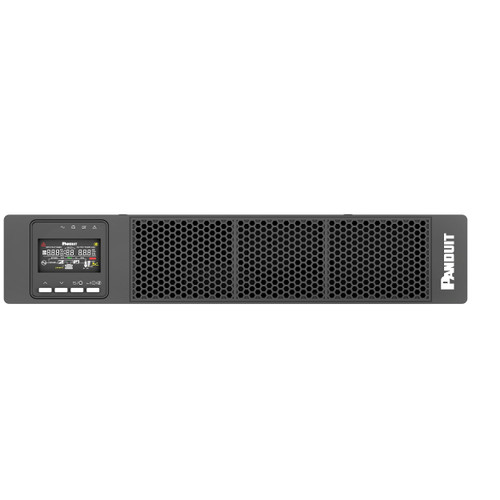
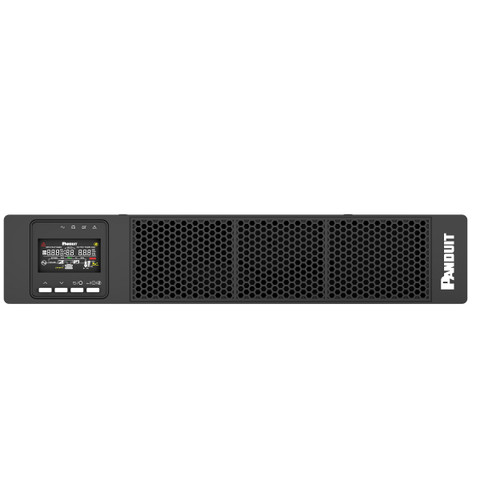
Both the U01N14L and U01N12L are Panduit SteadySine™ 1 kVA rack-mount lithium-ion UPS units targeting data center, edge, and enterprise MTDC environments. They share identical physical dimensions (3.4 in / 86.5 mm H × 17.3 in / 440 mm W) and the same sub-brand. However, the supplied specifications differ substantially in depth: U01N12L carries full topology, power output, voltage, battery, and management details, while U01N14L specs are largely physical and categorical. The comparison below uses only what is actually documented for each model.
In This Guide
- Which model provides a stronger power delivery architecture and confirmed output capacity?
- How do input/output voltage, battery technology, and recharge characteristics compare between the two units?
- Which unit offers better remote management and what accessories are included out of the box?
- Which should you choose: the U01N14L or the U01N12L?
- Side-by-Side Specs
- FAQ
Which model provides a stronger power delivery architecture and confirmed output capacity?
The U01N12L is explicitly specified as a Double Conversion (Online) UPS with an output power rating of 1 kVA / 900 W, a pure sinewave waveform, and zero transfer time — meaning load devices never experience a switchover gap during grid events. These are critical differentiators for sensitive IT equipment.
The U01N14L lists only '1KVA' in its product name and '120V' in its SKU-embedded descriptor, but neither the topology (online, line-interactive, or standby), the output wattage, the waveform type, nor the transfer time are present in the provided specifications. Buyers cannot confirm from the available data whether U01N14L delivers the same double-conversion, zero-transfer protection that U01N12L explicitly documents.
How do input/output voltage, battery technology, and recharge characteristics compare between the two units?
The U01N12L is specified for 230 V single-phase input and 230 V single-phase output — positioning it for international or 230 V infrastructure deployments. Its lithium-ion battery carries a stated life of 10+ years and recharges to 90% in under 2 hours. Hot-swappable battery replacement is explicitly confirmed, minimizing planned maintenance downtime.
The U01N14L's SKU descriptor references '120V,' suggesting a North American single-phase input design, but no output voltage, battery life, recharge time, or hot-swap capability is confirmed in the provided specifications. The voltage difference alone (120 V vs. 230 V) makes these units non-interchangeable for infrastructure wiring purposes, and buyers in 120 V environments would need to verify U01N12L compatibility before considering it as a substitute.
Which unit offers better remote management and what accessories are included out of the box?
The U01N12L includes an Intelligent Network Card in the box, with documented support for SNMP v2/v3, HTTP/HTTPS, and email alerts. A rail kit is also included. These are not optional add-ons; they ship standard. This matters for data center environments where out-of-band UPS monitoring and automated alerting are operational requirements rather than afterthoughts.
The U01N14L provides no management, connectivity, or accessory information in the supplied specifications. Network management capability, SNMP support, included rail hardware, and any bundled cards are all undocumented. The cable category field ('power-distribution-environmental-connectivity-hardware') is a taxonomy tag, not a feature confirmation, and cannot be used to infer network management support.
Which should you choose: the U01N14L or the U01N12L?
Our take: The U01N12L is the stronger documented choice for buyers who need confirmed double-conversion topology, specific voltage compatibility, and out-of-box management — the U01N14L cannot be evaluated on those same axes because its specifications do not cover topology, output watts, voltage (beyond the 120 V SKU hint), transfer time, battery life, recharge speed, hot-swap capability, or network management. Concrete spec deltas: U01N12L documents 900 W real power output vs. no wattage stated for U01N14L; U01N12L confirms zero transfer time (online topology) vs. undocumented for U01N14L; U01N12L includes an Intelligent Network Card with SNMP v2/v3 vs. no management spec for U01N14L. Voltage architecture diverges (230 V vs. implied 120 V), making these units non-interchangeable at the panel level. Buyers in 120 V North American deployments should verify U01N12L compatibility or obtain the full U01N14L datasheet from Panduit before treating these as equivalent alternatives.
Side-by-Side Comparison
Spec-for-spec, from manufacturer data.
| Specification | Panduit U01N14L | Panduit U01N12L |
|---|---|---|
| Sub Brand | SteadySine™ | SteadySine™ |
| Product Type | UPS | Uninterruptible Power Supply (UPS) |
| Topology | — | Double Conversion (Online) |
| Output Power | — | 1 kVA / 900 W |
| Input Voltage | 120 V (SKU descriptor) | 230 V Single Phase |
| Output Voltage | — | 230 V Single Phase |
| Waveform | — | Pure Sinewave |
| Transfer Time | — | Zero (Online Topology) |
| Battery Type | Lithium-Ion (name only) | Lithium-Ion |
| Battery Life | — | 10+ Years |
| Recharge Time | — | <2 Hours to 90% |
| Hot-Swappable Battery | — | Yes |
| Form Factor | — | 2U Rack-Mount |
| Height | 3.41 in / 86.5 mm | 3.4 in / 86.5 mm |
| Width | 17.3 in / 440 mm | 17.3 in / 440 mm |
| Network Management | — | SNMP v2/v3, HTTP/HTTPS, Email Alerts |
| Included Accessories | — | Intelligent Network Card, Rail Kit |
| Operating Temperature | — | 0–40°C |
| Application | Data Center, Edge, Enterprise MTDC | Data Center, Edge, Enterprise MTDC |
| UPC | 061305689891 | 061305682536 |
Frequently Asked Questions
Which should you choose: the U01N14L or the U01N12L?
The U01N12L is the stronger documented choice for buyers who need confirmed double-conversion topology, specific voltage compatibility, and out-of-box management — the U01N14L cannot be evaluated on those same axes because its specifications do not cover topology, output watts, voltage (beyond the 120 V SKU hint), transfer time, battery life, recharge speed, hot-swap capability, or network management. Concrete spec deltas: U01N12L documents 900 W real power output vs. no wattage stated for U01N14L; U01N12L confirms zero transfer time (online topology) vs. undocumented for U01N14L; U01N12L includes an Intelligent Network Card with SNMP v2/v3 vs. no management spec for U01N14L. Voltage architecture diverges (230 V vs. implied 120 V), making these units non-interchangeable at the panel level. Buyers in 120 V North American deployments should verify U01N12L compatibility or obtain the full U01N14L datasheet from Panduit before treating these as equivalent alternatives.
Can I use the U01N12L in a North American 120 V data center instead of the U01N14L?
Based on the provided specifications, no — the U01N12L is documented for 230 V single-phase input and output, while the U01N14L SKU descriptor references 120 V. Substituting one for the other without confirming voltage compatibility with your site infrastructure would be an installation error. Consult Panduit's datasheets (U01N12L.pdf and U01N14L.pdf) and your facility's voltage before selecting either unit.
Does the U01N14L include a network management card like the U01N12L does?
The provided specifications for the U01N14L do not mention a network management card, SNMP support, or any remote monitoring capability. The U01N12L explicitly includes an Intelligent Network Card with SNMP v2/v3, HTTP/HTTPS, and email alerts in the box. If remote UPS monitoring is a requirement, U01N12L has documented support; U01N14L does not — based on available spec data.
Is the U01N14L or U01N12L better for deployments requiring zero transfer time during power events?
The U01N12L is the only model with a documented answer: its Double Conversion (Online) topology provides zero transfer time, meaning connected equipment never experiences a switchover delay. The U01N14L's topology is not specified in the provided data, so no equivalent claim can be made for it. For applications where transfer time is mission-critical — such as sensitive compute or storage hardware — U01N12L's online topology is the confirmed choice between these two based on available specifications.
More UPS Comparisons
- Ubiquiti UPS-TOWER-US vs Panduit U01N12L
- Ubiquiti UPS-TOWER-US vs Panduit U01S12L
- Ubiquiti UPS-TOWER-US vs Middle Atlantic OL1000R-2
- Ubiquiti UPS-TOWER-US vs Middle Atlantic OL1000R-8
- Panduit U01N12L vs Middle Atlantic OL1000R-2
- Panduit U01N12L vs Middle Atlantic OL1000R-8
UPS Buying Guides
Get a Second Opinion on Your Camera Choice
Share your site layout, coverage goals, and budget. Our team will validate the camera selection, flag anything we would change, and recommend products that match the use case.