
Panduit U01N11V vs Panduit U01S12L: Specification Comparison
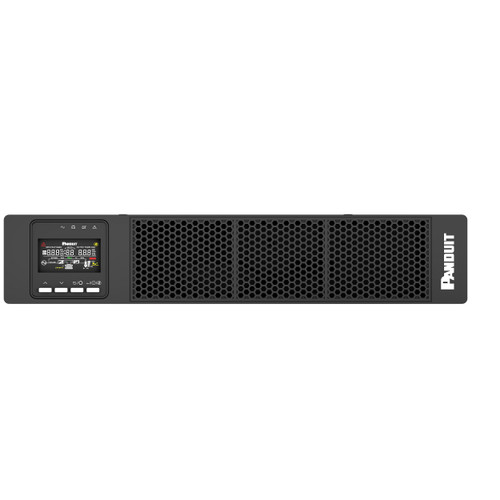
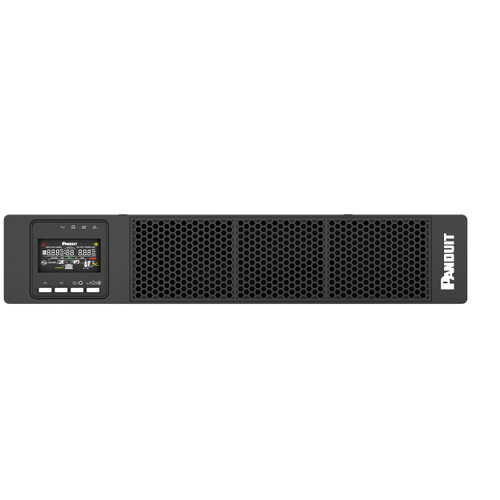
Both the Panduit U01N11V and U01S12L are 1 kVA, 2U rack-mount UPS units in the SteadySine™ platform, targeting data center edge, enterprise MTDC, and similar infrastructure deployments. The comparison centers on three decision-critical axes: input/output voltage and regional fit, battery technology and service life, and UPS topology with its implications for connected load protection. Buyers choosing between these two models are effectively choosing between a 120V single-phase unit and a 230V double-conversion online unit.
In This Guide
Which model fits your electrical infrastructure — 120V or 230V?
The U01N11V is specified for 120V AC single-phase input and output, making it appropriate for North American electrical environments where branch circuits are standardized at 120V. The U01S12L is specified for 230V AC single-phase input and output at 50/60 Hz, aligning with European, Middle Eastern, Asian, and other non-North American markets where 230V is the standard.
Neither model's specs state an explicit output receptacle configuration or outlet count, so direct comparison at that level is not possible from provided data. Buyers should verify regional outlet compatibility with Panduit documentation before procurement. The U01N11V datasheet is referenced at /content/product-datasheets/U01N11V.pdf and the U01S12L at /content/product-datasheets/U01S12L.pdf for detailed outlet/connector specifications.
How do the battery technologies and expected service lives compare?
The U01S12L specifies Lithium-Ion battery chemistry with a typical service life of 10 years. This is a material operational advantage: longer replacement intervals reduce lifecycle maintenance costs and minimize rack downtime associated with battery swap procedures in dense deployments.
The U01N11V's battery type and service life are not stated in the provided specifications. Buyers evaluating total cost of ownership or planning maintenance windows cannot make a direct comparison on this dimension without consulting Panduit's published datasheet or product documentation for the U01N11V. This is a notable data gap when comparing the two units head-to-head.
Does the UPS topology differ, and what does that mean for connected load protection?
The U01S12L is specified as Double Conversion Online topology with zero transfer time and a pure sine wave output waveform with less than 3% total harmonic distortion (typical). Double conversion means the connected load runs continuously off inverted DC power; utility power never directly reaches the load, eliminating transfer switching events entirely. This topology provides the highest level of power conditioning and is the appropriate choice for sensitive or mission-critical electronics.
The U01N11V's topology is not explicitly stated in the provided specifications. Its sub-brand designation as SteadySine™ is shared with the U01S12L, suggesting a sine wave output, but topology class (offline, line-interactive, or double conversion online) cannot be confirmed from the available data. Buyers deploying loads sensitive to transfer time or power quality should treat this as an unresolved specification and consult the U01N11V datasheet directly.
Which should you choose: the U01N11V or the U01S12L?
Our take: The U01S12L is the stronger choice when the deployment site runs 230V AC infrastructure and requires verified double-conversion online protection with zero transfer time. Its three concrete spec advantages over the U01N11V as documented are: (1) explicit 230V input/output versus the U01N11V's 120V, directly determining regional fit; (2) confirmed Lithium-Ion battery with a 10-year typical service life versus an unstated battery type on the U01N11V; and (3) documented double-conversion online topology with <3% THD and zero transfer time versus an unstated topology on the U01N11V. The U01N11V is the correct selection for 120V North American environments, but its topology and battery specs are absent from the provided data, making a full technical equivalence comparison impossible. Platform-wise, both share the SteadySine™ sub-brand and identical 2U form factor dimensions.
Side-by-Side Comparison
Spec-for-spec, from manufacturer data.
| Specification | Panduit U01N11V | Panduit U01S12L |
|---|---|---|
| SKU | U01N11V | U01S12L |
| Sub Brand | SteadySine™ | SteadySine™ |
| Product Type | UPS | Uninterruptible Power Supply (UPS) |
| Capacity | — | 1 kVA / 900W |
| Topology | — | Double Conversion Online |
| Input Voltage | 120V AC, Single Phase | 230V AC, Single Phase |
| Output Voltage | 120V AC | 230V AC, 50/60Hz |
| Output Waveform | — | Pure Sine Wave |
| Total Harmonic Distortion | — | <3% (typical) |
| Transfer Time | — | Zero (continuous online) |
| Battery Type | — | Lithium-Ion |
| Battery Service Life | — | 10 years (typical) |
| Form Factor | 2U Rack-Mount | 2U Rack-Mount |
| Height | 3.4 in / 86.5 mm | 3.4 in / 86.5 mm |
| Width | 17.3 in / 440 mm | 17.3 in / 440 mm |
| Management Interface | — | USB, SNMP (optional network card) |
| Operating Temperature | — | 0–40°C (32–104°F) |
| Standards Compliance | — | IEC 62040-1, IEC 62040-2, CE, UN 38.3 |
| UPC | 061305682524 | 061305682494 |
| Application | Data Center, Edge, Enterprise MTDC | Data Center Edge, Enterprise MTDC, Surveillance Racks |
Frequently Asked Questions
Which should you choose: the U01N11V or the U01S12L?
The U01S12L is the stronger choice when the deployment site runs 230V AC infrastructure and requires verified double-conversion online protection with zero transfer time. Its three concrete spec advantages over the U01N11V as documented are: (1) explicit 230V input/output versus the U01N11V's 120V, directly determining regional fit; (2) confirmed Lithium-Ion battery with a 10-year typical service life versus an unstated battery type on the U01N11V; and (3) documented double-conversion online topology with <3% THD and zero transfer time versus an unstated topology on the U01N11V. The U01N11V is the correct selection for 120V North American environments, but its topology and battery specs are absent from the provided data, making a full technical equivalence comparison impossible. Platform-wise, both share the SteadySine™ sub-brand and identical 2U form factor dimensions.
Can I use either of these UPS units in North America?
Only the U01N11V is specified for 120V AC, which is the North American standard. The U01S12L is specified for 230V AC input and output and is not suitable for direct connection to standard North American 120V branch circuits without a step-up transformer. Verify local electrical standards before selecting either unit.
Which model has a longer battery life, and does that affect maintenance costs?
The U01S12L specifies a Lithium-Ion battery with a typical 10-year service life, which reduces the frequency and cost of battery replacements compared to conventional VRLA batteries typically rated at 3–5 years. The U01N11V's battery type and service life are not stated in the provided specifications, so a direct comparison cannot be made from available data. Consult the U01N11V datasheet for this information.
Is the U01S12L or U01N11V better for protecting sensitive IT equipment from power anomalies?
The U01S12L's double-conversion online topology with zero transfer time and less than 3% THD (typical) means connected equipment never experiences a switchover event and receives continuously conditioned sine wave power. The U01N11V's topology is not specified in the provided data, so its level of power conditioning cannot be confirmed. For the most sensitive loads — servers, storage, and network equipment — the U01S12L's documented online topology provides the highest available protection from the two units, subject to voltage compatibility.
More UPS Comparisons
- Ubiquiti UPS-TOWER-US vs Panduit U01N12L
- Ubiquiti UPS-TOWER-US vs Panduit U01S12L
- Ubiquiti UPS-TOWER-US vs Middle Atlantic OL1000R-2
- Ubiquiti UPS-TOWER-US vs Middle Atlantic OL1000R-8
- Panduit U01N12L vs Middle Atlantic OL1000R-2
- Panduit U01N12L vs Middle Atlantic OL1000R-8
UPS Buying Guides
Get a Second Opinion on Your Camera Choice
Share your site layout, coverage goals, and budget. Our team will validate the camera selection, flag anything we would change, and recommend products that match the use case.