
Panduit U01N11L vs Panduit U01S12L: Specification Comparison
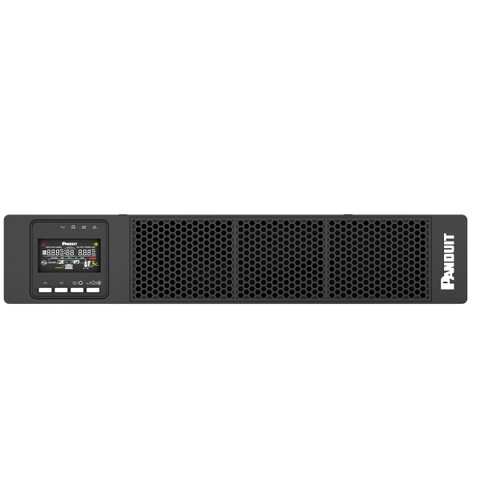
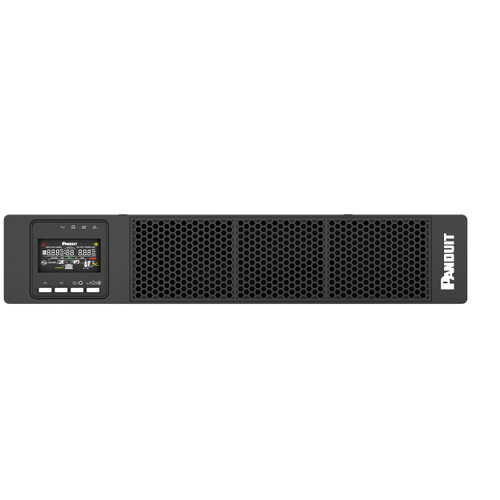
Both products are 1 kVA, 2U rack-mount UPS units from Panduit's SteadyPulse/SteadySine family, sharing identical physical footprints (17.3" × 3.4", 440 mm × 86.5 mm). A buyer choosing between the U01N11L and U01S12L is weighing two distinct UPS architectures within the same power class and form factor — the kind of decision common in data center edge, enterprise MTDC, or surveillance rack deployments where input voltage requirements, battery technology, and conversion topology drive the final selection.
In This Guide
- Which unit delivers cleaner, more reliable output power — and how does the topology affect protected equipment?
- Are these units compatible with the same electrical infrastructure, and how does battery chemistry affect total cost of ownership?
- What monitoring interfaces and compliance certifications does each unit provide for IT and facilities teams?
- Which should you choose: the U01N11L or the U01S12L?
- Side-by-Side Specs
- FAQ
Which unit delivers cleaner, more reliable output power — and how does the topology affect protected equipment?
The U01S12L uses Double Conversion Online topology, meaning AC input is continuously rectified to DC and re-inverted to AC output. Transfer time is zero because the load never runs directly on raw mains — the inverter is always in the signal path. Output waveform is specified as Pure Sine Wave with Total Harmonic Distortion below 3% (typical). This topology is the industry standard for protecting sensitive electronics from all categories of mains disturbances: sags, surges, harmonics, frequency variation, and outright failure.
The U01N11L is listed as a UPS under the SteadyPulse™ sub-brand. No topology (e.g., standby, line-interactive, double-conversion) is stated in the provided specifications. No transfer time, output waveform type, or THD figure is given. Buyers who need a guaranteed zero-transfer-time or pure sine output cannot confirm those properties from the available U01N11L spec data.
Are these units compatible with the same electrical infrastructure, and how does battery chemistry affect total cost of ownership?
The U01S12L specifies an input voltage of 230 V AC, Single Phase, with output at 230 V AC, 50/60 Hz. It uses a Lithium-Ion battery with a typical service life of 10 years. Lithium-Ion chemistry generally offers longer calendar life, reduced replacement frequency, wider operating temperature tolerance, and lighter weight compared to VRLA/AGM alternatives — each a measurable TCO factor in rack deployments.
The U01N11L specifies no input or output voltage in the provided data. No battery chemistry or battery service life is stated. The SteadyPulse™ branding is the only differentiator noted. Without voltage and battery specs, it is not possible to confirm infrastructure compatibility or project battery replacement costs from the supplied information alone.
What monitoring interfaces and compliance certifications does each unit provide for IT and facilities teams?
The U01S12L lists USB and optional SNMP (network card) as management interfaces, and declares compliance with IEC 62040-1, IEC 62040-2, CE, and UN 38.3 (the lithium battery transport standard). It is positioned on the Panduit SmartZone platform. These certifications are directly relevant for enterprise procurement, EU market entry, and international shipping of lithium cells.
The U01N11L provides no management interface information in the supplied specifications. No standards compliance certifications are listed. The SteadyPulse™ sub-brand appears in the data, but no platform designation equivalent to SmartZone is noted. Procurement teams requiring documented regulatory compliance or remote monitoring capability cannot confirm those features from the available U01N11L data.
Which should you choose: the U01N11L or the U01S12L?
Our take: The U01S12L is the stronger choice when topology assurance, battery longevity, input voltage compatibility with 230 V AC infrastructure, and documented regulatory compliance are decision criteria. Concretely: (1) the U01S12L specifies Double Conversion Online topology with zero transfer time and <3% THD — no equivalent topology data exists for the U01N11L; (2) the U01S12L carries a Lithium-Ion battery rated for a 10-year typical service life versus no battery specification at all for the U01N11L; (3) the U01S12L declares IEC 62040-1, IEC 62040-2, CE, and UN 38.3 compliance — the U01N11L lists none. Both units share the same 1 kVA class and 2U rack footprint. The U01N11L may be appropriate where its specific SteadyPulse™ design requirements are understood through its datasheet (/content/product-datasheets/U01N11L.pdf), but the supplied specifications do not support a head-to-head parity claim.
Side-by-Side Comparison
Spec-for-spec, from manufacturer data.
| Specification | Panduit U01N11L | Panduit U01S12L |
|---|---|---|
| SKU | U01N11L | U01S12L |
| Sub-Brand / Platform | SteadyPulse™ | SteadySine™ / SmartZone |
| Power Capacity | — | 1 kVA / 900 W |
| Topology | — | Double Conversion Online |
| Transfer Time | — | Zero (continuous online) |
| Output Waveform | — | Pure Sine Wave |
| THD (Output) | — | <3% (typical) |
| Input Voltage | — | 230 V AC, Single Phase |
| Output Voltage | — | 230 V AC, 50/60 Hz |
| Battery Chemistry | — | Lithium-Ion |
| Battery Service Life | — | 10 years (typical) |
| Form Factor | 2U Rack-Mount | 2U Rack-Mount |
| Width | 17.3" (440 mm) | 17.3" (440 mm) |
| Height | 3.4" (86.5 mm) | 3.4" (86.5 mm) |
| Management Interfaces | — | USB, SNMP (optional card) |
| Standards Compliance | — | IEC 62040-1, IEC 62040-2, CE, UN 38.3 |
Frequently Asked Questions
Which should you choose: the U01N11L or the U01S12L?
The U01S12L is the stronger choice when topology assurance, battery longevity, input voltage compatibility with 230 V AC infrastructure, and documented regulatory compliance are decision criteria. Concretely: (1) the U01S12L specifies Double Conversion Online topology with zero transfer time and <3% THD — no equivalent topology data exists for the U01N11L; (2) the U01S12L carries a Lithium-Ion battery rated for a 10-year typical service life versus no battery specification at all for the U01N11L; (3) the U01S12L declares IEC 62040-1, IEC 62040-2, CE, and UN 38.3 compliance — the U01N11L lists none. Both units share the same 1 kVA class and 2U rack footprint. The U01N11L may be appropriate where its specific SteadyPulse™ design requirements are understood through its datasheet (/content/product-datasheets/U01N11L.pdf), but the supplied specifications do not support a head-to-head parity claim.
Can I use either UPS on a standard 120 V North American circuit?
Only the U01S12L has a documented input voltage — 230 V AC, Single Phase — which is a European/international standard, not 120 V North American. No input voltage is specified for the U01N11L in the provided data. Neither unit can be confirmed as 120 V compatible from these specs; consult each product's datasheet before purchasing for a North American installation.
How often will I need to replace the battery in each unit?
The U01S12L specifies a Lithium-Ion battery with a typical service life of 10 years. No battery chemistry or service life is stated for the U01N11L in the supplied specifications. Battery replacement interval for the U01N11L cannot be determined from the available data.
Which unit is better suited for a monitored data center edge rack with SNMP management?
The U01S12L explicitly lists USB and optional SNMP (via network card) as management interfaces and is associated with the Panduit SmartZone platform. The U01N11L lists no management interfaces in the provided specifications. For a deployment requiring SNMP integration, the U01S12L is the only unit with a documented path to that capability based on available spec data.
More UPS Comparisons
- Ubiquiti UPS-TOWER-US vs Panduit U01N12L
- Ubiquiti UPS-TOWER-US vs Panduit U01S12L
- Ubiquiti UPS-TOWER-US vs Middle Atlantic OL1000R-2
- Ubiquiti UPS-TOWER-US vs Middle Atlantic OL1000R-8
- Panduit U01N12L vs Middle Atlantic OL1000R-2
- Panduit U01N12L vs Middle Atlantic OL1000R-8
UPS Buying Guides
Get a Second Opinion on Your Camera Choice
Share your site layout, coverage goals, and budget. Our team will validate the camera selection, flag anything we would change, and recommend products that match the use case.