
HID 910NWNTEKE05A7 vs HID 920NHRTEK0001T: Specification Comparison
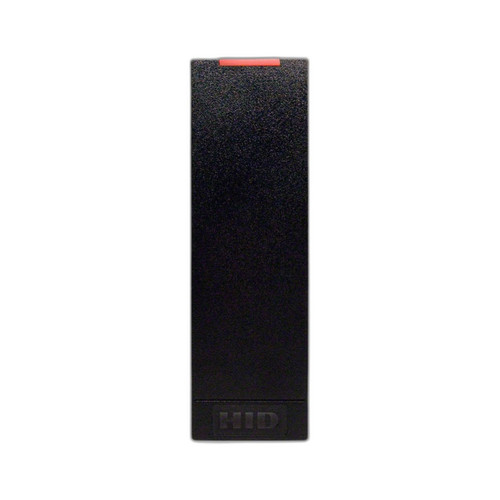
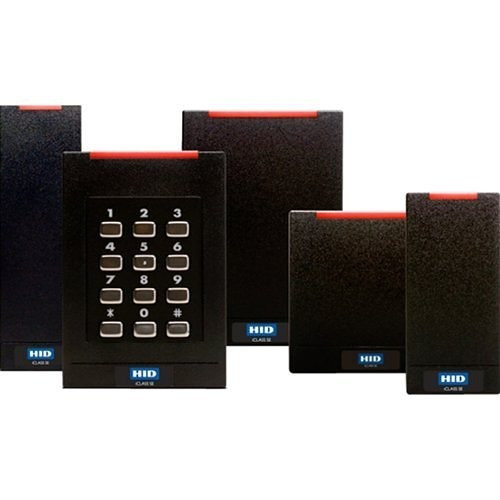
Both the HID 910NWNTEKE05A7 and 920NHRTEK0001T are HID iCLASS SE-platform access control readers designed for physical access points, sharing a dual-frequency credential read capability and a 2-year warranty. The 910NWNTEKE05A7 is a Wiegand-output proximity reader bridging legacy LF and modern HF credentials, while the 920NHRTEK0001T is a PIVCLASS-compliant FIPS-grade smart card reader terminal adding RS-485 full-duplex communication. Buyers choosing between them are typically weighing panel compatibility, federal compliance requirements, and supported credential breadth.
In This Guide
- How does each reader connect to an access control panel, and which output formats are supported?
- Which credential technologies and security standards does each reader enforce?
- What physical feedback, form factor, and deployment environment differences should installers expect?
- Which should you choose: the 910NWNTEKE05A7 or the 920NHRTEK0001T?
- Side-by-Side Specs
- FAQ
How does each reader connect to an access control panel, and which output formats are supported?
The 910NWNTEKE05A7 outputs exclusively via Wiegand with a specified 100 µs pulse timing and a terminal interface. This makes it a direct drop-in replacement for any panel already wired for standard Wiegand without any firmware or cabling changes. No RS-485 or OSDP output is listed in the provided specifications for this model.
The 920NHRTEK0001T supports RS-485 full-duplex (485FDX) as its primary communication bus and also provides a Wiegand output, giving it two distinct panel-side options. Its specification data additionally references OSDP as a communication protocol, enabling encrypted, bidirectional panel communication where the controller supports it. The Wiegand fallback preserves backward compatibility with legacy panels. Installers with modern PACS controllers can therefore use the 920NHRTEK0001T in a supervised, encrypted link rather than the unidirectional Wiegand-only path of the 910NWNTEKE05A7.
Which credential technologies and security standards does each reader enforce?
The 910NWNTEKE05A7 reads iCLASS SE, SEOS, SIO, and legacy LF proximity cards through its HF + LF dual-technology design. It supports the EVCS5164 migration profile, allowing simultaneous validation of old LF proximity and new iCLASS SE credentials during a phased card migration. Its encryption tier is described as iCLASS SE encryption; no FIPS certification level is stated in the provided specifications.
The 920NHRTEK0001T reads a broader credential set: iCLASS SE, DESFire, MIFARE, HID Prox (125 kHz), SEOS, NFC/13.56 MHz, and standard contactless smart cards. Critically, it carries FIPS 75-bit encryption and is described as PIVCLASS-compliant, satisfying federal government security mandates such as HSPD-12/PIV card programs. No FIPS certification or PIVCLASS designation is noted for the 910NWNTEKE05A7. The 920NHRTEK0001T therefore covers a wider credential ecosystem in addition to meeting higher regulatory encryption requirements.
What physical feedback, form factor, and deployment environment differences should installers expect?
Both readers share a color option of black or white with a silver trim baseplate and include a red LED indicator and an audible buzzer. The 910NWNTEKE05A7 specifies a red Flash-Off LED state and buzzer-enabled feedback. The 920NHRTEK0001T specifies a red LED plus a flashing green LED and an audible buzzer, providing an additional visual state for credential acceptance. The 920NHRTEK0001T also notes optional tamper detection via open-collector output; no tamper detection output is listed for the 910NWNTEKE05A7.
The 910NWNTEKE05A7 is classified as a proximity reader (R15 series) suited to commercial environments transitioning from LF proximity to iCLASS SE. The 920NHRTEK0001T is classified as a smart card reader terminal (R40-H series) and is explicitly positioned for federal government access control deployments. Operating environment specifications such as temperature range and ingress protection ratings are not provided in the specifications supplied for either model, so direct environmental comparison cannot be made.
Which should you choose: the 910NWNTEKE05A7 or the 920NHRTEK0001T?
Our take: The 920NHRTEK0001T is the stronger choice when the deployment must satisfy federal government credential or compliance requirements, or when the PACS infrastructure supports RS-485/OSDP for supervised, encrypted reader communication. Its FIPS 75-bit encryption and PIVCLASS compliance are absent from the 910NWNTEKE05A7 specification entirely. It also reads a wider credential set—adding DESFire, MIFARE, NFC, and standard HID Prox on top of the iCLASS SE stack—reducing future hardware swaps as cardbases evolve. The optional tamper detection output is an additional physical-security advantage not listed for the 910NWNTEKE05A7. Conversely, the 910NWNTEKE05A7 is the appropriate choice for commercial sites running a purely Wiegand panel infrastructure where the specific EVCS5164 migration profile is needed to validate legacy LF proximity and new iCLASS SE cards in parallel, and where FIPS compliance is not a mandate.
Side-by-Side Comparison
Spec-for-spec, from manufacturer data.
| Specification | HID 910NWNTEKE05A7 | HID 920NHRTEK0001T |
|---|---|---|
| Product Series | iCLASS SE R15 Proximity Reader | R40-H PIVCLASS Smart Card Reader Terminal |
| Primary Communication | Wiegand only (100 µs pulse) | RS-485 Full-Duplex (485FDX) |
| Secondary Output | — | Wiegand output |
| OSDP Support | — | Yes (per spec data) |
| Encryption Standard | iCLASS SE encryption | FIPS 75-bit |
| PIVCLASS / Federal Compliance | — | Yes |
| iCLASS SE Credential | Yes | Yes |
| SEOS Credential | Yes | Yes |
| SIO Credential | Yes | — |
| DESFire Credential | — | Yes |
| MIFARE Credential | — | Yes |
| HID 125 kHz Prox Credential | Yes (LF offset) | Yes |
| NFC / 13.56 MHz | — | Yes |
| EVCS5164 Migration Profile | Yes | — |
| LED Indicators | Red (Flash-Off) | Red + flashing green |
| Tamper Detection Output | — | Optional (open collector) |
| Audible Buzzer | Yes | Yes |
| Warranty | 2-year | 2-year |
Frequently Asked Questions
Which should you choose: the 910NWNTEKE05A7 or the 920NHRTEK0001T?
The 920NHRTEK0001T is the stronger choice when the deployment must satisfy federal government credential or compliance requirements, or when the PACS infrastructure supports RS-485/OSDP for supervised, encrypted reader communication. Its FIPS 75-bit encryption and PIVCLASS compliance are absent from the 910NWNTEKE05A7 specification entirely. It also reads a wider credential set—adding DESFire, MIFARE, NFC, and standard HID Prox on top of the iCLASS SE stack—reducing future hardware swaps as cardbases evolve. The optional tamper detection output is an additional physical-security advantage not listed for the 910NWNTEKE05A7. Conversely, the 910NWNTEKE05A7 is the appropriate choice for commercial sites running a purely Wiegand panel infrastructure where the specific EVCS5164 migration profile is needed to validate legacy LF proximity and new iCLASS SE cards in parallel, and where FIPS compliance is not a mandate.
Can either reader work with my existing Wiegand-only access control panel?
Yes—both models support Wiegand output. The 910NWNTEKE05A7 is exclusively Wiegand (100 µs pulse timing specified). The 920NHRTEK0001T provides Wiegand output alongside its primary RS-485 full-duplex interface, so it can connect to a legacy Wiegand panel while retaining the option to switch to RS-485 or OSDP if the panel is later upgraded.
Is the 920NHRTEK0001T or 910NWNTEKE05A7 required for a federal PIV card program?
Based on the provided specifications, only the 920NHRTEK0001T carries FIPS 75-bit encryption and PIVCLASS compliance—the two attributes typically required for federal HSPD-12/PIV deployments. No FIPS certification or PIVCLASS designation is listed for the 910NWNTEKE05A7, making it unsuitable for mandated federal credential programs per these specifications.
Which reader is better for a site that still issues legacy 125 kHz proximity cards but wants to migrate to modern credentials over time?
The 910NWNTEKE05A7 is specifically designed for this scenario: its HF + LF dual-technology design plus the EVCS5164 migration profile lets a single reader simultaneously validate old LF proximity and new iCLASS SE/SEOS credentials during a phased rollout. The 920NHRTEK0001T also reads 125 kHz HID Prox alongside iCLASS SE, DESFire, and MIFARE, so it can serve a mixed-card environment as well—but its migration-profile support equivalent to EVCS5164 is not specified in the provided data.
More Access Control Reader Comparisons
- HID 20NWS-01-000000 vs HID 920NHRTEK0001T
- HID 20NWS-01-000000 vs HID 20NKS-01-002CBR
- HID 920NHRTEK0001T vs HID 20NKS-01-002CBR
- HID 40NKS-01-002CBR vs HID 20NWS-01-000000
- HID 40NKS-01-002CBR vs HID 920NHRTEK0001T
- HID 900NWPNEK00483 vs HID 20NWS-01-000000
Access Control Reader Buying Guides
Get a Second Opinion on Your Camera Choice
Share your site layout, coverage goals, and budget. Our team will validate the camera selection, flag anything we would change, and recommend products that match the use case.